AIRMAR PM265LH Dual-Frequency CHIRP Depth Sounder
| Brand | AIRMAR |
|---|---|
| Origin | USA |
| Model | PM265LH |
| Transmit Power | 1000 W |
| Low-Frequency Range | 42–65 kHz (Beamwidth: 25°–16°, Max Depth: 914 m) |
| High-Frequency Range | 130–210 kHz (Beamwidth: 10°–6°, Max Depth: 304 m) |
| Total Transducer Bandwidth | 103 kHz |
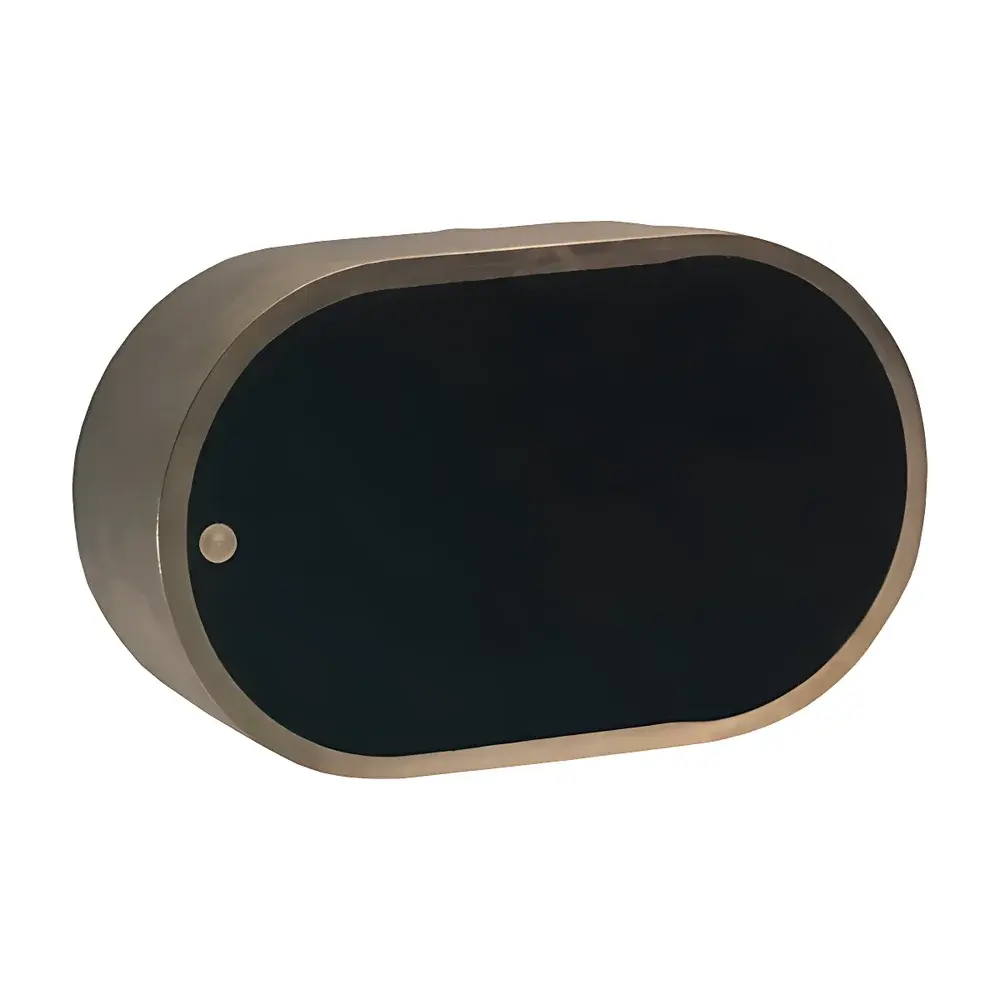
| Housing Material | Bronze |
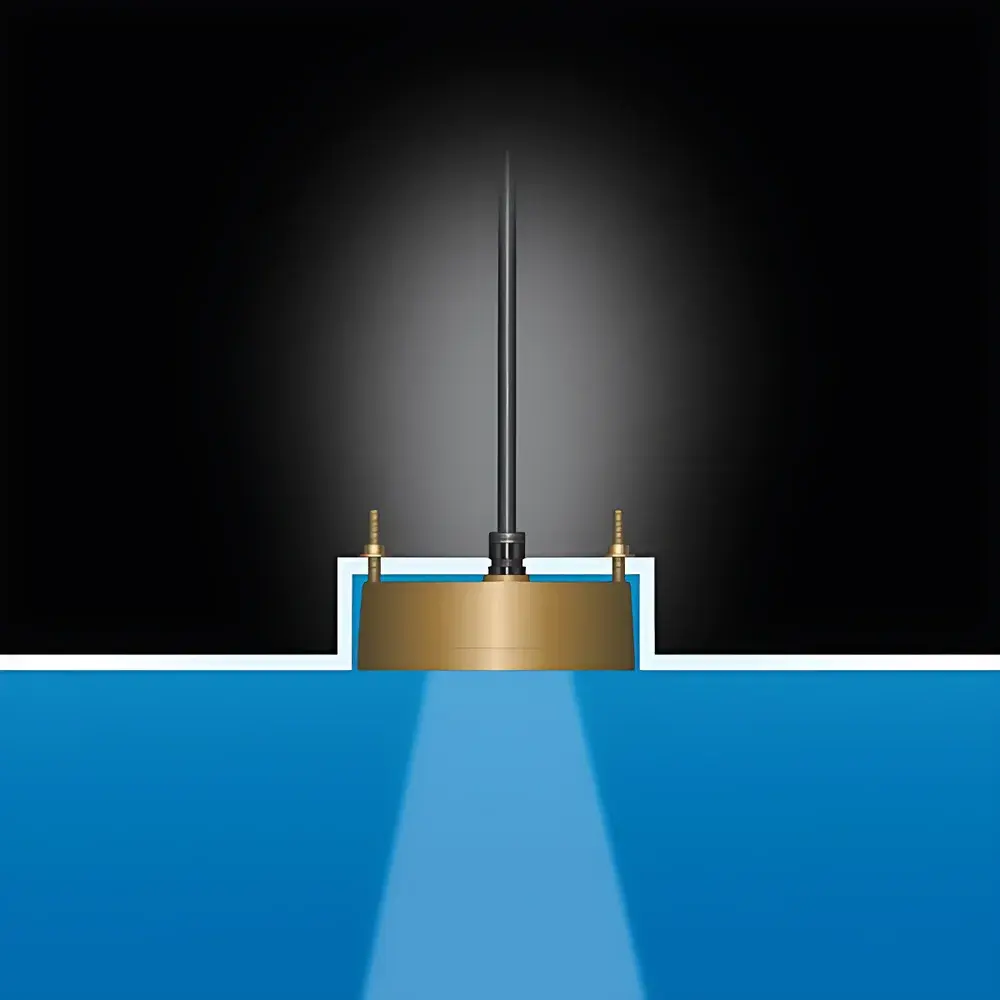
| Mounting Options | Tank, Hull Cavity, Pocket/Kiel Mount |
| Transducer Window | Polyurethane |
| Operating Temperature Sensor | Integrated Fast-Response Thermistor |
| Compatible Hull Types | Solid Fiberglass Only (≥8 m LOA) |
| Weight | 5.2 kg |
Overview
The AIRMAR PM265LH is a dual-frequency CHIRP (Compressed High-Intensity Radar Pulse) depth sounder transducer engineered for high-fidelity hydroacoustic profiling in commercial fishing, scientific survey, and precision marine navigation applications. Unlike conventional fixed-frequency echosounders, the PM265LH employs swept-frequency CHIRP technology—transmitting continuously modulated pulses across defined bandwidths—to deliver superior signal-to-noise ratio, improved target separation, and enhanced bottom discrimination. Its dual-band architecture integrates two physically distinct piezoelectric arrays within a single bronze housing: a seven-element low-frequency (LF) array operating from 42 to 65 kHz, optimized for deep-water penetration and large-target detection; and a high-frequency (HF) array spanning 130 to 210 kHz, configured for narrow-beam angular resolution and fine-scale structural imaging. This design enables simultaneous acquisition of complementary acoustic data streams—e.g., detecting dense bait schools at depth while resolving individual pelagic species (such as bluefin tuna at 60 kHz, squid at 133 kHz, or cod at 175 kHz) near the thermocline—without hardware switching or temporal latency.
Key Features
- Integrated dual-band CHIRP transduction: independent LF (42–65 kHz) and HF (130–210 kHz) arrays co-located in a single compact bronze housing
- Optimized beam geometry: LF beamwidth adjustable from 25° to 16°; HF beamwidth narrowed to 10°–6° for precise lateral target localization
- 1 kW peak transmit power with duty-cycle management for sustained deep-water operation up to 914 m (LF) and 304 m (HF)
- Onboard fast-response thermistor delivering real-time water temperature measurements synchronized with depth returns
- Polyurethane acoustic window providing broadband transmission efficiency and cavitation resistance across both frequency bands
- Mounting versatility: compatible with tank-mount, hull cavity, pocket/keel-mount configurations; optional variants available for thru-hull (B265LH), transom (TM265LH), in-hull (M265LH), and custom tank (CM265LH) installations
- Xducer ID® digital identification protocol enabling automatic configuration recognition by compatible sonar processors (e.g., Raymarine Axiom, Garmin GPSMAP, Furuno TZtouch)
Sample Compatibility & Compliance
The PM265LH is designed exclusively for use on solid fiberglass hulls ≥8 meters in length, with hull deadrise angles accommodated via custom mounting shims or angled adapter plates. It is not rated for aluminum, steel, or cored composite hulls due to acoustic impedance mismatch and potential resonance-induced signal distortion. The transducer complies with IEC 62236-3 (electromagnetic compatibility for marine electronics) and meets RoHS 2 Directive 2011/65/EU material restrictions. While not certified to ISO 17677-1 (acoustic Doppler current profiler performance standards), its CHIRP waveform parameters adhere to empirical best practices outlined in ICES Cooperative Research Report No. 335 for fisheries acoustics instrumentation. Data outputs are compatible with NMEA 2000 (PGN 128259, 128267) and NMEA 0183 (DPT, MTW, DBT) protocols for integration into vessel monitoring systems (VMS) compliant with FAO Port State Measures Agreement (PSMA) reporting requirements.
Software & Data Management
The PM265LH operates as a sensor-level device and requires connection to a CHIRP-capable display processor or PC-based echosounder platform (e.g., Echoview, Sonar4, or QPS Qimera). Raw IQ data streams support post-processing for target strength (TS) analysis, volume backscattering coefficient (Sv) calculation, and multi-frequency classification algorithms. Firmware updates are delivered via AIRMAR’s Xducer Manager utility, which logs calibration history, thermal drift compensation profiles, and installation-specific beam alignment metadata. All timestamped depth and temperature records include embedded UTC synchronization (via NMEA 2000 time source), supporting audit-ready data provenance for GLP-aligned fisheries research or regulatory catch documentation workflows.
Applications
- Commercial pelagic fisheries: simultaneous detection and differentiation of baitfish layers and predator species across vertical strata
- Scientific stock assessment surveys: quantitative echo-integration for biomass estimation using dual-frequency target classification (e.g., distinguishing krill from juvenile herring)
- Marine habitat mapping: high-resolution bathymetric profiling coupled with substrate characterization via bottom return spectral analysis
- Vessel-based environmental monitoring: long-term water column temperature profiling correlated with acoustic backscatter anomalies
- Autonomous underwater vehicle (AUV) integration: compact form factor and low-profile mounting enable retrofitting on medium-class USVs for littoral zone reconnaissance
FAQ
Is the PM265LH compatible with aluminum or steel hulls?
No. Acoustic coupling efficiency and signal fidelity are compromised on metallic or cored hulls; only solid fiberglass hulls ≥8 m LOA are supported.
What NMEA protocols does the transducer support?
NMEA 2000 (PGN 128259 for depth, PGN 128267 for temperature) and NMEA 0183 (DPT, MTW, DBT sentences).
Can the LF and HF channels operate simultaneously?
Yes—hardware-level parallel excitation and reception enable true concurrent dual-band CHIRP operation without time multiplexing.
Does the transducer require external cooling or water flow?
No. Passive thermal dissipation through the bronze housing is sufficient under continuous 1 kW transmit duty cycles typical of survey-grade operation.
How is beam alignment verified during installation?
Xducer ID® provides built-in tilt and orientation telemetry; final alignment is validated using AIRMAR’s BeamCheck™ diagnostic mode and reference bottom return symmetry analysis.