
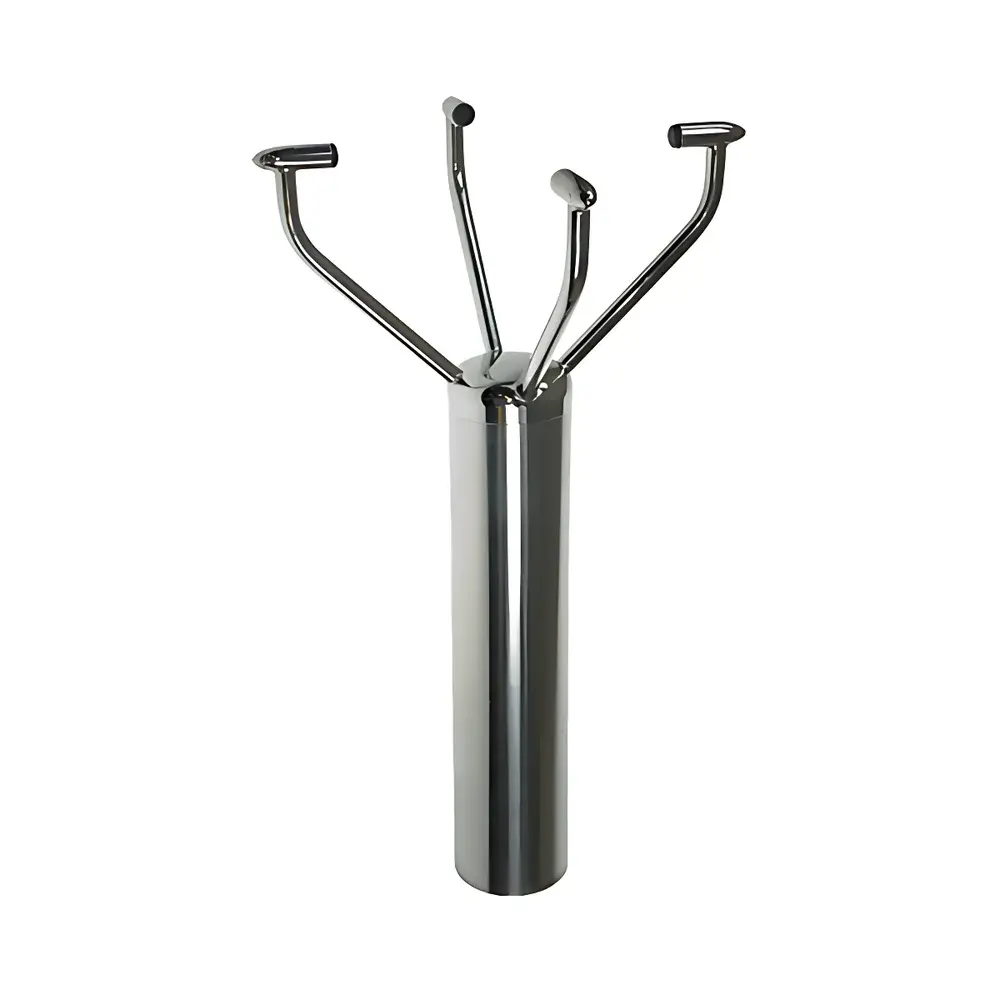
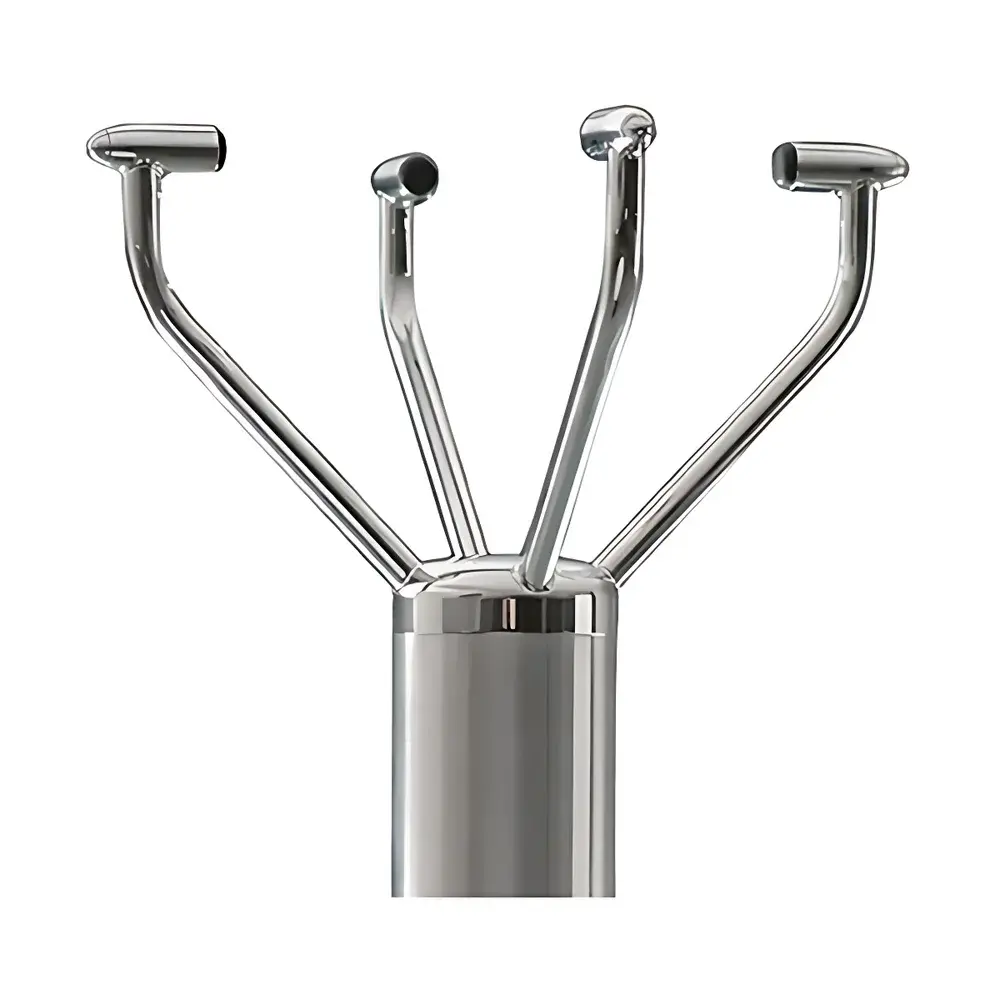

Gill WindObserver II Ultrasonic Anemometer
| Brand | Gill |
|---|---|
| Origin | United Kingdom |
| Model | WindObserver II |
| Instrument Type | Ultrasonic Anemometer |
| Resolution | 0.01 m/s |
| Measurement Range | 0–65 m/s |
| Accuracy | ±2% of reading |
| Operating Temperature | −55 °C to +70 °C |
| Operating Humidity | 5–100% RH |
| Ingress Protection | IP66 |
| Housing Material | Stainless Steel |
| Certification | Lloyds Register Type Approved |
| Output Interfaces | 1 digital (RS-422/RS-485), 3 analog (4–20 mA or 0–10 V) |
| WMO Compliance | Wind averaging and gust algorithms aligned with WMO Guide to Meteorological Instruments and Methods of Observation (WMO-No. 8, 7th Ed., 2008) |
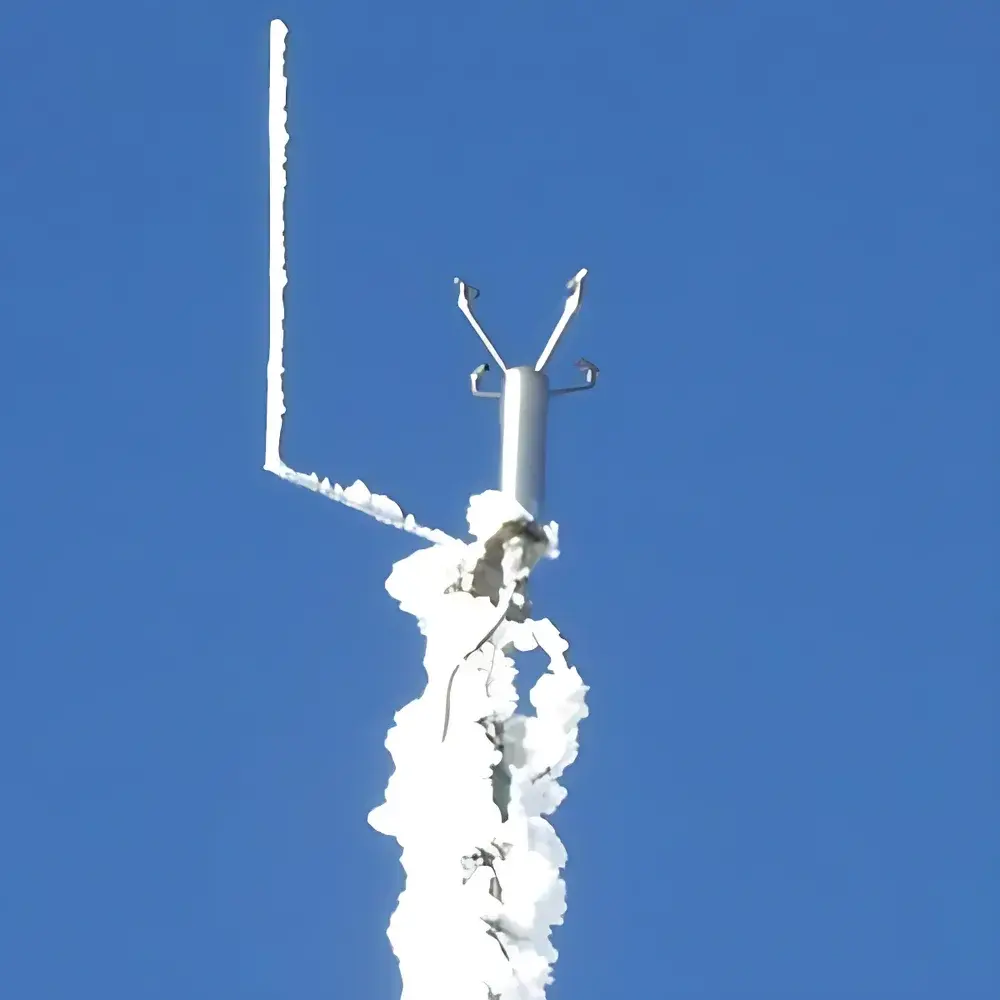
| Optional Feature | Integrated de-icing system |
Overview
The Gill WindObserver II is a solid-state ultrasonic anemometer engineered for continuous, high-reliability wind vector measurement in demanding environmental and industrial applications. Unlike mechanical cup-and-vane sensors, it employs time-of-flight ultrasonic transit-time differential measurement across three orthogonal acoustic paths to compute true 3D wind speed and direction without moving parts. This principle ensures zero mechanical wear, minimal maintenance, and immunity to bearing drift or icing-induced inertia errors. Designed and manufactured in the United Kingdom, the WindObserver II meets rigorous marine-grade performance requirements—including long-term stability under salt-laden atmospheres—and is formally type-approved by Lloyd’s Register for offshore and maritime deployment. Its extended operational envelope (−55 °C to +70 °C) and IP66-rated stainless-steel enclosure make it suitable for permanent outdoor installation across aviation, energy infrastructure, coastal monitoring, and high-altitude meteorological networks.
Key Features
- Solid-state ultrasonic sensing architecture with no rotating components—eliminates mechanical hysteresis and calibration drift over time
- Full wind vector output: wind speed (0–65 m/s) and wind direction (0–359°) with 0.01 m/s resolution and ±2% accuracy across the entire range
- Triple analog outputs (4–20 mA or 0–10 V selectable per channel) plus one RS-422/RS-485 digital interface for seamless integration into SCADA, PLC, and data acquisition systems
- Lloyd’s Register Type Approval certifies compliance with marine structural integrity, corrosion resistance, and electromagnetic compatibility (EMC) standards for offshore platforms and vessel-mounted installations
- Optional integrated resistive de-icing system enables reliable operation in sub-zero, high-humidity, or supercooled fog conditions—critical for airport wind shear detection and offshore turbine control
- Configurable averaging modes: user-selectable vector-based sliding average (1–3600 s) and 3-second gust detection, fully compliant with WMO-No. 8 (7th Edition, 2008) definitions for synoptic and aviation reporting
Sample Compatibility & Compliance
The WindObserver II is optimized for open-air atmospheric sampling in unobstructed flow fields. It requires standard mounting on a non-turbulent mast or tower (minimum 1.5 m above surrounding obstructions) and performs reliably across natural wind regimes—from laminar boundary layer flows near ground level to turbulent gusts exceeding 55 m/s in storm conditions. The device complies with ISO 16622:2020 (Wind measurement—Ultrasonic anemometers—Performance requirements and test methods) and supports traceable calibration via NPL-traceable reference standards. For regulated environments, its deterministic output protocol and stable firmware architecture support GLP-compliant data logging when paired with validated third-party DAQ systems. While not intrinsically safe, it is rated for use in non-hazardous zones per IEC 60079-0.
Software & Data Management
Gill provides free Windows-compatible configuration and data logging software (WindCom) supporting real-time visualization, parameter setup (averaging window, output scaling, de-icer activation thresholds), and CSV export with timestamped metadata. The instrument embeds non-volatile memory for up to 30 days of internal logging at 1 Hz (expandable via external SD card modules). All firmware updates are delivered as signed binaries with SHA-256 checksum verification. When deployed in FDA-regulated or GxP-aligned contexts (e.g., wind-sensitive pharmaceutical cleanroom HVAC validation), the WindObserver II can be integrated into 21 CFR Part 11-compliant systems through audit-trail-enabled middleware that logs all configuration changes, output events, and diagnostic status flags.
Applications
- Airport low-level wind shear and microburst detection systems (LLWAS), interfacing with ATC displays and automated weather observing systems (AWOS)
- Dynamic positioning (DP) control loops on offshore supply vessels and drillships, where real-time wind vector feedforward improves station-keeping accuracy
- Port and terminal safety management—triggering crane shutdown protocols during high-wind events and enabling cargo handling optimization
- Wind farm yaw control and power curve validation, particularly in complex terrain or offshore arrays requiring high temporal fidelity
- Structural health monitoring of tall buildings, bridges, and transmission towers—correlating wind loading with strain gauge and accelerometer data
- National meteorological networks and upper-air sounding stations requiring WMO-compliant wind statistics for climate benchmarking and model assimilation
FAQ
Does the WindObserver II require routine recalibration?
No scheduled recalibration is mandated under normal operating conditions; however, Gill recommends annual verification against a traceable reference anemometer per ISO 16622 procedures to maintain metrological confidence.
Can the de-icing option be retrofitted to existing units?
Yes—the de-icing module is field-upgradable via authorized service centers using calibrated thermal sensor replacement and firmware reconfiguration.
What is the maximum cable length supported for analog outputs?
For 4–20 mA outputs, up to 1,000 m is supported with shielded twisted-pair cabling (AWG 18) and proper grounding; RS-485 digital communication supports up to 1,200 m at 9.6 kbps.
Is the WindObserver II compatible with Modbus RTU or SDI-12 protocols?
It natively supports RS-422/RS-485 serial communication with ASCII command set; Modbus RTU implementation requires external protocol converter or OEM firmware customization.
How does the device handle precipitation interference?
The transducer geometry and acoustic pulse processing algorithm suppress rain noise via spectral filtering and signal-to-noise ratio gating—validated per IEC 61000-4-30 for electromagnetic resilience in wet conditions.
Related Products







