
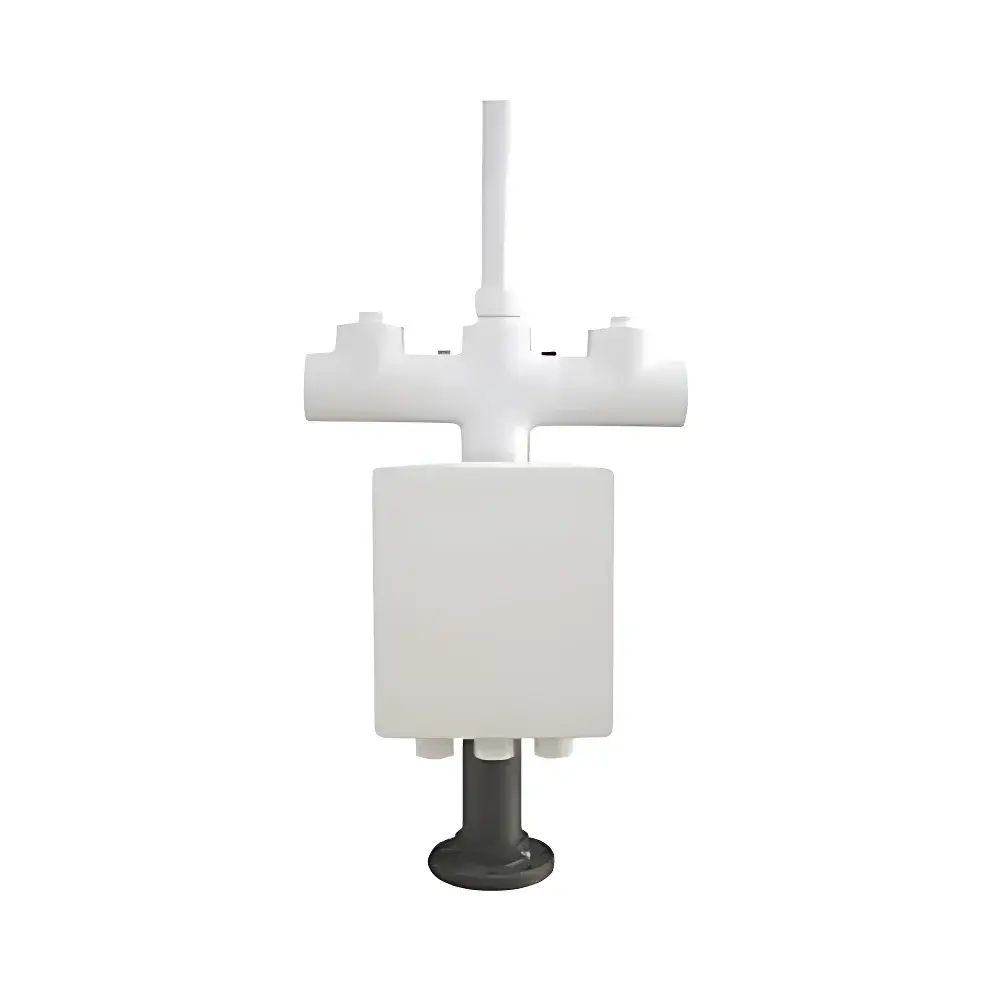
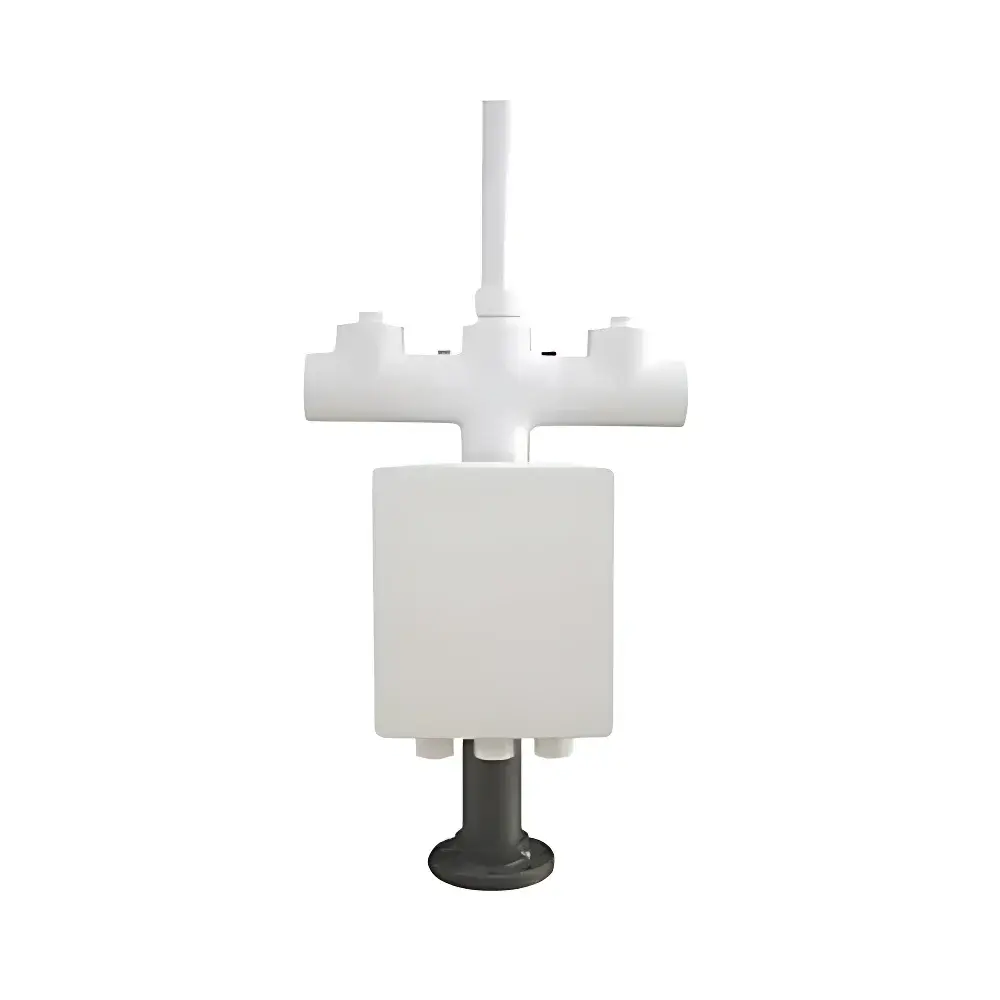
RainWise Monopod Meteorological Mounting Mast
| Brand | RainWise |
|---|---|
| Origin | USA |
| Manufacturer Type | Authorized Distributor |
| Origin Category | Imported |
| Model | Monopod |
| Instrument Type | Auxiliary Mounting System for Weather Stations |
| Mast Height (Standard) | 3 m |
| Optional Heights | 6 m, 10 m |
| Material | UV-Stabilized PVC |
| Enclosure Rating | NEMA 4X |
| Sensor Capacity | Up to 6 primary meteorological sensors + expansion ports for soil temperature, soil moisture, and evaporation sensors |
| Foundation Requirement | Concrete pad with flange-mount interface |
| Power Options | AC mains + optional solar-ready configuration |
Overview
The RainWise Monopod is a purpose-engineered, single-pole mounting mast system designed exclusively for integration with the RainWise EDL Series integrated weather stations. Unlike generic pole mounts, the Monopod provides a calibrated mechanical platform that ensures optimal spatial separation, angular alignment, and sensor-level stability required for regulatory-grade environmental data collection. Its structural architecture adheres to standard meteorological siting guidelines—including WMO No. 8 (Guide to Meteorological Instruments and Methods of Observation) and ASTM D5497-22 (Standard Practice for Installation of Environmental Monitoring Equipment)—to minimize flow distortion, thermal radiation error, and electromagnetic interference. The mast serves as both mechanical support and functional integration hub: all sensor mounting points are pre-positioned per IEC 61000-4-3 EMC compliance spacing requirements, and the integrated NEMA 4X enclosure provides secure, weatherproof housing for data loggers, power management modules, and communication interfaces.
Key Features
- UV-stabilized rigid PVC construction—chemically inert, non-corrosive, and thermally stable across −40 °C to +70 °C operating range
- Precision-machined sensor mounting brackets with standardized 1/4″–20 UNC and M6 threaded interfaces compatible with RainWise EDL-series anemometers, wind vanes, thermohygrometers, barometric pressure transducers, tipping-bucket rain gauges, and pyranometers
- Integrated NEMA 4X-rated enclosure with gasketed hinged door, internal DIN-rail mounting, and cable gland provisions for IP67-rated sensor wiring
- Solar-ready power architecture: dual-input terminal block accepts 12 V DC from AC/DC converter or charge-regulated output from photovoltaic array (solar panel not included)
- Flange-based foundation interface requiring reinforced concrete pad (minimum 600 mm × 600 mm × 300 mm, ASTM C94-compliant mix)
- Modular height scalability: factory-assembled 3 m standard configuration; optional 6 m and 10 m variants available with reinforced wall thickness and guy-wire anchor points per ANSI/EIA-222-G wind-load specifications
Sample Compatibility & Compliance
The Monopod supports full sensor complement of the RainWise EDL platform, including but not limited to: propeller-type anemometer (0–75 m/s, ±0.3 m/s accuracy), vane-based wind direction sensor (0–360°, ±3° resolution), capacitive relative humidity probe (0–100% RH, ±2% RH @ 25 °C), platinum RTD air temperature sensor (−40 °C to +70 °C, ±0.2 °C), silicon piezoresistive barometer (800–1100 hPa, ±0.1 hPa), heated tipping-bucket rain gauge (0.01 mm resolution), and thermopile-based pyranometer (0–2000 W/m², ISO 9060:2018 Class C spectral response). Expansion ports conform to SDI-12 and RS-485 (Modbus RTU) physical layer standards, enabling connection of third-party soil moisture (TDR/FDR), soil temperature (PT1000), and pan evaporation sensors. All configurations comply with NOAA/NWS ASOS siting criteria and support GLP-aligned metadata logging when paired with RainWise’s certified data acquisition firmware.
Software & Data Management
The Monopod itself is hardware-only and does not include embedded firmware. However, it is fully interoperable with RainWise’s EDL Control Suite (v4.2+), which supports automated sensor discovery, calibration coefficient upload via USB or Ethernet, and time-synchronized data aggregation at user-defined intervals (1 s to 60 min). Raw measurements are timestamped with GPS-derived UTC and stored in CSV/NetCDF formats compliant with CF-1.8 metadata conventions. When deployed in regulated environments (e.g., EPA ambient air monitoring networks or USDA ARS field research sites), the system supports audit-trail generation, electronic signature workflows, and 21 CFR Part 11–compliant user access controls through optional enterprise license modules.
Applications
The Monopod is deployed across federal, academic, and industrial applications where long-term, low-maintenance, and code-compliant meteorological observation is required. Typical use cases include: real-time mesonet nodes for NOAA’s COOP and USCRN programs; boundary-layer flux studies in eddy-covariance towers; microclimate profiling in agricultural research (e.g., USDA-ARS irrigation trials); wildfire risk modeling infrastructure in CAL FIRE and USFS fire weather networks; and environmental baseline monitoring for ISO 14064-2 GHG inventory verification. Its NEMA 4X enclosure and UV-resistant polymer structure make it suitable for coastal, desert, and high-UV index deployments without degradation over 15+ year service life.
FAQ
Is the Monopod compatible with non-RainWise sensors?
Yes—provided the sensor meets mechanical interface standards (M6 or 1/4″–20 UNC threads) and electrical protocols (SDI-12, RS-485 Modbus RTU, or 4–20 mA analog output). Custom bracket adapters are available upon request.
Does the Monopod include grounding provisions?
Yes—integrated copper grounding lug (6 AWG minimum) is located at the base flange per NEC Article 250 and IEEE 1100 recommendations for instrumentation grounding.
Can the NEMA 4X enclosure accommodate third-party data loggers?
Yes—the interior volume (300 mm × 250 mm × 150 mm) accommodates most industry-standard loggers including Campbell Scientific CR1000X, Onset HOBO RX3000, and Delta-T DL6.
What is the maximum wind loading rating?
At 3 m height: 150 km/h (93 mph) gusts per ASCE 7-22 Exposure Category B; 6 m and 10 m variants require guy-wire stabilization per manufacturer-supplied engineering drawings.
Is calibration documentation provided with the mast?
No—the Monopod is a passive mounting structure and carries no metrological calibration. Sensor-level calibration certificates are supplied separately with each connected instrument per ISO/IEC 17025 requirements.







