
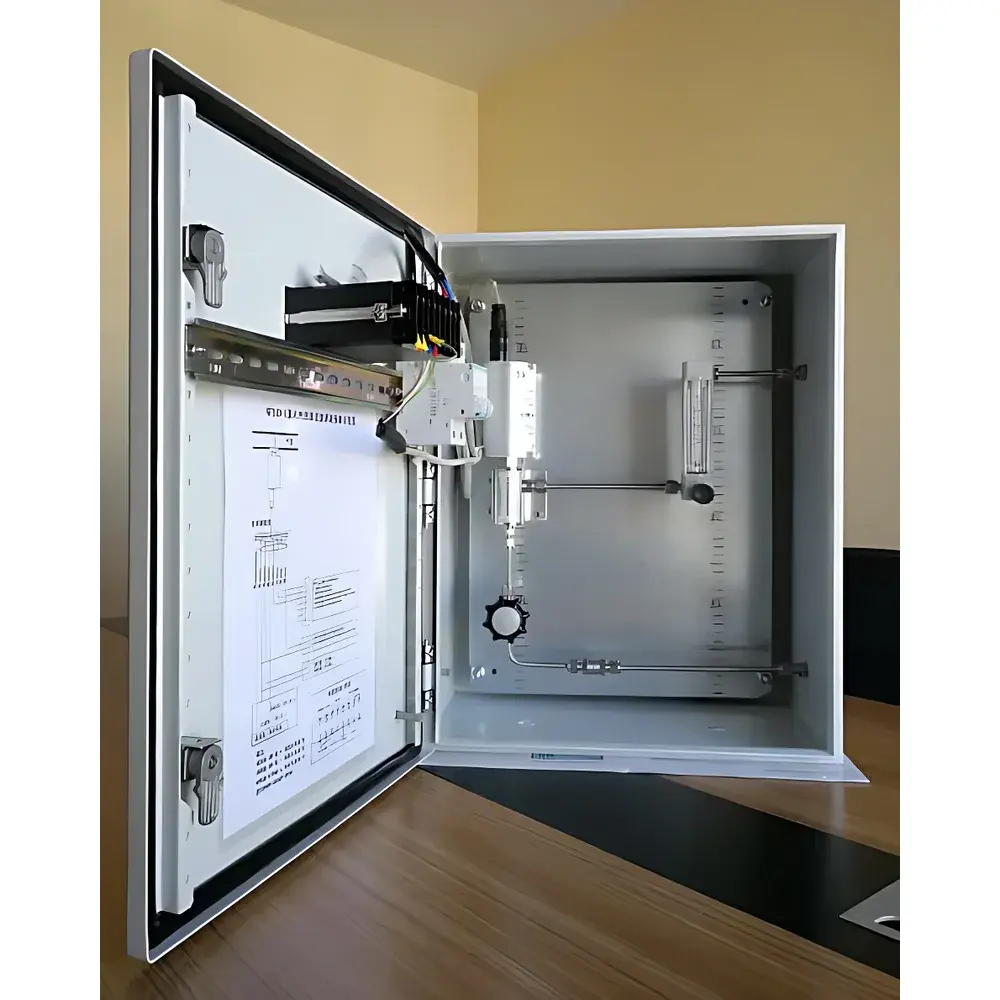
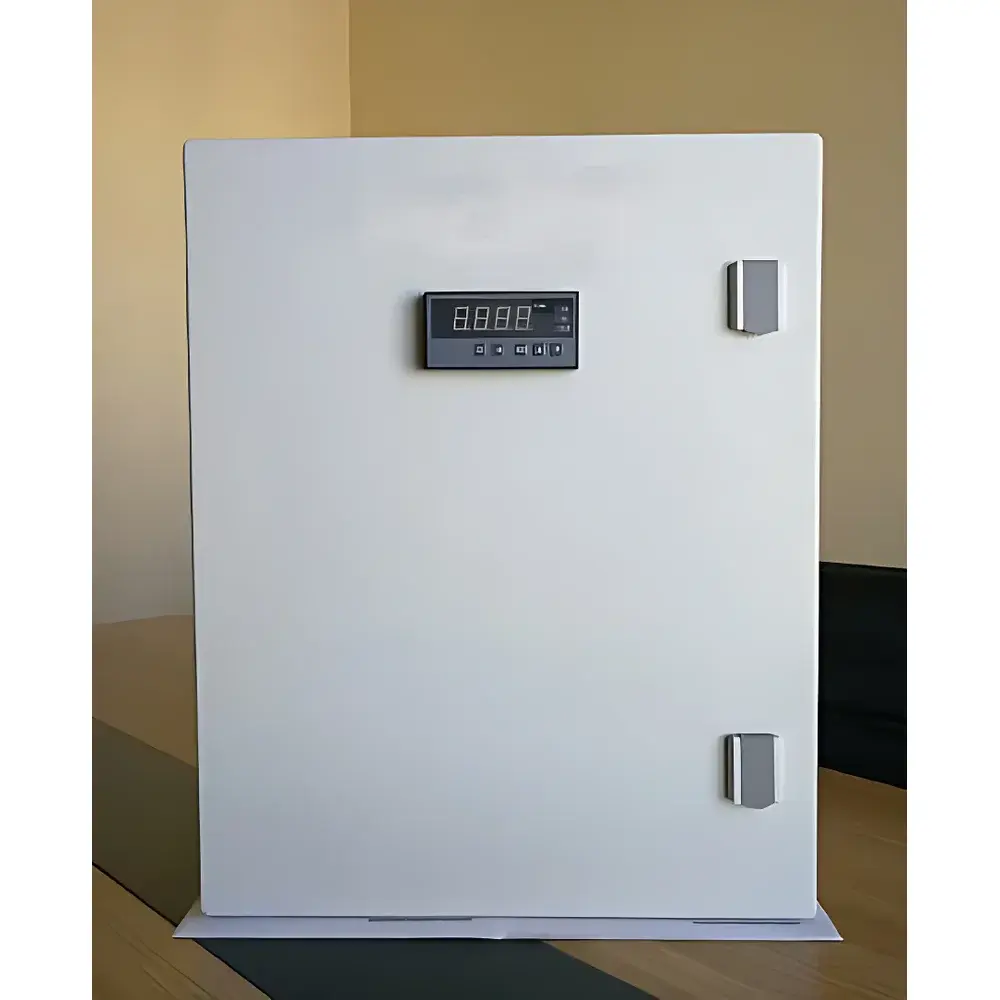
NP330-G Online Dew Point Analyzer
| Origin | Beijing, China |
|---|---|
| Manufacturer Type | Authorized Distributor |
| Origin Category | Domestic (PRC) |
| Model | NP330-G |
| Price Range | USD 7,000–14,000 |
| Product Type | Online Dew Point Analyzer |
| Measurement Principle | Aluminum Oxide (Al₂O₃) Capacitive Sensor |
| Operating Temperature | −20 °C to +60 °C |
| Accuracy | ±2 °C |
| Repeatability | ±0.5 °C |
| Dew Point Range (Standard) | −80 °C to +20 °C |
| Optional Range | −100 °C to +20 °C |
| Sample Gas Temperature Limit | ≤ +60 °C |
| Pressure Rating | Up to 300 bar |
| Recommended Flow Rate | 1–5 L/min |
| Power Supply | 18–28 VDC, max. 70 mA |
| Enclosure Rating | IP65 |
| Filter | 80 µm Stainless Steel Sintered |
| Sensor Thread | G1/2″, Insertion Depth: 50 mm |
| Calibration Interval | Annual |
| Sensor Dimensions | Ø60 mm × 115 mm (height), Total Length: 176 mm |
| Weight | ~450 g |
| Transmitter Housing | 96 mm (W) × 48 mm (H) × 112 mm (L), Horizontal Panel Mount |
| Display | Red LED |
| Analog Input/Output | 4–20 mA (isolated) |
| Loop Power | 24 VDC |
| Main Enclosure | 400 mm (W) × 500 mm (H) × 250 mm (D), Carbon Steel with Powder Coating, Lockable Door |
Overview
The NP330-G Online Dew Point Analyzer is an industrial-grade, continuous-process moisture monitoring instrument engineered for high-reliability operation in demanding gas quality control applications. It employs a robust aluminum oxide (Al₂O₃) capacitive sensor—widely recognized for its long-term stability, resistance to condensation, and immunity to most non-corrosive process gases. Unlike chilled-mirror or tunable diode laser (TDL) technologies, the Al₂O₃ sensor operates on dielectric constant variation induced by water vapor adsorption, enabling direct measurement of dew point temperature without phase change or optical path interference. The analyzer is designed for permanent installation in pressurized gas streams up to 300 bar, supporting real-time moisture surveillance in critical infrastructure including air separation units (ASUs), natural gas dehydration skids, pharmaceutical nitrogen purge systems, semiconductor fab bulk gas delivery networks, and HVAC commissioning protocols.
Key Features
- High-stability Al₂O₃ ceramic capacitive sensing element with integrated temperature compensation for accurate dew point calculation across wide thermal gradients
- Extended operational range: standard −80 °C to +20 °C dew point; optional −100 °C to +20 °C configuration for ultra-dry applications (e.g., electronic-grade N₂ or Ar)
- Full-pressure-rated probe assembly compatible with static pressures up to 300 bar—no external pressure reduction required
- IP65-rated transmitter housing with red LED display, supporting local readout and 4–20 mA analog output with galvanic isolation
- Stainless steel sintered filter (80 µm pore size) protecting the sensing surface from particulate contamination in dirty gas streams
- G1/2″ threaded probe interface with 50 mm insertion depth—compatible with standard process tees and flange adapters; optional mounting adapters available
- Low-power electronics (18–28 VDC, <70 mA) suitable for integration into distributed control systems (DCS) or PLC-based monitoring architectures
Sample Compatibility & Compliance
The NP330-G is validated for use with dry air, nitrogen, argon, oxygen, hydrogen, helium, carbon dioxide, and hydrocarbon gases—including natural gas and refinery off-gas—provided they are non-corrosive and free of aggressive acidic components (e.g., H₂S, SO₂, HF, Cl₂). It complies with IEC 61000-6-2 (EMC immunity) and IEC 61000-6-4 (EMC emissions) standards. While not intrinsically safe certified, the analyzer may be deployed in Zone 2/Class I Div 2 environments when installed with appropriate barrier systems. Its measurement performance aligns with ISO 8573-1:2010 Class 2–4 compressed air purity specifications and supports adherence to ASTM D6304 (moisture in petroleum products) and USP (water content in pharmaceutical gases) verification workflows. Annual calibration traceable to NIST or equivalent national metrology institutes is recommended to maintain measurement integrity under GLP/GMP audit conditions.
Software & Data Management
The NP330-G operates as a standalone analog transmitter with no embedded firmware or digital communication protocol (e.g., Modbus, HART). All configuration—including zero/span adjustment, damping factor selection, and unit switching (°C/°F)—is performed via front-panel push buttons and LED menu navigation. The 4–20 mA output is linearly scaled to the full dew point range and may be interfaced directly with SCADA systems, data loggers, or alarm relays. For regulatory compliance in validated environments, users are advised to implement external audit trails using third-party historian software that captures timestamped analog input values, calibration records, and maintenance logs per FDA 21 CFR Part 11 requirements. No proprietary software or cloud connectivity is included or required.
Applications
- Air separation plants: monitoring dew point in liquid oxygen/nitrogen storage and transfer lines to prevent ice formation in cryogenic valves
- Natural gas transmission: verifying dehydration efficiency downstream of glycol contactors or molecular sieve dryers
- Pharmaceutical manufacturing: ensuring <−40 °C dew point in cleanroom nitrogen blankets and lyophilizer purge gas supply
- Semiconductor fabrication: validating ultra-high-purity (UHP) bulk gases prior to tool manifold distribution
- Automotive fuel cell testing: controlling humidity in hydrogen feed streams to avoid PEM membrane degradation
- HVAC system commissioning: verifying desiccant wheel performance and duct moisture carryover in hospital and lab ventilation systems
FAQ
Does the NP330-G require periodic sensor replacement?
No—Al₂O₃ sensors exhibit typical service lifetimes exceeding five years under normal operating conditions. However, exposure to silicone vapors, oil aerosols, or acid gases accelerates drift and necessitates earlier recalibration or sensor exchange.
Can it measure dew point in compressed air at 7 bar without pressure compensation?
Yes—the instrument’s internal algorithm applies real-time pressure compensation using the user-configured line pressure value, ensuring accuracy across variable operating pressures within its 300 bar rating.
Is the 4–20 mA output isolated and configurable?
Yes—the analog output is fully isolated and factory-scaled to the selected dew point range. Span and zero points may be adjusted manually using the front-panel interface.
What is the minimum required sample flow rate for stable readings?
A laminar flow of 1–5 L/min ensures adequate sensor surface renewal while minimizing pressure drop; lower flows increase response time but do not compromise accuracy if dwell time exceeds 30 seconds.
How often should field calibration be performed?
Annual calibration against a certified reference dew point standard (e.g., chilled mirror hygrometer) is recommended. More frequent checks are advised in high-risk or regulated processes subject to FDA, EMA, or ISO 13485 audits.
Related Products






