
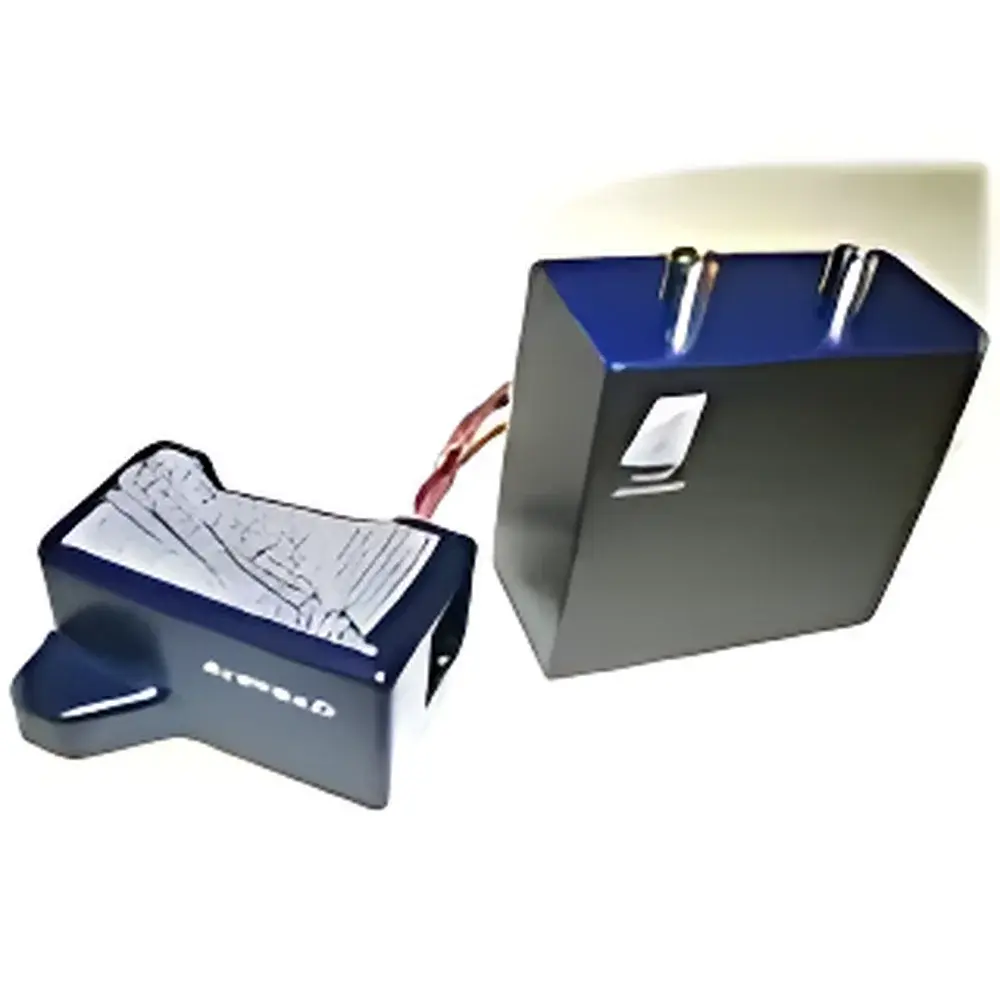
AIRTRAC 1064 nm Ultra-Compact DPSS Laser
| Origin | Imported |
|---|---|
| Manufacturer Type | Distributor |
| Core Technology | Solid-State DPSS Laser |
| Model | AIRTRAC |
| Pulse Energy | 50 mJ |
| Pulse Width | 6 ns |
| Repetition Rate | 20–30 Hz |
| Beam Divergence | 250 µrad |
| Cooling Method | Conduction |
| Operating Temperature | −40 to +70 °C |
| Dimensions | 72.8 × 56.6 × 36.4 mm |
| Weight | 0.2 kg |
| Input Voltage | 18–28 VDC |
| Max Input Power | <50 W |
| Control Interface | RS-422/485 or TTL |
| Trigger Mode | Internal/External |
| Q-Switch Control | TTL |
| Diode Current Control | 0–2 VDC analog or potentiometer |
Overview
The AIRTRAC 1064 nm Ultra-Compact DPSS Laser is a rigorously engineered, conduction-cooled, diode-pumped solid-state (DPSS) laser system designed for integration into size-, weight-, and power-constrained (SWaP-C) platforms. Operating at the fundamental Nd:YAG wavelength of 1064 nm, it delivers high-peak-power nanosecond pulses via intracavity Q-switching—enabling precise time-of-flight (ToF) measurements, coherent detection, and nonlinear optical excitation. Its monolithic cavity architecture minimizes alignment sensitivity and enhances long-term stability under thermal and mechanical stress. Engineered for field-deployable operation, the laser meets MIL-STD-810G environmental requirements for shock, vibration, and wide-temperature operation (−40 to +70 °C), making it suitable for airborne, UAV-mounted, and handheld LIDAR systems, as well as embedded industrial metrology modules.
Key Features
- Ultra-compact form factor (72.8 × 56.6 × 36.4 mm) with sub-200 g mass—optimized for SWaP-C-sensitive integrations
- Stable 1064 nm output with near-diffraction-limited beam quality (M² < 1.3 typical) and low divergence (250 µrad full angle)
- Q-switched pulse generation with consistent 6 ns FWHM width and 50 mJ pulse energy at 20–30 Hz repetition rate
- Conduction-based thermal management eliminates moving parts—no fans, no liquid cooling, no maintenance
- Fully COTS-based drive electronics with dual-control architecture: internal timing logic and external trigger synchronization via RS-422/485 or TTL
- Flexible diode current control: analog 0–2 VDC input or onboard potentiometer for fine-tuning pump intensity and pulse energy stability
- Comprehensive safety interlock interface (dry contact closure) compliant with IEC 60825-1 Class 4 laser safety requirements
Sample Compatibility & Compliance
The AIRTRAC laser is compatible with standard optical breadboards, kinematic mounts (e.g., Thorlabs KM100 series), and OEM integration frames using M2.5 or #2-56 threaded holes. Its hermetically sealed cavity and conformal-coated PCBs ensure resistance to humidity (up to 95% RH non-condensing) and particulate ingress (IP52 equivalent). The system complies with CE marking directives (2014/30/EU EMC, 2014/35/EU LVD), RoHS 2015/863/EU, and laser safety standards IEC 60825-1:2014 (Class 4). Firmware supports audit-ready operational logging for GLP/GMP-aligned development workflows, and all control signals—including enable, trigger, interlock, and Q-switch firing—are electrically isolated to meet IEC 61000-6-2 immunity requirements.
Software & Data Management
The AIRTRAC laser operates without proprietary host software; all functions are accessible via hardware-level digital and analog interfaces. RS-422/485 communication enables daisy-chained multi-unit synchronization with microsecond-level timing resolution and built-in CRC error checking. TTL-triggered operation supports deterministic jitter < 5 ns (RMS) between trigger edge and Q-switch firing. For automated test environments, the device supports SCPI-like command framing over serial (baud rate configurable up to 115.2 kbps) and exposes real-time status registers (laser health, temperature, interlock state, pulse count). All configuration parameters—including repetition rate setpoint, diode current limit, and trigger delay offset—are stored in non-volatile memory and survive power cycling. No drivers or SDKs are required for integration with LabVIEW, Python (pySerial), or MATLAB instrument control toolboxes.
Applications
- LIDAR subsystems for autonomous navigation, terrain mapping, and atmospheric aerosol profiling
- Pulsed infrared illumination for gated imaging and active night vision systems
- Laser-induced breakdown spectroscopy (LIBS) in portable elemental analyzers
- Time-resolved fluorescence lifetime measurement (FLIM) and phosphorescence decay analysis
- Nonlinear frequency conversion pumping (e.g., OPOs, SHG crystals) for tunable mid-IR sources
- Industrial laser marking and micromachining where compactness and reliability outweigh ultra-high rep-rate needs
- Calibration reference sources for photodetector linearity testing and pulse energy meter validation
FAQ
What is the maximum allowable ambient temperature during continuous operation?
The laser is rated for continuous operation from −40 °C to +70 °C ambient, provided mounting surface thermal resistance remains ≤ 0.5 K/W and case temperature does not exceed +85 °C.
Can the pulse repetition rate be adjusted in real time during operation?
Yes—repetition rate is programmable from 20 Hz to 30 Hz in 1 Hz increments via RS-422/485 command or by analog voltage scaling on dedicated control pins.
Is the laser compliant with FDA 21 CFR Part 11 for regulated analytical instrumentation?
While the laser itself is not a standalone medical device, its firmware supports timestamped, immutable event logging (enable, trigger, fault) and user-accessible audit trails—enabling system-level Part 11 compliance when integrated into validated instruments.
Does the unit include beam collimation optics?
Yes—a fixed-focus aspheric collimator is factory-aligned and permanently mounted; beam diameter at aperture is 2.1 mm (1/e²), with divergence specified at 250 µrad.
What is the expected lifetime of the pump diode under nominal operating conditions?
Based on accelerated life testing per Telcordia GR-468-CORE, the pump diode exhibits >10,000 hours MTTF at 25 °C case temperature and 70% of max rated current.





