
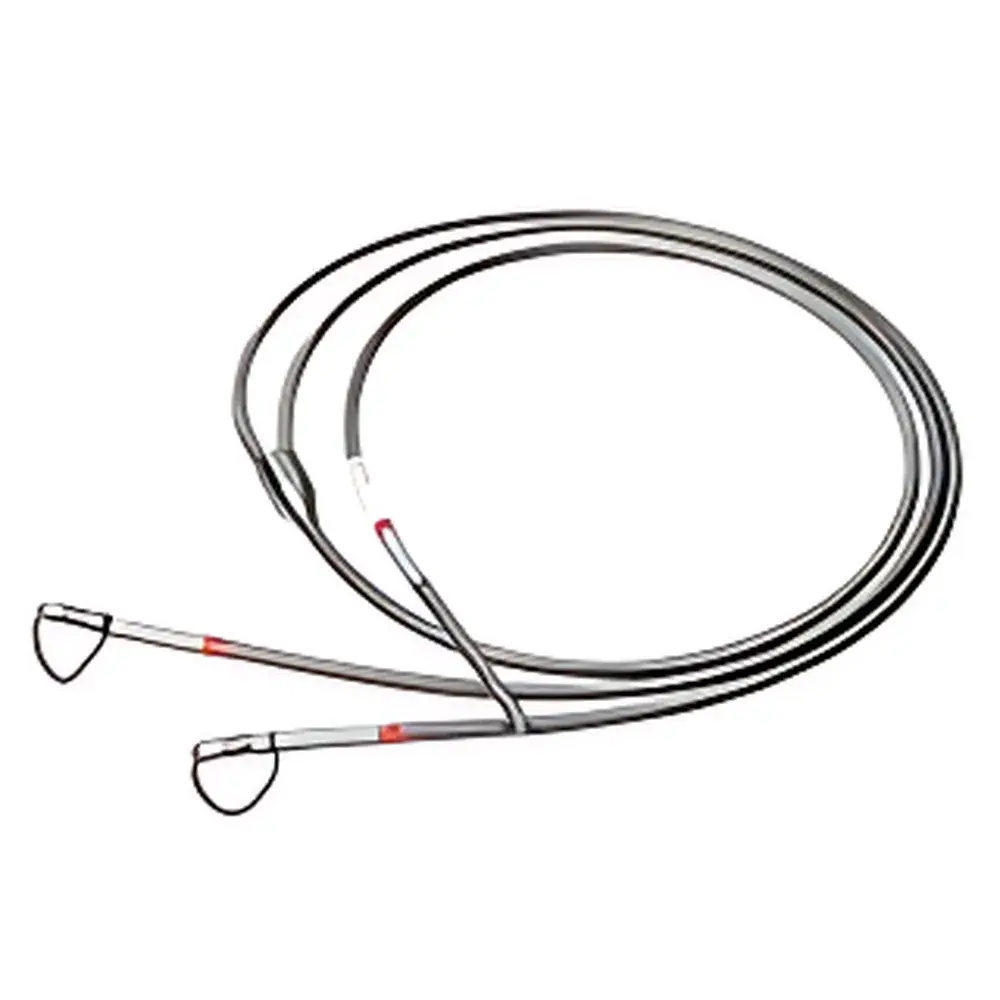
NewOpto NR-Series 7-Fiber Reflectance Probes
| Brand | NewOpto |
|---|---|
| Origin | Zhejiang, China |
| Model | NR-Series Reflectance Probe |
| Wavelength Ranges | 190–2200 nm (model-dependent) |
| Core Diameters | 200 µm, 400 µm, or 600 µm |
| Fiber Configuration | 6 illumination fibers + 1 collection fiber |
| Connector Types | SMA 905 (standard), customizable |
| Housing Material | Stainless steel or anodized aluminum |
| Operating Temperature | −10 °C to +60 °C |
| IP Rating | IP54 (standard), optional IP67 |
Overview
NewOpto NR-Series 7-fiber reflectance probes are engineered for robust, reproducible optical reflectance measurements in laboratory, industrial, and field-deployable spectroscopic systems. Based on the principle of diffuse and specular reflectance spectroscopy, these probes deliver high signal-to-noise ratio (SNR) performance by spatially separating illumination and collection pathways—six symmetrically arranged illumination fibers surround a central collection fiber, minimizing back-reflection interference and enhancing measurement stability. Designed for seamless integration with modular spectrometers and broadband light sources, the NR-Series supports quantitative and qualitative analysis across UV-Vis-NIR spectral domains, enabling applications such as colorimetry, thin-film thickness estimation, pharmaceutical tablet coating uniformity assessment, and real-time process monitoring in chemical synthesis or food processing lines.
Key Features
- Modular 7-fiber architecture: six identical illumination fibers concentrically arrayed around one dedicated collection fiber—optimized for consistent probe-to-sample geometry and reduced angular dependency.
- Multiple spectral range options: UV-enhanced (190–1100 nm), VIS-extended (300–1400 nm), NIR-optimized (400–2200 nm), and broadband (280–2100 nm) configurations ensure compatibility with diverse detector and source combinations.
- Three core diameter variants (200 µm, 400 µm, 600 µm): selected based on required radiant throughput, spatial resolution, and coupling efficiency with specific spectrometer slit or entrance optics.
- Standard SMA 905 connectors with precision ferrule alignment; optional FC/PC, ST, or custom terminations available for OEM integration.
- Ruggedized housings: stainless steel (for high-temperature or corrosive environments) or black anodized aluminum (for lightweight portability); all models feature strain-relieved cable exits and laser-etched serial numbering for traceability.
- Thermal and mechanical stability: calibrated for operation between −10 °C and +60 °C; tested per IEC 60068-2 environmental stress protocols.
Sample Compatibility & Compliance
The NR-Series probes are compatible with solid, semi-solid, and liquid samples—provided surface roughness, reflectivity, and transparency fall within standard diffuse reflectance assumptions. Flat, curved, or irregular surfaces can be measured using optional standoff fixtures or contact caps (e.g., quartz window, PTFE diffuser, or sapphire tip). For regulated environments, probe assemblies support documentation under GLP and GMP frameworks: batch-specific calibration reports, material certifications (RoHS, REACH), and optional traceable NIST-traceable reflectance standards (e.g., Spectralon® 99% reflector) are available upon request. While the probes themselves are not standalone analytical instruments, their design aligns with ASTM E308 (computing CIE tristimulus values), ISO 13655 (spectral measurement geometry), and USP (near-infrared spectroscopy for pharmaceuticals).
Software & Data Management
NR-Series probes operate transparently within third-party spectroscopy software platforms—including OceanInsight OceanView, Avantes ASE, Hamamatsu LightMaster, and open-source tools like Python-based PySpectra or MATLAB’s Spectral Toolbox. No proprietary drivers are required; spectral data acquisition follows standard USB/Virtual COM or Ethernet-based communication protocols. All probe variants support time-stamped metadata embedding (wavelength range, core size, connector type) via user-configurable header fields. For audit-ready workflows, integration with LIMS or ELN systems is facilitated through CSV/JSON export, HDF5 binary format, or OPC UA interface adapters—enabling full chain-of-custody tracking compliant with FDA 21 CFR Part 11 when paired with validated spectrometer hardware and electronic signature modules.
Applications
- Pharmaceutical QA/QC: non-destructive verification of tablet coating thickness, blend homogeneity, and API concentration via NIR diffuse reflectance.
- Materials science: characterization of polymer degradation, pigment dispersion, and thin-film interference patterns on coated substrates.
- Agricultural analytics: rapid assessment of grain moisture content, fruit sugar levels (Brix), and leaf chlorophyll index using portable Vis-NIR setups.
- Environmental monitoring: in-situ soil organic carbon estimation and water turbidity screening in field-deployable sensor nodes.
- Industrial process control: closed-loop feedback for paint spray booths, plastic extrusion line color consistency, and semiconductor wafer surface inspection.
FAQ
What is the difference between ‘P’ and ‘M’ suffixes in model numbers?
The ‘P’ designation indicates a probe with polished-end fibers and standard stainless steel housing—optimized for general-purpose reflectance. The ‘M’ variant features metal-coated (aluminized or gold-coated) fiber ends and enhanced NIR reflectivity, recommended for low-light or extended-wavelength (>1600 nm) applications.
Can these probes be used in immersion or underwater environments?
Standard NR-Series probes are rated IP54. For submersion or high-humidity operation, specify IP67-rated versions with hermetically sealed connectors and fluoropolymer jacketed cables.
Is fiber bending radius specified?
Yes—minimum bend radius is 15× outer cable diameter for NR200/NR400 models and 20× for NR600 variants. Exceeding this may induce modal noise or attenuation spikes.
How is probe-to-probe spectral response variation addressed?
Each production batch undergoes spectral flatness verification using a stabilized tungsten-halogen source and reference spectrometer. Full spectral responsivity curves (350–1700 nm) are supplied with calibration-grade units.
Are custom lengths or connector types supported?
Yes—custom cable lengths (0.5 m to 5 m), hybrid fiber types (e.g., UV-grade fused silica + multimode silica), and specialized connectors (FC/APC, angled physical contact) are available under OEM agreements with lead-time adjustment.




