
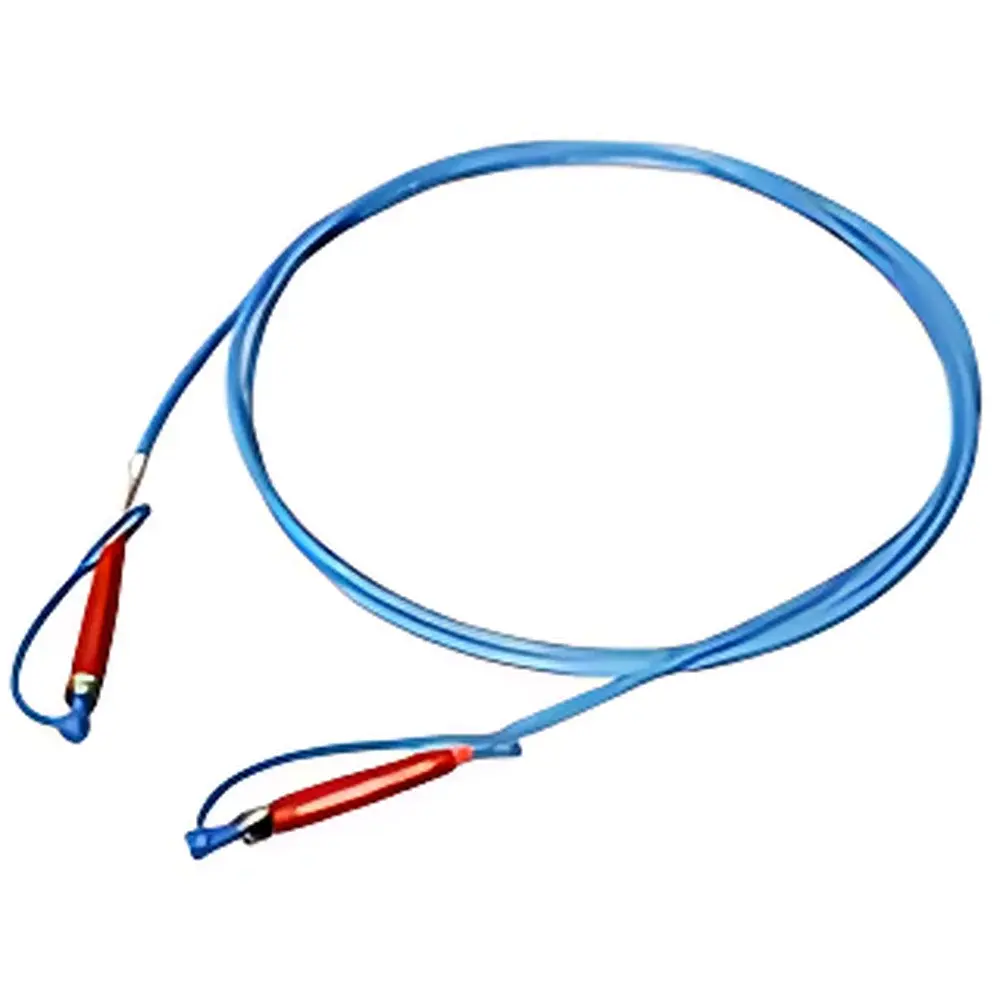
NewOpto UV-Grade Fiber Optic Patch Cord
| Brand | NewOpto |
|---|---|
| Wavelength Range | 200–1100 nm |
| Core Diameter | 200 µm, 400 µm, 600 µm, or 1000 µm |
| Length | 2 m (custom lengths: 0.5 m / 1 m / 2 m) |
| Jacket Material | Plastic or Metal-Braided |
| Connector Type | SMA905 |
| Numerical Aperture | ~0.22 (typical for UV-grade silica fiber) |
| Operating Temperature | −40 °C to +85 °C |
| Compliance | RoHS-compliant construction |
| Fiber Type | High-OH synthetic fused silica (UV-optimized) |
Overview
NewOpto UV-Grade Fiber Optic Patch Cords are precision-engineered optical interconnects designed for demanding spectroscopic, photometric, and analytical applications requiring high transmission efficiency in the deep ultraviolet through near-infrared spectral regions. These patch cords utilize low-OH (for NIR/VIS) or high-OH (for UV-optimized) synthetic fused silica fibers with controlled numerical aperture and minimal solarization-induced attenuation—critical for stable signal delivery in UV resonance Raman, fluorescence excitation, UV-Vis absorption, and plasma diagnostics. Unlike standard telecom-grade fibers, NewOpto’s UV-optimized variants feature enhanced resistance to 254 nm and 193 nm irradiation, mitigating photodarkening effects over extended operational lifetimes. Each cord is terminated with industry-standard SMA905 connectors, polished to sub-50 nm surface roughness and verified via interferometric inspection to ensure repeatable coupling efficiency and low back-reflection (< −40 dB).
Key Features
- UV-extended spectral transmission: 190–1100 nm (NF400-2-SR-M), 200–1100 nm (UV series), 280–2100 nm (broadband variants), and up to 2200 nm (NIR series)
- Multiple core diameters: 200 µm, 400 µm, 600 µm, and 1000 µm — enabling optimization for light throughput (large core) vs. spatial resolution or laser coupling (smaller core)
- Dual jacket options: Flexible polymer jacket (P-type) for benchtop lab use; ruggedized metal-braided armor (M-type) for industrial environments, vibration-prone setups, or OEM integration
- Factory-verified insertion loss: ≤ 2.5 dB per connector pair (at 250 nm for UV-grade; ≤ 1.8 dB at 600 nm for VIS/NIR variants)
- High-power handling capability: Compatible with pulsed and CW sources up to 500 mW average power (dependent on wavelength, core size, and exposure duration)
- Custom configurability: Standard 2 m length; optional 0.5 m and 1 m variants; custom lengths available upon request with ±2 mm tolerance
Sample Compatibility & Compliance
NewOpto fiber patch cords are routinely deployed in ISO/IEC 17025-accredited laboratories for UV-Vis-NIR spectrophotometry (per ASTM E275, ISO 6244), fluorescence quantum yield measurements (USP ), and laser-induced breakdown spectroscopy (LIBS). Their high-purity silica composition meets stringent outgassing requirements for vacuum-compatible optical paths (per ASTM E595). All plastic-jacketed variants comply with RoHS Directive 2011/65/EU and REACH Regulation (EC) No. 1907/2006. Metal-armored versions include nickel-plated brass ferrules and pass salt-spray testing per ASTM B117 (96 h, neutral pH). For regulated pharmaceutical or clinical instrumentation, documentation packages—including material traceability, connector torque validation reports, and spectral transmittance certification—can be supplied under NDA.
Software & Data Management
While inherently passive components, NewOpto patch cords integrate seamlessly into instrument control ecosystems. When used with spectrometers (e.g., Ocean Insight, Avantes, Hamamatsu), they maintain spectral fidelity across calibration cycles—supporting NIST-traceable wavelength and radiometric calibration workflows. For GLP/GMP environments, batch-specific certificates of conformance include spectral transmission curves (200–2200 nm, 1 nm resolution), connector end-face inspection images, and mechanical test records (tensile strength ≥ 50 N, bend radius ≥ 30 mm). Audit-ready digital records align with FDA 21 CFR Part 11 requirements when paired with validated LIMS or ELN platforms.
Applications
- UV resonance Raman spectroscopy of biomolecules and catalysts
- In-line process monitoring of semiconductor etch chambers using VUV emission detection
- Microplate reader illumination and detection optics in HTS assays
- Fiber-coupled LED and laser delivery for photobiomodulation and optogenetics
- Plasma emission analysis in fusion research and industrial plasma torches
- Calibration transfer between reference and field-deployable spectrometers
FAQ
What is the maximum recommended irradiance for continuous UV exposure at 254 nm?
For NF200-2-UV-M cords, the practical limit is 15 mW/mm² at 254 nm for indefinite operation; derating to 5 mW/mm² is advised for >10,000 h service life.
Can these fibers be used in vacuum environments?
Yes—plastic-jacketed versions require pre-baking at 60 °C for 24 h; metal-armored variants are vacuum-ready as shipped (outgassing rate <1×10⁻⁶ g/(cm²·s)).
Do you provide spectral transmission data for each individual cord?
Batch-level spectral characterization is standard; unit-level data is available as an optional add-on with full QC documentation.
Is there a difference in NA between plastic and metal-jacketed versions?
No—the numerical aperture is determined solely by the fiber’s core/clad structure; jacket type affects only mechanical robustness and EMI shielding.
Are FC or ST connectors available for these UV-grade cords?
SMA905 is standard; FC/PC and ST/PC terminations are available on request with minimum order quantity of 10 units per configuration.




