
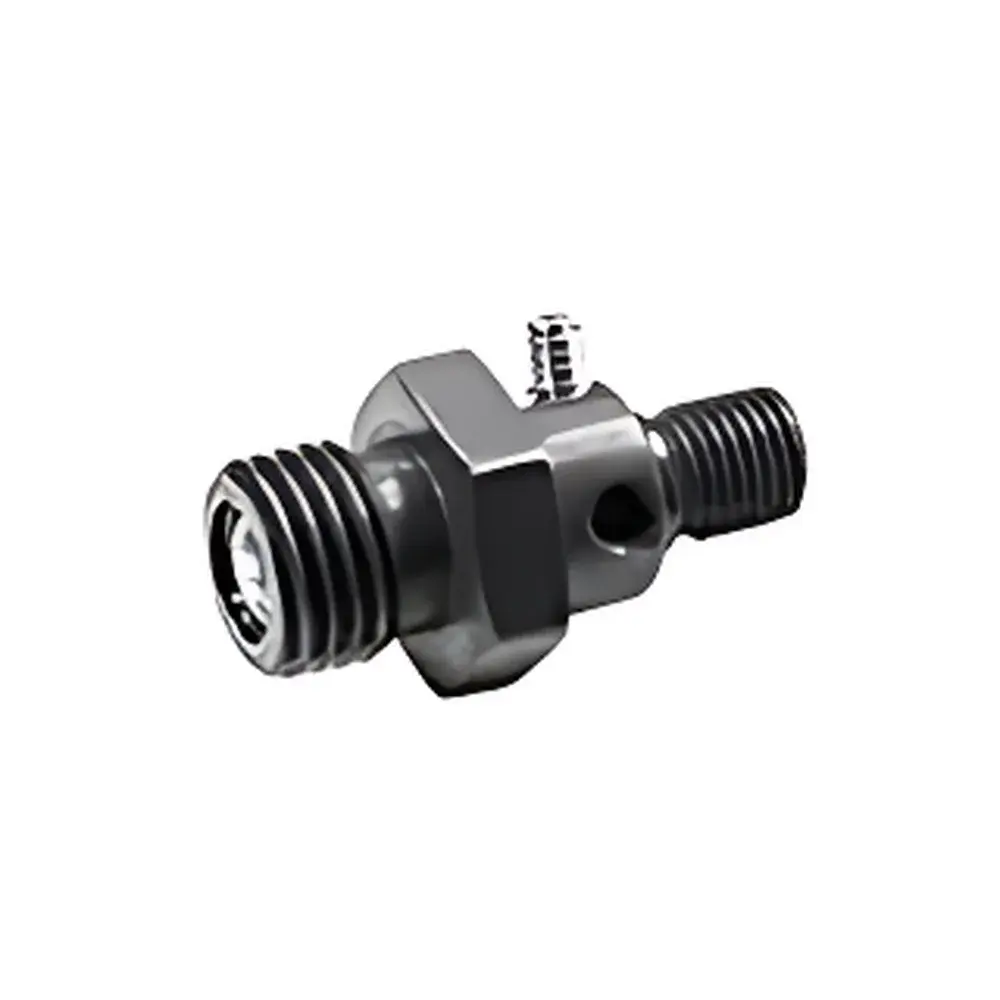
Newport 74-UV Series UV-VIS-NIR Collimating Lens (200–2000 nm)
| Brand | Ocean Optics |
|---|---|
| Model | newopto |
| Material | Fused Silica (Dynasil) / BK7 / BaF10+FD10 |
| Spectral Range | 200–2000 nm |
| Beam Divergence | ≤2° |
| Focal Length Options | 10 mm, 30 mm, 100 mm |
| Diameter Options | 5 mm, 25.4 mm, 30 mm |
| f-number | f/2 |
| Operating Temperature | Up to 200°C |
| Connector | SMA905 with 6.35 mm ferrule and 3/8-24 external thread (variant-specific) |
| Compliance | RoHS-compliant optical assembly |
| Mounting Interface | Standardized 3/8-24 or 1/4-36 external/internal threads |
Overview
The Newport 74-UV Series UV-VIS-NIR Collimating Lens is a precision-engineered optical component designed for broadband collimation and focusing of light delivered via optical fiber in demanding spectroscopic, metrological, and laser-based applications. Engineered using high-purity fused silica (Dynasil or Suprasil), BK7, or specialized fluoride-glass composites (BaF10/FD10), these lenses maintain exceptional transmission and wavefront fidelity across an ultra-broad spectral range—from deep ultraviolet (200 nm) through visible to near-infrared (2000 nm). The f/2 design enables high numerical aperture performance while minimizing spherical aberration; each lens is optimized for use with standard 6.35 mm ferrule fibers terminated with SMA905 connectors. Beam divergence after collimation is rigorously controlled to ≤2°, ensuring spatial coherence suitable for interferometric alignment, spectrometer input coupling, and free-space beam delivery in OEM instrumentation.
Key Features
- Ultra-broadband transmission: validated from 200 nm to 2000 nm—covering UV-C, UV-B, visible, and NIR-I bands without coating-induced artifacts
- Fused silica variants (Dynasil, Suprasil) offer superior UV transparency, low thermal expansion (<5.5 × 10⁻⁶ /°C), and resistance to solarization under prolonged 200–250 nm exposure
- Thermally stable mechanical housing with standardized 3/8-24 or 1/4-36 external/internal threading for repeatable integration into kinematic mounts and optomechanical breadboards
- Consistent f/2 geometry ensures predictable spot size and depth-of-field behavior across all focal lengths (10 mm, 30 mm, 100 mm)
- Factory-aligned and tested with NIST-traceable interferometry to verify wavefront error < λ/4 @ 633 nm (RMS)
- RoHS-compliant construction with no leaded glass or hazardous outgassing materials—suitable for cleanroom and vacuum-compatible environments (up to 10⁻⁶ Torr, per material certification)
Sample Compatibility & Compliance
This collimator series is compatible with multimode and single-mode silica fibers (core diameters 50–400 µm) terminated with SMA905 connectors and 6.35 mm stainless steel ferrules. It supports both FC/PC and custom-polished fiber endfaces, provided surface quality meets λ/10 scratch-dig specification. All fused silica variants comply with ASTM F795-22 (Standard Specification for Optical Fused Silica) and ISO 10110-3:2019 (Surface imperfections). Thermal operating ranges are validated per MIL-STD-810G Method 502.6 (temperature shock) and IEC 60068-2-14 (cyclic temperature testing). No active cooling or humidity control is required for operation within specified ambient conditions (−40°C to +200°C, depending on model).
Software & Data Management
As a passive optical component, the 74-UV Series requires no firmware, drivers, or embedded software. However, it is fully interoperable with industry-standard optical design and simulation platforms—including Zemax OpticStudio (non-sequential mode), CODE V, and FRED—for ray tracing, tolerance analysis, and system-level throughput modeling. Calibration reports—including measured transmission spectra (200–2000 nm, ±0.5 nm resolution), focal length verification (±0.15%), and divergence profiles—are supplied in CSV and PDF formats compliant with ISO/IEC 17025:2017 documentation requirements. Traceability to NIST SRM 2036 (fused silica refractive index) is included for metrology-grade deployments.
Applications
- Input coupling into UV-Vis-NIR spectrometers (e.g., Ocean Insight QE Pro, Avantes AvaSpec) requiring low-stray-light, high-throughput illumination paths
- Free-space beam conditioning in time-resolved fluorescence setups, where dispersion control and pulse preservation are critical
- OEM integration into gas-phase absorption cells (e.g., TDLAS systems operating at 1300–1600 nm or 185–220 nm ozone monitoring)
- Calibration reference optics for radiometric and photometric transfer standards (per CIE S 025/E:2015)
- Alignment aids in ultrafast laser laboratories using Ti:sapphire or OPA sources spanning 200–2000 nm
- Environmental monitoring sensors deployed in field-deployable UV-LED-based water quality analyzers (e.g., nitrate, TOC detection)
FAQ
What spectral range is guaranteed for the fused silica (Dynasil) variant?
The 74-UV and 74-DA models deliver ≥85% average transmission from 200 nm to 2000 nm, with verified cutoff at 195 nm (10% transmission point) and >92% transmission at 1064 nm.
Can this lens be used with polarization-maintaining (PM) fiber?
Yes—provided the PM fiber’s stress rods are aligned to the lens’s mechanical axis during mounting; angular misalignment beyond ±0.5° degrades extinction ratio by >15 dB.
Is vacuum compatibility validated for any model?
The COL-UV-30 (Suprasil) variant has been tested to 10⁻⁶ Torr at 25°C for 72 hours with <1×10⁻⁹ g/s total mass loss (per ASTM E595), making it suitable for UHV spectroscopy chambers.
Do you provide custom AR coatings?
Standard units are uncoated; however, optional dual-band MgF₂ + Ta₂O₅ multilayer coatings (200–400 nm & 700–1100 nm) are available upon request with full spectral reflectance data.
How is focal length tolerance verified?
Each lens undergoes collimation testing using a HeNe laser (632.8 nm) and a calibrated beam profiler (Thorlabs BP109-IR); focal length is reported with ±0.15% uncertainty (k=2).





