
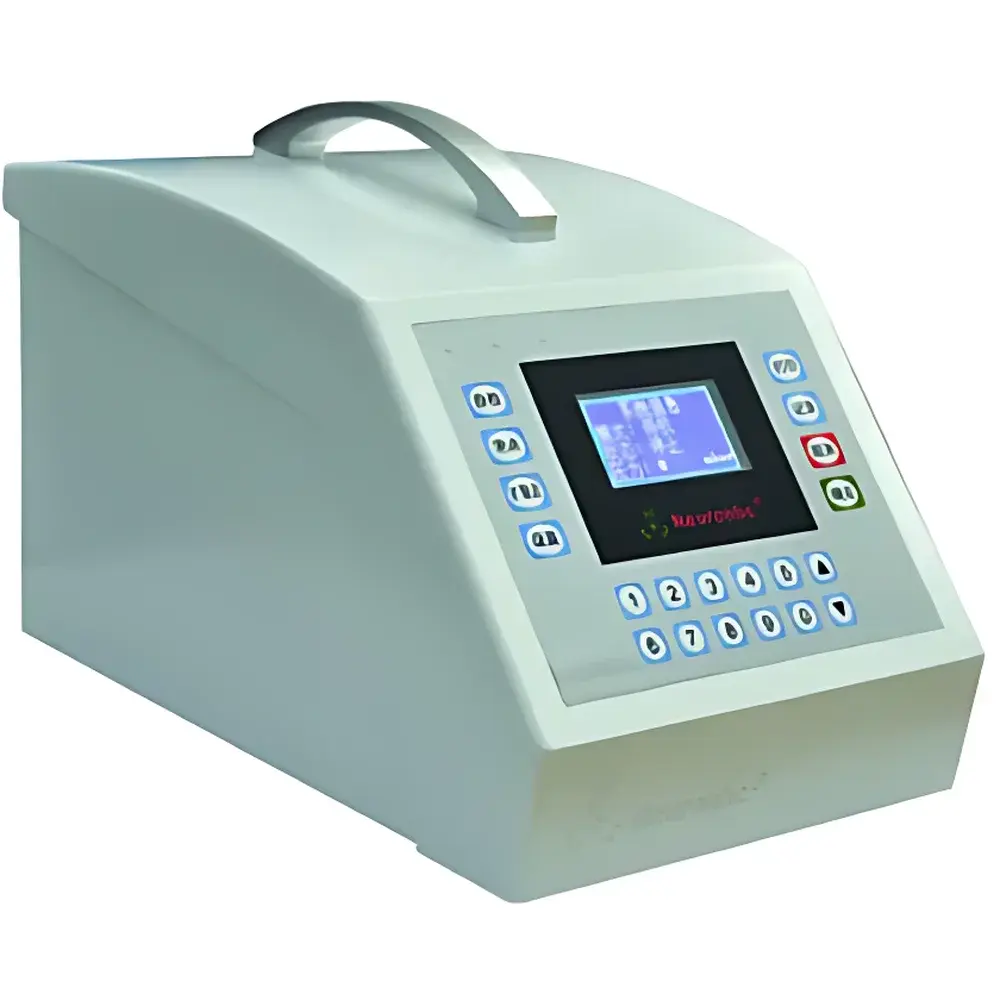
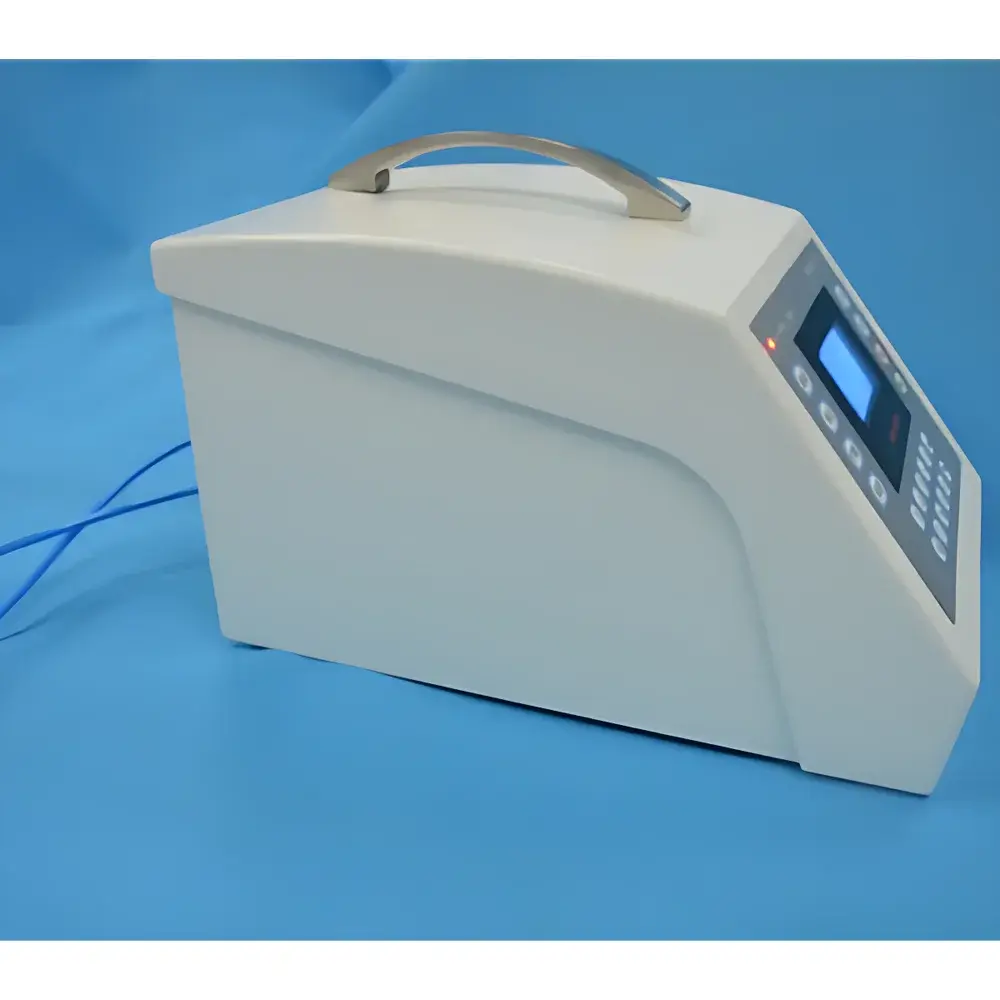
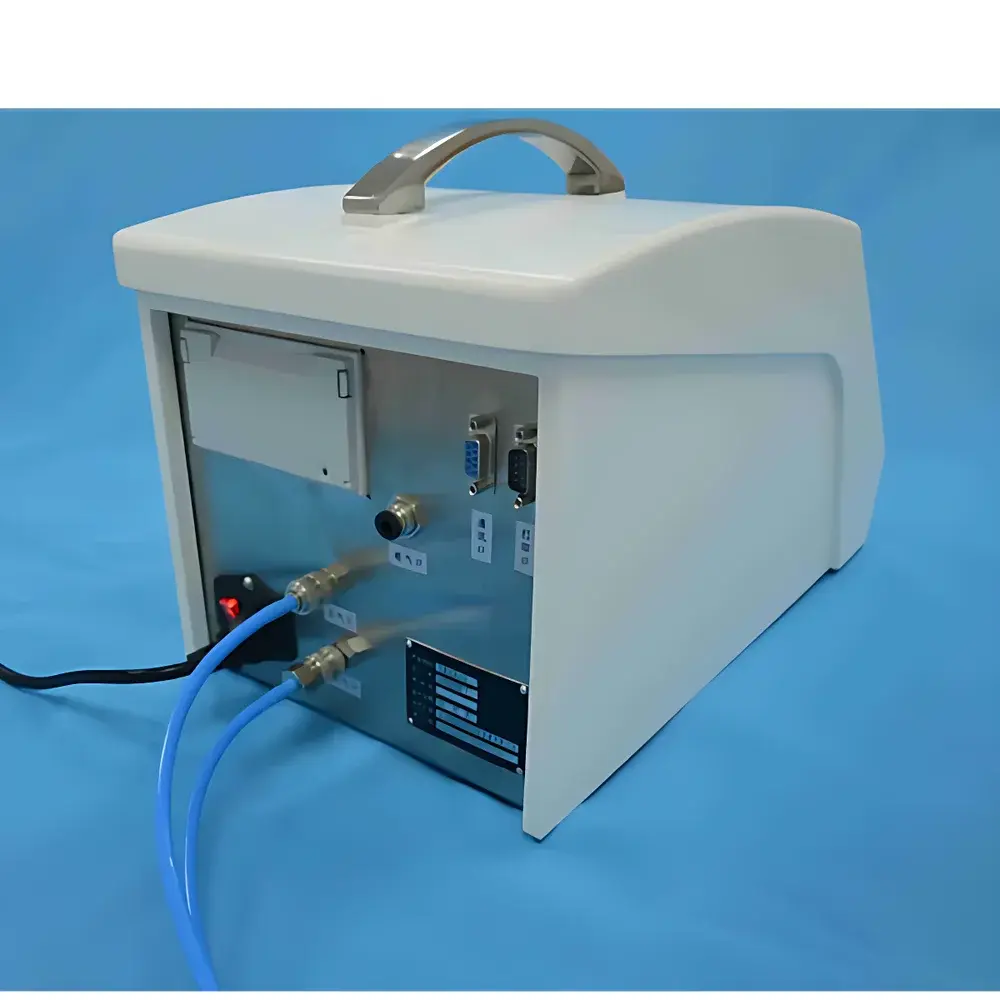
NeuronBC Integtest™ V1.1 Automated Filter Integrity Tester
| Brand | NeuronBC |
|---|---|
| Origin | Beijing, China |
| Manufacturer Type | Authorized Distributor |
| Country of Origin | China |
| Model | V1.1 |
| Power Supply | 100–240 V AC, 50/60 Hz, 100 W |
| Operating Pressure Range | 500–6900 mbar |
| Minimum Inlet Pressure | 3000 mbar |
| Pressure Sensitivity | ±1.0 mbar |
| Bubble Point Accuracy | ±75 mbar |
| Dimensions (W×D×H₁×H₂) | 400 × 380 × 100 × 235 mm |
| Display | 73 × 39 mm monochrome LCD |
| Ambient Operating Conditions | 5–35 °C, 10–80% RH |
| Test Duration (Rapid Bubble Point) | 9 ± 2 min |
| Test Duration (Bubble Point Scan) | 20 ± 2 min |
| Data Storage | 20 test records |
| Print Output | Integrated thermal printer (English language support) |
| Compliance | Designed to meet USP <1207>, ASTM F838-22, ISO 13408-2, and FDA 21 CFR Part 11 requirements for audit trail and electronic record integrity |
Overview
The NeuronBC Integtest™ V1.1 Automated Filter Integrity Tester is a precision-engineered instrument designed for quantitative validation of membrane filter and cartridge integrity in regulated pharmaceutical, biotechnology, and medical device manufacturing environments. It operates on two internationally recognized physical principles: the bubble point test—based on capillary flow theory where gas displaces liquid from the largest pores at a defined pressure—and the pressure hold (diffusion) test, which quantifies gas diffusion through wetted membranes under constant pressure over time. These methods are fully aligned with compendial standards including USP , ISO 13408-2, and ASTM F838-22, and support compliance with FDA 21 CFR Part 11 for electronic records and signatures when configured with audit-trail-enabled software. The system is engineered for integration into both offline QC laboratories and online process lines, enabling non-invasive testing without compromising downstream sterility.
Key Features
- Fully automated microprocessor-controlled operation with pre-programmed test sequences for bubble point scanning, rapid bubble point detection, and pressure hold testing
- Integrated self-diagnostic function that verifies pneumatic circuit integrity, detects leaks in test fixtures, and flags operator errors prior to test initiation
- Real-time pressure monitoring with high-resolution transducers calibrated to ±1.0 mbar sensitivity and ±75 mbar bubble point repeatability
- Modular test fixture compatibility supporting single- and multi-cartridge configurations (1–15 cores), capsule filters, mini-cartridges, disc membranes (Φ25–Φ300 mm), and vent filters
- Thermal printer with English-language output providing traceable hardcopy reports including test parameters, pass/fail status, timestamp, operator ID, and raw pressure vs. time data
- Onboard memory storing up to 20 complete test records with metadata (date, time, test type, pressure profile, result)
Sample Compatibility & Compliance
The Integtest™ V1.1 accommodates a broad range of filtration assemblies used across upstream and downstream processing. It validates standard pleated cartridges (2.5″–40″), capsule filters, disc membranes, and air/gas vent filters—including tank air breathers and point-of-use water filters. All test methodologies adhere to regulatory expectations for filter qualification per ICH Q5A(R2), EU Annex 1, and WHO Technical Report Series No. 970. The instrument’s pressure control architecture meets ISO 9001-certified calibration traceability requirements, and its firmware supports configuration for 21 CFR Part 11-compliant environments when paired with validated LIMS or MES integration protocols. Documentation packages include IQ/OQ templates, calibration certificates, and risk-based validation support files.
Software & Data Management
While the V1.1 operates as a standalone unit with embedded firmware, its data architecture supports interoperability with enterprise systems via RS-232 serial interface. Raw test logs export in ASCII format for import into laboratory information management systems (LIMS) or electronic batch records (EBR). The thermal printout serves as a compliant primary record per ALCOA+ principles (Attributable, Legible, Contemporaneous, Original, Accurate). Optional PC-based software (sold separately) enables extended data visualization, trend analysis, user access control, and full 21 CFR Part 11 audit trail functionality—including electronic signatures, change history, and secure log-in authentication. Firmware updates are delivered via USB and include version-controlled release notes aligned with GxP change control practices.
Applications
- Integrity verification of sterilizing-grade hydrophilic and hydrophobic membrane filters used in parenteral drug manufacturing
- Pre- and post-use testing of air filters in bioreactor and cleanroom HVAC systems
- Validation of final-fill line sterilizing filters and buffer filtration trains
- Testing of purified water and WFI distribution system vent filters
- Qualification of single-use bioprocessing assemblies containing integrated filters
- Supporting filter lifecycle management per ISO 13408-2 Annex C and PDA TR26
FAQ
Does the Integtest™ V1.1 comply with FDA 21 CFR Part 11?
Yes—when operated with optional validated software and appropriate procedural controls (e.g., user authentication, audit trail activation, electronic signature workflows), it satisfies electronic record and signature requirements for GMP environments.
Can it test hydrophobic filters such as PTFE vent filters?
Yes—the instrument supports both aqueous and alcohol-based wetting agents (e.g., isopropanol/water mixtures) required for hydrophobic membrane conditioning prior to bubble point or diffusion testing.
Is external calibration required annually?
NeuronBC provides factory calibration with NIST-traceable documentation. Annual recalibration is recommended per ISO/IEC 17025 and internal quality procedures; on-site service or return-to-factory options are available.
What maintenance is needed for long-term reliability?
Routine inspection of O-rings, filter housings, and pressure tubing is advised. The system contains no consumable sensors; transducers are solid-state and rated for >100,000 test cycles under normal operating conditions.
How is data integrity ensured during power interruption?
All active tests automatically suspend and retain state upon power loss. Upon restoration, the system resumes from the last stable checkpoint or prompts manual confirmation before continuing—preventing corrupted or incomplete records.





