
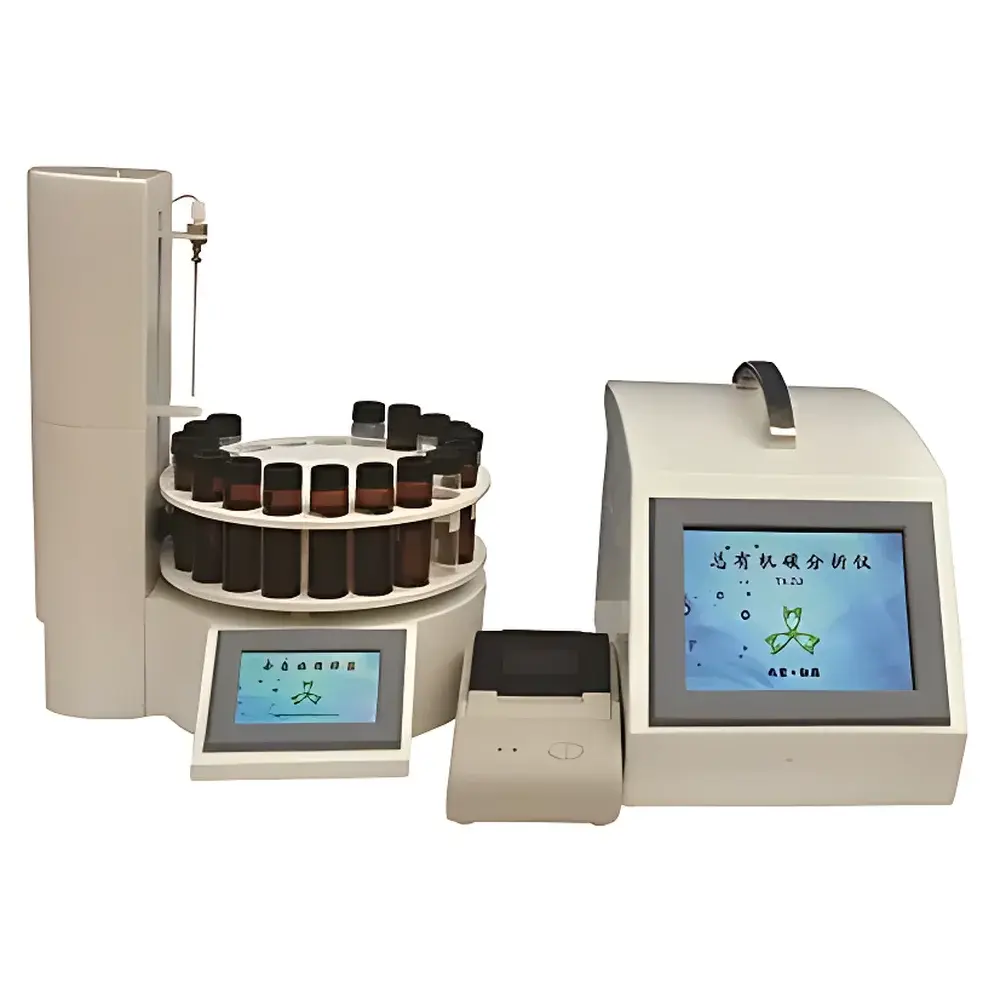
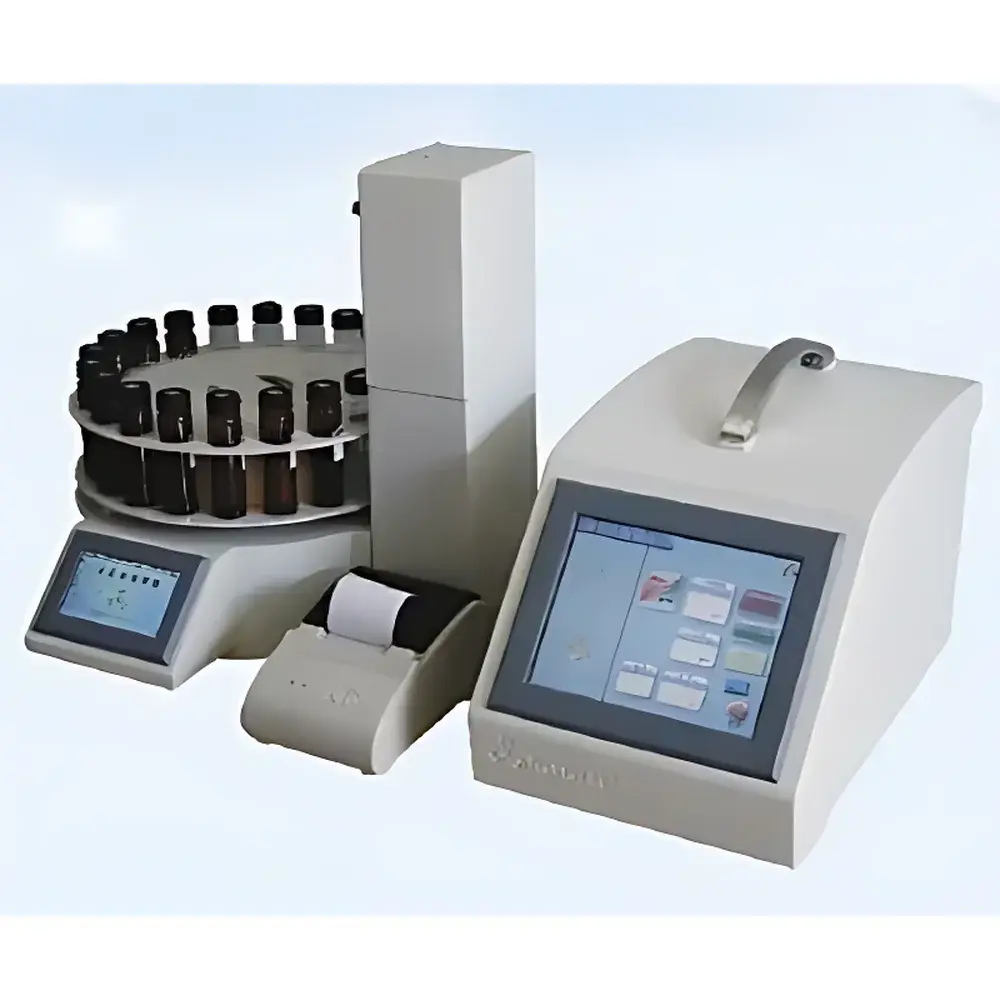
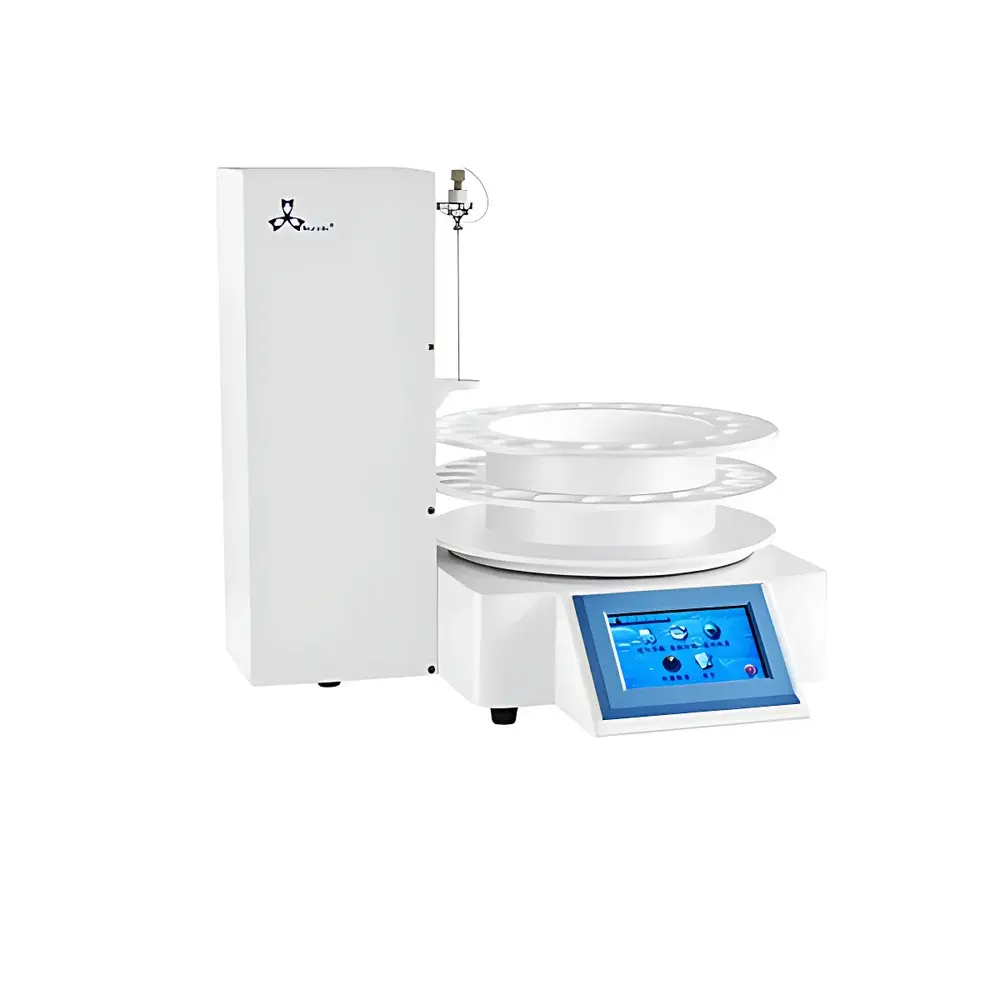
NeuronBC AIS-1.1 Multifunctional Autosampler for TOC and Chromatographic Systems
| Brand | NeuronBC |
|---|---|
| Origin | Beijing, China |
| Model | AIS-1.1 |
| Instrument Type | Multifunctional Autosampler |
| Maximum Sample Capacity | 20 vials |
| Minimum Injection Volume | 0.1 µL |
| Loop Volume | 10 mL |
| Positioning Accuracy | ±0.3 mm |
| Operation Modes | Automatic / Manual / Passive |
| Needle Wash Cycles | Unlimited |
| Repeat Injection Capability | Unlimited |
| Power Supply | AC 220 V, 50 Hz |
Overview
The NeuronBC AIS-1.1 Multifunctional Autosampler is an engineered sample introduction system designed for integration with total organic carbon (TOC) analyzers and complementary chromatographic platforms—including HPLC, IC, and GC systems requiring precise, unattended liquid handling. It operates on a syringe-driven positive-displacement principle, utilizing high-precision stepper motor control and optical liquid-level detection to ensure reliable aspiration without air entrainment. The system’s core architecture supports three operational paradigms—fully automatic sequence execution, manual step-by-step intervention, and passive trigger-based sampling—enabling flexible deployment across laboratory, pilot-scale, and regulated production environments. Its compact footprint (W × D × H: 320 × 380 × 360 mm) and low mass (<12 kg) facilitate benchtop installation adjacent to analyzers without structural reinforcement or dedicated utility routing.
Key Features
- Intelligent liquid-level sensing: Dual-wavelength optical detection identifies meniscus position in real time, dynamically adjusting needle depth to prevent vacuum-induced air draw—critical for low-volume, high-sensitivity TOC quantification.
- Modular mechanical design: Critical motion components—including the XYZ positioning gantry, syringe drive assembly, and valve manifold—are constructed using ISO-certified stainless steel and PEEK-composite fluidic paths to resist corrosion from aggressive solvents and oxidizing reagents (e.g., persulfate, acidified permanganate).
- Touchscreen HMI with native Chinese interface: 7-inch capacitive display with intuitive icon-driven workflow navigation; firmware supports user-defined method templates, run-time parameter override, and audit-trail-enabled session logging.
- Dual-mode needle washing: Integrated solvent reservoir and programmable rinse cycles allow unlimited wash iterations between injections using up to two independent cleaning solvents—configurable per sample or batch to mitigate carryover in trace-level analysis.
- Robust positional repeatability: Linear guide rails and closed-loop encoder feedback maintain ≤±0.3 mm spatial accuracy across all 20 vial positions—even after >10,000 actuation cycles—ensuring long-term alignment stability with autosampler-compatible autosampler ports.
Sample Compatibility & Compliance
The AIS-1.1 accommodates standard 4–40 mL screw-cap or crimp-top vials (including ASTM D5905-compliant TOC sample containers) and integrates seamlessly with USP , EP 2.2.44, and ISO 8573-1 compliant TOC analyzers. Its hardware and firmware architecture support GLP/GMP-aligned operation: electronic logs record operator ID, timestamp, method name, vial position, injection volume, and wash cycle count for each run. While not pre-certified to FDA 21 CFR Part 11, the system provides full data export (CSV/Excel) and optional third-party validation documentation packages for IQ/OQ/PQ protocols required by pharmaceutical QC labs.
Software & Data Management
Control is managed via embedded firmware (v2.4.1, field-upgradable via USB), eliminating dependency on external PCs. All method parameters—including dwell times, rinse volumes, injection speed gradients, and pause intervals—are stored in non-volatile memory with password-protected access levels (Operator, Supervisor, Administrator). Raw event logs are timestamped with microsecond resolution and archived locally for ≥12 months. Exported datasets include full metadata headers compliant with LIMS ingestion standards (ASTM E1578, ISO/IEC 17025 Annex A.3), enabling direct import into enterprise-quality systems such as LabWare LIMS or Thermo Fisher SampleManager.
Applications
- Pharmaceutical water systems: Continuous monitoring of purified water (PW) and water for injection (WFI) per USP and EU GMP Annex 1 requirements; supports routine verification of sanitization efficacy and system qualification (IQ/OQ).
- Environmental compliance testing: Automated analysis of surface water, wastewater effluents, and groundwater samples for regulatory reporting under EPA Method 415.3 and ISO 8245.
- Electronics-grade ultrapure water (UPW): Low-part-per-trillion TOC quantification in semiconductor fab monitoring loops where manual handling introduces contamination risk.
- Method development labs: Rapid screening of column conditioning protocols, mobile phase optimization, and gradient robustness studies via repeat-injection scripting without software licensing constraints.
FAQ
Does the AIS-1.1 support remote triggering via TTL or RS-232?
Yes—it features isolated TTL input for external start/stop signals and a full-duplex RS-232 port (9600 bps, 8N1) compatible with legacy analyzer handshake protocols.
Can the 10 mL定量 loop be replaced with alternative volumes?
No—the loop is factory-integrated and calibrated; however, users may configure partial-loop fills (e.g., 1–9 mL) with volumetric compensation enabled in firmware.
Is the system suitable for viscous or particulate-laden samples?
It is rated for aqueous solutions up to 15 cP viscosity and suspended solids <5 µm diameter; filtration prior to loading is recommended for samples exceeding these limits.
What maintenance intervals are specified for long-term reliability?
Syringe seals require replacement every 6 months under continuous operation; optical sensor windows should be cleaned weekly with lint-free isopropanol wipes.
How is calibration traceability established?
NeuronBC provides NIST-traceable volumetric calibration certificates (per ISO/IEC 17025) upon request, covering syringe delivery accuracy at 0.1, 1.0, and 10.0 mL points.






