
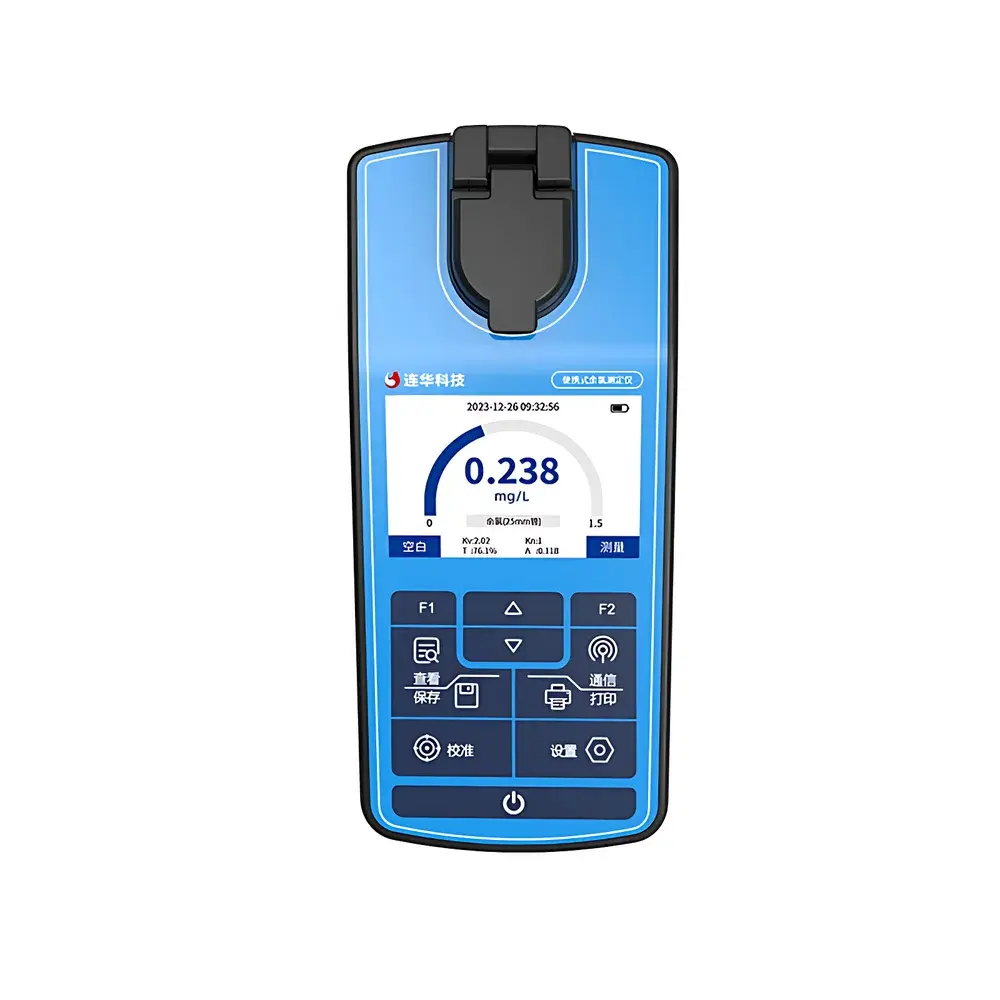
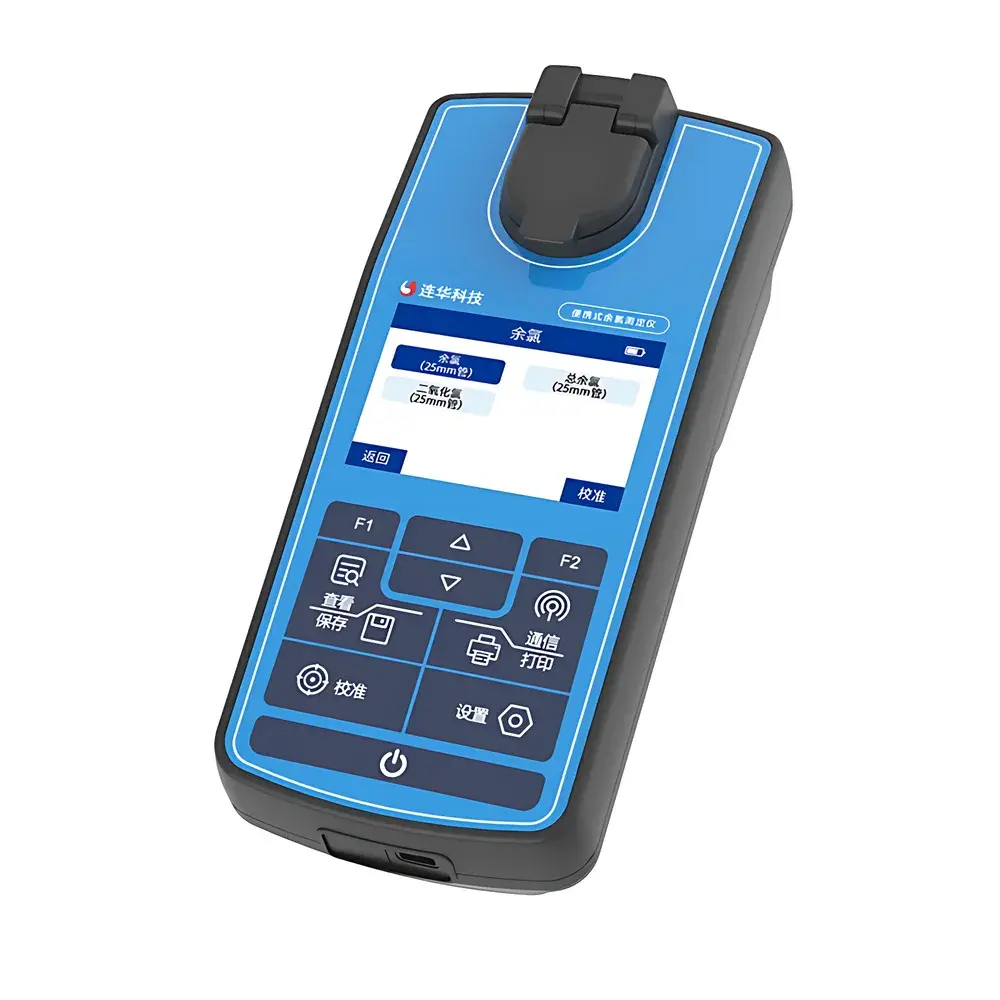
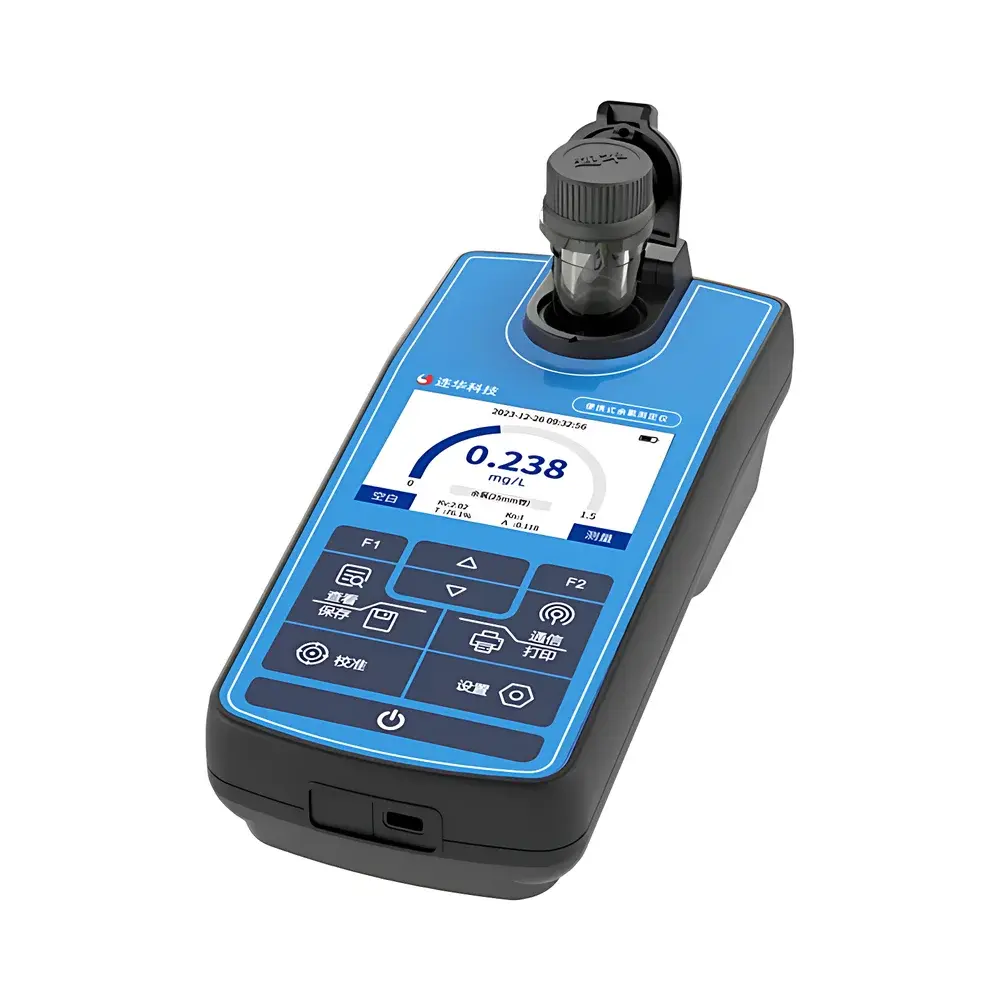
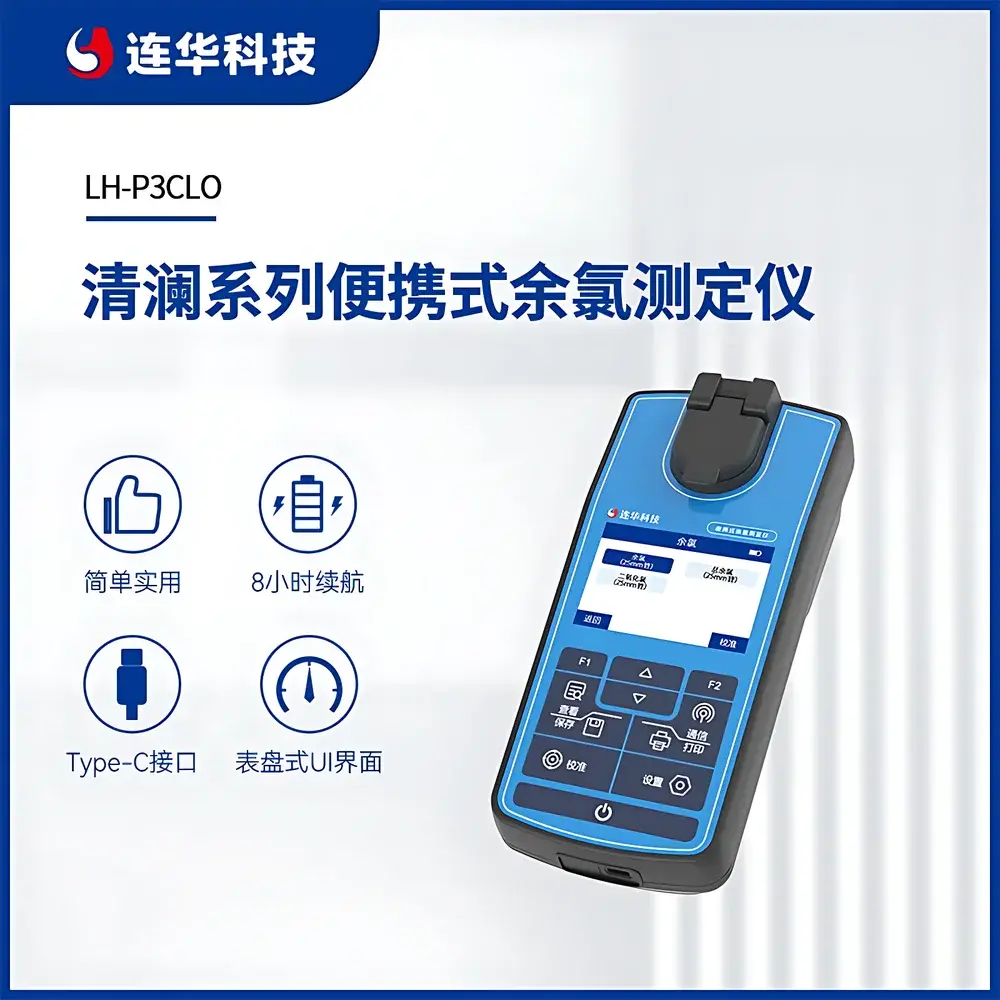
Lianhua LH-P3CLO Portable Residual Chlorine and Chlorine Dioxide Analyzer
| Brand | Lianhua |
|---|---|
| Origin | Beijing, China |
| Manufacturer Type | Direct Manufacturer |
| Instrument Type | Portable |
| Measurement Principle | DPD Spectrophotometry |
| Measurable Parameters | Free Chlorine, Total Residual Chlorine, Chlorine Dioxide |
| Range | Free Chlorine: 0–15 mg/L |
| Total Residual Chlorine | 0–15 mg/L |
| Chlorine Dioxide | 0–5 mg/L |
| Accuracy | ±10% |
| Repeatability | ≤±5% |
| Display | 3.5-inch color TFT screen with dial-style UI |
| Calibration | Built-in optical calibration & 15 preloaded calibration curves |
| Compliance | HJ 586–2010, GB/T 5750.11–2006 |
Overview
The Lianhua LH-P3CLO Portable Residual Chlorine and Chlorine Dioxide Analyzer is a field-deployable spectrophotometric instrument engineered for rapid, on-site quantification of disinfectant residuals in water systems. It operates on the N,N-diethyl-p-phenylenediamine (DPD) colorimetric method—standardized under Chinese national regulations HJ 586–2010 and GB/T 5750.11–2006—which relies on stoichiometric oxidation of DPD by free chlorine or chlorine dioxide to generate a stable pink-colored quinoneimine dye. Absorbance is measured at 515 nm using a precision LED-optical path assembly, enabling direct concentration readout without manual calculation. Designed for municipal water utilities, wastewater treatment plants, swimming pool operators, and public health laboratories, the LH-P3CLO delivers trace-level sensitivity and analytical consistency in non-laboratory environments—without compromising metrological integrity.
Key Features
- Triple-parameter capability: Simultaneous support for free chlorine, total residual chlorine, and chlorine dioxide measurement—eliminating need for multiple dedicated instruments.
- 3.5-inch high-resolution color TFT display with intuitive dial-style user interface: Real-time concentration values are presented as analog-style gauge readings alongside digital output, reducing interpretation error during field operation.
- Fifteen factory-loaded calibration curves: Pre-programmed to cover common matrix interferences (e.g., turbidity, nitrite, monochloramine), with option for user-defined curve adjustment via slope/intercept input—meeting requirements for academic research and method validation protocols.
- Integrated optical calibration function: Automatically verifies LED intensity and photodetector response prior to each measurement cycle, compensating for aging components and ambient temperature drift—ensuring long-term signal stability and minimizing recalibration frequency.
- Intelligent over-range detection: When sample concentration exceeds upper measurement limit, the display highlights the upper bound value in red and suppresses extrapolated results—preventing misinterpretation of saturated absorbance signals.
- Rugged portable architecture: IP65-rated enclosure, shock-absorbing rubberized housing, and rechargeable lithium-ion battery (≥8 hours continuous use) enable reliable deployment in humid, dusty, or vibration-prone environments including pump stations and distribution networks.
Sample Compatibility & Compliance
The LH-P3CLO accepts standard 10 mL or 25 mL water samples collected in clean glass or polypropylene containers. It accommodates raw surface water, treated drinking water, chlorinated wastewater effluent, and recirculated pool water—with demonstrated performance across pH 4.0–8.5 and turbidity 0.2 mg/L; monochloramine contribution is estimated based on reaction kinetics delay. The analyzer complies with regulatory frameworks governing disinfectant monitoring in potable water supply, including HJ 586–2010 (China), and aligns with principles referenced in EPA Method 334.0 and ISO 7393-2 for field-based chlorine determination. While not certified to ISO/IEC 17025, its documented repeatability (≤±5%) and accuracy (±10%) meet internal QA/QC thresholds for routine surveillance per WHO Guidelines for Drinking-water Quality (4th ed.).
Software & Data Management
Data logging is performed internally with timestamped storage for up to 1,000 test records, including operator ID, sample ID, measurement date/time, parameter type, and raw absorbance values. USB-C interface enables export to CSV format for integration into LIMS or Excel-based trend analysis. Firmware updates are delivered via secure OTA protocol with SHA-256 signature verification. Audit trail functionality logs all calibration events, curve modifications, and system resets—supporting GLP-aligned documentation practices. Though not 21 CFR Part 11 compliant out-of-the-box, the device’s immutable log structure and user-accessible audit history facilitate adaptation to GMP-regulated environments with supplemental procedural controls.
Applications
- Real-time verification of chlorine dosing efficacy at water treatment plant contact basins and clearwells.
- Compliance monitoring at point-of-entry (POE) and point-of-use (POU) locations in distributed water networks.
- Routine quality assurance for recreational water venues—including daily pool/spa checks mandated under local health codes.
- Emergency response assessment following infrastructure failure or contamination incidents.
- Educational laboratory instruction in environmental chemistry and water safety curricula.
- Field validation of online chlorine sensors during commissioning or periodic verification testing.
FAQ
What sample volume is required for analysis?
A minimum of 10 mL of well-mixed, unfiltered water sample is required. For low-concentration applications (<0.1 mg/L), 25 mL is recommended to improve signal-to-noise ratio.
Does the instrument require reagent kits?
Yes—DPD reagent tablets (free chlorine and total chlorine) and chlorine dioxide-specific reagents must be used per manufacturer specifications. Reagent lot numbers should be entered manually to apply batch-specific calibration offsets.
Can the LH-P3CLO be used for seawater or brackish water analysis?
Not without pretreatment: high chloride concentrations (>1,000 mg/L) interfere with DPD oxidation kinetics. Dilution with deionized water and application of matrix-matched calibration are necessary—and must be validated per project-specific SOP.
Is firmware upgrade supported in the field?
Yes—via USB-C connection to a Windows or macOS host running the Lianhua Device Manager utility. No internet connection is required during update execution.
How often should optical calibration be performed?
Recommended before first use, after prolonged storage (>30 days), following exposure to extreme temperatures, and at least once per shift in high-frequency operational settings.







