
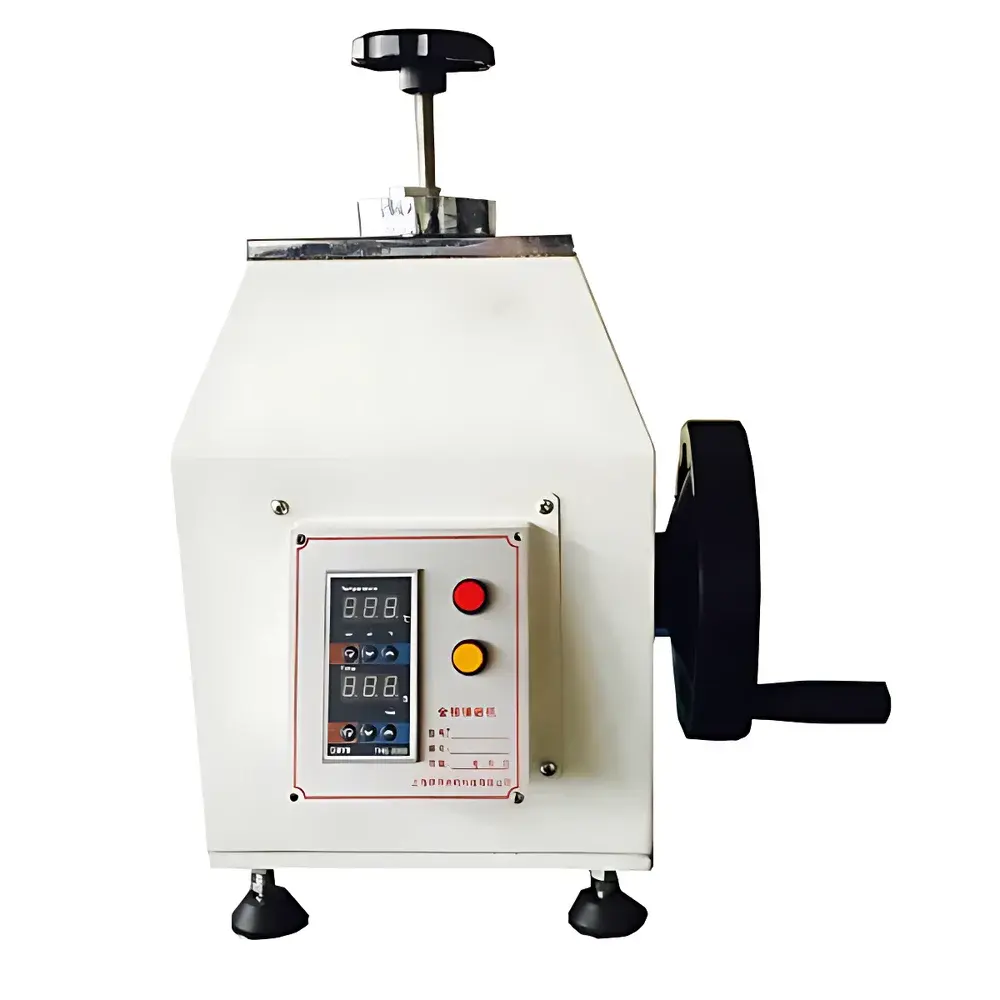
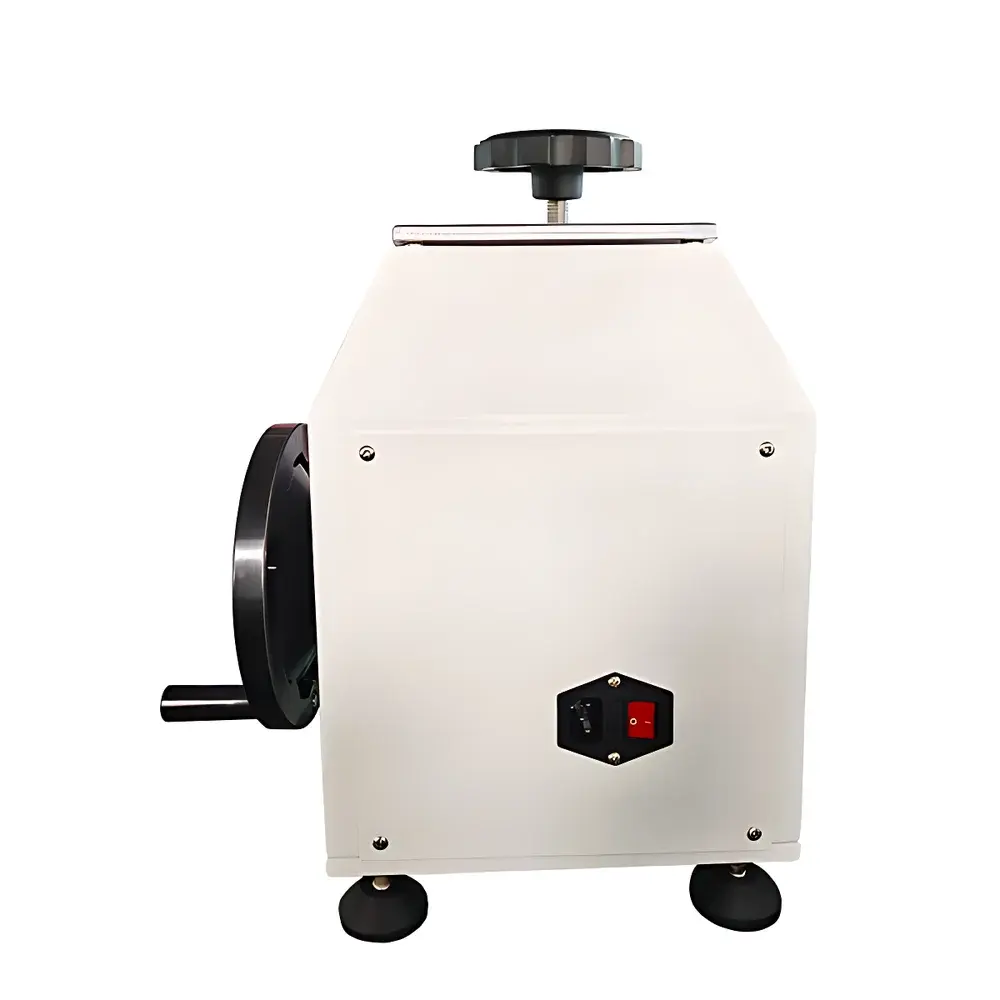
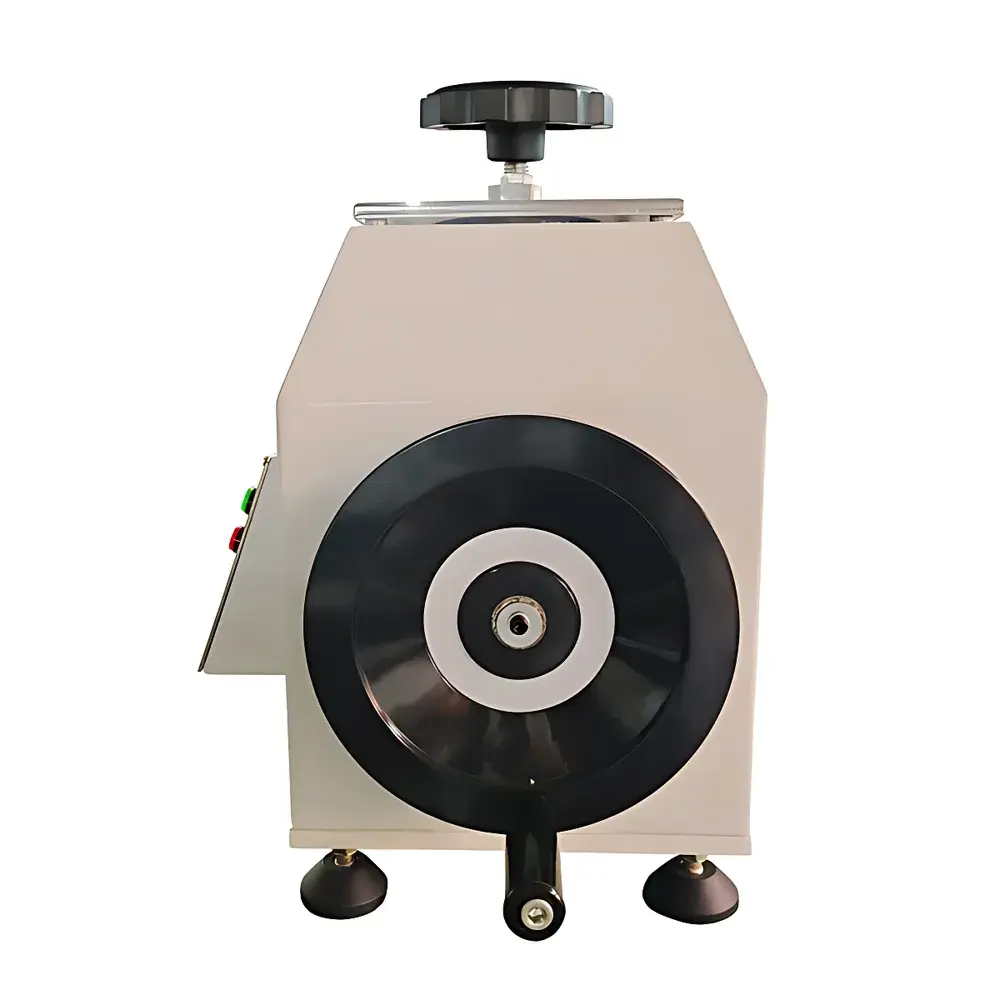
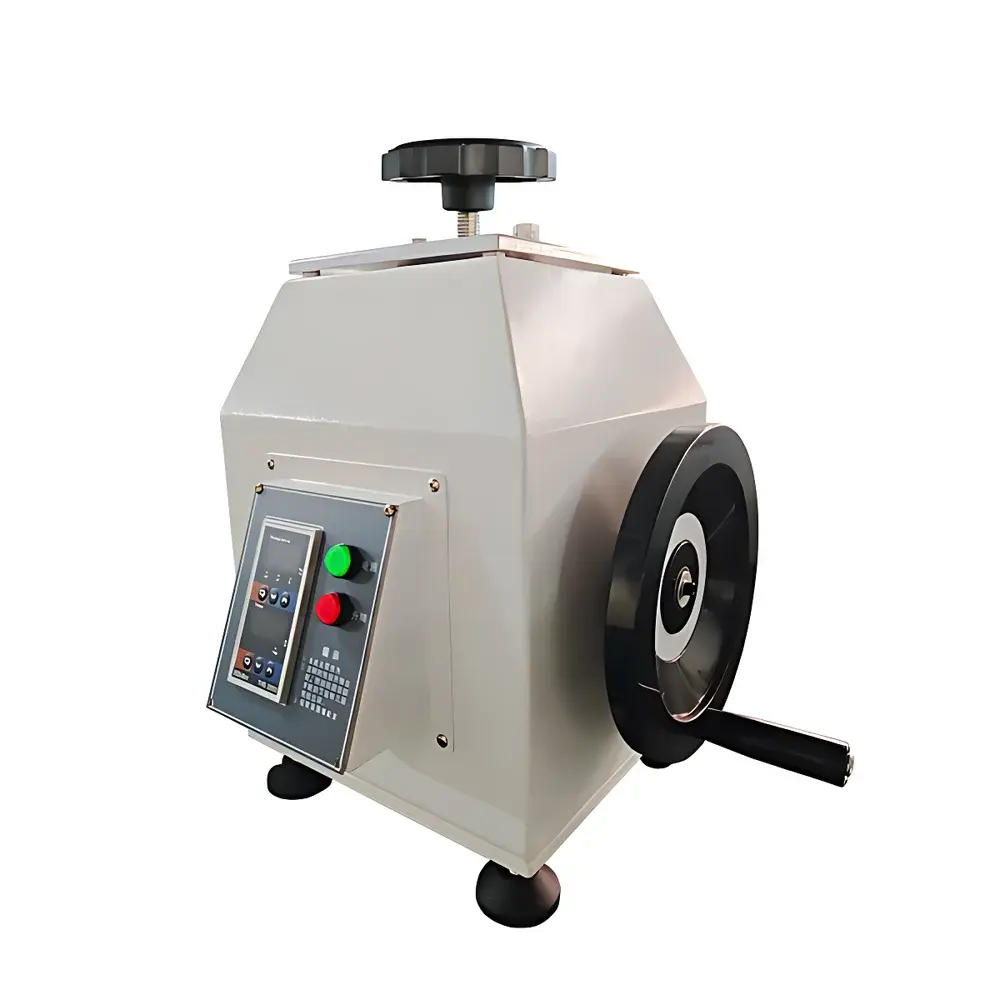
YANRUN XQ-2B Manual Hot Mounting Press
| Brand | YANRUN |
|---|---|
| Origin | Shanghai, China |
| Manufacturer Type | Direct Manufacturer |
| Country of Origin | China |
| Model | XQ-2B |
| Instrument Type | Hot Mounting Press |
| Heating Power | 800 W |
| Temperature Range | 0–300 °C |
| Timer Range | 0–99 min |
| Specimen Diameter Options | Φ25 mm / Φ30 mm / Φ40 mm |
| Voltage | 220 V AC |
| Net Weight | 32 kg |
Overview
The YANRUN XQ-2B Manual Hot Mounting Press is a precision-engineered laboratory instrument designed for the thermosetting encapsulation of metallurgical, ceramic, polymeric, geological, and electronic specimens prior to metallographic preparation. It operates on the principle of heat-activated compression molding: thermosetting resins (e.g., phenolic, epoxy, or diallyl phthalate) are heated above their glass transition temperature and subjected to controlled axial pressure, enabling full impregnation of porous structures and uniform consolidation around irregular or fragile samples. This process yields dimensionally stable, edge-retentive mounts with minimal shrinkage and thermal distortion—critical prerequisites for subsequent grinding, polishing, and high-magnification optical or electron microscopy analysis. The XQ-2B is optimized for routine use in QC labs, R&D facilities, and academic metallography laboratories where reproducibility, operator control, and compliance with standardized mounting protocols (e.g., ASTM E3, ISO 15510, and GB/T 13298) are essential.
Key Features
- Manually operated hydraulic press mechanism ensures consistent, repeatable compaction force without reliance on complex servo systems—ideal for training, method development, and low-throughput environments.
- Adjustable heating plate with PID-controlled temperature regulation (0–300 °C ±2 °C) supports a wide range of thermosetting resins, including high-temperature phenolics for refractory ceramics and low-viscosity epoxies for delicate PCBs or soft polymers.
- Interchangeable mold inserts accommodate three standard specimen diameters: Φ25 mm, Φ30 mm, and Φ40 mm—enabling compatibility with automated grinding/polishing systems requiring standardized mount geometry per ASTM E3 and ISO 15510.
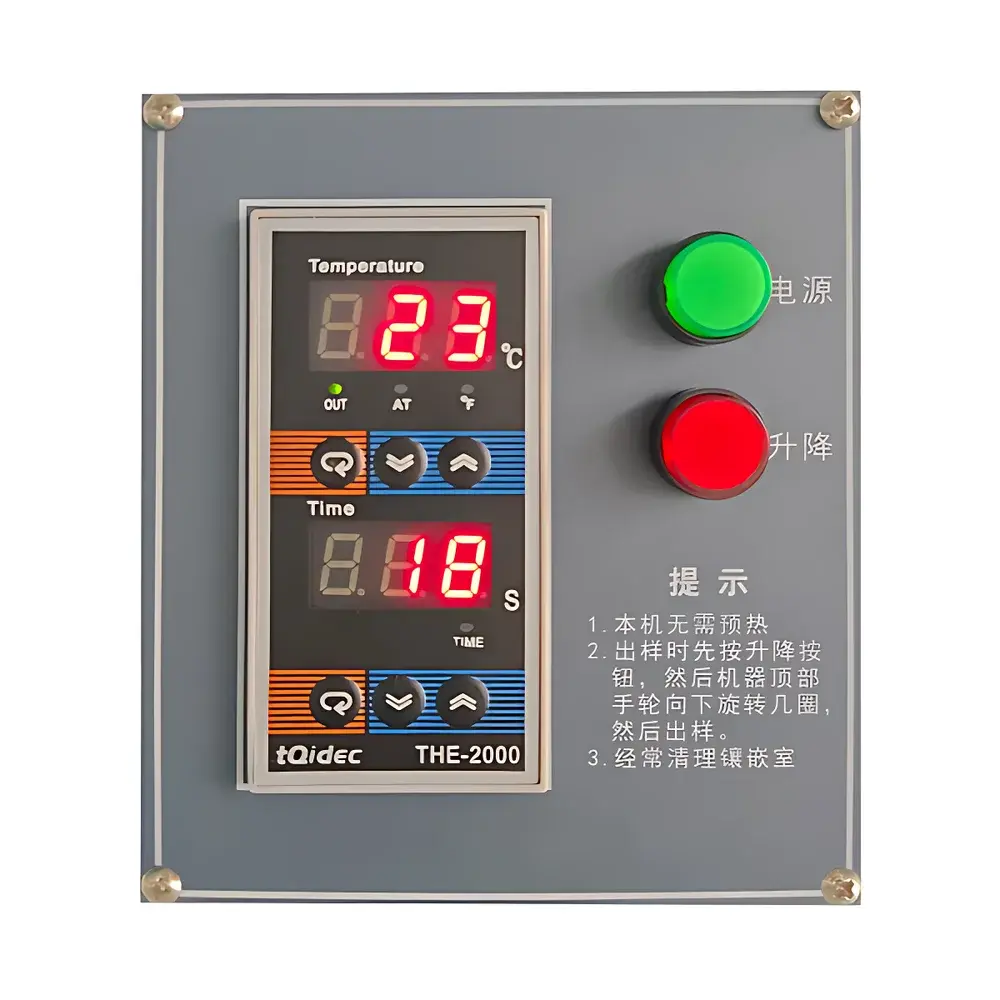
- Digital timer (0–99 minutes) with audible end-of-cycle alert ensures precise dwell time control, critical for complete resin cross-linking and avoidance of under-curing or charring.
- Robust cast-iron frame and insulated heating chamber minimize thermal drift and external surface temperature rise, enhancing operator safety and long-term dimensional stability of the press assembly.
- No integrated vacuum or gas purge—designed for ambient-pressure hot mounting; cold mounting applications require separate equipment (e.g., vacuum impregnation units).
Sample Compatibility & Compliance
The XQ-2B accommodates diverse specimen types—including brittle ceramics, low-melting-point alloys (e.g., Sn-Pb, Zn-Al), sintered powders, geological thin sections, semiconductor wafers, and multi-layer PCBs—provided appropriate resin selection and cycle parameters are applied. For temperature-sensitive samples, reduced setpoints (e.g., 120–160 °C) and extended dwell times mitigate thermal degradation. All mounting procedures align with GLP documentation requirements when paired with lab-controlled SOPs. While the unit itself carries no CE or UL certification, its operational parameters conform to safety thresholds defined in IEC 61010-1 for laboratory electrical equipment. Users must validate resin compatibility and cycle parameters per material-specific standards (e.g., ASTM B602 for metallic coatings, ISO 14577 for hardness testing specimen prep).
Software & Data Management
The XQ-2B is a standalone mechanical-electrical system with no embedded firmware, network interface, or proprietary software. Temperature setpoint, timer duration, and manual pressure application are controlled via front-panel dials and push-button actuation. No data logging, audit trail, or electronic recordkeeping is performed internally. Laboratories requiring 21 CFR Part 11 compliance must implement external documentation workflows—such as handwritten logbooks, LIMS-integrated batch records, or digital camera timestamping of mounted specimens—to ensure traceability of mounting conditions (time, temperature, mold size) for QA/QC reporting.
Applications
- Metallographic specimen preparation for ferrous/non-ferrous alloys, weld zones, and heat-affected regions in aerospace and automotive component validation.
- Encapsulation of sintered ceramic bodies and refractory composites prior to porosity quantification (ASTM C272) or fracture toughness evaluation.
- Stabilization of geological core fragments and mineral aggregates for petrographic analysis under polarized light microscopy.
- Mounting of polymer blends and fiber-reinforced composites to preserve interfacial morphology during cross-sectional SEM imaging.
- Edge protection of small electronic components (e.g., solder joints, die attach layers) for failure analysis root-cause determination.
- Standardized preparation of reference materials used in inter-laboratory round-robin testing per ISO/IEC 17043 guidelines.
FAQ
What resin types are compatible with the XQ-2B?
Phenolic, epoxy, and diallyl phthalate (DAP) thermosetting resins are routinely used. Resin selection must match specimen thermal sensitivity and required final hardness—phenolics for high-temp stability, epoxies for optical clarity and low shrinkage.
Is vacuum assistance available on this model?
No. The XQ-2B is a non-vacuum hot press. Vacuum impregnation requires a separate vacuum mounting station prior to hot pressing.
Can it be used for cold mounting?
Not directly. Cold mounting requires ambient-temperature resin curing systems (e.g., acrylics or epoxies with room-temp hardeners); the XQ-2B’s heating function is inactive during cold processes.
What maintenance is required?
Monthly cleaning of mold cavities and heating plate surfaces with non-abrasive solvents; annual inspection of hydraulic seal integrity and thermocouple calibration against NIST-traceable references.
Does it meet ISO/IEC 17025 requirements for accredited labs?
The unit itself does not carry accreditation, but when operated within documented, validated SOPs—including periodic verification of temperature accuracy and timer repeatability—it supports compliance with ISO/IEC 17025 clause 6.4.6 (equipment verification).



