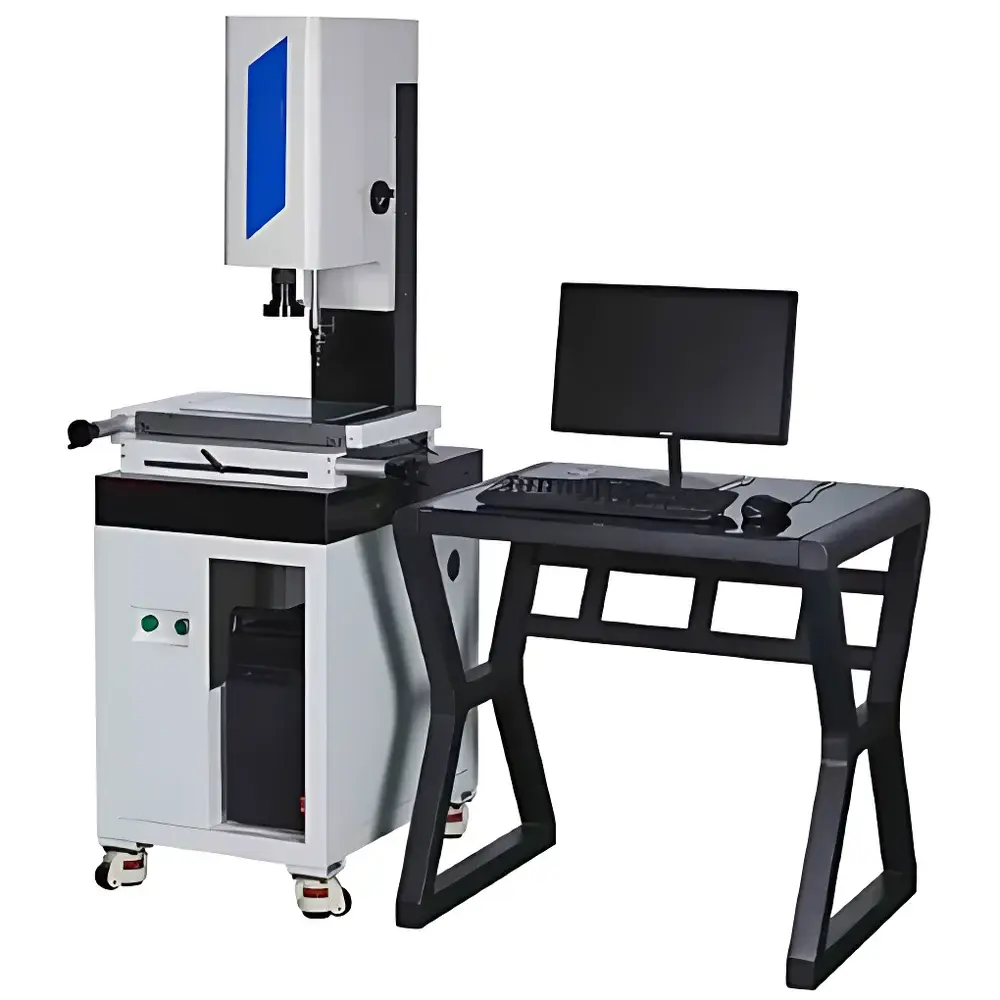
YANRUN YR3020S Manual 2D Video Measuring System
| Brand | YANRUN |
|---|---|
| Origin | Shanghai, China |
| Manufacturer Type | Direct Manufacturer |
| Country of Origin | China |
| Model | YR3020S |
| Operation Mode | Manual |
| Measurement Range (X×Y×Z) | 300 × 200 × 180 mm |
| Measurement Accuracy | (3 + L/200) µm |
| Encoder Resolution | 1 µm |
| Camera | High-Resolution CCD with Sony IC Sensor |
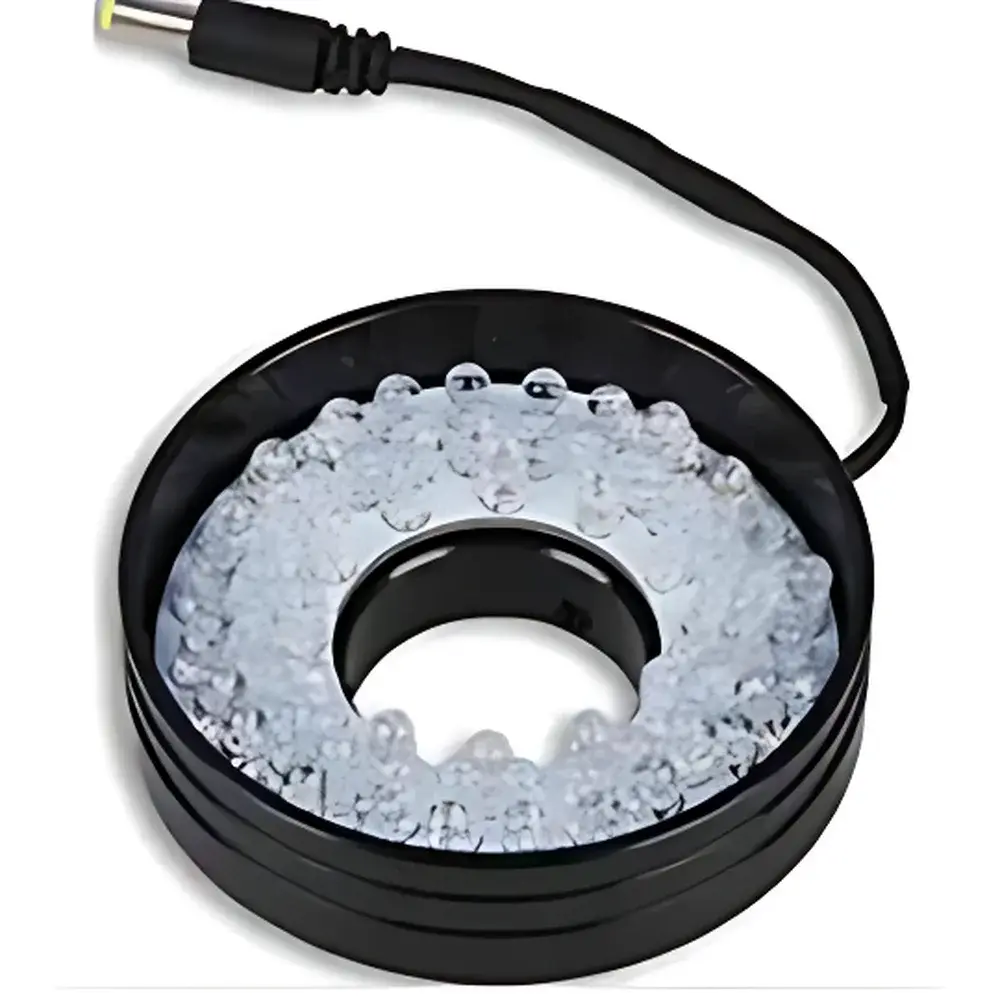
| Illumination | Imported LED Ring/Circular Cold Light Source |
| Base & Column Material | Grade 00 Granite (Flatness ≤ 3 µm) |
| Linear Guide | High-Balance Crossed Roller Bearings |
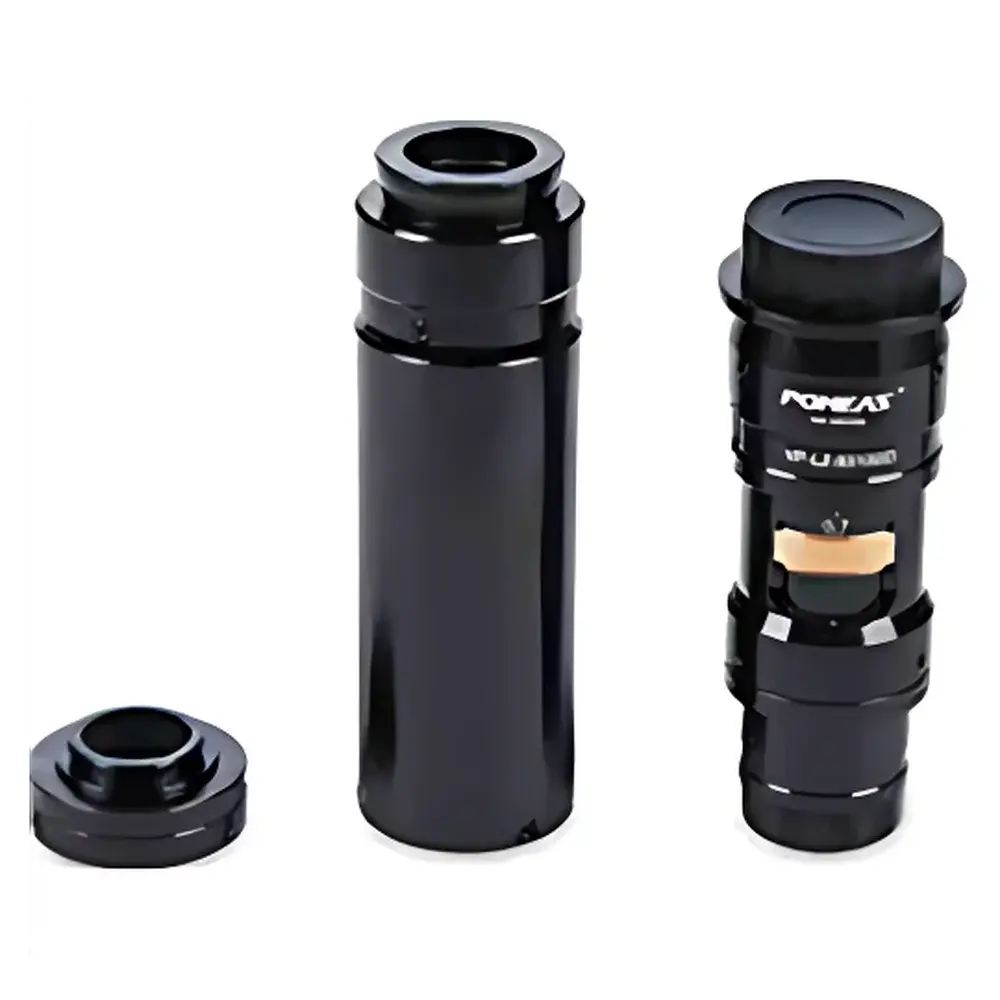
| Lens | 0.7–4.5× Continuous Zoom Objective |
| Software | ZONSON Intelligent Metrology Suite (Multi-language, SPC, Auto-Edge Detection, GD&T Analysis, CAD Import/Export) |
Overview
The YANRUN YR3020S Manual 2D Video Measuring System is a precision geometric metrology instrument engineered for high-reproducibility dimensional inspection of planar and near-planar components in production and quality control environments. Operating on the principle of optical magnification and digital image-based coordinate metrology, the system captures high-fidelity images via a Sony-sensor CCD camera and a continuously variable zoom lens (0.7–4.5×), enabling accurate sub-pixel edge detection across a 300 mm × 200 mm measurement stage. With a vertical travel of 180 mm and manual Z-axis focusing, it supports both surface and profile measurements of machined parts, stamped components, precision tools, and micro-engineered features. Its rigid mechanical architecture—built on Grade 00 granite base and column (flatness ≤ 3 µm) and guided by crossed roller bearings—ensures thermal stability and mechanical repeatability essential for ISO/IEC 17025-compliant calibration workflows.
Key Features
- Manual operation with ergonomic handwheel controls for X/Y translation and fine Z-axis focus adjustment
- Closed-loop linear encoders with 1 µm resolution across all three axes, delivering traceable positional feedback per ISO 230-2
- High-stability optical path incorporating an imported LED ring/circular cold light source—minimizing thermal drift and glare during prolonged inspection cycles
- 00-grade granite structural frame offering superior vibration damping and long-term geometric integrity
- Integrated ZONSON intelligent metrology software platform supporting multi-language UI, real-time video streaming, and hardware-accelerated edge detection algorithms
- Native support for GD&T evaluation—including parallelism, perpendicularity, position, concentricity, symmetry, profile of a line/surface, and runout (radial/axial)—aligned with ASME Y14.5 and ISO 1101 standards
Sample Compatibility & Compliance
The YR3020S accommodates a broad spectrum of industrial components up to 300 × 200 × 180 mm, including but not limited to: stamping dies, cam profiles, gear tooth forms, milling cutters, watch movement components, PCB stencils, connector terminals, and diamond tooling. Its non-contact optical methodology eliminates part deformation risks associated with tactile probing. The system meets fundamental requirements for laboratory accreditation under ISO/IEC 17025:2017 for dimensional testing, and its measurement uncertainty model—expressed as (3 + L/200) µm—is validated against NIST-traceable artifacts. While not certified to FDA 21 CFR Part 11 out-of-the-box, audit-ready data logging, user access control, and electronic signature support can be enabled through optional ZONSON software configuration modules compliant with GLP/GMP documentation practices.
Software & Data Management
The ZONSON metrology suite provides a unified environment for acquisition, analysis, reporting, and statistical process control. It includes SDK2000 video capture firmware optimized for low-latency, high-SNR imaging; a 0.1 µm-resolution DC300 motion control subsystem; and full CAD interoperability—supporting direct import of DXF, DWG, and STEP files for overlay-based deviation analysis. Measurement results export natively to Word, Excel, PDF, and AutoCAD-compatible formats. SPC functionality enables real-time capability analysis (Cp/Cpk), trend charting, and histogram generation. All measurement sessions are timestamped and logged with operator ID, instrument configuration, environmental metadata (optional ambient sensor integration), and raw image archives—facilitating full traceability per ISO 9001 Clause 8.5.2.
Applications
This system serves as a primary or secondary reference instrument in QC labs and shop-floor metrology stations across mechanical manufacturing, mold & die fabrication, electronics assembly, timepiece engineering, and medical device component verification. Typical use cases include first-article inspection of CNC-machined housings, geometric validation of injection-molded plastic parts, contour verification of EDM-cut electrodes, pitch and lead angle assessment of threaded fasteners, and form error quantification (e.g., circularity, straightness) on precision-ground shafts. Its adaptability to diverse lighting modes (ring, coaxial, backlit) makes it especially effective for measuring translucent, reflective, or high-contrast features without surface preparation.
FAQ
What is the maximum workpiece weight this system can accommodate?
The stage is rated for loads up to 25 kg; heavier fixtures require custom mounting solutions verified for static stability.
Is the system compatible with third-party calibration artifacts?
Yes—certified step gauges, ball bars, and grid plates traceable to national metrology institutes (e.g., NIM, NIST, PTB) are fully supported for periodic verification.
Can the software generate reports compliant with IATF 16949 requirements?
All exported reports include mandatory fields: part number, revision level, operator ID, equipment ID, calibration due date, measurement date/time, and uncertainty budget summary—meeting IATF 16949 Section 8.6.2 documentation expectations.
Does the system support automated measurement sequences?
While the YR3020S is manually operated, the ZONSON software allows programming of repeatable point sequences, auto-edge detection triggers, and batch report generation—enabling semi-automated workflows without robotic stage integration.
What maintenance intervals are recommended for optimal accuracy?
Biannual verification of encoder linearity and optical alignment is advised; annual recalibration of the entire system—including lens distortion mapping and illumination uniformity profiling—is required for ISO 17025 accredited use.