
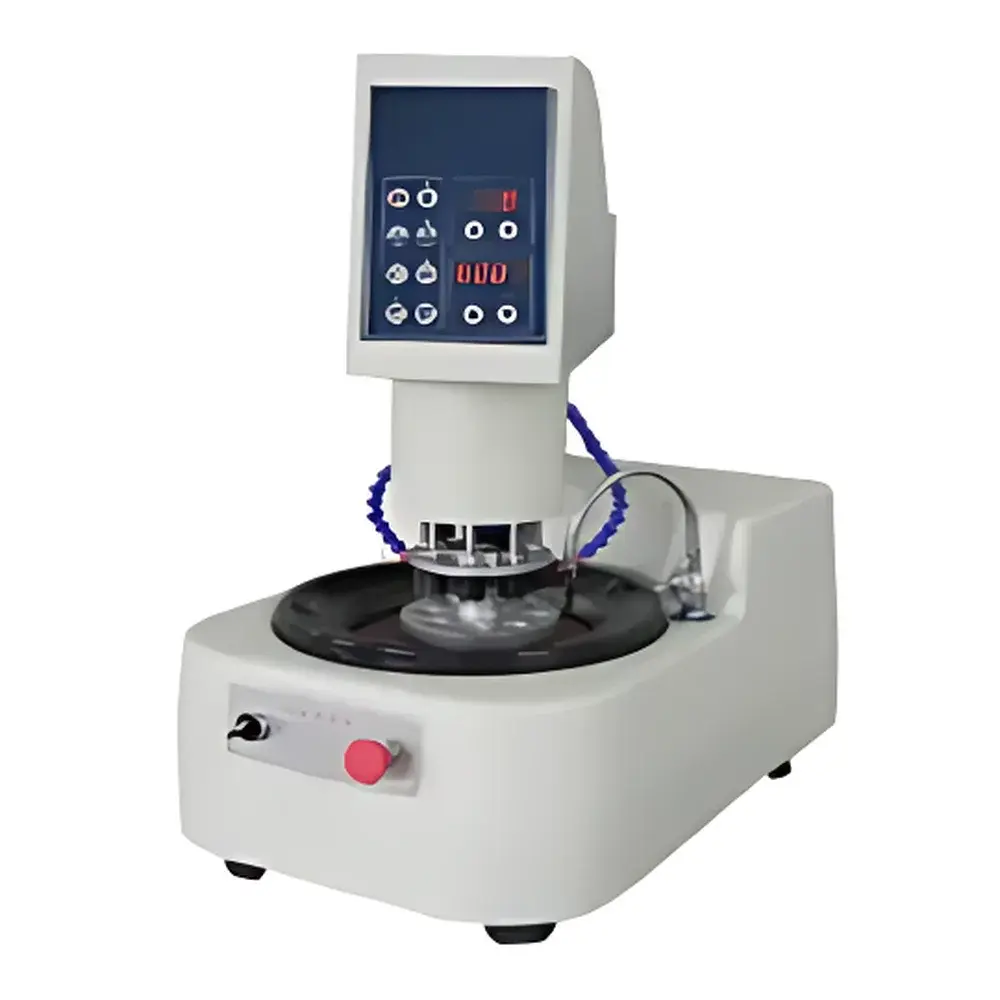
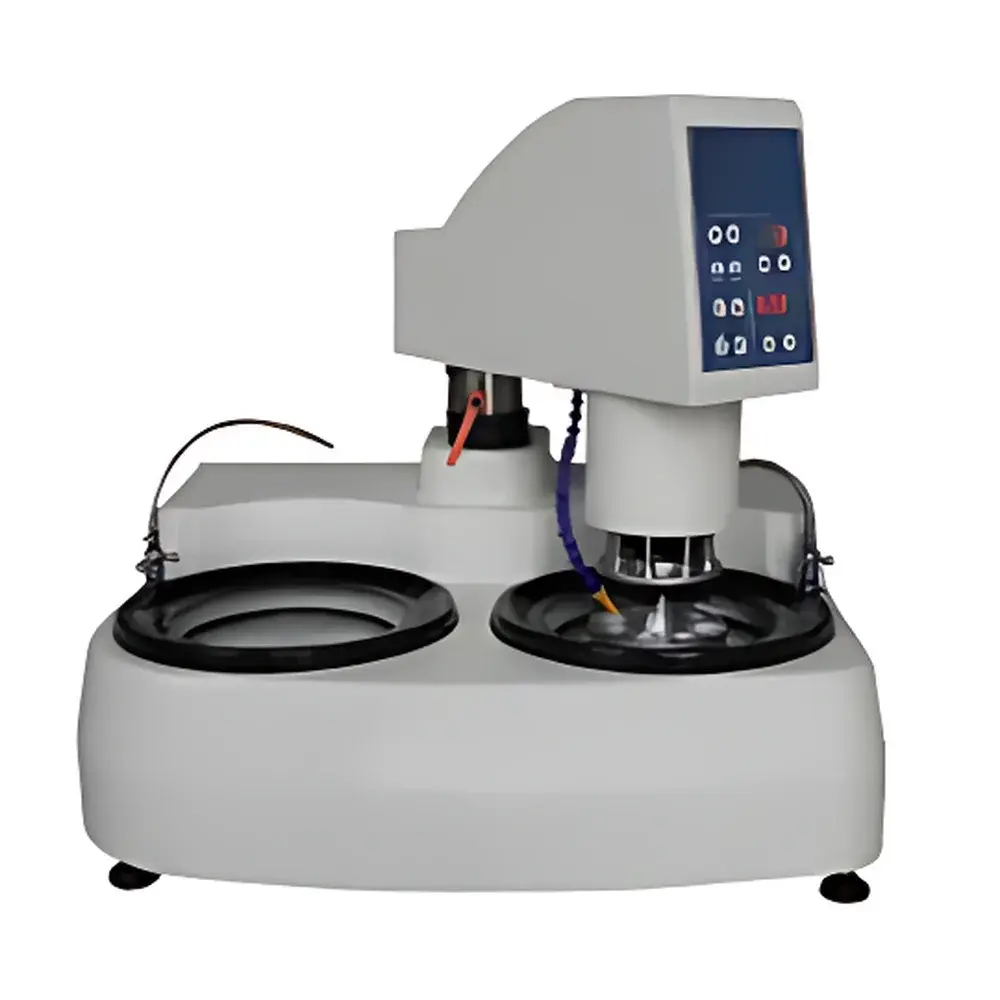
YANRUN BMP-1000/2000 Automatic Metallographic Grinding and Polishing System
| Brand | YANRUN |
|---|---|
| Origin | Shanghai, China |
| Manufacturer Type | Direct Manufacturer |
| Region Classification | Domestic (China) |
| Model | BMP-1000 / BMP-2000 |
| Drive Speed | 100–1500 rpm (intelligent auto-adjustable) |
| Platen Diameter | 230 mm |
| Number of Platens | 1 (BMP-1000) / 2 (BMP-2000) |
| Specimen Capacity | 8 positions (with multi-specimen holder) |
| Pressure Application | Pneumatic (single-point or central loading) |
| Load Range | 1–40 N × 4 stations |
| Head Rotation Speed | 20–200 rpm |
| Polishing/Grinding Time | 0–9999 s |
| Motor Power | 550 W (AC variable-frequency drive) |
| Specimen Diameter | Standard 30 mm (custom diameters available) |
| Dimensions (BMP-2000/BMP-1000) | 650 × 650 × 700 mm / 450 × 650 × 700 mm |
| Voltage/Frequency | 220 V AC / 50 Hz |
Overview
The YANRUN BMP-1000/2000 Automatic Metallographic Grinding and Polishing System is an engineered solution for standardized, repeatable, and high-throughput metallographic specimen preparation. Designed around a dual-motor, closed-loop control architecture, the system integrates independent speed regulation of both platen(s) and specimen holder head—enabling precise decoupling of abrasive action (platen rotation) from mechanical loading dynamics (head rotation and pneumatic force application). This configuration adheres to core principles defined in ASTM E3-22 and ISO 16232 for consistent material removal rates, surface planarity, and subsurface damage minimization. The BMP series supports fully automated grinding-polishing sequences—including timed stage transitions, load ramping, and rotational direction reversal—making it suitable for laboratories operating under GLP, ISO/IEC 17025, or internal quality assurance protocols requiring audit-trail-capable process documentation.
Key Features
- Intelligent dual-speed control: Platen speed adjustable from 100–1500 rpm; specimen head speed independently regulated from 20–200 rpm—optimized for sequential SiC paper grinding, diamond suspension lapping, and colloidal silica polishing stages.
- Pneumatic loading system with digital pressure calibration: Delivers stable, repeatable single-point loads from 1–40 N across up to four specimen stations simultaneously—critical for minimizing inter-sample variability in hardness-sensitive materials such as aluminum alloys or tempered steels.
- Modular platen configuration: BMP-1000 features a single 230 mm diameter platen; BMP-2000 integrates two synchronized 230 mm platens—enabling parallel execution of grinding and polishing steps without cross-contamination or manual intervention.
- Robust AC variable-frequency motor drive (550 W): Ensures torque stability across full speed range and extended operational duty cycles—validated for >10,000 hours MTBF under continuous laboratory use.
- Digital panel interface with programmable sequence memory: Stores up to 20 multi-stage protocols (e.g., “Al-Si Alloy – 3-Stage Finish”) with user-defined time, speed, load, and directional parameters—supporting SOP-driven workflows.
Sample Compatibility & Compliance
The BMP-1000/2000 accommodates specimens up to 30 mm in diameter (custom adapters support 12–50 mm), including cylindrical, rectangular, and irregular geometries via optional magnetic, vacuum, or custom-fitting holders. It delivers reproducible surface finish on ferrous metals (carbon steels, stainless grades), non-ferrous systems (Cu, Al, Mg, Ti alloys), brittle ceramics (SiC, Al₂O₃), geological samples (granite, basalt thin sections), optical glasses, semiconductor wafers, and advanced composites (CFRP, MMCs). All operational parameters comply with safety requirements per IEC 61000-6-2 (EMC immunity) and IEC 61000-6-4 (EMC emissions); structural design conforms to ISO 12100 for machinery safety. Optional integration with FDA 21 CFR Part 11-compliant software modules enables electronic signature, audit trail, and data integrity compliance for regulated environments.
Software & Data Management
While the base unit operates via embedded digital panel control, optional Ethernet-enabled firmware upgrades support remote monitoring and protocol synchronization via YANRUN’s LabPrepLink™ desktop application (Windows 10/11). This platform logs timestamped process metadata—including actual vs. setpoint rpm, applied load deviation, elapsed time per stage, and motor current draw—for traceable QA/QC reporting. Export formats include CSV and PDF-certified reports compatible with LIMS integration. All stored protocols are encrypted and version-controlled, with role-based access (Operator, Supervisor, Admin) to meet ALCOA+ data governance criteria.
Applications
- Routine QC labs: High-volume preparation of weld joints, castings, and rolled products per ASTM E3, E407, and ISO 14487.
- Failure analysis centers: Controlled thinning of fracture surfaces or cross-sections for SEM/EDS examination without artifact introduction.
- Academic metallurgy research: Reproducible surface conditioning prior to microhardness mapping (ASTM E384) or electron backscatter diffraction (EBSD).
- Geological sample labs: Planar preparation of rock thin sections and mineral mounts for petrographic microscopy.
- Electronics packaging labs: Deburring and surface planarization of solder joints, PCB substrates, and MEMS devices prior to cross-sectional FA.
FAQ
What standards does the BMP-1000/2000 support for method validation?
It is designed to execute procedures compliant with ASTM E3-22, ISO 14487, and EN 10365—providing documented repeatability of surface roughness (Ra < 0.05 µm post-final polish) and edge retention across ≥50 consecutive runs.
Can the system be integrated into a fully automated lab workflow?
Yes—via optional PLC-compatible I/O signals and Modbus TCP interface, enabling synchronization with upstream sectioning tools and downstream imaging stations.
Is maintenance documentation available in English with spare parts schematics?
Full English-language technical manuals, CE declarations, and exploded-view diagrams with OEM part numbers are provided upon purchase and updated annually via secure customer portal access.
What consumables are validated for use with this system?
YANRUN certifies compatibility with ISO-standard SiC papers (P80–P2500), 3–9 µm diamond suspensions, and 0.02–0.05 µm colloidal silica dispersions—each tested for uniform wear rate and residue-free removal.
Does the pneumatic loading system require an external air source?
Yes—a clean, dry, oil-free compressed air supply (4–6 bar) is required; optional quiet diaphragm air pump (model AP-Q200) is available as certified accessory with integrated moisture trap and pressure regulator.



