
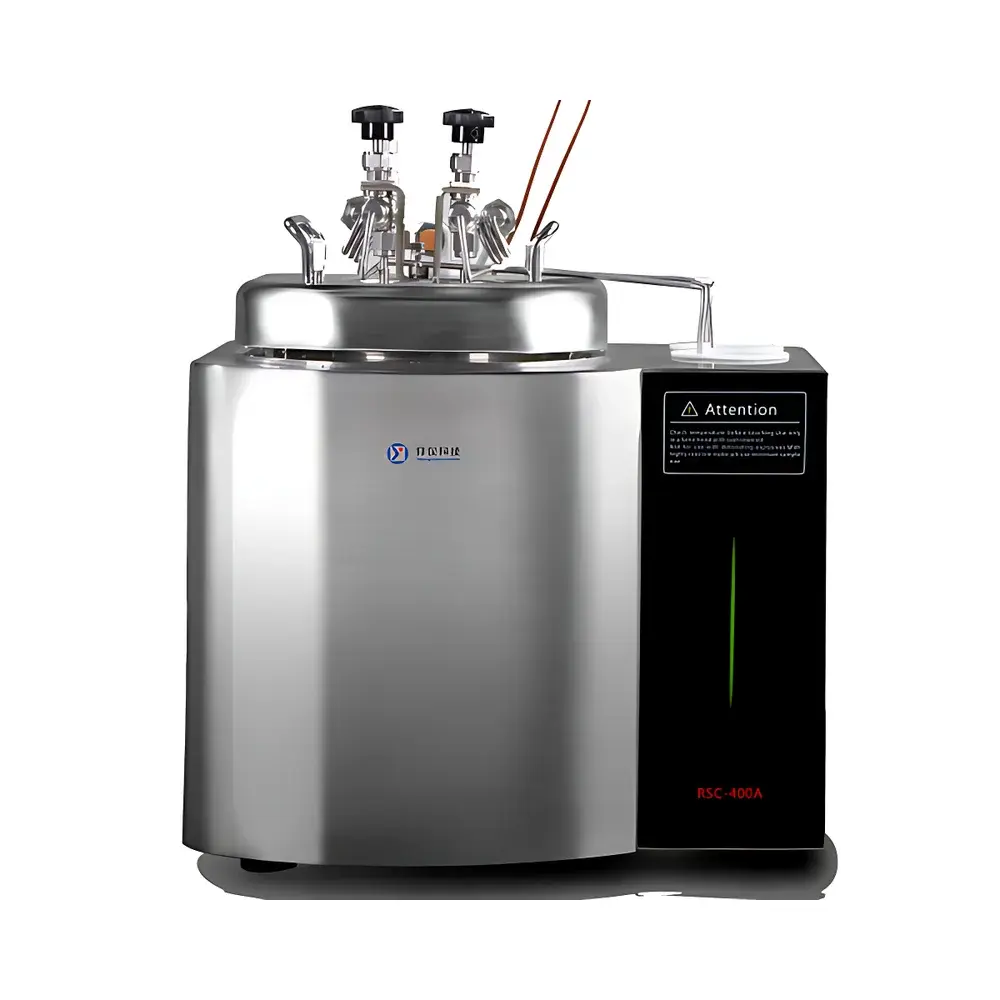
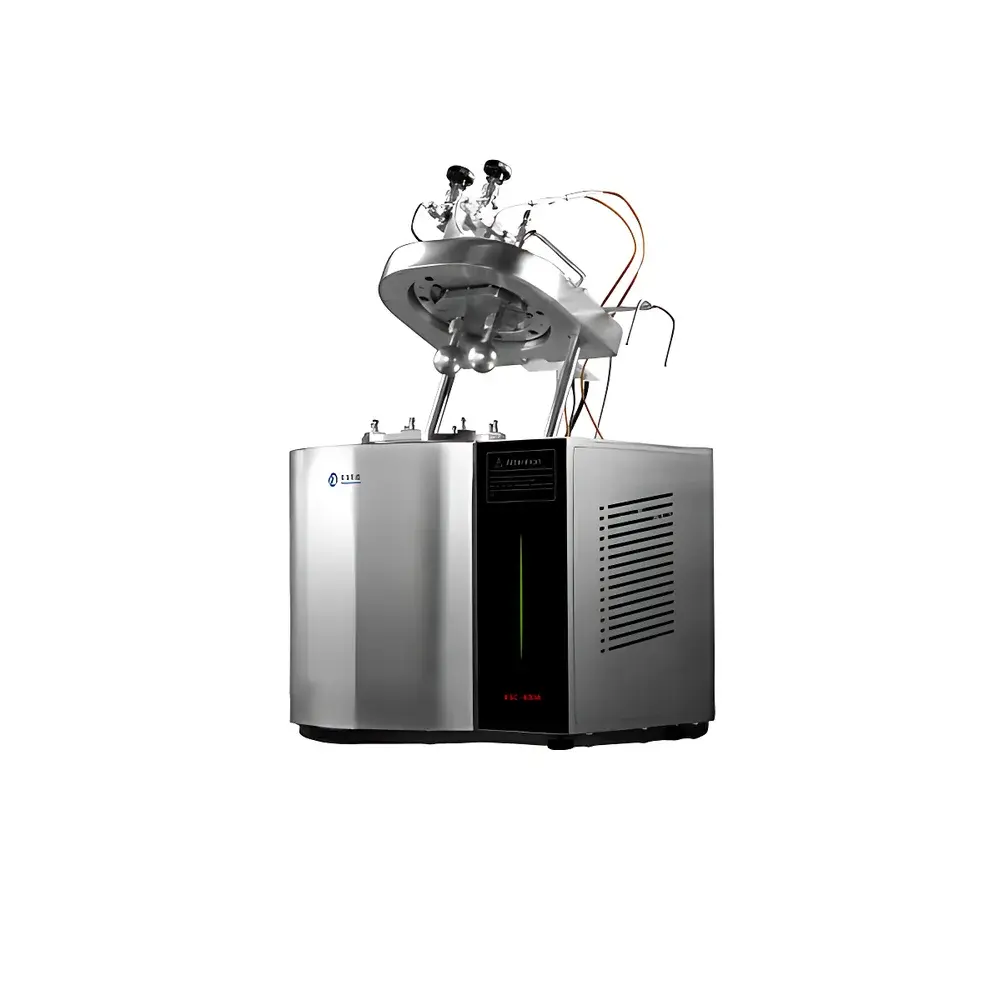
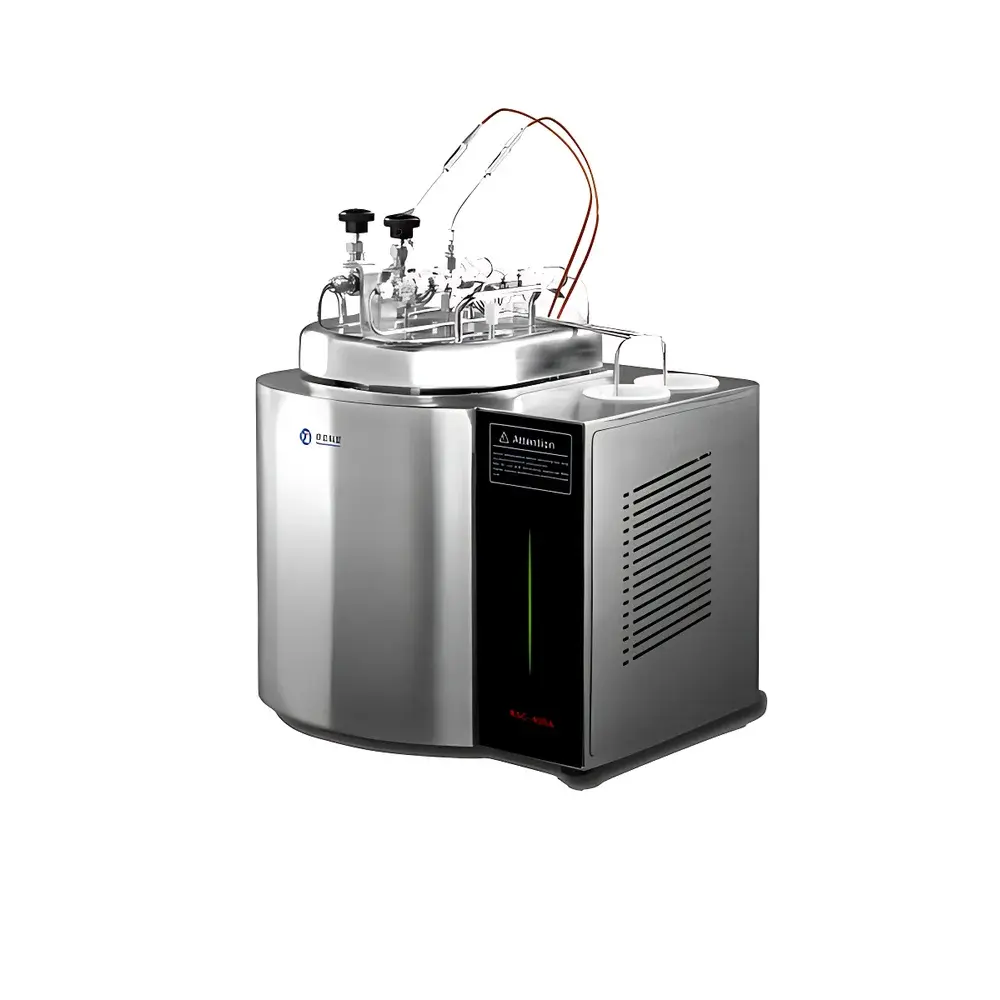
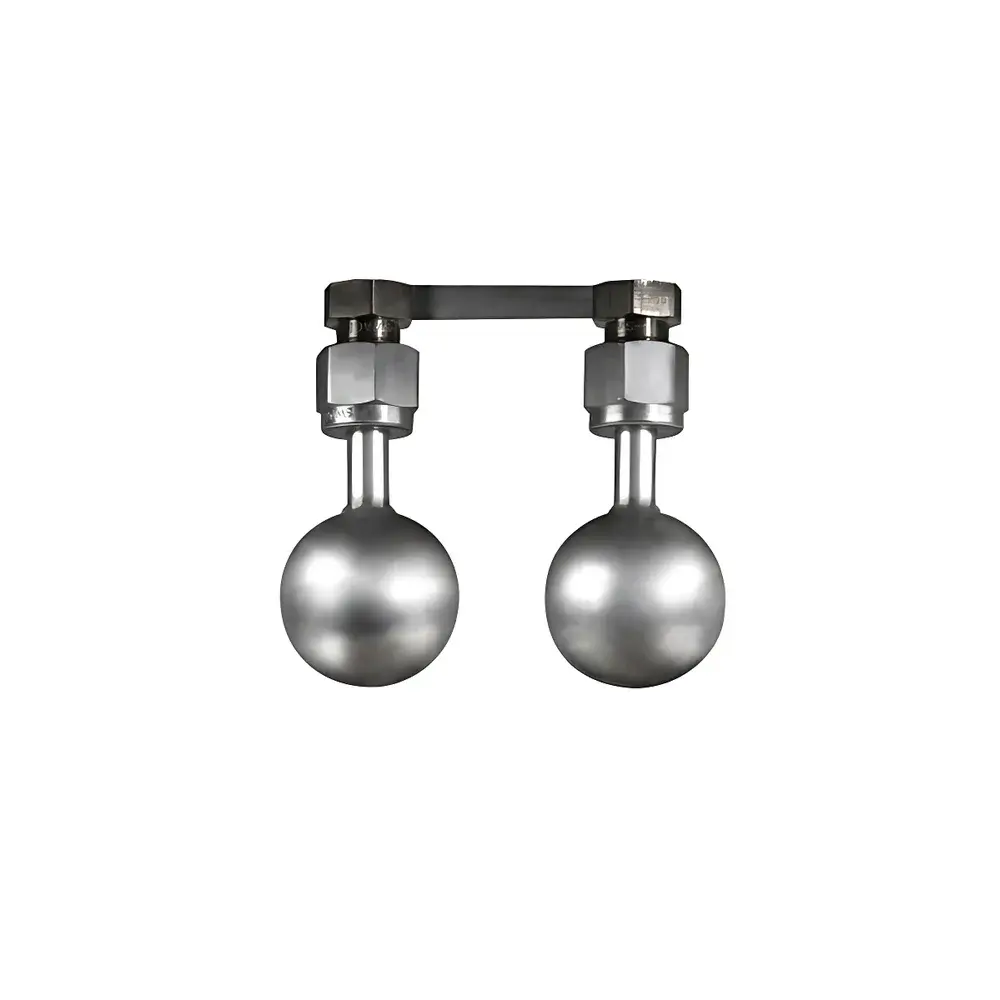
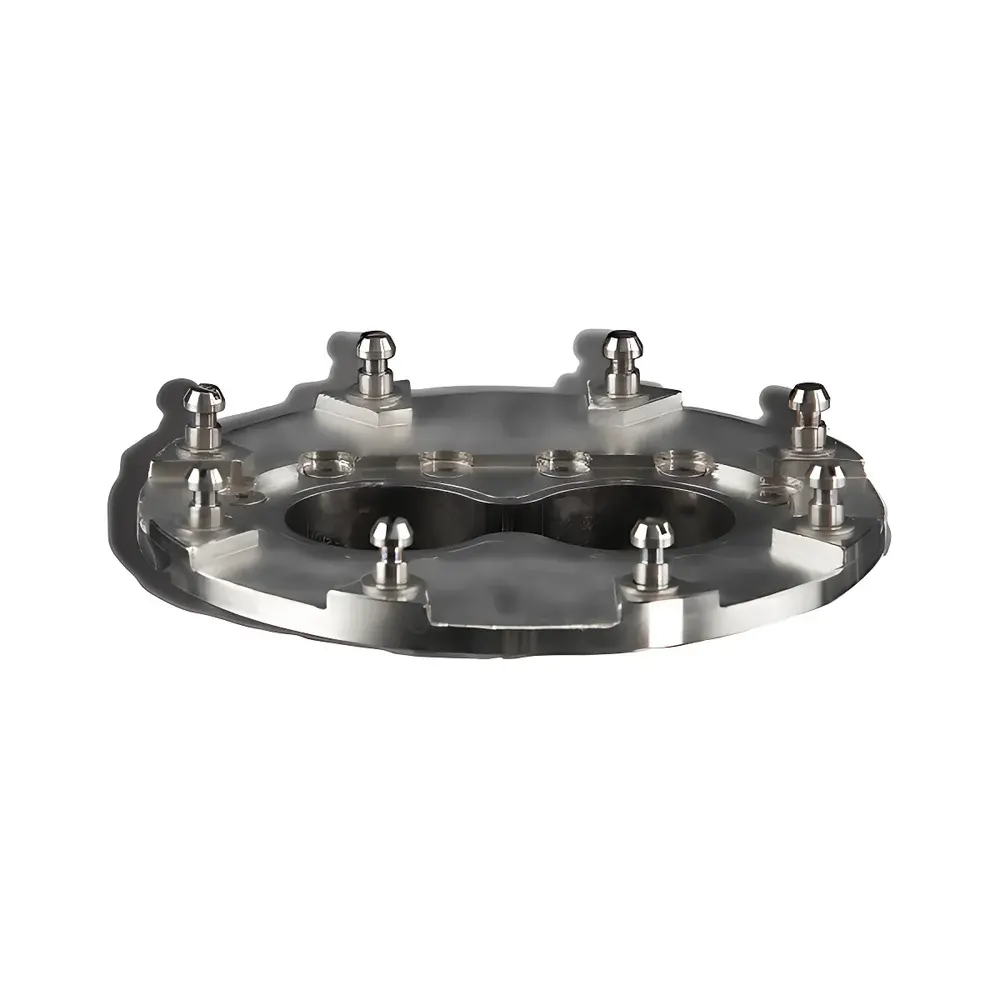
Young Instruments RSC-400A Rapid Screening Calorimeter
| Brand | Young Instruments |
|---|---|
| Origin | Zhejiang, China |
| Manufacturer Type | Manufacturer |
| Product Category | Domestic |
| Model | RSC-400A |
| Instrument Type | Accelerating Rate Calorimeter (ARC) |
| Measurement Mode | Adiabatic / Quasi-adiabatic Heat Flow & Pressure Monitoring |
| Temperature Range | Ambient to 400 °C |
| Heating Rate | 0.5–10 °C/min |
| Temperature Resolution | 0.01 °C |
| Pressure Range | 0–20 MPa |
| Pressure Resolution | 1 kPa |
| Detection Sensitivity | 1% DTBP in 6 mL Toluene |
| Sample Cell Volume | 8 mL |
| Sample Cell Materials | Stainless Steel (standard), Titanium or Hastelloy C-276 (optional) |
| Interface | RJ45 Ethernet |
| Power Supply | AC 220 V / 50 Hz |
| Power Consumption | 800 W |
| Dimensions | 310 mm × 280 mm × 350 mm |
| Weight | 15.5 kg |
| Operating Environment | 5–40 °C, <85% RH |
Overview
The Young Instruments RSC-400A Rapid Screening Calorimeter is an accelerating rate calorimeter engineered for high-throughput thermal hazard assessment of reactive chemical systems under controlled, near-adiabatic conditions. It operates on the principle of heat-wait-search (H-W-S) methodology combined with real-time pressure monitoring, enabling simultaneous acquisition of exothermic onset temperature, self-heating rate, adiabatic temperature rise (ΔTad), time-to-maximum-rate (TMR), pressure evolution, gas generation kinetics, and vent sizing data. Unlike differential scanning calorimeters (DSC) or thermogravimetric analyzers (TGA), the RSC-400A accommodates larger sample masses (up to 8 mL) while maintaining robust containment integrity up to 20 MPa—critical for identifying runaway reaction thresholds in process safety studies. Its design complies with core principles outlined in ASTM E698, ISO/IEC 17025, and CCPS Guidelines for Chemical Process Safety, supporting hazard identification required for Process Hazard Analysis (PHA), HAZOP, and Layer of Protection Analysis (LOPA).
Key Features
- Dual-channel architecture enables parallel testing of two independent samples—reducing total screening time by up to 40% without compromising measurement fidelity.
- Integrated pressure transducer and high-resolution thermocouple array deliver synchronized thermal and mechanical response data, essential for determining critical venting parameters per DIERS methodology.
- Industrial-grade components—including precision-machined stainless-steel sample cells, aerospace-grade sealing mechanisms, and temperature-stable PID-controlled furnace—ensure long-term repeatability and metrological traceability.
- Multi-mode operation: supports Isothermal Hold, Dynamic Ramp, and Dual Gradient Scan protocols—enabling flexible experimental design for decomposition kinetics, polymerization initiation, or catalytic runaway screening.
- Automated lid-locking system interlocked with real-time pressure and temperature feedback; mechanical release only permitted when internal conditions fall within pre-defined safe thresholds (≤0.1 MPa, ≤60 °C).
- Post-test inert gas purge (N2 or Ar) cools the furnace rapidly, minimizing downtime between consecutive experiments and enhancing laboratory throughput.
- Comprehensive safety architecture includes dual independent overpressure relief valves, Class I explosion-proof enclosure rating, and hardware-enforced thermal cutoff at 420 °C.
Sample Compatibility & Compliance
The RSC-400A accepts liquid, slurry, paste, and solid-phase samples in standardized 8 mL sample cells constructed from 316 stainless steel (standard), titanium Grade 2 (for halogen-containing systems), or Hastelloy C-276 (for highly corrosive media such as concentrated acids or red fuming nitric acid). Cell compatibility has been validated against common industrial solvents (e.g., toluene, THF, DMF, acetonitrile), active pharmaceutical ingredients (APIs), nitroaromatics, peroxides, azides, and energetic materials. The instrument meets functional safety requirements aligned with IEC 61511 (SIL-2 capable configuration) and supports audit-ready documentation per FDA 21 CFR Part 11 when paired with compliant software configurations. All test reports include metadata timestamps, operator ID, calibration certificate references, and raw sensor trace logs—fully traceable for GLP/GMP-regulated environments.
Software & Data Management
The proprietary RSC-DataSuite v3.2 software provides full instrument control, real-time visualization of temperature/pressure/time profiles, and automated calculation of key thermal safety parameters: onset temperature (Tonset), peak temperature (Tpeak), maximum self-heat rate (dT/dt)max, adiabatic time-to-explosion (TMRad), and vent flow capacity (Qmax). Data export is supported in CSV, XML, and PDF formats—with embedded digital signatures and version-controlled report templates. Audit trail functionality records all user actions, parameter modifications, and calibration events with immutable timestamps. Software architecture supports network deployment across lab-wide instrument clusters and integrates via OPC UA with LIMS platforms (e.g., LabWare, STARLIMS) and enterprise MES systems.
Applications
- Reaction calorimetry screening for batch and continuous process development in fine chemical and pharmaceutical manufacturing.
- Thermal stability evaluation of battery electrolytes, cathode materials, and solid-state electrolytes under abuse conditions.
- Hazard classification of new chemical entities (NCEs) per UN GHS Chapter 2.5 and EU CLP Regulation Annex I.
- Validation of emergency relief system (ERS) design parameters using experimentally derived phi-factor-corrected data.
- Root cause analysis of thermal incidents during pilot-scale trials or scale-up campaigns.
- Supporting regulatory submissions to EMA, FDA, and MHRA requiring documented thermal hazard characterization.
FAQ
What sample volume is required for reliable detection of low-energy exotherms?
A minimum of 3–5 mL is recommended for statistically robust onset detection; sensitivity is validated at 1% DTBP in 6 mL toluene, corresponding to ~0.5 J/g threshold under adiabatic conditions.
Can the RSC-400A be used for gas evolution quantification?
Yes—integrated pressure-volume-temperature (PVT) modeling allows estimation of moles of non-condensable gas generated during decomposition, provided vapor pressure corrections are applied for volatile solvents.
Is remote operation and monitoring supported?
The RJ45 Ethernet interface enables full TCP/IP-based remote control, live data streaming, and alarm notification via SNMP or email integration.
How often does the system require recalibration?
Temperature sensors are factory-calibrated to NIST-traceable standards; annual verification is recommended per ISO/IEC 17025, with optional on-site calibration services available.
Does the instrument support custom heating profiles beyond standard modes?
Yes—user-defined ramp/hold sequences can be programmed via scripting interface (Python API), allowing implementation of complex thermal stress protocols mimicking realistic process deviations.



