
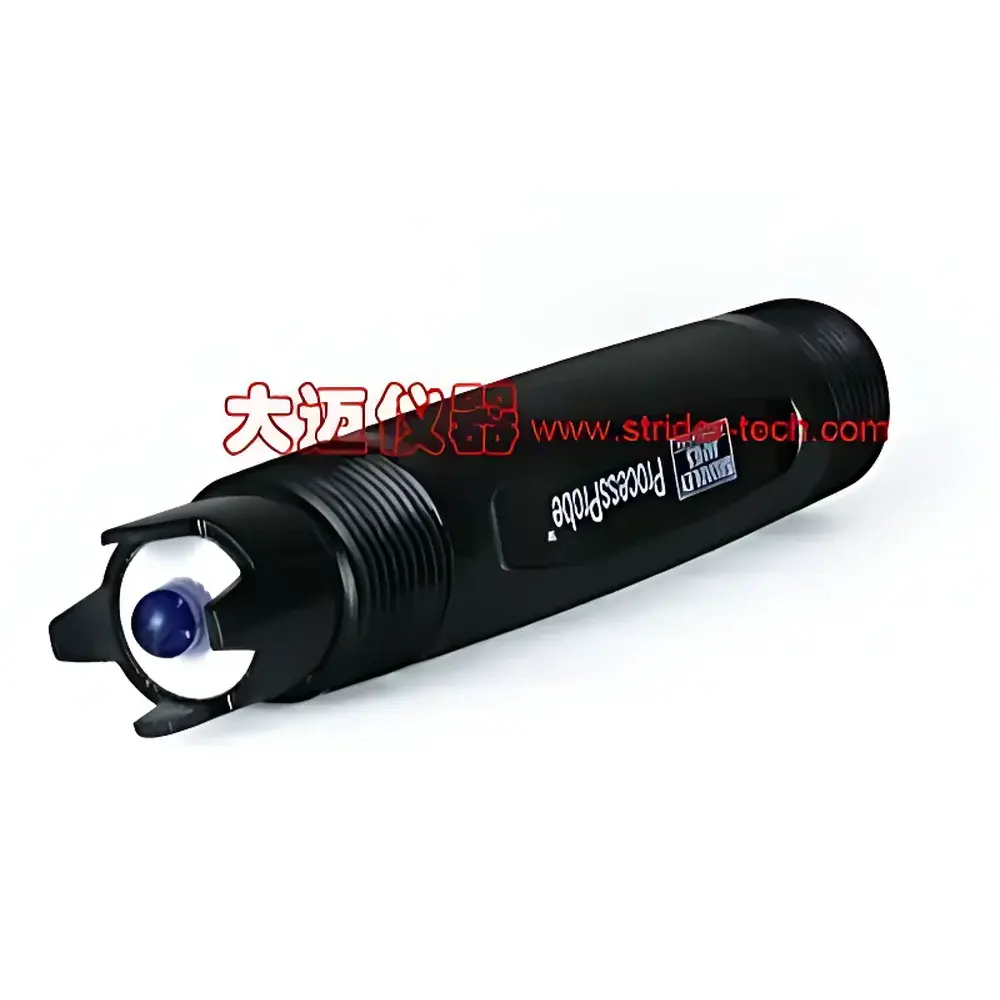
BJC S400-RTPBO-M10ST Industrial Redox (ORP) Electrode
| Origin | USA |
|---|---|
| Manufacturer Type | Authorized Distributor |
| Origin Category | Imported |
| Model | S400-RTPBO-M10ST |
| Pricing | Upon Request |
Overview
The BJC S400-RTPBO-M10ST is a high-reliability, industrial-grade redox (oxidation-reduction potential, ORP) electrode engineered for continuous online monitoring in demanding aqueous process environments. It operates on the fundamental electrochemical principle of measuring the equilibrium potential difference between a noble metal sensing element (platinum) and a stable reference system (dual-junction Ag/AgCl), relative to the standard hydrogen electrode (SHE). This measurement provides a direct, millivolt-scale indicator of the electron-transfer capacity of a solution—critical for real-time control of disinfection efficacy, chemical dosing, corrosion inhibition, and redox-driven bioprocesses. Designed specifically for harsh wastewater, ultrapure water, and high-fouling industrial effluent applications, the S400-RTPBO-M10ST integrates robust mechanical architecture with electrochemically optimized geometry to ensure long-term signal stability, minimal drift, and resistance to poisoning or clogging.
Key Features
- Ring-shaped ceramic junction with large surface area—engineered to minimize pore occlusion in high-suspended-solid or viscous media, enabling reliable operation in heavily contaminated wastewater streams.
- Large-diameter platinum sensing ring—provides enhanced signal-to-noise ratio and improved potential reproducibility under fluctuating flow or low-conductivity conditions (e.g., UPW systems).
- Dual-salt-bridge Ag/AgCl reference system—isolates the internal reference electrolyte (3.8 M KCl, non-refillable, pressurized design) from sample matrix interference, significantly extending service life in chloride-deficient or sulfide-rich environments.
- RYTON® (polyphenylene sulfide) and borosilicate glass body—rated for continuous operation from –5 °C to 105 °C and withstands 100 psig pressure at 100 °C, suitable for pressurized loop installations and steam-sanitizable CIP systems.
- PT-100 integrated temperature sensor (optional)—enables automatic temperature compensation per NIST-traceable algorithms, supporting compliance with ASTM D1129 and ISO 5814 standards for ORP measurement accuracy.
- IP68-rated housing—fully submersible and resistant to dust ingress, certified for permanent immersion in wet process trenches or open-channel monitoring stations.
Sample Compatibility & Compliance
The S400-RTPBO-M10ST demonstrates broad compatibility across low- to medium-conductivity aqueous matrices, including deionized water, reverse osmosis permeate, activated sludge effluent, cooling tower blowdown, and chlorinated potable water distribution systems. Its Teflon-wetted junction and chemically inert RYTON/glass construction resist attack from oxidants (e.g., ozone, chlorine dioxide), heavy metals, and organic solvents typically encountered in pharmaceutical and semiconductor rinse waters. The electrode conforms to key regulatory and quality frameworks: it supports audit-ready data integrity when paired with compliant transmitters (e.g., those meeting FDA 21 CFR Part 11 requirements for electronic records), and its measurement methodology aligns with ASTM D1498 (Standard Test Method for Oxidation-Reduction Potential of Aqueous Solutions) and ISO 5814:2012 (Water quality — Determination of oxidation-reduction potential).
Software & Data Management
While the S400-RTPBO-M10ST is an analog sensor (mV output), it is fully interoperable with industry-standard 4–20 mA or digital (HART®, Modbus RTU/ASCII) transmitter platforms. When integrated into SCADA or DCS architectures, its stable mV signal enables high-fidelity trending, automated alarm thresholds (e.g., ORP < +650 mV indicating insufficient disinfectant residual), and correlation with pH and conductivity for multivariate process insight. For laboratories operating under GLP or GMP, the electrode’s predictable drift profile (< ±2 mV/month under calibration-controlled storage) and documented calibration traceability support instrument qualification (IQ/OQ/PQ) protocols and routine verification per USP Analytical Instrument Qualification guidelines.
Applications
- Real-time ORP monitoring in municipal and industrial wastewater treatment—particularly for chlorine, chlorine dioxide, and ozone disinfection control loops.
- Critical point-of-use monitoring in semiconductor ultrapure water (UPW) distribution networks to detect trace oxidant breakthrough or reductive contamination events.
- Pharmaceutical clean-in-place (CIP) validation—verifying oxidative sanitization efficacy through sustained +800 mV thresholds.
- Electrochemical corrosion monitoring in closed-loop cooling systems via redox potential shift analysis.
- Environmental compliance reporting for discharge permits requiring continuous redox surveillance (e.g., NPDES permits).
FAQ
What is the recommended calibration frequency for the S400-RTPBO-M10ST in continuous online service?
Calibration is advised prior to installation and at least once every 7–14 days in high-fouling applications; monthly intervals are acceptable in stable UPW or low-contamination loops. Two-point verification using certified Zobell’s and Light’s standard solutions is required.
Can this electrode be used in low-conductivity water (< 5 µS/cm)?
Yes—its large platinum ring and optimized junction hydraulics reduce polarization error; however, use with a grounded reference or conductive ground loop is strongly recommended to stabilize the measurement circuit.
Is the 3.8 M KCl reference electrolyte refillable?
No—the internal reference system is sealed and non-refillable; the electrode is designed for replacement after 12–24 months of typical industrial service, depending on thermal and chemical stress exposure.
Does the PT-100 temperature sensor option support automatic temperature compensation in all transmitters?
Only transmitters with configurable two-wire RTD input and programmable ORP compensation algorithms (e.g., Emerson DeltaV, Endress+Hauser Liquiline CM44P) can fully utilize this feature.
What cleaning protocol is recommended for fouled ceramic junctions?
Soak in warm 10% HNO₃ for 15 minutes, followed by thorough rinsing with deionized water; avoid abrasive scrubbing or ultrasonic cleaning, which may damage the platinum ring geometry.
Related Products







