
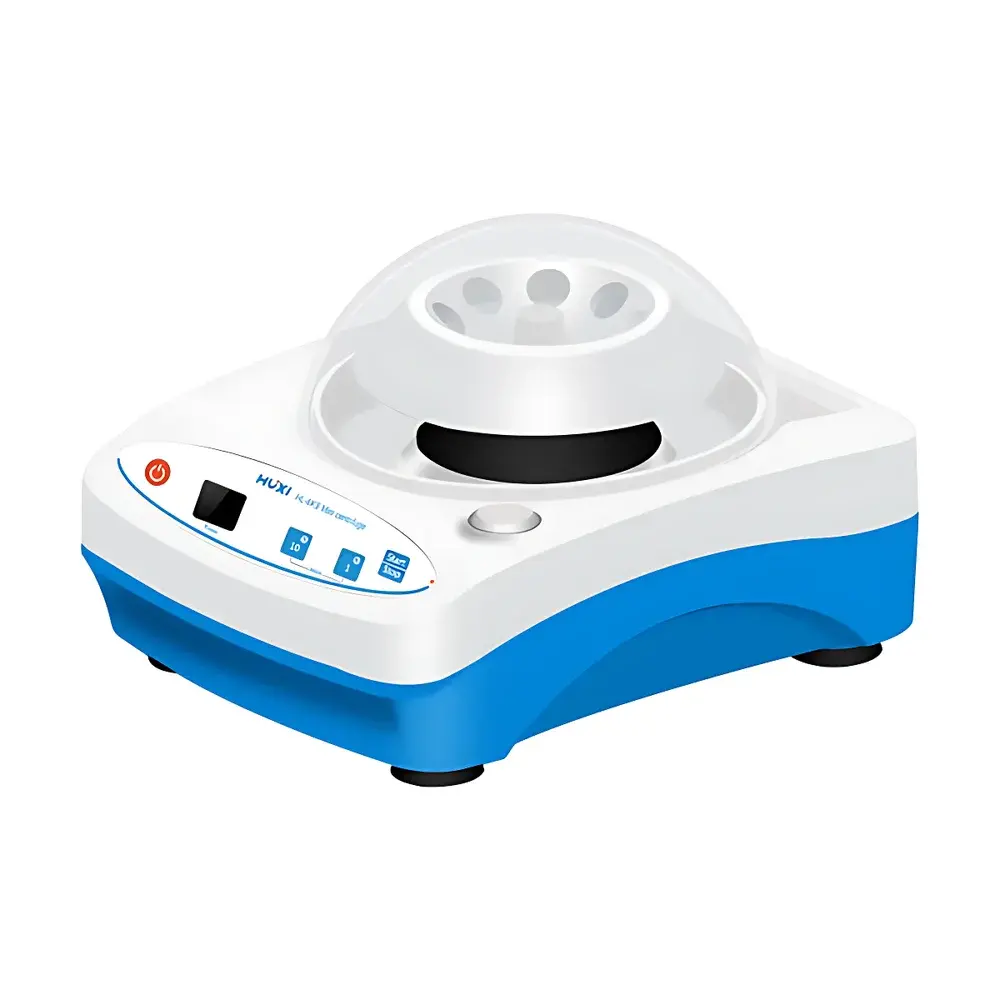
HUXI HL-11KS Benchtop Microcentrifuge
| Brand | HUXI |
|---|---|
| Origin | Shanghai, China |
| Manufacturer Type | Original Equipment Manufacturer (OEM) |
| Product Category | Domestic |
| Model | HL-11KS |
| Instrument Type | Palm-Sized Microcentrifuge |
| Speed Range | High-Speed (10,000–30,000 rpm) |
| Function | General-Purpose Centrifuge |
| Configuration | Fixed-Angle Rotor |
| Separation Class | Biomacromolecules |
| Maximum Capacity | 2 mL per tube |
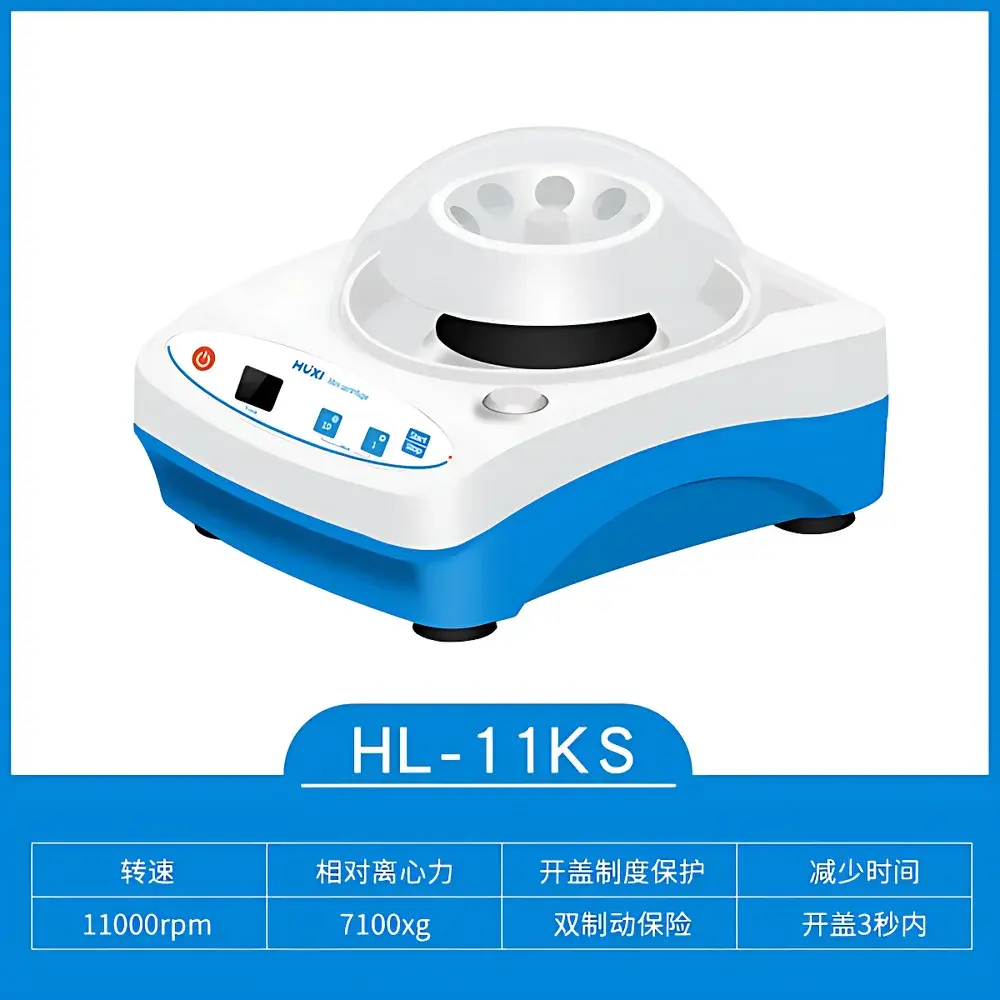
| Maximum Speed | 11,000 rpm |
| Maximum RCF | 7,100 × g |
| Dimensions (L×W×H) | 175 × 135 × 120 mm |
| Weight | 1.6 kg |
| Power Input | AC 100–240 V, 50/60 Hz |
| Noise Level | ≤45 dB(A) |
| Acceleration Time to 90% Rated Speed | 5 s |
| Deceleration & Lid Opening Time | ≤3 s |
| Rotor Options | 8-position 2.0/1.5 mL fixed-angle rotor |
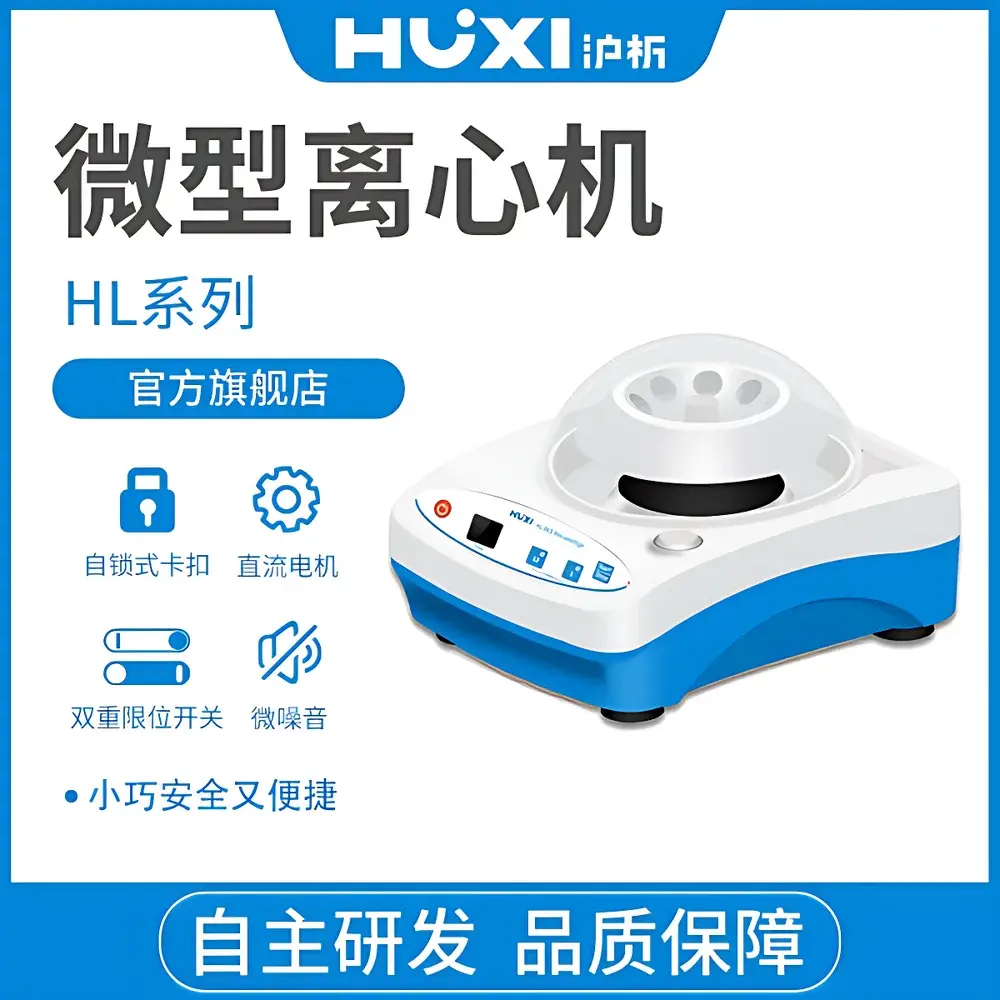
| Motor Type | Brushless DC Motor |
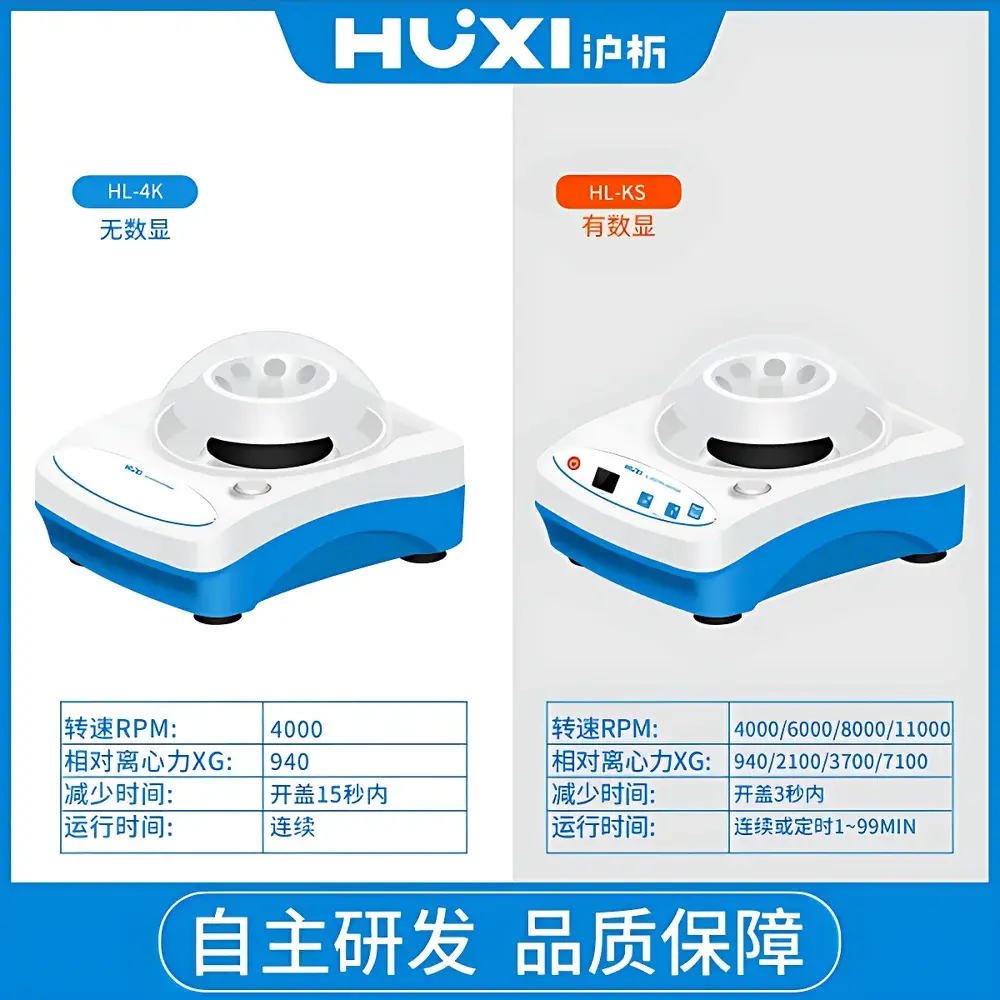
| Timer Range | 1–99 min (continuous or timed mode) |
Overview
The HUXI HL-11KS is a compact, high-performance benchtop microcentrifuge engineered for precision separation of biomacromolecules—including DNA, RNA, proteins, and cellular organelles—in resource-constrained or space-limited laboratory environments. Utilizing brushless DC motor technology and optimized aerodynamic rotor design, the HL-11KS delivers stable rotational dynamics at up to 11,000 rpm with a maximum relative centrifugal force (RCF) of 7,100 × g—sufficient for pelleting nucleic acids from small-volume lysates, clarifying bacterial suspensions, and recovering PCR products. Its palm-sized footprint (175 × 135 × 120 mm) and lightweight construction (1.6 kg) make it ideal for laminar flow hoods, biosafety cabinets, and mobile lab setups. Unlike general-purpose centrifuges, the HL-11KS integrates mechanical and electronic safety redundancies—including dual braking systems, automatic lid interlock, and real-time RCF calculation—to ensure compliance with ISO 13485-aligned quality management practices for in vitro diagnostic (IVD) sample preparation workflows.
Key Features
- Brushless DC motor delivering consistent torque output, low thermal drift, and extended service life (>10,000 hours MTBF)
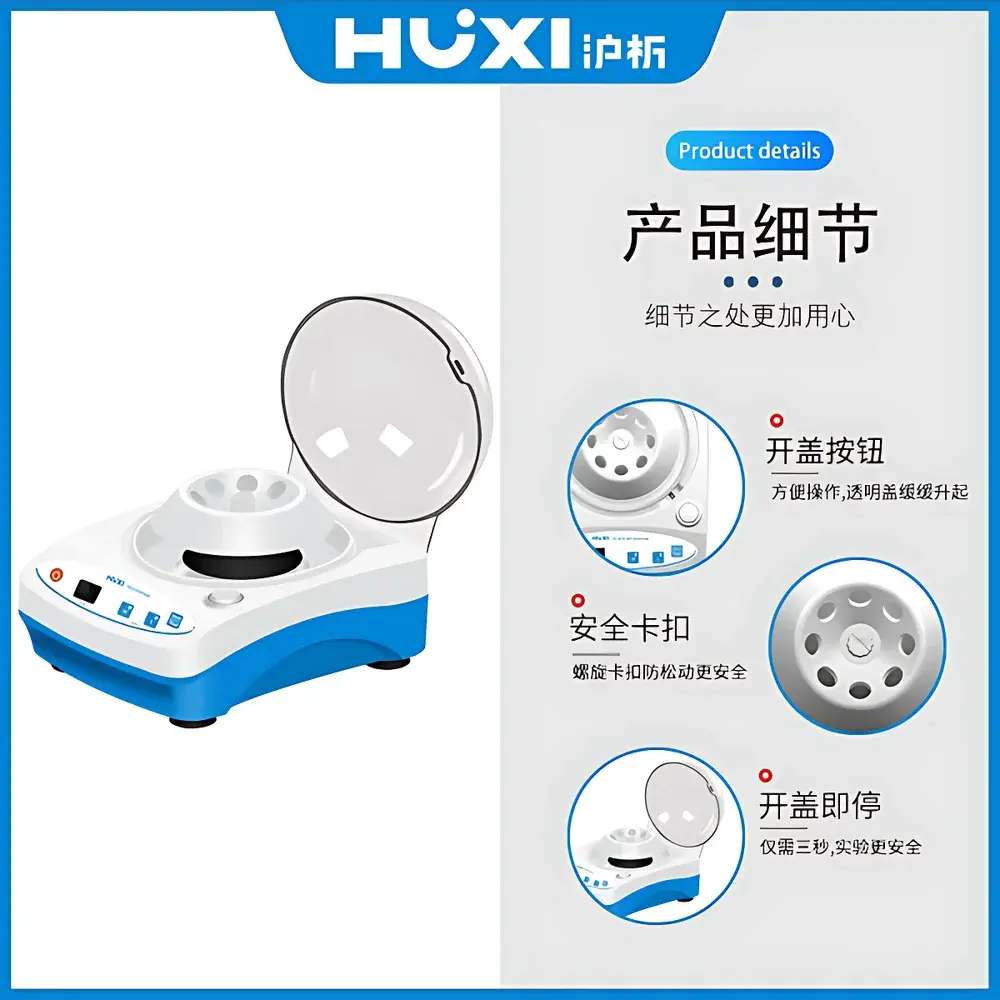
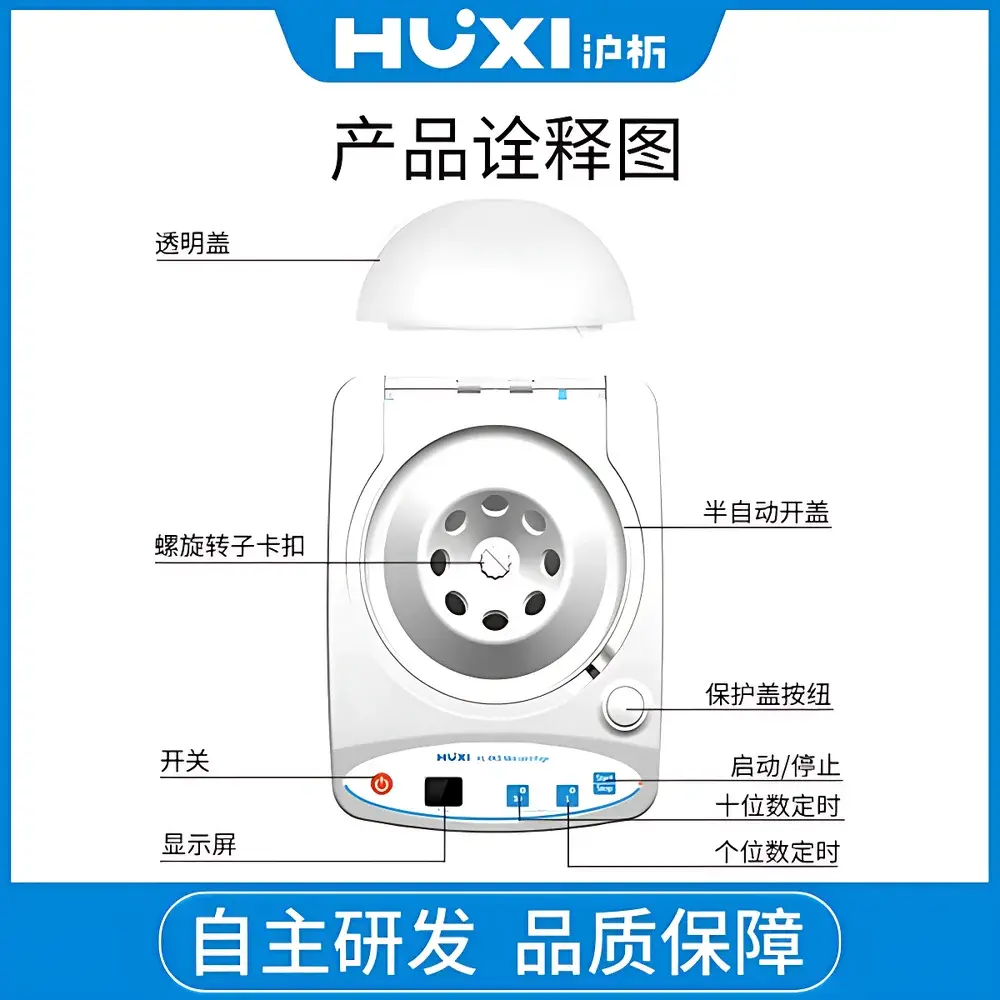
- Intelligent semi-automatic lid mechanism: motor halts within 3 seconds of lid actuation, minimizing sample disturbance during tube access
- Wide-input universal power supply (AC 100–240 V, 50/60 Hz), enabling stable operation across global voltage standards without external transformers
- Acoustically damped housing and balanced rotor assembly limit operational noise to ≤45 dB(A), meeting WHO-recommended ambient noise thresholds for quiet laboratory zones
- Ergonomic transparent spherical lid provides full visual monitoring of rotor status and sample integrity during operation
- Quick-release rotor interface with tactile click-lock feedback ensures secure installation and rapid interchange between 8-place 1.5/2.0 mL angle rotors and 32-place 0.2 mL PCR strip rotors
- Digital timer with 1–99 minute programmable range and continuous mode; memory retention preserves last-used settings after power cycling
Sample Compatibility & Compliance
The HL-11KS accommodates standard microcentrifuge tubes (1.5 mL and 2.0 mL) and 8-strip PCR tube formats (0.2 mL per well), supporting common consumables from leading vendors including Eppendorf, Axygen, and Thermo Fisher Scientific. All rotors are certified to ISO 15883-1:2019 (sterilization compatibility) and validated for repeated autoclaving at 121 °C for 20 minutes. The device complies with IEC 61010-1:2010 (Safety Requirements for Electrical Equipment for Measurement, Control, and Laboratory Use) and meets electromagnetic compatibility (EMC) requirements per IEC 61326-1:2020. While not FDA 510(k)-cleared as a medical device, its performance parameters align with ASTM F2666-21 (Standard Practice for Validation of Centrifuge Performance in Life Science Applications), making it suitable for GLP-compliant sample prep in QC/QA laboratories serving pharmaceutical, food safety, and biotechnology sectors.
Software & Data Management
The HL-11KS operates via an embedded microcontroller with no external software dependency—ensuring deterministic response times and eliminating cybersecurity vulnerabilities associated with networked instruments. All operational parameters (speed, time, RCF, acceleration/deceleration profiles) are stored locally in non-volatile memory with timestamped audit trails accessible via front-panel display scroll navigation. For integration into LIMS or ELN ecosystems, optional RS-232 serial output (available via accessory module) supports ASCII-formatted log export compliant with 21 CFR Part 11 Annex 11 data integrity requirements when paired with validated third-party middleware. No cloud connectivity or proprietary drivers are required.
Applications
- Routine nucleic acid purification workflows: spin-column binding buffer clarification, ethanol precipitation wash steps, and post-PCR cleanup
- Microbial pelleting for genomic DNA extraction from E. coli, S. cerevisiae, and environmental isolates
- Protein concentration and desalting using centrifugal filter units (e.g., Amicon Ultra, 0.5 mL format)
- Viral particle pelleting in early-stage virology research (e.g., lentiviral vector preps, phage lysate concentration)
- Quality control centrifugation in food microbiology labs (e.g., pathogen enrichment pellet recovery prior to plating)
- Small-batch reagent formulation where precise phase separation (e.g., organic-aqueous extraction) is required in sub-2 mL volumes
FAQ
What is the maximum recommended rotor load for continuous operation?
The HL-11KS is rated for continuous use at full speed (11,000 rpm) only when all positions in the rotor are loaded symmetrically with tubes of identical volume and mass—up to 2.0 mL per position.
Can the HL-11KS be used for clinical diagnostic sample processing under CLIA or CAP guidelines?
Yes—provided that user-defined SOPs include daily verification of speed accuracy (±100 rpm tolerance), routine rotor inspection per manufacturer’s maintenance schedule, and documented calibration traceability to NIST-traceable tachometers.
Is rotor balancing required before each run?
Yes. Although the rotor design minimizes imbalance sensitivity, manual balance verification using matched tube masses remains mandatory per ISO 20957-2:2020 to prevent premature bearing wear and vibration-induced sample degradation.
Does the device support variable acceleration/deceleration ramping?
No—the HL-11KS uses fixed-profile ramps (5 s to 90% max speed; coast-down deceleration) to maintain mechanical reliability and simplify validation protocols for regulated environments.
Are replacement rotors and adapters available through international distributors?
Yes—HUXI-certified rotors (P/N HL-R11K-ANG for 1.5/2.0 mL; P/N HL-R11K-PCR for 0.2 mL strips) are distributed globally via ISO 13485-certified logistics partners with CE marking and RoHS documentation.



