
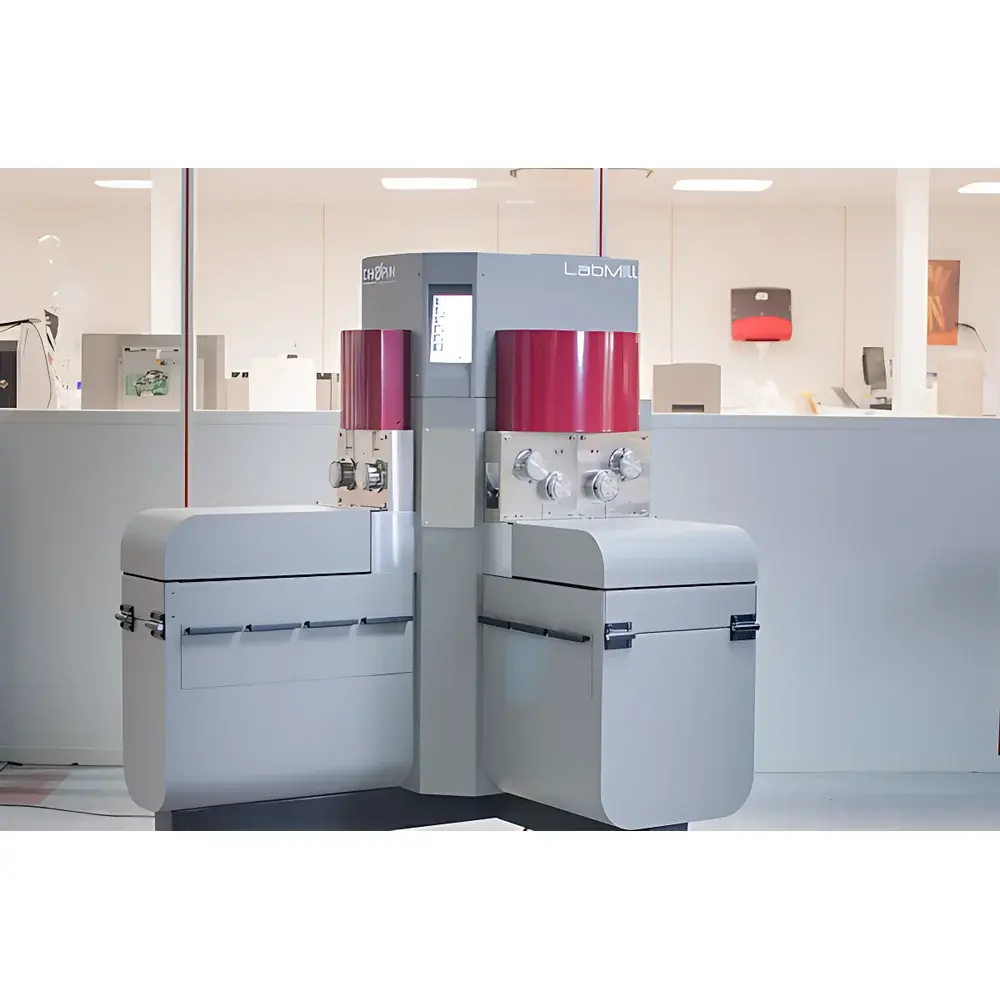
LabMill by KPM-CHOPIN Automated Laboratory Mill for Wheat Grinding
| Brand | KPM-CHOPIN |
|---|---|
| Origin | USA |
| Model | LabMill |
| Compliance | ISO 27971:2008 |
| Patent | FR 0905572 / US 9,067,210 |
| Feed Capacity | 50 g – 2,000 g per run |
| Roller Configuration | 2-break, 1-scratch, 2-heart passages |
| Feed Control | Integrated precision balance with constant-rate gravimetric feeding |
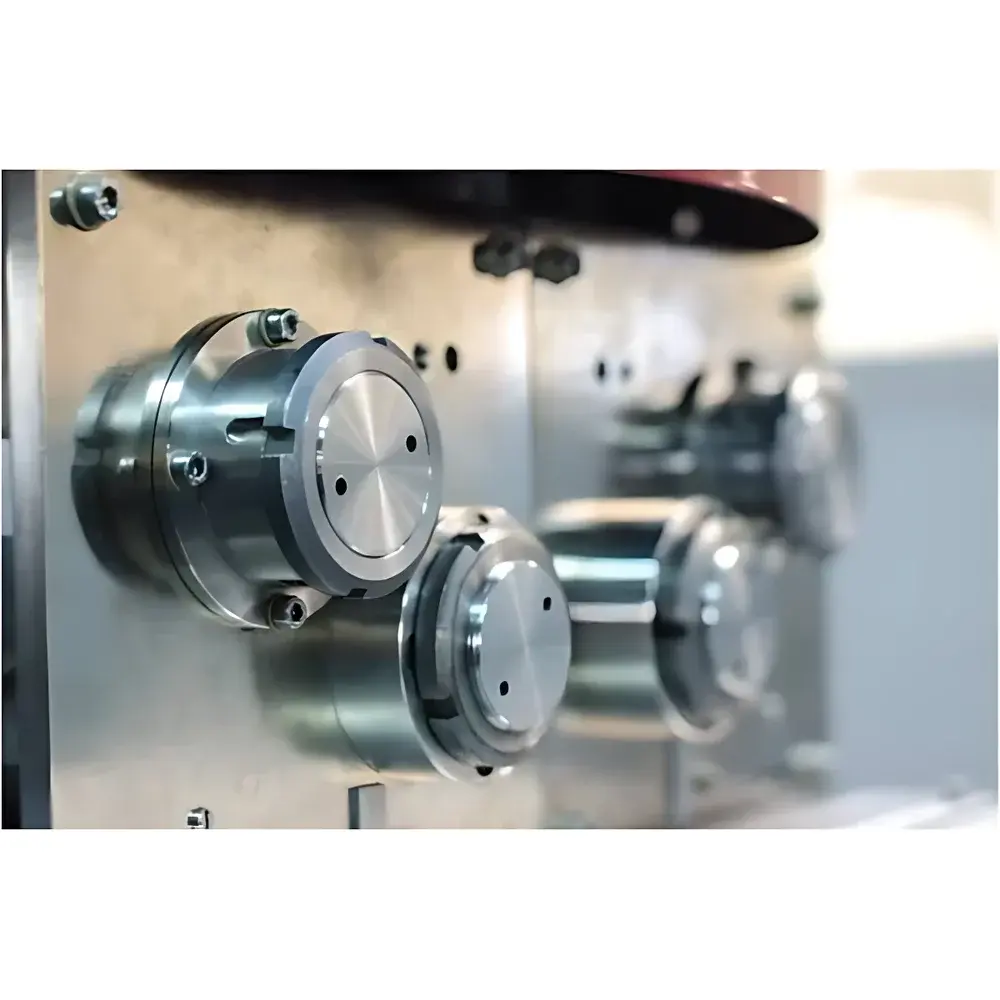
| Roller Adjustment | Eccentric shaft-mounted rollers with user-defined gap calibration |
| Sieving System | Multi-stage cascade sieving (defined mesh sizes per passage) |
| Construction | Industrial-grade stainless steel and hardened alloy components |
| Operating Principle | Simulated industrial roller milling using sequential break–scratch–heart grinding and fractionated sifting |
Overview
The LabMill by KPM-CHOPIN is a fully automated, benchtop laboratory roller mill engineered to replicate the mechanical and functional sequence of industrial wheat milling under controlled, repeatable conditions. Unlike conventional lab mills relying on impact or attrition, the LabMill implements a patented five-passage milling flow—comprising two break rolls, one scratch roll, and two heart rolls—each followed by dedicated sieving stages calibrated to standard flour particle size distributions. This architecture enables physico-mechanical simulation of commercial milling behavior, allowing precise quantification of flour yield (extraction rate), bran separation efficiency, and granulation profile across soft, hard, durum, and ancient wheat varieties. The system operates on gravimetric feed control: an integrated high-resolution balance regulates wheat input at a constant mass flow rate, eliminating operator-induced variability and ensuring consistent kernel stress history across replicates. Designed in accordance with ISO 27971:2008, the LabMill delivers metrologically traceable data for evaluating milling suitability, predicting industrial extraction performance, and correlating grain hardness parameters (e.g., NIR hardness index, SKCS) with downstream flour functionality.
Key Features
- Patented five-stage milling flow (2-break → 1-scratch → 2-heart) with independent roller gap adjustment via eccentric shaft mechanism
- Gravimetric feed control system with ±0.1 g repeatability, enabling precise 50 g minimum batch testing and scalable up to 2 kg for additive formulation validation
- Dual-configuration roller sets: interchangeable break-roll assemblies optimized for soft vs. hard wheat kernel fracture behavior
- Cascade sieving module with standardized mesh configurations (per ISO 27971 Annex B) for simultaneous collection of flour, shorts, fine/medium coarse semolina, and bran fractions
- Human-centered engineering: front-access maintenance ports, tool-free roller removal, and modular sieve frame alignment system
- Roller surface geometry compliant with ISO 5224:2019 specifications for corrugation pitch, depth, and angle across all grinding passages
Sample Compatibility & Compliance
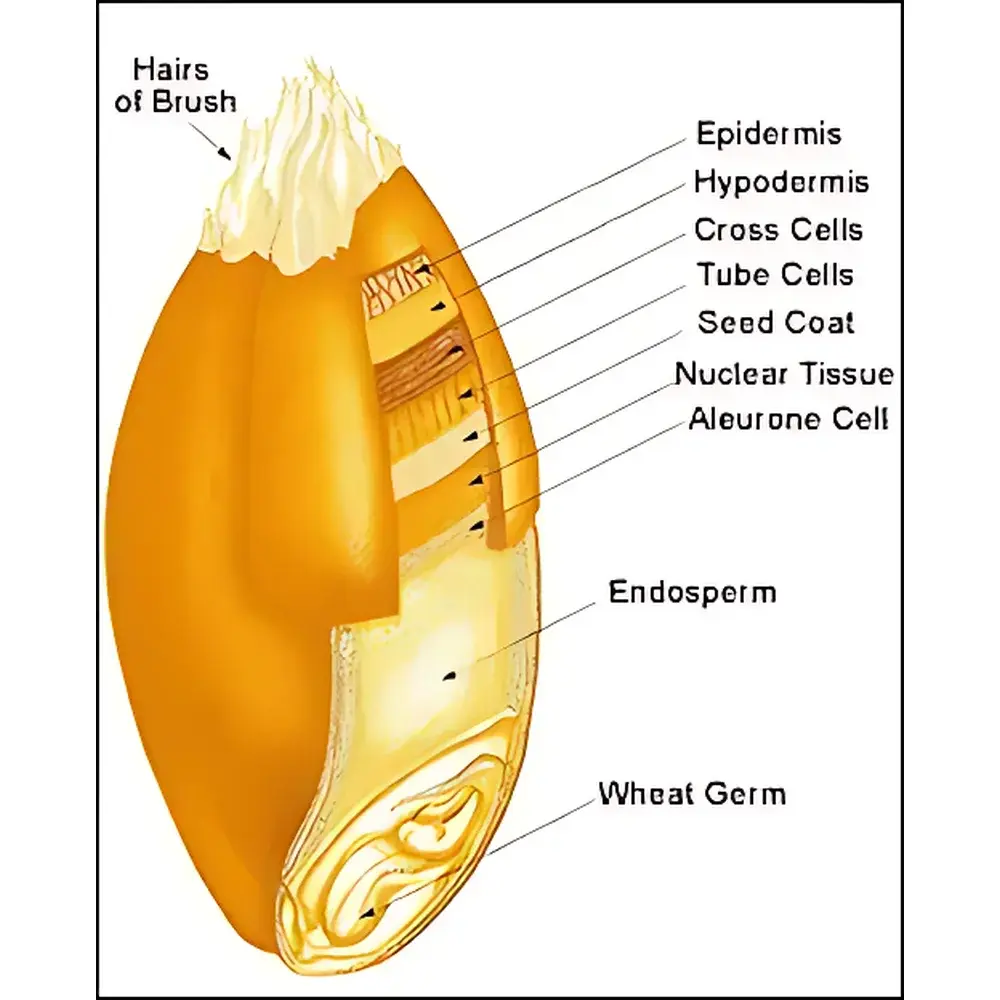
The LabMill accommodates whole kernels of Triticum aestivum (bread wheat), T. durum (durum wheat), T. turgidum (emmer), and T. spelta (spelt), irrespective of moisture content (10–15% w.b.) or Hagberg falling number (200–400 s). Its adaptive feed mechanism and variable roller clearance eliminate pre-conditioning requirements typically imposed by fixed-gap mills. All operational outputs—including extraction rate, ash distribution across fractions, and particle size cumulative distribution—are directly comparable to commercial mill trials when validated against ISO 27971 reference methods. The system supports GLP-compliant workflows through audit-ready operation logs and manual intervention timestamps. It is routinely deployed in laboratories accredited to ISO/IEC 17025:2017 for cereal quality testing and satisfies method validation criteria outlined in AACC International Method 26–50A and ICC Standard Method 173.
Software & Data Management
The LabMill operates without proprietary software dependency; all process parameters—including feed mass, roller speed (rpm), gap settings (µm), and elapsed milling time—are manually set and mechanically locked prior to operation. Output fractions are physically weighed and recorded externally using certified analytical balances. This hardware-first architecture ensures full transparency, eliminates software validation overhead, and guarantees long-term method stability across instrument generations. For laboratories requiring digital traceability, optional integration with LIMS platforms is supported via RS-232 serial output of timestamped weight values from the internal balance. Raw data files conform to ASTM E1482-22 guidelines for instrumental cereal testing metadata structure.
Applications
- Wheat breeding programs: high-throughput screening of 50 g samples to rank genotypes by predicted industrial extraction rate and flour ash segregation
- Milling R&D: optimization of tempering protocols, roll gap sequencing, and break-to-heart ratio for novel wheat classes
- Flour quality labs: generation of reproducible test flours for Farinograph, Mixolab, and alveograph analysis under fixed milling history
- Food ingredient development: production of >2 kg homogeneous flour batches for baking, noodle, and steamed bread trials
- Academic teaching: demonstration of classical milling theory—including particle size reduction mechanics, differential breakage kinetics, and sieve efficiency curves—in undergraduate food science curricula
FAQ
Does the LabMill require kernel preconditioning (tempering) before milling?
No. Its adaptive feed and adjustable roller gaps accommodate untempered kernels, though users may apply standard tempering protocols to align with specific industrial benchmarks.
Can the LabMill be used for non-wheat cereals such as rye or barley?
It is validated exclusively for Triticum species per ISO 27971. Non-wheat grains exhibit divergent fracture mechanics and require separate method development and equipment qualification.
How is calibration verified between instruments?
Inter-instrument comparability is maintained through annual verification using NIST-traceable reference wheat samples and documented roller gap measurement with certified micrometers per ISO 5224 Annex D.
Is the LabMill compliant with FDA 21 CFR Part 11 for electronic records?
As a hardware-controlled, non-software-driven instrument, it does not generate electronic records subject to Part 11. All data originate from external certified balances and manual logbooks, satisfying paper-based GLP requirements.
What maintenance intervals are recommended for the roller assemblies?
Roller reconditioning (re-corrugation or polishing) is advised after 500 kg of cumulative milling throughput, verified by surface profilometry per ISO 4287.






