
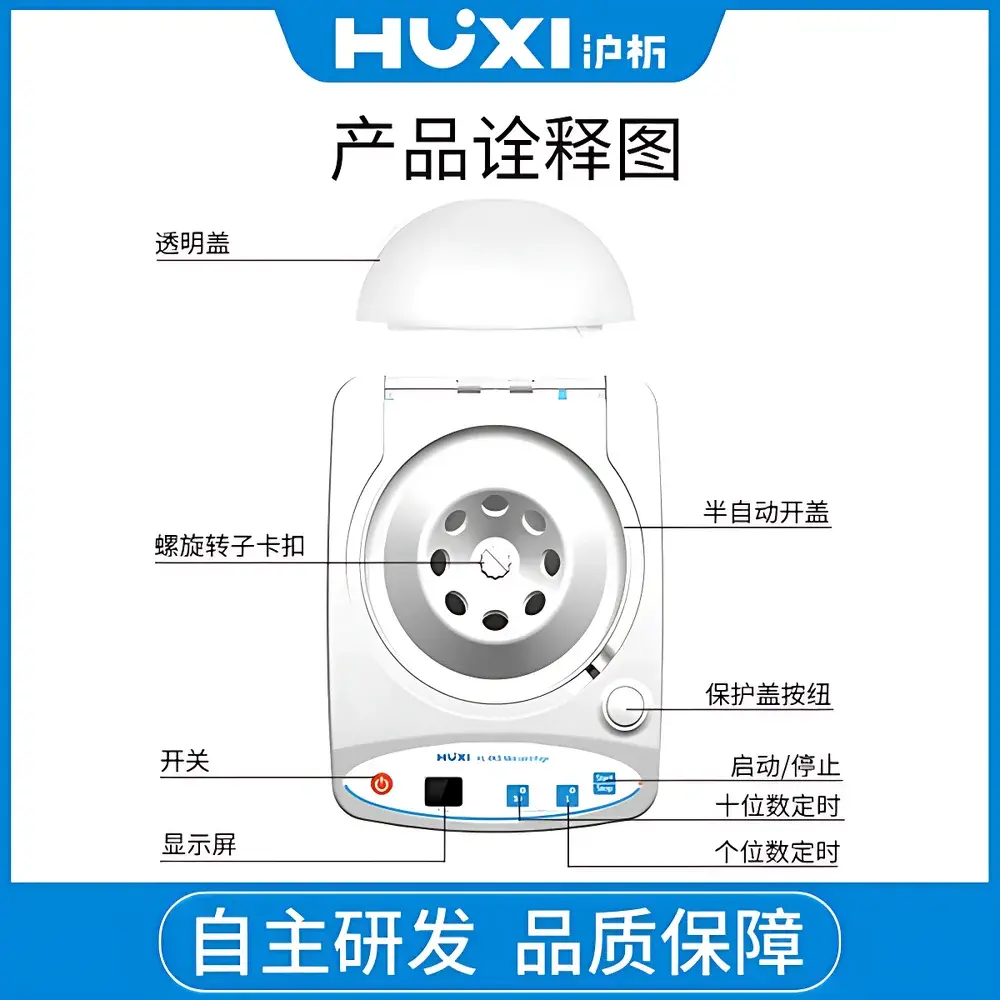
HUXI HL-4K Benchtop Microcentrifuge
| Brand | HUXI |
|---|---|
| Origin | Shanghai, China |
| Manufacturer Type | Direct Manufacturer |
| Product Category | Domestic |
| Model | HL-4K |
| Instrument Type | Palm-Sized Centrifuge |
| Speed Class | Low-Speed Centrifuge (max. 4,000 rpm) |
| Configuration | Fixed-Angle Rotor Centrifuge |
| Separation Target | Biological Macromolecules |
| Max Capacity | 2 mL per tube |
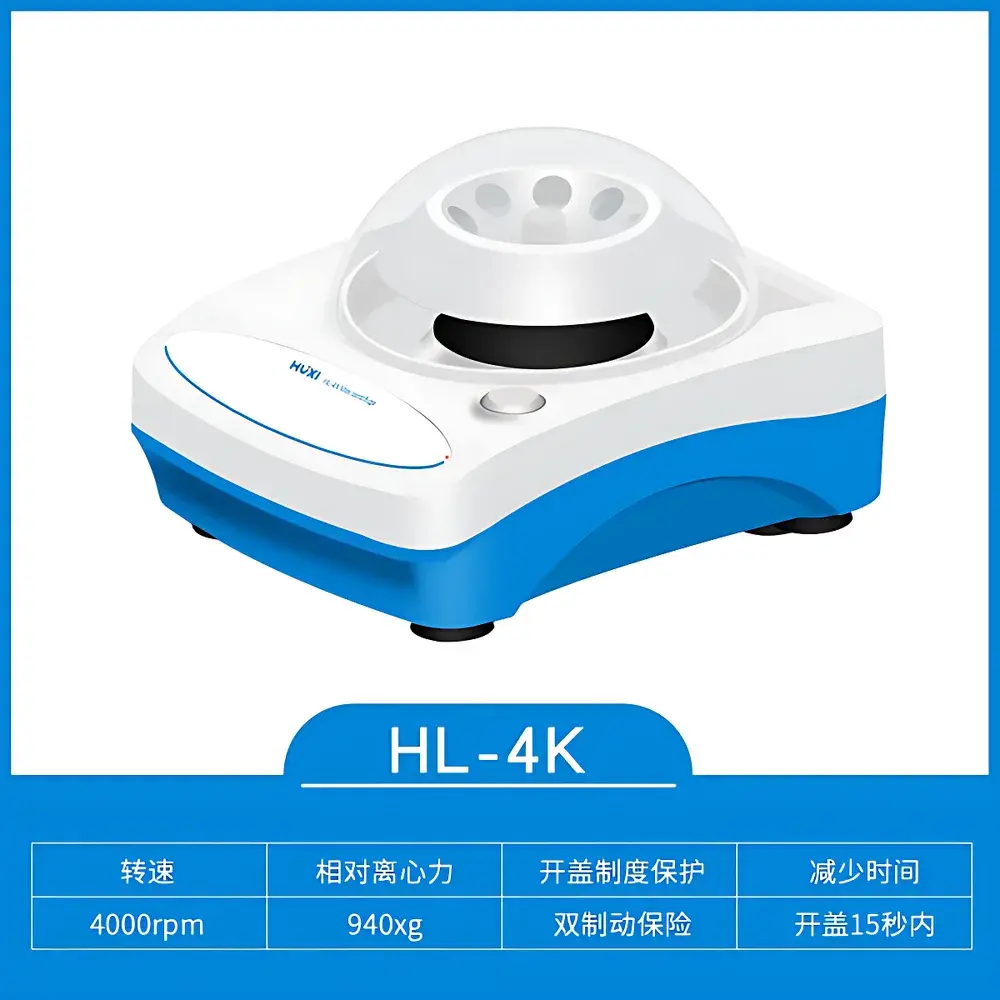
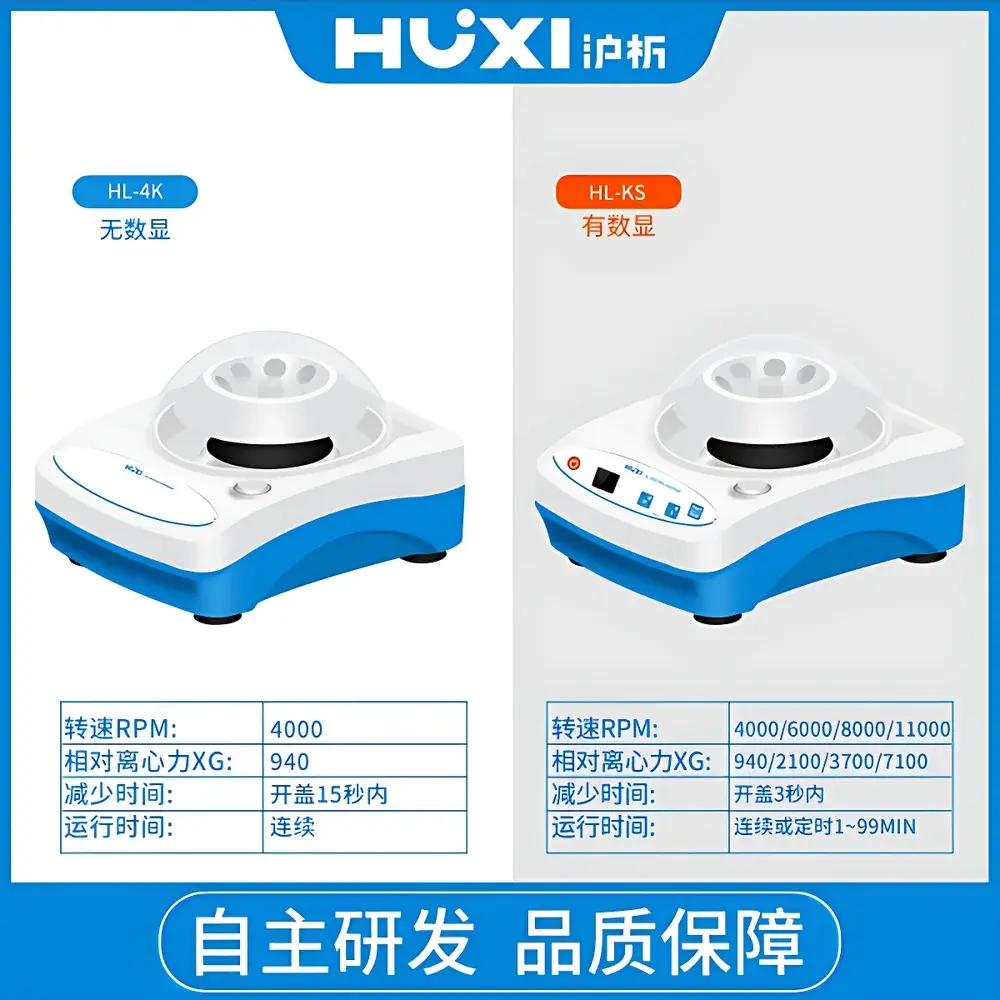
| Max Speed | 4,000 rpm |
| Max RCF | 940 × g |
| Dimensions (L×W×H) | 175 × 135 × 120 mm |
| Weight | 1.4 kg |
| Power Input | AC 100–240 V, 50/60 Hz |
| Rotor Options | 8-position 2.0/1.5 mL rotor |
| Lid Mechanism | Semi-Automatic Lid with Dual-Brake Safety Lock |
| Acceleration Time | ≤5 s to 90% of rated speed |
| Deceleration Time | ≤15 s after lid opening |
| Noise Level | <55 dB(A) |
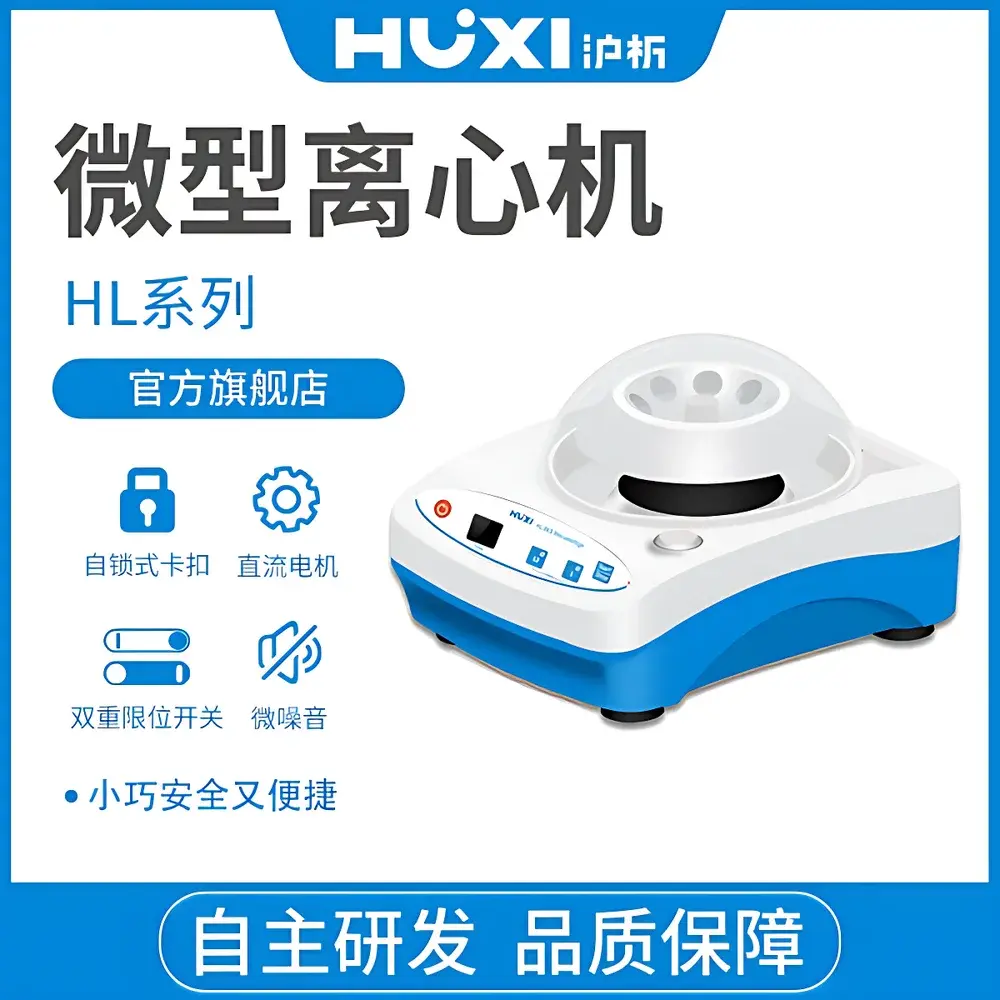
| Motor Type | Brushless DC Motor |
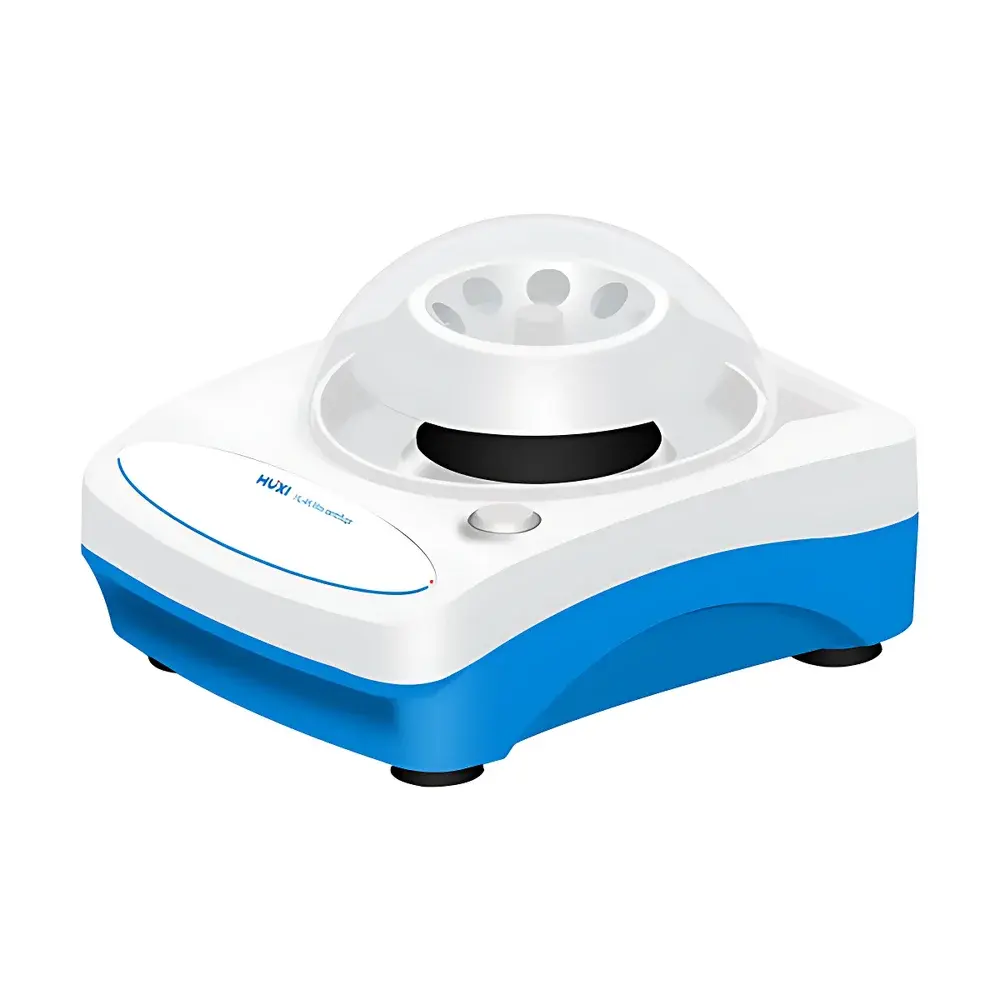
| Lid Material | Transparent Polycarbonate Sphere |
Overview
The HUXI HL-4K is a compact, benchtop microcentrifuge engineered for precision and reliability in routine laboratory separation tasks involving biological macromolecules—including DNA, RNA, proteins, and cellular organelles. Operating on the principle of sedimentation under centrifugal force, the HL-4K generates a maximum relative centrifugal force (RCF) of 940 × g at 4,000 rpm, sufficient for pelleting nucleic acids from aqueous solutions, clarifying lysates, or recovering PCR products. Its palm-sized footprint (175 × 135 × 120 mm) and lightweight construction (1.4 kg) make it ideal for crowded workbenches, biosafety cabinets, and mobile lab setups where space and portability are critical. Designed for continuous operation under standard ambient conditions (15–35 °C, <80% RH), the HL-4K integrates a brushless DC motor that ensures consistent torque delivery, minimal thermal drift, and extended service life—key attributes for labs requiring high reproducibility across repeated daily runs.
Key Features
- Compact form factor with spherical transparent polycarbonate lid—enables real-time visual monitoring of sample integrity and rotor status without interrupting operation.
- Semi-automatic lid actuation with dual-brake safety interlock: lid opening triggers immediate deceleration (<15 s stop time), and motor restart is inhibited until full lid closure is confirmed.
- Tool-free rotor exchange via proprietary snap-fit rotor retention system—supports rapid switching between two standardized configurations: an 8-place fixed-angle rotor for 1.5/2.0 mL microtubes and an 8×4 PCR strip rotor for 0.2 mL tubes.
- Universal AC input (100–240 V, 50/60 Hz) with high-frequency wide-voltage regulation—ensures stable performance across global laboratory power infrastructures without external transformers.
- Low-noise operation (<55 dB[A]) achieved through dynamic balancing of rotor assembly and vibration-damping housing design—critical for shared core facilities and quiet-zone laboratories.
- Intuitive mechanical control interface with LED indicators for speed, run time, and lid status—no software dependency or firmware updates required.
Sample Compatibility & Compliance
The HL-4K accommodates standard microcentrifuge consumables compliant with ISO 8573-1 (compressed air purity) and ASTM D4294 (tube material compatibility). It supports polypropylene and polyethylene microtubes (1.5 mL and 2.0 mL) as well as thin-walled 0.2 mL PCR strips conforming to ANSI/SLAS standards. All rotors are balanced to ISO 1940-1 Grade G6.3 and certified for use with biosafety level 1 (BSL-1) and BSL-2 samples when operated within validated protocols. While not classified as a medical device under FDA 21 CFR Part 820, the instrument meets general electrical safety requirements per IEC 61010-1:2010 for laboratory equipment and carries CE marking for EMC and LVD compliance.
Software & Data Management
The HL-4K operates as a standalone hardware platform with no embedded software, firmware, or data logging capability. This architecture eliminates cybersecurity vulnerabilities, reduces validation burden, and aligns with GLP/GMP environments where audit trails must originate from external systems (e.g., LIMS or ELN). Users record operational parameters—including run duration, speed, and rotor type—manually or via integrated lab notebook templates compliant with ALCOA+ principles. For regulated workflows requiring electronic records, the device may be paired with third-party time-stamped video capture or IoT-enabled environmental monitors meeting 21 CFR Part 11 requirements.
Applications
- Routine nucleic acid purification workflows—spinning down silica-membrane columns post-wash steps.
- Clarification of bacterial and mammalian cell lysates prior to chromatography or electrophoresis.
- Recovery of enzymatic reaction products in high-throughput assay development.
- Preparative centrifugation of antibody-conjugated beads in immunoassay optimization.
- Stabilization of temperature-sensitive reagents during cold-chain transfer in clinical research settings.
- Field-deployable sample concentration in environmental monitoring programs where grid power is intermittent.
FAQ
Is the HL-4K suitable for use with infectious samples?
Yes—when used with sealed tubes and appropriate PPE, the HL-4K complies with CDC/NIH guidelines for BSL-2 containment; however, aerosol-tight rotors and biosafety-certified lids are not included and must be sourced separately.
Can the HL-4K be operated inside a refrigerated chamber?
No—the device is rated for ambient operation only (15–35 °C); condensation and thermal stress may compromise motor insulation and electronic stability below 15 °C.
Does the HL-4K support timed runs?
Yes—it features a mechanical timer adjustable from 1 second to 99 minutes and 59 seconds, with automatic shutdown upon completion.
Are replacement rotors traceable to calibration certificates?
Each rotor is individually serialized and supplied with a factory-verified balance report (±0.01 g imbalance tolerance), but formal metrological calibration is not performed per ISO/IEC 17025.
What maintenance is required?
Routine cleaning of the rotor chamber and lid seal with 70% ethanol; annual inspection of rotor threads and brake mechanism by authorized service personnel is recommended.
Related Products



