
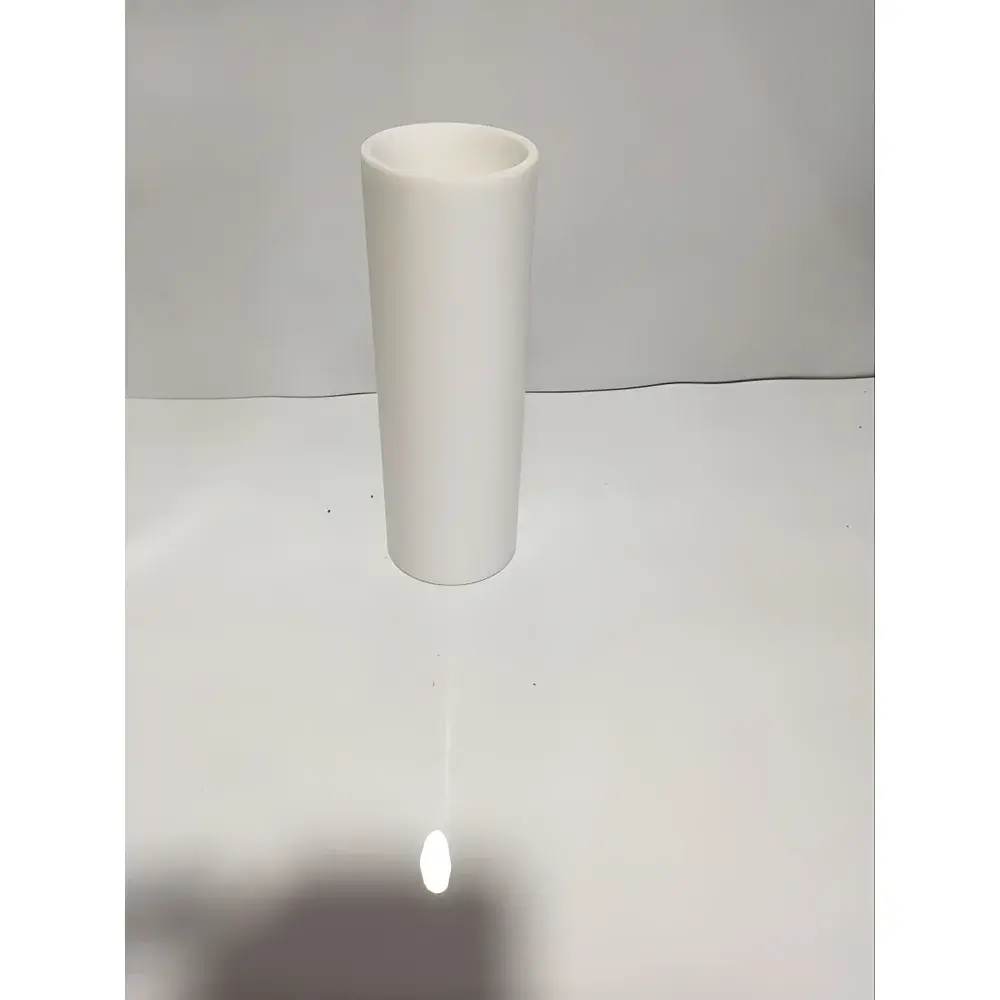
Zhengxin Instrument Factory F4-200mL Polytetrafluoroethylene (PTFE) Beaker
| Brand | Zhengxin Instrument Factory / zxyiqi |
|---|---|
| Origin | Jiangsu, China |
| Manufacturer Type | General Distributor |
| Country of Origin | China |
| Model | F4-200mL |
| Price | USD 95 (FOB Jiangsu) |
Overview
The Zhengxin Instrument Factory F4-200mL Polytetrafluoroethylene (PTFE) Beaker is a high-purity, chemically inert laboratory vessel engineered for demanding analytical and process applications where contamination control, thermal stability, and corrosion resistance are critical. Constructed from virgin, molded PTFE per ASTM D4894 and ISO 1043-1 specifications, this beaker operates reliably across an extended temperature range of –190 °C to +260 °C under continuous use, with short-term exposure tolerance up to +300 °C on electric hot plates (when placed on a ceramic or asbestos-free wire gauze). Its non-reactive surface eliminates leaching, adsorption, or extractables—making it suitable for trace-metal analysis, ultra-trace sample preparation, and high-purity synthesis workflows in accordance with USP , ISO/IEC 17025, and GLP-compliant laboratories.
Key Features
- Ultra-low surface energy (<18 mN/m) ensures exceptional non-stick performance and complete sample recovery.
- Exceptional chemical resistance: inert to concentrated acids (including aqua regia), alkalis, halogens, and all common organic solvents—no measurable ion leaching per ICP-MS validation protocols.
- Low metallic blank values: certified for trace-element analysis; typical Na, K, Ca, Fe, and heavy metal blanks < 10 pg/mL after acid washing (HNO₃/HF rinse protocol).
- Thermal stability: maintains dimensional integrity and mechanical resilience from cryogenic conditions to 260 °C; no decomposition or outgassing below 300 °C in inert atmospheres.
- Self-lubricating properties: coefficient of friction ≈ 0.05–0.10 (dynamic, ASTM D1894), minimizing wear during stirring or scraping with PTFE-coated tools.
- Non-toxic and physiologically inert: compliant with FDA 21 CFR §177.1550 for food-contact applications and ISO 10993-5 cytotoxicity testing.
Sample Compatibility & Compliance
This PTFE beaker is compatible with aggressive reagents used in microwave-assisted digestion (MWD), hydrofluoric acid (HF)-based etching, alkaline fusion, and low-background radiochemical separations. It meets the material requirements for ISO/IEC 17025 accredited environmental testing labs (e.g., EPA Method 3052, ASTM D5688), nuclear fuel cycle sample handling (IAEA Technical Reports Series No. 432), and semiconductor-grade chemical dispensing. All units undergo visual inspection for voids, delamination, or surface defects; batch-certified test reports include FTIR verification (peak at 1210 cm⁻¹, C–F stretch) and density measurement (2.12–2.20 g/cm³).
Software & Data Management
As a passive laboratory consumable, this PTFE beaker does not incorporate embedded electronics or software interfaces. However, its traceability is supported through alphanumeric batch labeling (laser-engraved or solvent-resistant ink), enabling integration into LIMS environments via manual or barcode-scanned entry. Each shipment includes a Certificate of Conformance documenting raw material grade (ASTM D4894 Type I, Class A), manufacturing lot number, and compliance with RoHS Directive 2011/65/EU and REACH Annex XVII restrictions on PFOA and PFOS precursors.
Applications
- Trace-metal analysis (ICP-MS, GF-AAS) requiring sub-ppt detection limits.
- Preparation of calibration standards and reference materials in metrology labs.
- Digestion vessels for geological, biological, and environmental matrices under closed-vessel microwave systems.
- Storage and transfer of HF, molten alkali carbonates, or fluorinated intermediates in fine chemical synthesis.
- Cryogenic sample handling in low-temperature physics and superconductivity research.
- High-purity rinsing and conditioning of quartz, sapphire, or fused-silica components in photonics manufacturing.
FAQ
Can this beaker be used directly on an open flame?
No. Direct contact with Bunsen burners or gas flames is prohibited due to localized overheating (>400 °C), which may cause thermal degradation and release of fluorinated compounds. Always use with a wire gauze or ceramic heating plate.
Is autoclaving recommended?
Autoclaving at 121 °C/15 psi is permissible for sterilization, but repeated cycles may accelerate creep deformation. For routine cleaning, hot nitric acid (65 °C, 2 h) followed by ultrapure water rinse is preferred.
What is the maximum safe heating rate for ramped temperature protocols?
To prevent thermal stress cracking, limit heating rates to ≤5 °C/min when transitioning from ambient to >200 °C, especially during vacuum-drying or solvent evaporation.
Are custom geometries available?
Yes. Zhengxin Instrument Factory offers OEM molding services for non-standard volumes (50–2000 mL), tapered walls, spouts, or integrated handles—subject to minimum order quantities and tooling lead time.
Does this product comply with FDA or USP requirements for pharmaceutical use?
Yes. Material certification confirms compliance with USP Class VI plastic requirements and FDA 21 CFR §177.1550 for repeated-use food-contact devices. Final device qualification remains the responsibility of the end-user’s quality system.



