
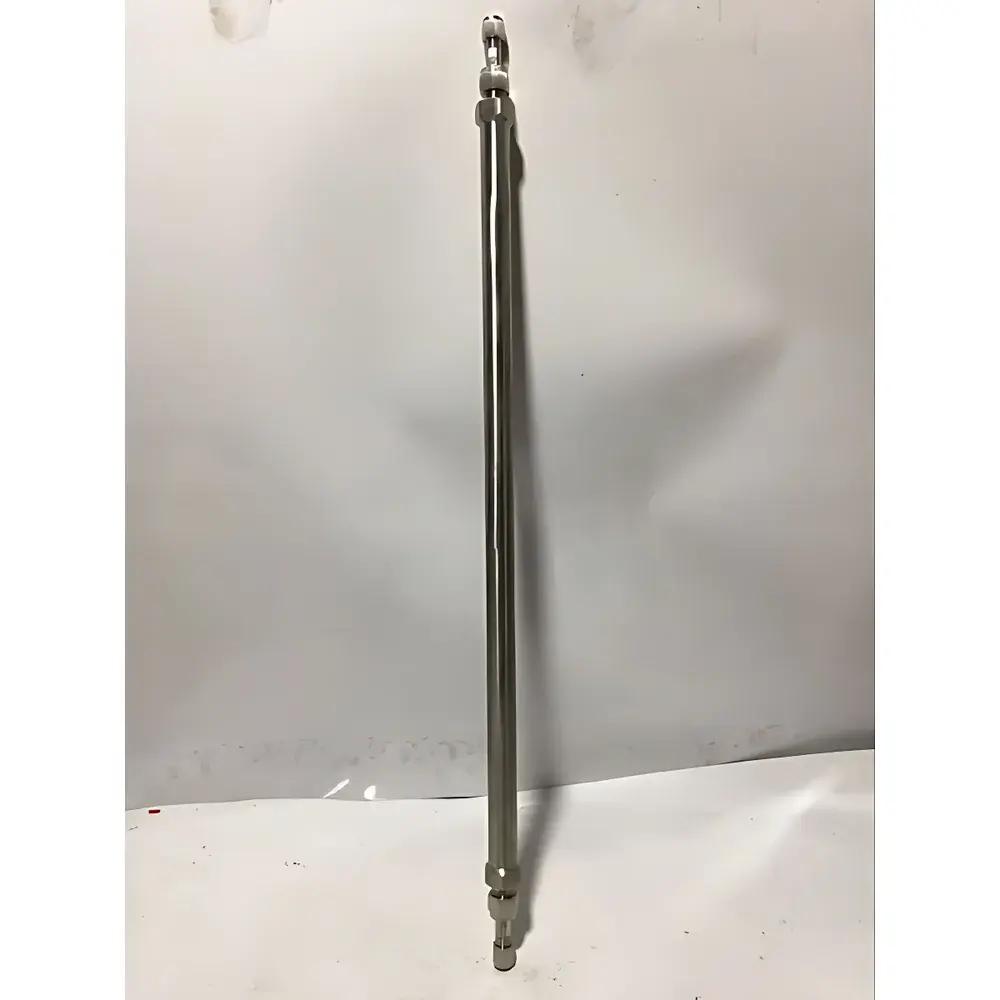
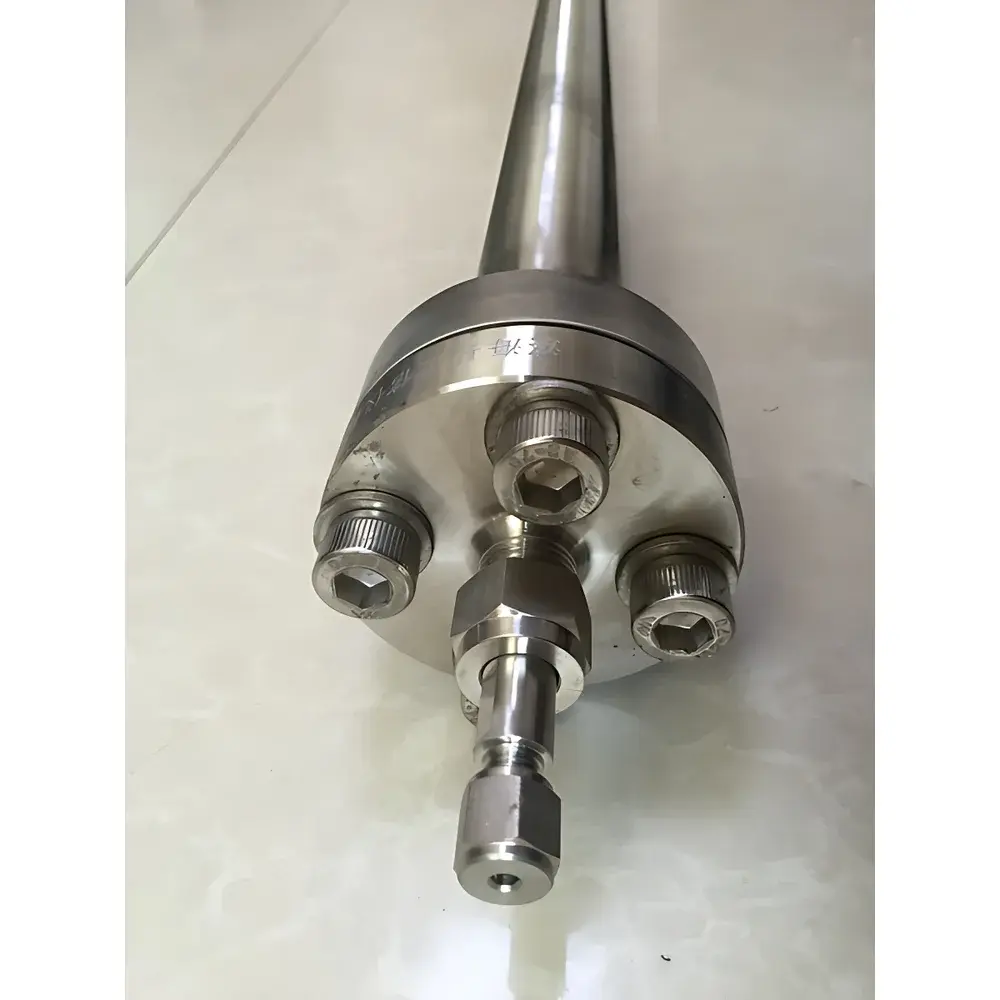
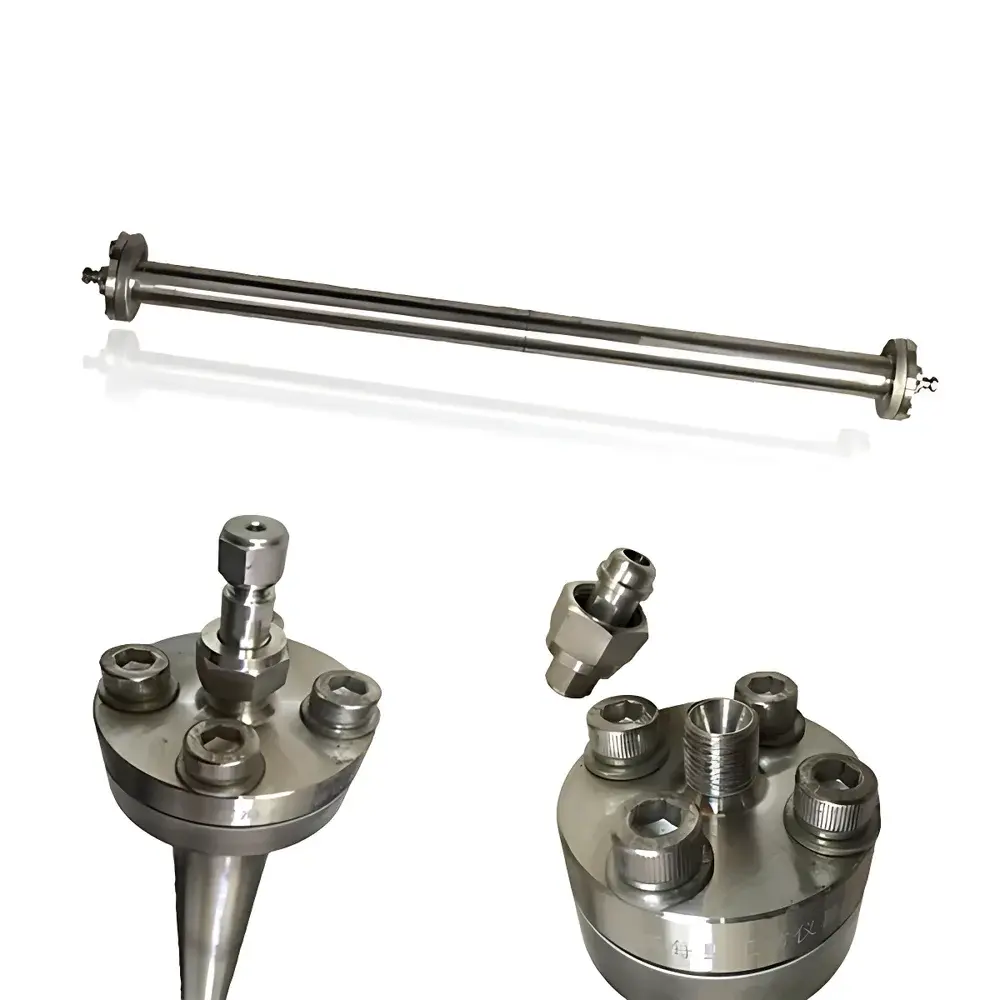
ZXYQI Tubular Reactor Vessel
| Brand | ZXYQI |
|---|---|
| Origin | Jiangsu, China |
| Manufacturer Type | Authorized Distributor |
| Country of Origin | China |
| Model | Tubular Reactor Vessel |
| Price | USD 1,080 (FOB Jiangsu) |
| Usable Volume | Small-scale (≤500 mL) |
| Construction Material | 316 Stainless Steel |
| Operating Pressure | Low-pressure (≤0.6 MPa / 6 bar gauge) |
| Capacity | 1 L nominal |
| Vacuum Performance | ≤1 Pa (at 25 °C, after 30 min pump-down with dual-stage rotary vane pump) |
Overview
The ZXYQI Tubular Reactor Vessel is a compact, benchtop-scale continuous-flow and batch-capable reactor system engineered for controlled chemical synthesis, catalytic screening, and kinetic studies under low-pressure and mild vacuum conditions. Designed around a seamless tubular geometry with axial flow path and uniform wall thickness, it operates on the principle of plug-flow or well-mixed batch reaction dynamics—depending on configuration—enabling precise residence time control and minimized back-mixing. Its 316 stainless steel construction ensures compatibility with a broad range of organic solvents, weak acids, and non-oxidizing reagents, while maintaining structural integrity at temperatures up to 200 °C (with optional heating mantle). The vessel integrates standardized 1/4″ NPT and Swagelok-compatible ports for gas/liquid inlet/outlet, thermocouple insertion, and pressure/vacuum monitoring—making it suitable for integration into modular lab-scale process trains.
Key Features
- Monolithic 316 stainless steel tubular body with electropolished interior surface (Ra ≤ 0.4 µm) for enhanced corrosion resistance and reduced catalyst fouling
- Low-pressure rated design (ASME B31.3-compliant stress analysis; maximum allowable working pressure: 0.6 MPa at 200 °C)
- Vacuum-ready configuration with helium-leak-tested sealing (leak rate <1×10⁻⁹ mbar·L/s) and integrated ISO-KF 25 vacuum flange
- Modular port layout: 4 × 1/4″ NPT threaded ports (2 axial, 2 radial), plus 1 × 6 mm thermowell sleeve for PT100 or K-type sensor
- Standardized clamp-type end closures with PTFE-coated metal gaskets (reusable up to 5 thermal cycles at ≤150 °C)
- Compatible with external heating mantles (up to 300 W), cooling jackets (via circulating chiller), and syringe pump–driven continuous feed systems
Sample Compatibility & Compliance
The ZXYQI Tubular Reactor Vessel supports homogeneous liquid-phase reactions, solid-catalyzed heterogeneous reactions (e.g., packed-bed configurations using removable catalyst cartridges), and gas–liquid absorption processes. It is routinely deployed in academic and industrial R&D labs for hydrogenation, esterification, photochemical precursor synthesis, and solvent-free condensation reactions. All wetted materials comply with ASTM F899 (stainless steel specifications) and EU Regulation (EC) No. 1935/2004 for food-contact–grade metals. While not certified for Class I Div 1 hazardous locations, the reactor meets general laboratory safety requirements per ANSI Z9.5 and ISO 15195:2018 for analytical laboratory equipment. Documentation includes material traceability certificates (MTRs) for all pressure-retaining components.
Software & Data Management
As a hardware-only reactor platform, the ZXYQI Tubular Reactor Vessel does not include embedded controllers or proprietary software. However, it is fully interoperable with third-party data acquisition systems—including LabVIEW-based DAQ modules, Eurotherm 2408 temperature controllers, and Modbus RTU–enabled pressure transmitters (e.g., Druck PMP series). Users may configure automated logging of temperature, pressure, and flow rate via OPC UA–compliant SCADA interfaces. Audit trails, electronic signatures, and 21 CFR Part 11 compliance are achievable when integrated with validated LIMS or ELN platforms such as LabWare LIMS or Benchling, provided local IT validation protocols are followed.
Applications
- Kinetic parameter determination (e.g., Arrhenius activation energy, reaction order) via steady-state residence time variation
- Catalyst deactivation profiling under continuous operation over 100+ hours
- Solvent optimization studies for green chemistry workflows (e.g., switching from DMF to γ-valerolactone)
- Small-volume API intermediate synthesis under inert atmosphere (N₂ or Ar purge capability)
- Teaching laboratory implementation for unit operations courses—demonstrating mass balance, heat transfer limitations, and scale-up correlations (e.g., Da number, Weisz–Prater criterion)
- Preparative-scale photochemical reactions when coupled with UV-LED arrays (365 nm, 10 W/cm²) mounted externally on quartz sections
FAQ
Is this reactor suitable for exothermic reactions requiring precise temperature control?
Yes—when paired with an external PID-controlled heating mantle and recirculating chiller, the vessel supports ±1 °C temperature stability across its operational range (ambient to 200 °C).
Can it be used for hydrogenation with H₂ gas at 5 bar?
Yes—within its 0.6 MPa (6 bar) MAWP rating; however, H₂ service requires leak testing per ISO 15848-1 and use of metal-sealed fittings.
Does the 1 L capacity refer to total volume or usable volume?
The nominal capacity is 1 L total internal volume; recommended usable volume for safe agitation or flow operation is ≤0.5 L to accommodate headspace and thermal expansion.
Are replacement gaskets and port adapters available separately?
Yes—ZXYQI supplies OEM-certified PTFE-coated Inconel 718 gaskets (P/N: G-TRV-316-025) and Swagelok SS-4-MF adapters (P/N: ADP-TRV-SW-04) with full dimensional and material certification.
What vacuum level can be sustained during prolonged operation?
With a properly maintained two-stage rotary vane pump and cold trap, stable base pressure ≤1 Pa is maintainable for >8 h; ultimate vacuum (≤0.1 Pa) achievable with optional turbomolecular pumping.



