
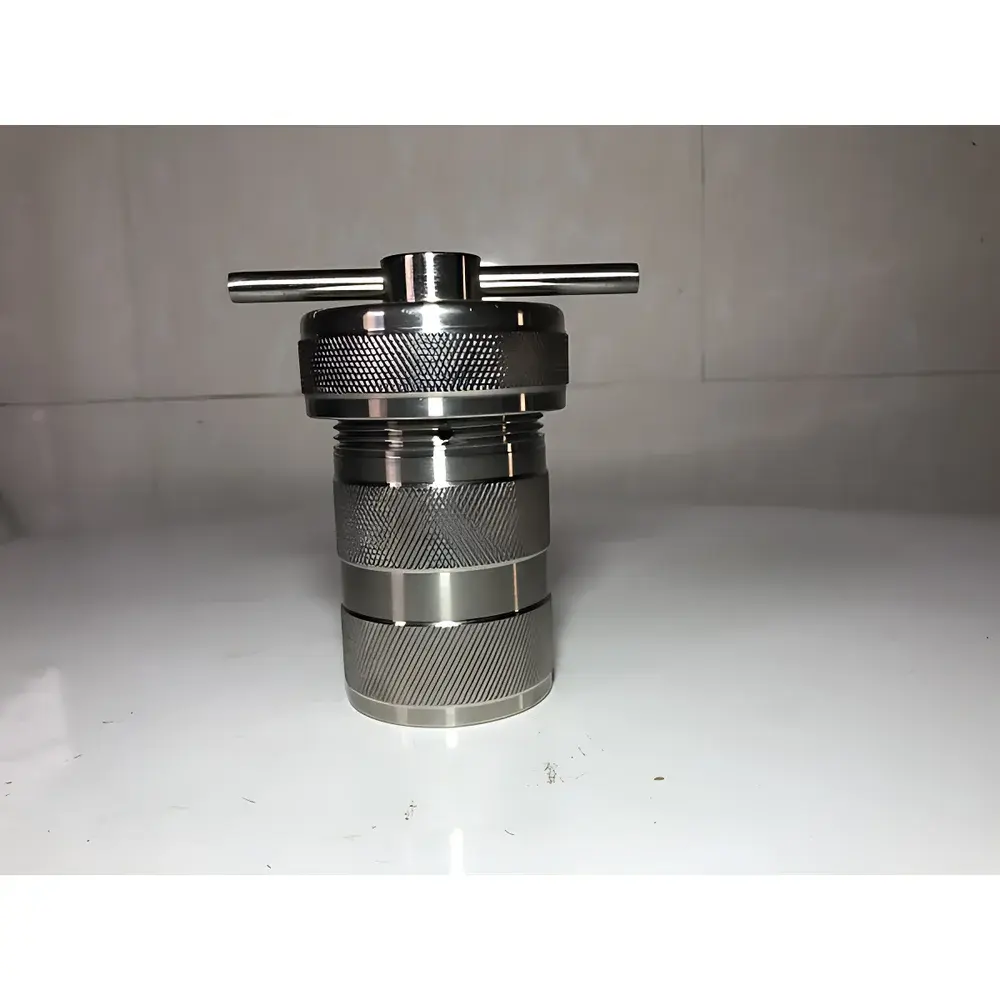
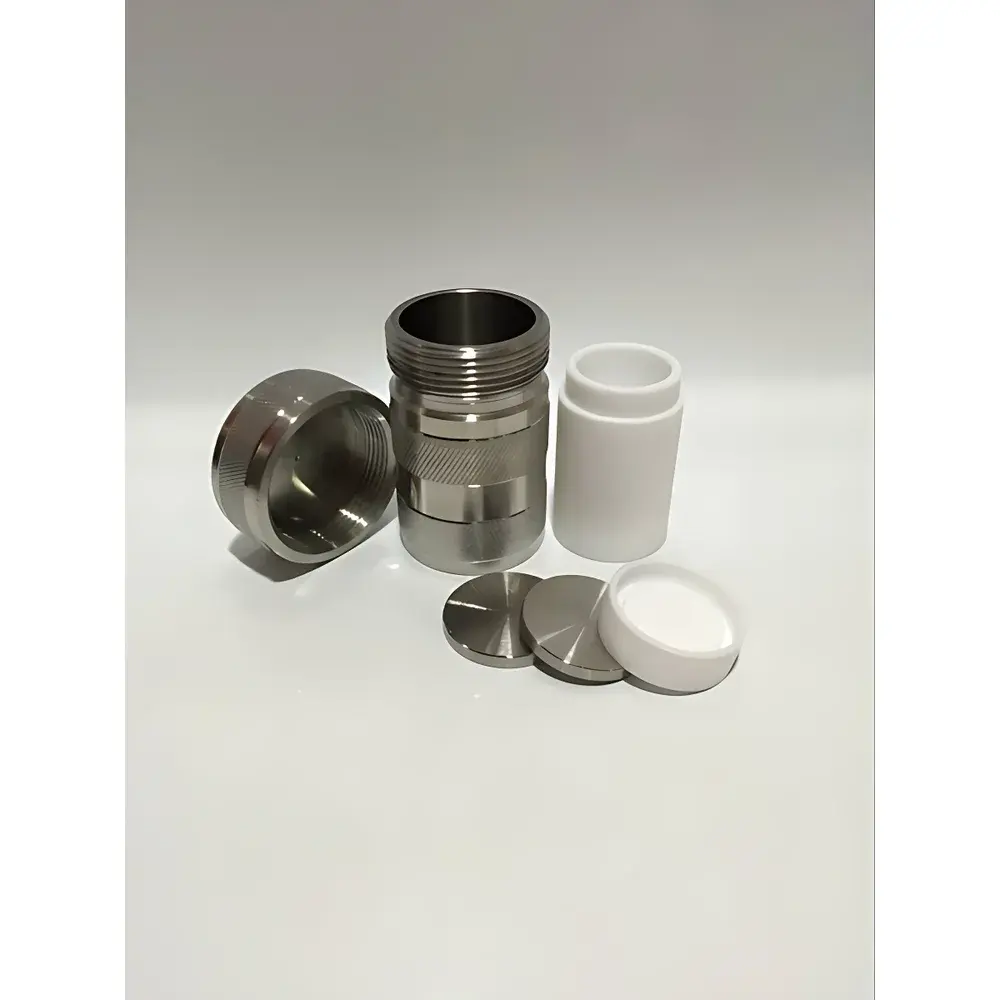
Zhengxin PF-25mL PTFE-Lined Stainless Steel Hydrothermal Synthesis Reactor (Pressure Bomb)
| Brand | Zhengxin Instrument Factory |
|---|---|
| Origin | Jiangsu, China |
| Model | PF-25mL |
| Material | Forged 304 Stainless Steel Body with PTFE Liner |
| Max Operating Pressure | ≤6 MPa |
| Max Temperature (PTFE) | 240 °C |
| Working Volume | 25 mL |
| Sealing | Circular Tenon-Groove + Manual Spiral Tightening |
| Vacuum Capability | Not Specified |
| Compliance | Designed for ASTM E2912, ISO 17025-aligned sample preparation workflows |
| Safety Features | Dual anti-explosion venting ports on lid and inner liner cap |
Overview
The Zhengxin PF-25mL PTFE-Lined Stainless Steel Hydrothermal Synthesis Reactor is a sealed, high-pressure, high-temperature reaction vessel engineered for controlled chemical synthesis and closed-vessel sample digestion. It operates on the principle of hydrothermal chemistry—leveraging elevated temperature and autogenous pressure generated by solvent vaporization within a hermetically sealed environment to accelerate reaction kinetics and enhance solubilization efficiency. Unlike open-vessel digestion, this reactor enables complete containment of volatile analytes (e.g., Hg, As, Se, Cd), minimizing loss during decomposition and ensuring quantitative recovery for trace elemental analysis. Its design conforms to fundamental requirements for microwave- and oven-based digestion protocols used in accredited analytical laboratories, particularly where compliance with ISO/IEC 17025, USP , and EPA Method 3052 preconditions applies.
Key Features
- Forged 304 stainless steel body with precision-machined circular tenon-groove sealing interface, delivering mechanical robustness and long-term dimensional stability under cyclic thermal loading.
- Chemically inert PTFE (polytetrafluoroethylene) liner rated for continuous use up to 240 °C and compatible with concentrated HNO₃, HF, HCl, aqua regia, NaOH, and most organic solvents—ensuring ultra-low metal blank values (Pb < 10⁻¹¹ g/mL; U < 10⁻¹² g/mL).
- Dual integrated pressure-relief vents on both the outer stainless steel lid and inner PTFE cap, enabling passive overpressure release at predetermined thresholds without catastrophic failure.
- Manual spiral tightening mechanism with calibrated torque feedback—eliminates reliance on external torque tools while maintaining reproducible sealing force across operators and batches.
- Optimized fill ratio guidance (recommended 1/3–2/3 liner volume) ensures safe vapor-phase expansion margin and prevents mechanical stress-induced liner deformation during heating.
- Surface-finish compliant with ASME BPE standards for non-porous, non-shedding internal surfaces—critical for low-background trace metal analysis in environmental, clinical, and semiconductor-grade applications.
Sample Compatibility & Compliance
This reactor supports digestion of diverse matrices including biological tissues, soils, sediments, polymers, ceramics, ores, foodstuffs, and pharmaceutical excipients. It is routinely deployed in EPA SW-846 Methods 3050B (acid digestion of sediments/sludges), 3051A (microwave-assisted acid digestion), and ASTM D5685 (determination of trace metals in coal ash). When operated inside certified laboratory ovens or microwave digestion systems, it meets GLP audit requirements for instrument calibration logs, batch record retention, and operator training documentation. The PTFE liner satisfies FDA 21 CFR 177.1550 for food-contact polymer compliance and exhibits no detectable leaching of fluorinated compounds under validated digestion conditions.
Software & Data Management
As a passive, non-electronic device, the PF-25mL reactor requires no embedded firmware or connectivity. However, its operational parameters integrate seamlessly into LIMS (Laboratory Information Management Systems) via standardized SOP templates. Users are advised to log batch-specific metadata—including lot numbers of liners, furnace calibration certificates, ramp/hold profiles, cooling rates, and post-digestion pH verification—within electronic lab notebooks compliant with 21 CFR Part 11 (electronic signatures, audit trails, data integrity controls). Zhengxin provides traceable material certifications (MTRs) for both 304 SS bodies and virgin PTFE liners upon request.
Applications
- Trace element quantification (Cd, Pb, Cu, Zn, Mn, Fe, Hg) in environmental samples via ICP-MS or GF-AAS following EPA 6020B or ISO 17294-2 protocols.
- Synthesis of nanomaterials (e.g., TiO₂, ZnO, perovskites) under controlled hydrothermal crystallization conditions.
- Acid-free alkaline fusion alternatives for refractory oxides (e.g., Al₂O₃, SiO₂) in geochemical reference material analysis.
- Organic matrix removal from botanical extracts prior to pesticide residue screening (AOAC 2007.01).
- Routine QC/QA for high-purity reagent grade acids and ultrapure water systems using blank monitoring per CLSI EP29-A guidelines.
FAQ
What is the maximum recommended operating temperature for the PTFE liner?
The PTFE liner is rated for continuous service up to 240 °C. Exceeding this limit may cause irreversible creep deformation and compromise seal integrity.
Can this reactor be used with hydrofluoric acid (HF)?
Yes—PTFE exhibits exceptional resistance to HF across full concentration ranges; however, strict adherence to PPE and fume hood protocols is mandatory due to HF toxicity.
Is the reactor suitable for microwave-assisted digestion?
It is designed for conventional oven-based heating only. Microwave use requires magnetron-compatible geometry and dielectric properties not guaranteed in this configuration.
How often should the PTFE liner be replaced?
Replace after 10–15 digestions involving aggressive media (e.g., aqua regia at >200 °C) or immediately upon visual signs of discoloration, cracking, or swelling.
Does the reactor meet ISO/IEC 17025 traceability requirements?
While the reactor itself is not calibrated, its construction materials carry full mill test reports (MTRs), and its performance is verifiable through interlaboratory validation studies cited in ASTM D5685 Annex A1.



