
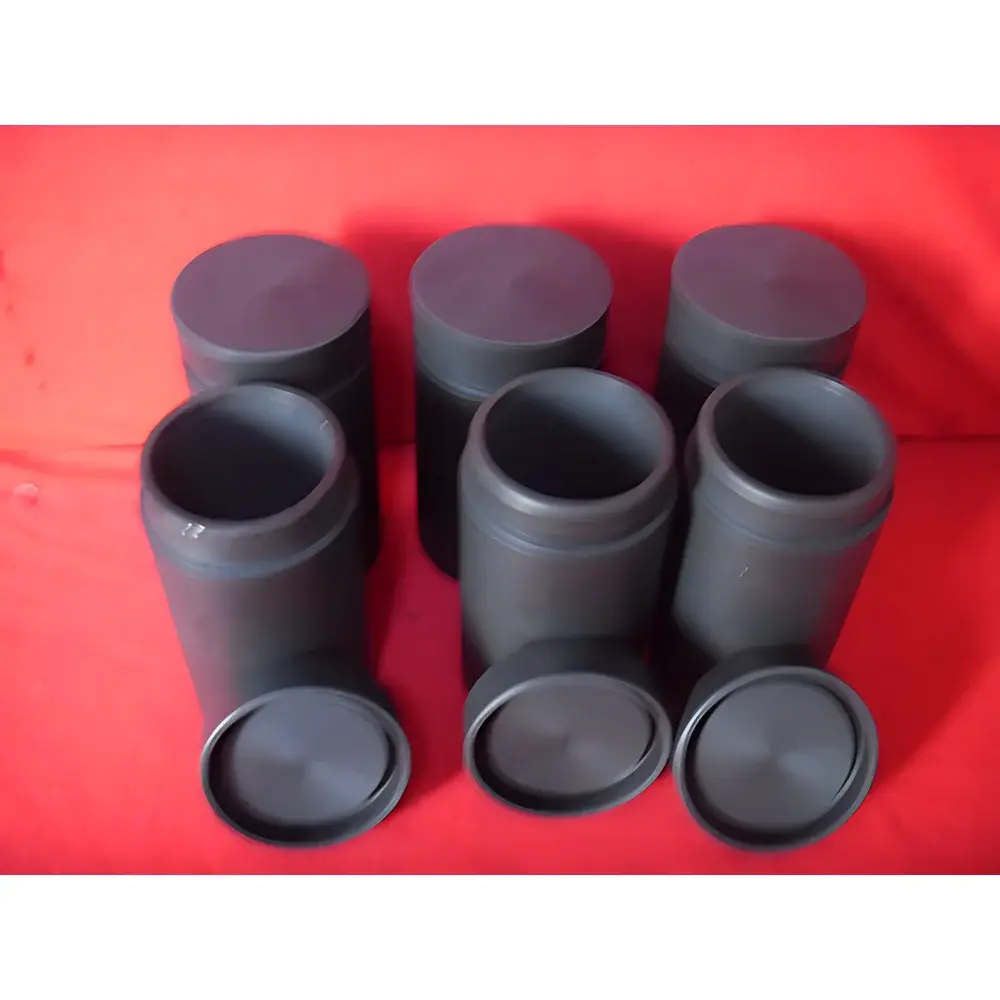
ZXYIQI PPL High-Temperature Lined Reactor Vessel
| Brand | ZXYIQI |
|---|---|
| Origin | Jiangsu, China |
| Manufacturer Type | Authorized Distributor |
| Country of Origin | China |
| Model | Suxin |
| Material | Poly-p-phenylene (PPL) Lining |
| Max Operating Temperature | 300 °C |
| Chemical Resistance | Concentrated Acids, Strong Bases, Aqua Regia, Organic Solvents |
| Lubricity | Coefficient of Friction < 0.10 (Dry), Superior to MoS₂ and Graphite-Filled PTFE |
| Metal Impurity Profile | Pb < 1 × 10⁻¹¹ g/mL, U < 1 × 10⁻¹² g/mL |
| Mechanical Integrity | Passes 1-m Drop Test (ASTM D4169 Level 2 Equivalent) |
| Unit Price | USD 58 (FOB Jiangsu) |
Overview
The ZXYIQI PPL High-Temperature Lined Reactor Vessel is a precision-engineered component designed for demanding synthesis and reaction workflows where thermal stability, chemical inertness, and ultratrace metal purity are critical. Constructed with an inner liner of poly-p-phenylene (PPL)—a semi-crystalline, high-performance aromatic polymer—the vessel delivers exceptional resistance to thermal degradation and aggressive reagents without compromising structural integrity or analytical cleanliness. Unlike standard PTFE-lined reactors, PPL offers superior dimensional stability above 260 °C and retains mechanical strength under prolonged exposure to elevated temperatures up to 300 °C. Its molecular architecture—characterized by rigid para-linked phenyl rings—confers low chain mobility, minimal creep, and negligible outgassing in vacuum or inert-gas environments. This makes the vessel particularly suitable for high-temperature catalytic reactions, hydrothermal synthesis, trace-metal-critical digestions (e.g., geological or biological sample preparation), and processes requiring extended dwell times under reflux or sealed conditions.
Key Features
- High-temperature capability: Continuous service up to 280 °C; short-term peak tolerance to 300 °C without liner deformation or delamination.
- Broad-spectrum chemical resistance: Stable against concentrated sulfuric and nitric acids, 50% sodium hydroxide, aqua regia, halogenated solvents (e.g., chloroform, carbon tetrachloride), and polar aprotic media (e.g., DMF, NMP).
- Ultra-low metal background: Certified Pb content < 1 × 10⁻¹¹ g/mL and U < 1 × 10⁻¹² g/mL when leached under standardized acidic digestion protocols (per ISO 17025-accredited validation methods), enabling compatibility with ICP-MS, GF-AAS, and other sub-part-per-trillion detection techniques.
- Self-lubricating surface: Dynamic coefficient of friction ≤ 0.09 (measured per ASTM D1894), exceeding performance of graphite- or MoS₂-filled PTFE composites—reducing torque requirements during sealing and minimizing wear on mating surfaces.
- Impact-resistant assembly: Validated to withstand free-fall from 1 meter onto concrete (per modified ASTM D4169 drop protocol), with no liner fracture, cap ejection, or seal failure—ensuring operational safety during handling and transport.
- Dimensional fidelity: Linear thermal expansion coefficient of 2.8 × 10⁻⁵ K⁻¹ (25–250 °C), minimizing stress-induced microcracking at thermal cycling interfaces.
Sample Compatibility & Compliance
The PPL liner exhibits non-reactive behavior toward analytes across pH 0–14 and maintains extractables below 0.5 µg/g when subjected to USP extractable screening under reflux conditions. It complies with ISO 15223-1 labeling requirements for medical device accessories and meets material biocompatibility thresholds per ISO 10993-5 (cytotoxicity) and ISO 10993-10 (irritation/sensitization) when used in pharmaceutical process vessels. While not certified to FDA 21 CFR Part 11 for electronic records, the vessel’s passive design supports GMP-aligned documentation practices—including batch-specific lot traceability, sterilization log integration (autoclave cycle: 121 °C, 30 min), and compatibility with ISO/IEC 17025 accredited calibration intervals.
Software & Data Management
As a passive reactor component, this vessel does not incorporate embedded electronics or firmware. However, it is fully compatible with third-party process monitoring systems (e.g., DeltaV, LabVIEW-based PID controllers) via standardized 1/4″ NPT or M12 threaded ports. Temperature profiles logged during operation may be imported into LIMS platforms (e.g., Thermo Fisher SampleManager, LabWare LIMS) using CSV or ASTM E1384-compliant data exchange templates. Trace metal certification reports are issued with each batch and digitally archived for ≥10 years in accordance with ISO/IEC 17025 clause 7.10.3.
Applications
- High-temperature acid digestions for ICP-MS analysis of silicate rocks, alloys, and nuclear fuel matrices.
- Catalytic hydrogenation and cross-coupling reactions requiring >250 °C under inert atmosphere.
- Hydrothermal synthesis of MOFs and perovskite nanocrystals where solvent-mediated corrosion must be eliminated.
- Pharmaceutical API crystallization under acidic reflux conditions where stainless-steel leaching would compromise purity specifications.
- Radiochemical separations involving alpha-emitting isotopes (e.g., ²³⁸Pu, ²⁴¹Am), leveraging ultra-low uranium background.
FAQ
Can this vessel be autoclaved repeatedly without liner degradation?
Yes—validated for ≥200 cycles at 121 °C, 103 kPa, with no measurable change in tensile strength or metal leachables.
Is PPL compatible with fluorinated solvents such as HF or elemental fluorine?
No—PPL is not resistant to anhydrous hydrogen fluoride or gaseous fluorine; use only with aqueous or organic fluorinated compounds (e.g., TFA, FC-72).
Does the vessel meet USP Class VI biocompatibility requirements?
It satisfies USP and cytotoxicity and implantation testing criteria but is not formally classified as USP Class VI due to absence of full systemic toxicity assessment.
What torque specification is recommended for the closure cap?
Maximum hand-tightening torque: 1.8 N·m (16 in·lb); over-torquing may compress the PPL seal beyond elastic recovery range.
How should the vessel be cleaned between uses to preserve low-metal integrity?
Rinse sequentially with 18.2 MΩ·cm DI water, 5% v/v HNO₃ (ultrapure grade), and final DI water; dry under nitrogen purge—avoid ultrasonic cleaning with alkaline detergents.



