
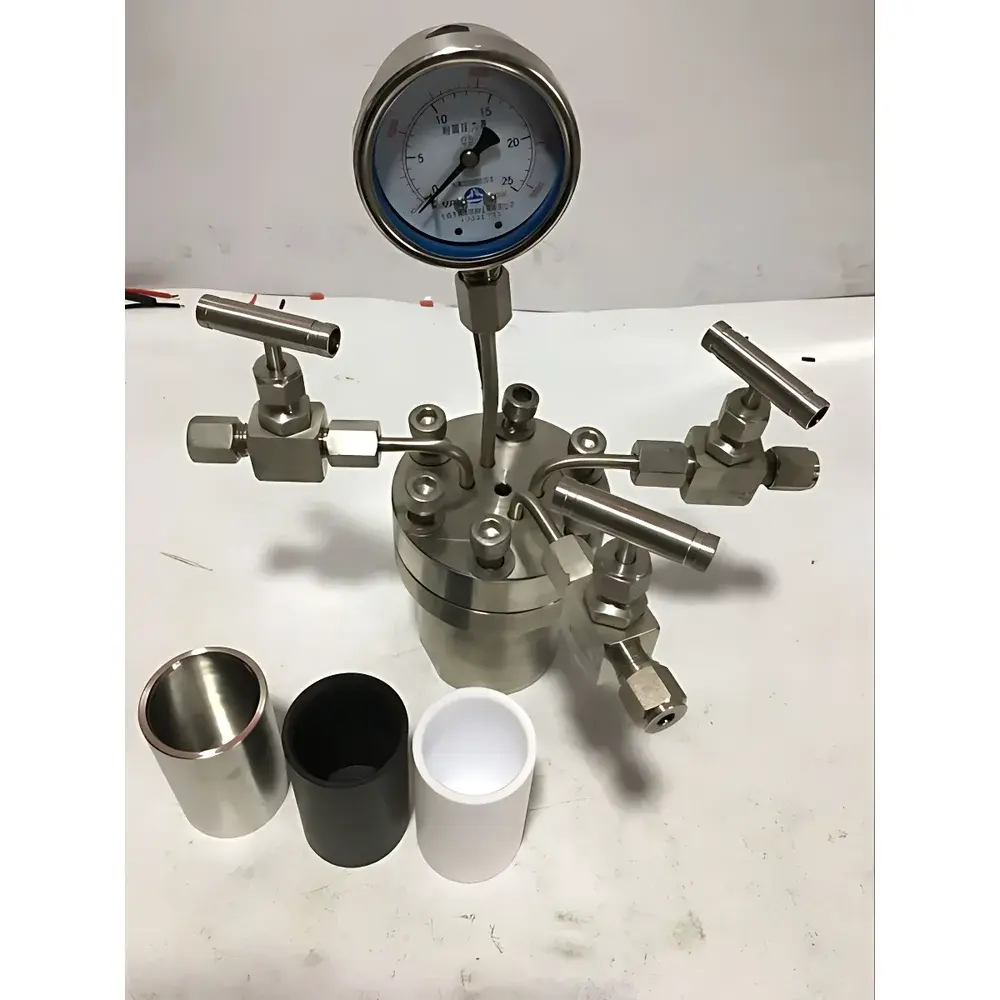
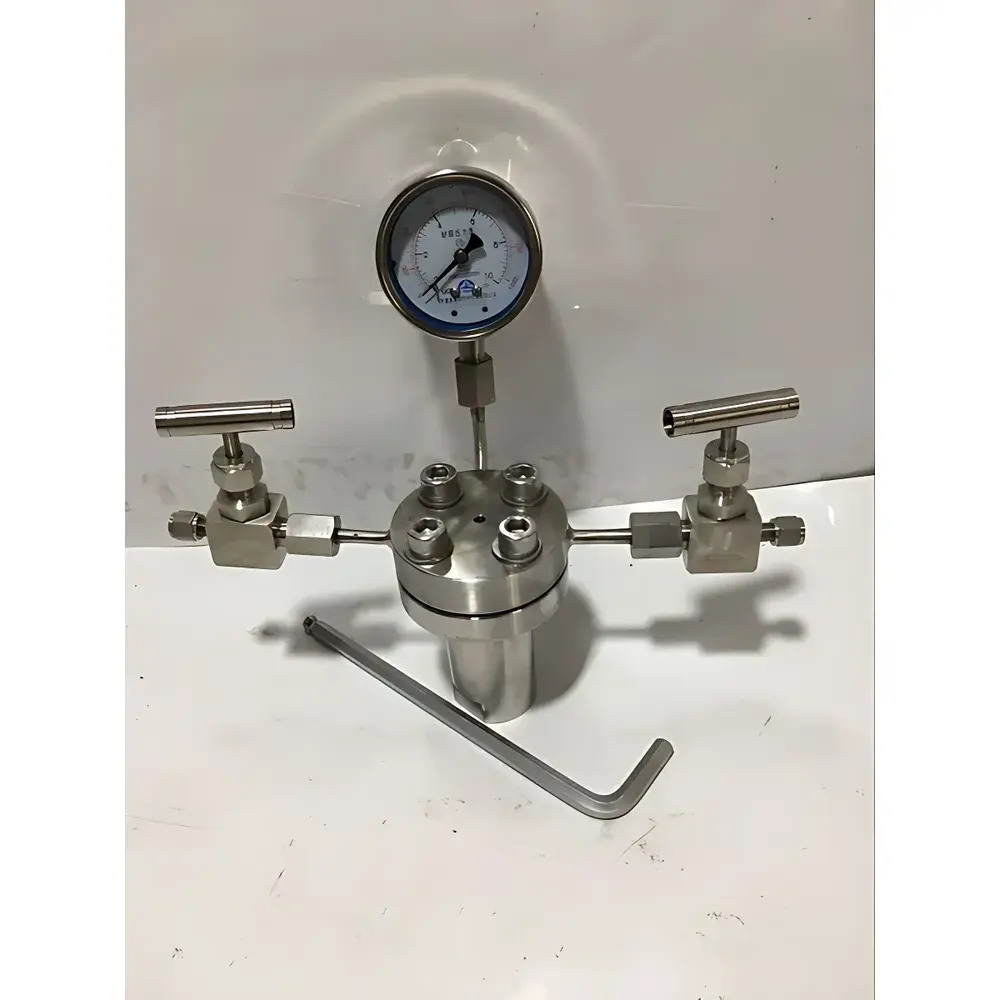
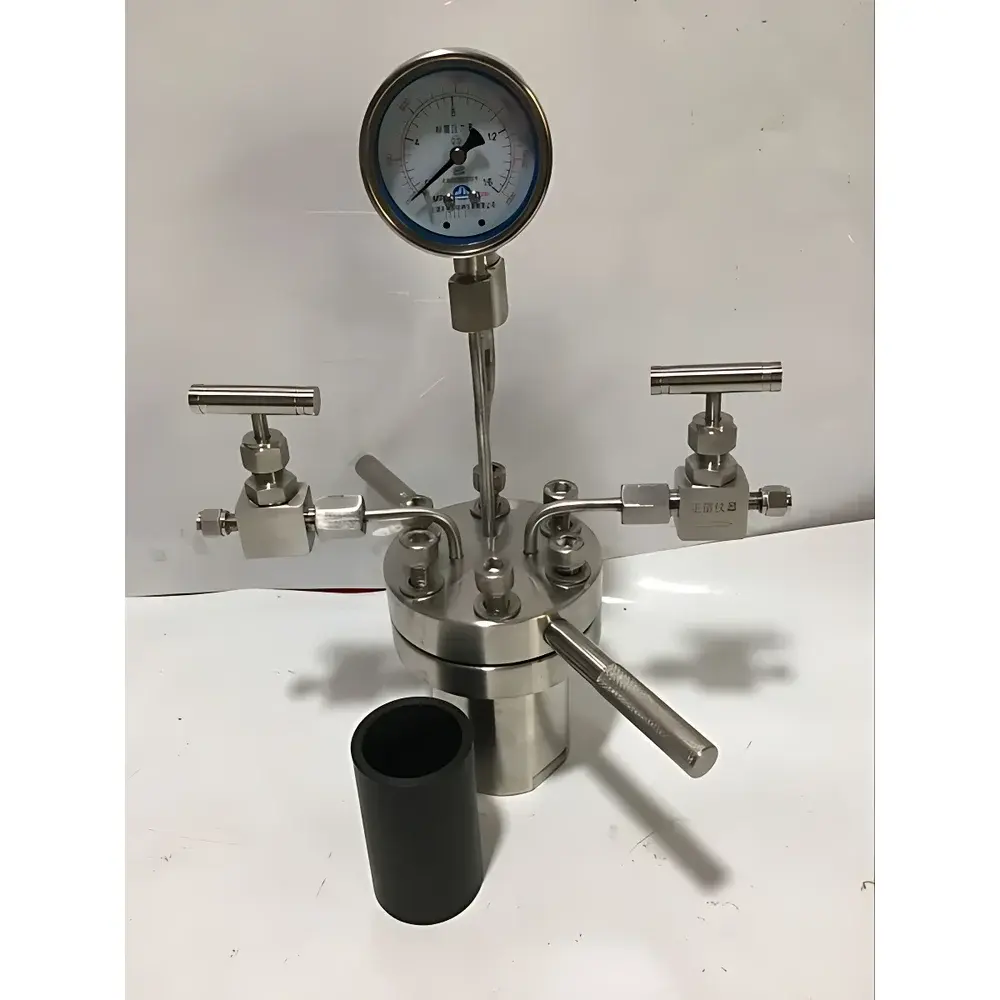
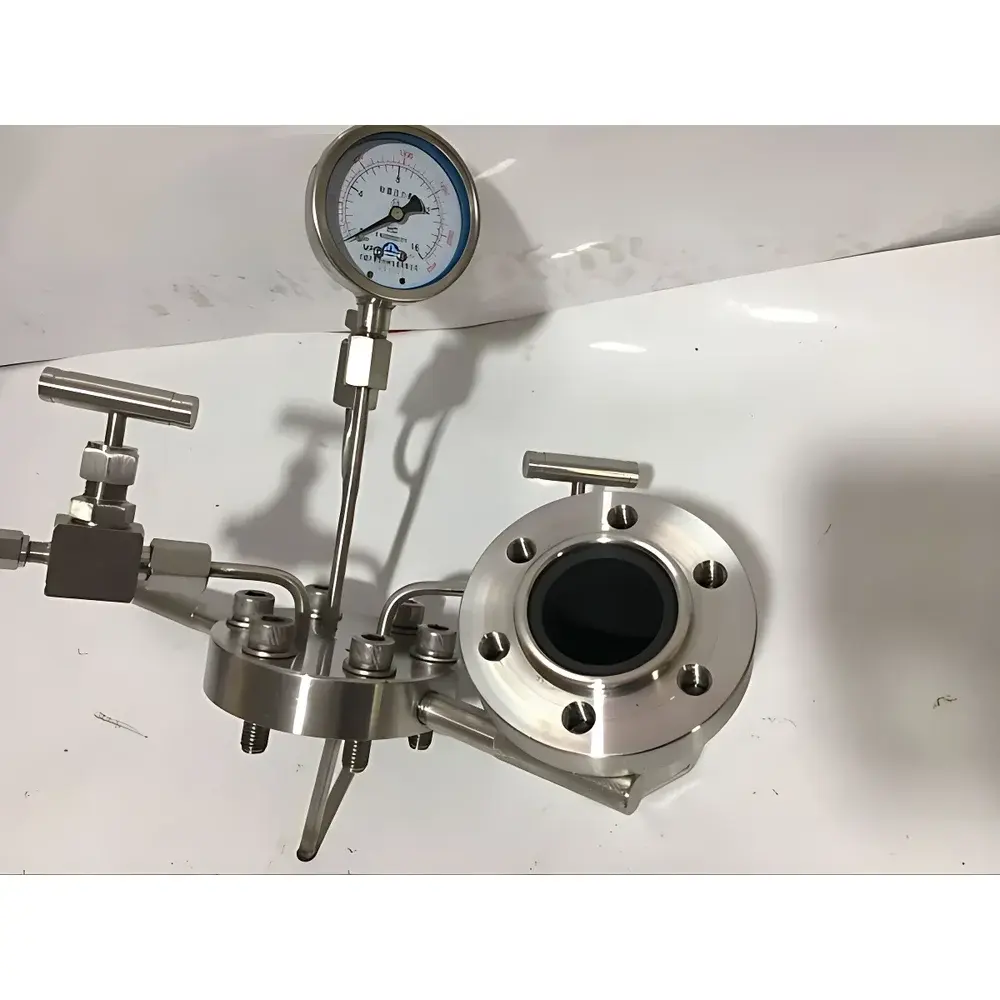
Zhengxin PFM-Series High-Pressure Hydrothermal Reactor with Precision Inlet/Exhaust Needle Valves and Integrated Pressure Gauge
| Brand | Zhengxin Instruments |
|---|---|
| Origin | Jiangsu, China |
| Manufacturer Type | Authorized Distributor |
| Country of Origin | China |
| Model | PFM-* mL |
| Capacity Range | 25–5000 mL |
| Vessel Material | Forged 304 Stainless Steel (optional: 316L, Hastelloy, Titanium, Zirconium) |
| Operating Pressure | –0.1 to 70 MPa |
| Temperature Range | 0–1000 °C |
| Vacuum Capability | Up to –0.1 MPa (absolute) |
| Pressure Monitoring | Integrated Stainless Steel Bourdon-tube Pressure Gauge |
| Gas Control | Dual Precision Needle Valves (inlet & exhaust) with 3 mm (1/8″) and 6 mm (1/4″) Swagelok-compatible ferrule fittings |
| Optional Linings | PTFE, PPL, Quartz, or Metal |
| Optional Accessories | Temperature Sensor Port, Explosion-Proof Shield, Sampling Tube, Custom Internal Filter Assembly |
| Heating Compatibility | Compatible with Oil Bath, Water Bath, Sand Bath, Electric Heating Mantles, and Magnetic/Overhead Stirring Systems |
| Customization | Fully configurable per client drawings, sample requirements, or dimensional specifications |
Overview
The Zhengxin PFM-Series High-Pressure Hydrothermal Reactor is an engineered solution for controlled synthesis, crystallization, and catalytic reaction studies under elevated temperature and pressure conditions. Designed on the principle of sealed-vessel hydrothermal chemistry, it enables precise manipulation of thermodynamic parameters—particularly vapor-phase equilibrium, solvothermal kinetics, and solid-phase nucleation—within a robust, leak-tight stainless steel environment. The reactor operates via a static batch configuration, where reactants are sealed inside the vessel prior to heating; pressure develops in situ as solvent vaporizes or gas-phase reagents participate in reaction equilibria. Its dual-needle-valve architecture allows sequential vacuum evacuation, inert gas purging (e.g., N₂ or Ar), pressurization with reactive gases (e.g., H₂, CO, NH₃), and controlled depressurization post-reaction—all without opening the vessel. This capability supports reproducible gas–liquid–solid phase interactions critical in materials science, nanomaterial synthesis (e.g., MOFs, perovskites, quantum dots), and green chemistry process development.
Key Features
- Forged 304 stainless steel main body with optional upgrade to 316L, Hastelloy C-276, titanium Grade 2, or zirconium for aggressive media compatibility (e.g., HF-containing systems, molten alkalis)
- Dual high-precision needle valves—separately configured for inlet and exhaust—with Swagelok®-compatible 1/8″ (3 mm) and 1/4″ (6 mm) ferrule connections, ensuring fine metering control and zero dead-volume gas handling
- Direct-mount stainless steel Bourdon-tube pressure gauge with dual-scale reading (MPa and psi), calibrated to ±1.6% FS, providing real-time internal pressure feedback during ramp-hold-cool cycles
- Modular design accommodating interchangeable liners: chemically inert PTFE or PPL for acid/alkali resistance; fused quartz for optical transparency and high-purity applications; or metal liners for ultra-high-temperature stability
- Integrated safety provisions including optional explosion-proof shielding compliant with IEC 60079-0 standards, overpressure relief ports compatible with rupture disc assemblies, and reinforced flange sealing with spiral-wound gaskets
- Thermal interface flexibility: standardized external geometry permits seamless integration with external heating sources—including silicone oil baths (up to 300 °C), fluidized sand baths (up to 600 °C), and custom-designed electric furnace inserts (up to 1000 °C)
Sample Compatibility & Compliance
The PFM-Series accommodates heterogeneous reaction mixtures containing solids (nanopowders, catalysts), viscous slurries, and volatile solvents (water, ethylene glycol, DMF, ethanol). Its pressure rating (–0.1 to 70 MPa) and temperature range (0–1000 °C) align with ASTM E2913 (Standard Guide for High-Pressure Reaction Vessels), ISO 4775 (Laboratory Glassware—Pressure Vessels), and USP (General Chapter on Pressure Vessels for Pharmaceutical Synthesis). When equipped with traceable calibration certificates and audit-ready documentation packages, the system meets GLP and GMP data integrity expectations for regulated R&D environments. Optional temperature sensors (Pt100 or K-type thermocouples) support compliance with FDA 21 CFR Part 11 when paired with validated data acquisition software.
Software & Data Management
While the base PFM-Series is manually operated, it integrates with third-party programmable temperature controllers (e.g., Eurotherm, Watlow) and digital pressure loggers (e.g., Druck DPI 620) via standard 4–20 mA or RS485 interfaces. Optional OEM data acquisition modules provide timestamped pressure–temperature profiles, exportable in CSV or Excel format for traceability. All accessories—including calibrated gauges and certified rupture discs—carry CE marking and factory calibration reports traceable to NIM (National Institute of Metrology, China) or UKAS-accredited labs.
Applications
- Synthesis of metal–organic frameworks (MOFs), layered double hydroxides (LDHs), and zeolitic imidazolate frameworks (ZIFs)
- Hydrothermal growth of single-crystal nanomaterials (e.g., TiO₂ nanotubes, LiFePO₄ cathode precursors)
- Catalytic hydrogenation, hydrolysis, and oxidation under subcritical water conditions
- Geochemical simulation studies (e.g., mineral dissolution/precipitation kinetics at crustal P–T conditions)
- High-temperature polymerization of aromatic polyimides and polybenzoxazoles
- Supercritical fluid-assisted nanoparticle precipitation (e.g., using CO₂-expanded liquids)
FAQ
What pressure and temperature ratings apply to the standard PFM model?
Standard units are rated for continuous operation up to 35 MPa and 350 °C; extended-range variants support 70 MPa / 1000 °C with upgraded alloys and sealing systems.
Can the reactor be used under vacuum before pressurization?
Yes—the exhaust needle valve enables connection to vacuum pumps down to ≤10⁻² mbar, facilitating degassing and inert atmosphere establishment prior to sealing.
Is PTFE lining suitable for all acidic media?
PTFE provides excellent resistance to most mineral acids below 200 °C; however, molten alkali metals, fluorine gas, and aqua regia at elevated temperatures require PPL or quartz linings.
How is temperature measured inside the vessel?
An optional thermowell port accepts Pt100 RTDs or Type K thermocouples, positioned adjacent to the reaction zone for representative bulk-phase measurement.
Does Zhengxin provide validation documentation for regulated labs?
Upon request, IQ/OQ protocols, calibration certificates (with uncertainty budgets), and material test reports (MTRs) per ASTM A240/A479 are supplied for GxP-compliant installations.



