
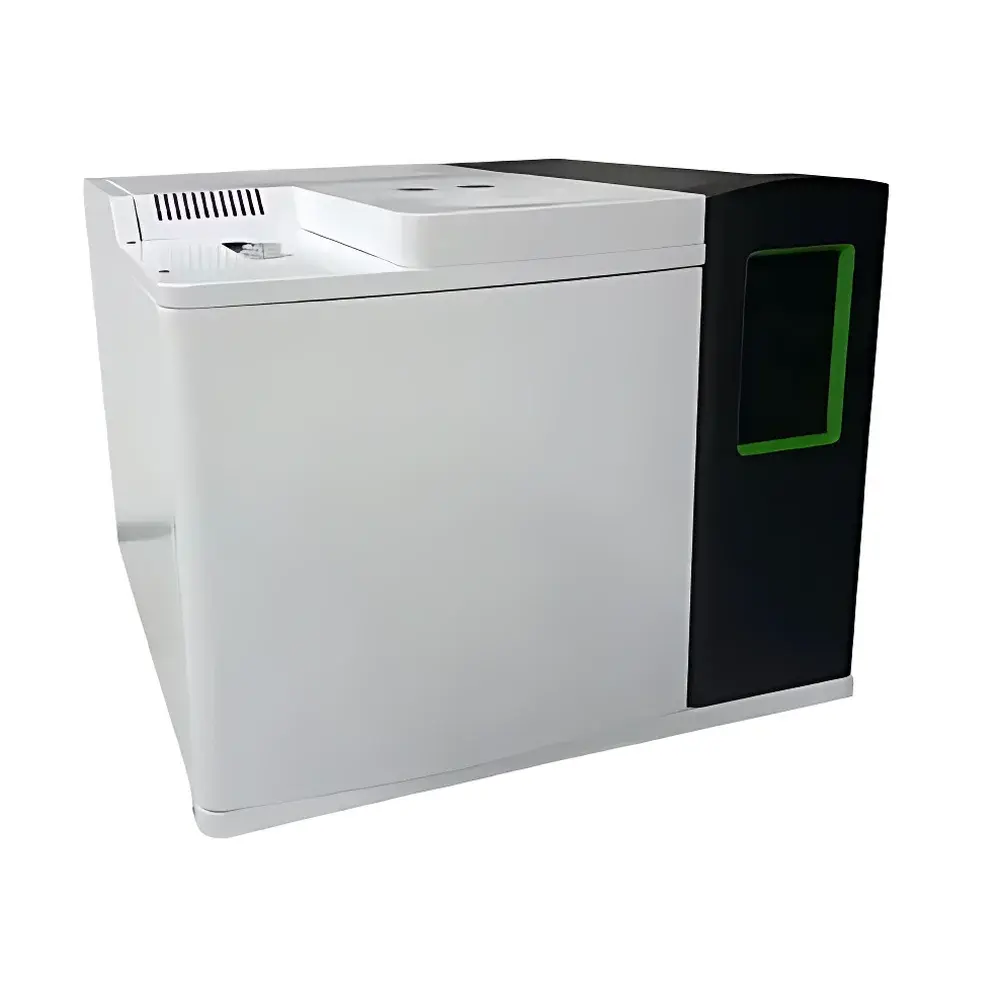
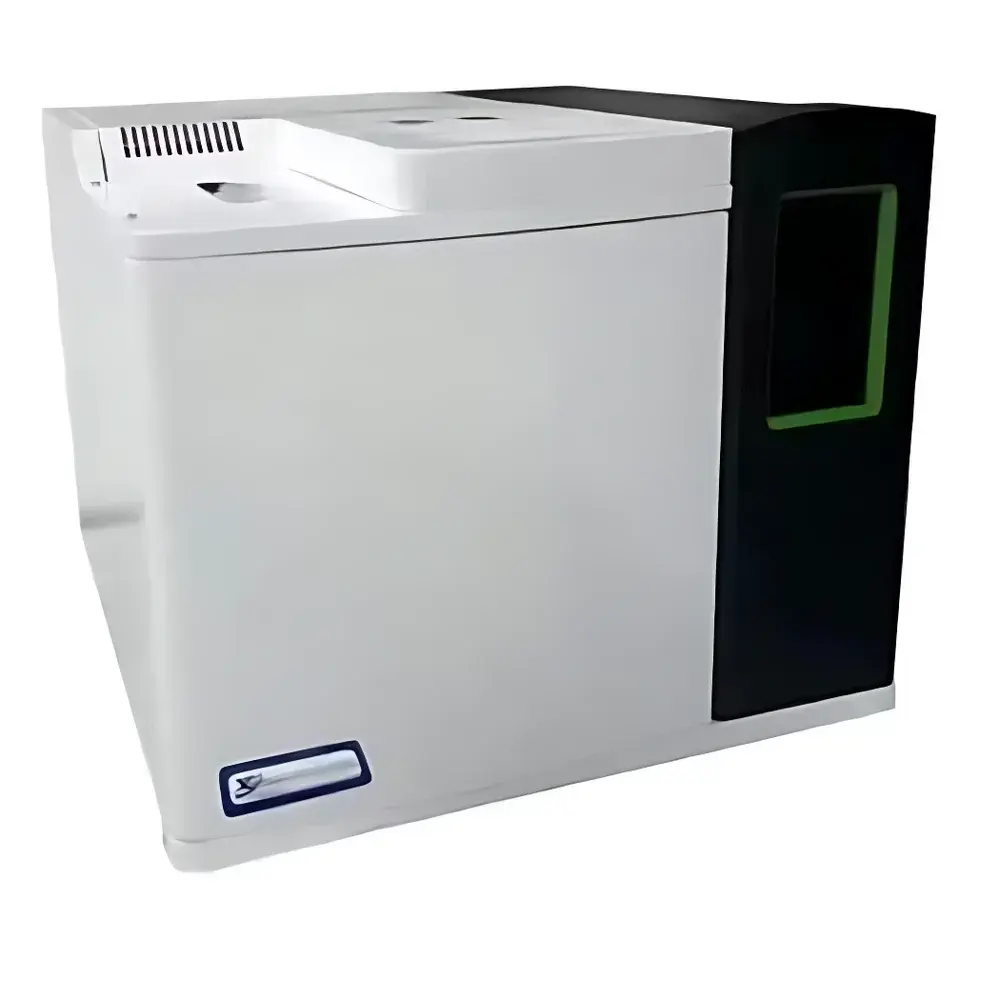
English Product Name
| Brand | HSPX |
|---|---|
| Origin | China |
| Manufacturer Type | Direct Manufacturer |
| Instrument Type | Laboratory Gas Chromatograph |
| Application Field | Pharmaceutical Residue Analysis |
| Temperature Control Range | Ambient +5°C to 400°C |
| Oven Ramp Rate | 0.1–39.9°C/min |
| Cool-down Time | ~6 min (from 400°C to 50°C) |
| Carrier Gas Flow Range & Control | 0–1000 mL/min |
| Carrier Gas Pressure Range & Control | 0–970 kPa |
| Injector Maximum Operating Temperature | 400°C |
| Injector Pressure Setting Range | 0–970 kPa |
| Injector Total Flow Setting Range | 0–1000 mL/min |
Overview
The HSPX EO-1000 is a dedicated laboratory gas chromatograph engineered for the precise, reliable quantification of residual ethylene oxide (EO) in pharmaceutical excipients, sterilized medical devices, and packaging materials. It operates on the principle of headspace gas chromatography (HS-GC), a validated analytical technique specified in the Chinese Pharmacopoeia (ChP) 2020 Edition, USP General Chapter <231>, and ISO 10993-7:2019 for biocompatibility evaluation. EO — a volatile, highly reactive alkylating agent and confirmed human carcinogen (IARC Group 1) — must be rigorously controlled post-sterilization. The EO-1000 integrates thermally stable oven architecture, high-fidelity pressure/flow control, and configurable detector support to meet stringent regulatory requirements for limit testing (e.g., ≤10 µg/g for implantable devices per ISO 10993-7). Its design conforms to GLP-compliant instrument qualification protocols, supporting IQ/OQ/PQ documentation frameworks.
Key Features
- Eight independently programmable temperature zones, including oven, up to three injectors, and up to three detectors — enabling simultaneous optimization of vaporization, separation, and detection conditions.
- High-resolution temperature control with ±0.01°C stability and 1°C incremental setting across ambient +5°C to 400°C; supports up to 16-segment programmed temperature ramping for complex matrix resolution.
- Electronic pressure and flow control (EPC) as standard or optional upgrade, delivering reproducible carrier gas delivery (0–1000 mL/min, 0–970 kPa) with real-time digital feedback and automated fault recovery.
- Integrated self-diagnostic system: automatic flame ignition/failure detection for FID, leak-responsive gas shutoff, and one-button startup sequence compliant with laboratory safety SOPs.
- Bilingual (English/Chinese) GUI on industrial-grade color LCD; fully remote-controllable via Ethernet-connected GC workstation software with audit-trail-enabled user management.
- Modular chassis architecture facilitates field-upgradable components — including detector bays (FID, TCD, ECD, FPD, NPD), autosampler interfaces, and headspace/thermal desorption module integration.
Sample Compatibility & Compliance
The EO-1000 is optimized for headspace analysis of solid and semi-solid samples per ChP Method II (static headspace) and USP <661.1>. Compatible sample formats include gelatin capsules, polymeric device housings, lyophilized powder vials, and silicone tubing. System validation aligns with ICH Q2(R2) guidelines for specificity, linearity (0.1–50 µg/mL EO standard range), LOD/LOQ determination, precision (<2% RSD for replicate injections), and robustness under variable vial pressurization and equilibration parameters. All hardware and firmware comply with electromagnetic compatibility (EMC) standards IEC 61326-1 and safety standard IEC 61010-1. Data integrity features support 21 CFR Part 11 compliance when paired with validated chromatography data systems (CDS).
Software & Data Management
The embedded GC control software provides full method development, sequence scheduling, and real-time chromatogram visualization. Raw data files (.cdf) are stored with embedded metadata: instrument configuration, calibration history, user ID, timestamp, and audit trail logs for all parameter changes. The system supports LIMS integration via ASTM E1384-compliant export and offers customizable report templates aligned with pharmacopeial submission formats (e.g., ChP Appendix XIX B). Optional CDS packages include electronic signature workflows, role-based access control, and automated peak integration using retention time locking (RTL) algorithms for long-term method transferability.
Applications
- Quantitative EO residue testing in Class II/III medical devices (e.g., catheters, sutures, surgical drapes) prior to market release.
- Routine QC analysis of pharmaceutical excipients — particularly gelatin, polysorbates, and PEG-based carriers — per ChP General Monograph 0721.
- Method development and validation support for EO sterilization process verification (ISO 11135).
- Multi-residue screening of related impurities (e.g., ethylene chlorohydrin, acetaldehyde) using selective detectors (ECD, NPD) and multi-dimensional column switching.
- Environmental monitoring of EO emissions from sterilization facilities via thermal desorption–GC–MS coupling (with optional TD interface).
FAQ
Is the EO-1000 compliant with Chinese Pharmacopoeia 2020 requirements for EO testing?
Yes — it meets all instrumental performance criteria outlined in ChP General Method 0721, including temperature precision, retention time repeatability, and sensitivity thresholds for 10 µg/g detection limits.
Can the system be configured for unattended overnight analysis?
Yes — with optional autosampler and headspace sampler, the EO-1000 supports scheduled batch runs, auto-calibration sequences, and email/SNMP alerts upon completion or error events.
What detector configurations are recommended for EO analysis?
FID is standard for broad-spectrum quantitation; ECD provides enhanced selectivity for halogenated by-products if required for impurity profiling.
Does the instrument support 21 CFR Part 11 compliance out-of-the-box?
The base system includes electronic signature readiness and audit trail logging; full Part 11 compliance requires deployment with validated third-party CDS software and documented procedural controls.
What maintenance intervals are recommended for routine operation?
Column conditioning every 200 injections, injector liner replacement every 500 injections, and quarterly EPC sensor calibration — all tracked automatically within the instrument’s maintenance log module.




