
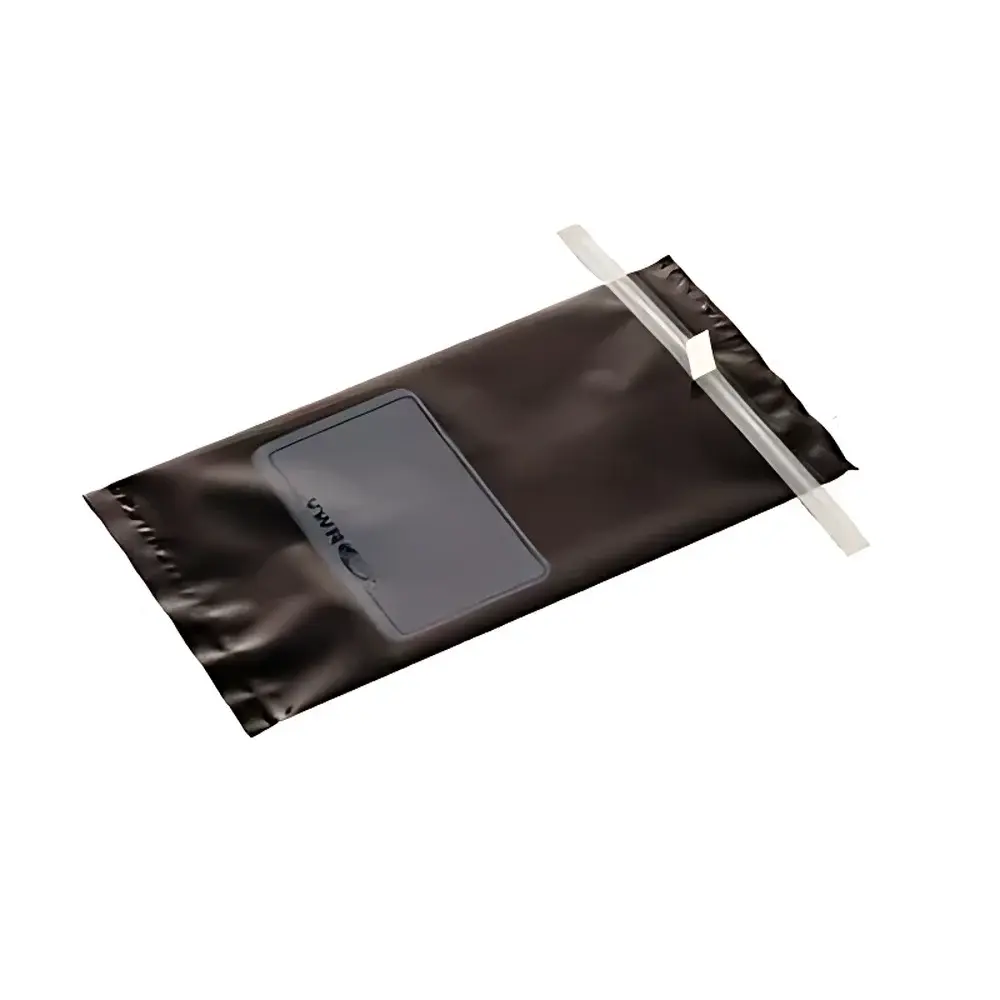
VWR Sterile Stand-Up & Sealable Sample Bags (Whirl-Pak™ and Combination Wire Designs)
| Brand | VWR |
|---|---|
| Origin | USA |
| Product Line | Sterile Disposable Sampling Containers |
| Models | 82007-714, 83007-556, 83007-562, 89000-190 |
| Sterility | Gamma-Irradiated (SAL 10⁻⁶) |
| Material | Low-Density Polyethylene (LDPE) |
| Max Temp | 100°C (212°F) |
| Not Compatible With | Alcohols or Strong Oxidizers |
Overview
VWR® Sterile Stand-Up & Sealable Sample Bags are gamma-irradiated, single-use, disposable containers engineered for integrity-critical sampling across environmental monitoring, clinical diagnostics, pharmaceutical quality control, food safety testing, and veterinary pathology. These bags employ two primary closure systems: the Whirl-Pak™ twist-wire mechanism—providing a tamper-evident, leak-resistant seal through mechanical twisting and locking of embedded stainless steel wires—and the Combination Wire design, integrating both wire closure and integrated safety tabs to prevent accidental opening during transport or storage. The stand-up variants feature bottom gussets that expand under sample weight, enabling stable upright positioning without external support racks—a key ergonomic advantage in high-throughput laboratories and field collection workflows. All bags are manufactured under ISO 13485–certified conditions and supplied with documented sterility assurance level (SAL) of 10⁻⁶, meeting ANSI/AAMI ST34 and ISO 11137 requirements for medical device sterilization validation.
Key Features
- Gamma-irradiated sterile packaging (validated SAL 10⁻⁶), individually wrapped or bulk-packed in sealed barrier pouches
- Stand-up capability via heat-sealed gusseted base; maintains vertical orientation with ≥150 mL load
- Whirl-Pak™ wire closure system ensures reproducible, operator-independent sealing force and visual/tactile confirmation of lock engagement
- Safety-tab variants provide secondary mechanical restraint against inadvertent wire loosening during agitation or centrifugation
- White write-on strips (matte polypropylene laminate) accept ballpoint pens, pencils, and permanent markers without smearing or solvent bleed
- Chemically inert LDPE construction complies with USP for Class VI plastics; non-pyrogenic and extractables-tested per USP and
- Dimensional consistency controlled to ±1.5 mm tolerance on width/height; thickness uniformity maintained within ±0.2 mil (±0.005 mm)
Sample Compatibility & Compliance
These bags accommodate solids (e.g., soil cores, tissue specimens), semisolids (e.g., sludge, creams), and liquids (e.g., wastewater, biological fluids, buffer solutions). They are routinely employed in EPA Method 503.1 (wastewater solids), FDA Bacteriological Analytical Manual (BAM) Chapter 4 (food microbiology), and CLSI M22-A3 (clinical specimen transport). Not recommended for use with ethanol, isopropanol, acetone, or other halogenated solvents due to potential stress cracking. Maximum sustained temperature exposure is 100°C; short-term steam autoclaving is not supported. All lots undergo bioburden testing per ISO 11737-1 and endotoxin testing per LAL assay (≤0.5 EU/mL). Compliant with 21 CFR Part 11 when used with validated electronic lab notebook (ELN) systems for chain-of-custody documentation.
Software & Data Management
While inherently hardware-based, VWR Sterile Sample Bags integrate seamlessly into regulated digital workflows. Batch-specific CoA (Certificate of Analysis) and CoC (Certificate of Conformance) are available as PDFs with unique lot traceability codes. Barcode-compatible white marking areas support integration with LIMS platforms (e.g., LabWare, Thermo Fisher SampleManager) using GS1-128 or Code 128 symbology. For GLP/GMP environments, bags are referenced in SOPs aligned with ASTM D4169 (performance testing of shipping containers) and ISO/IEC 17025:2017 Clause 7.5.3 (control of records). Audit trails for lot release—including sterilization cycle parameters, bioburden logs, and particulate testing reports—are retained for ≥10 years per VWR’s Quality Management System.
Applications
- Environmental Testing: Soil, sediment, and water sampling per EPA SW-846 Methods 9045D (pH), 9060A (oil & grease), and 9071B (PAHs)
- Clinical Microbiology: Transport of urine, stool, and wound swabs under CLIA and CAP-accredited protocols
- Pharmaceutical QC: Sampling of active pharmaceutical ingredients (APIs), excipients, and final drug product batches per USP and ICH Q5C
- Food Safety: Ready-to-eat (RTE) product testing for Listeria monocytogenes, Salmonella, and E. coli O157:H7 per USDA-FSIS Directive 10,010.1
- Veterinary Diagnostics: Carcass rinse sampling for pathogen enumeration (e.g., Campylobacter) in poultry processing per FSIS Notice 11-19
FAQ
Are these bags suitable for frozen storage?
Yes—tested for stability at –20°C and –80°C over 12 months; no embrittlement or seal failure observed per ASTM F1980 accelerated aging protocol.
Can I autoclave these bags?
No—gamma irradiation is the sole validated sterilization method. Autoclaving may compromise LDPE integrity and invalidate sterility claims.
What is the shelf life post-sterilization?
36 months from date of manufacture when stored in original packaging at 15–25°C and ≤60% RH, per ISO 11607-1 Annex A.
Do you offer custom printing or barcoding?
Yes—VWR supports OEM labeling, including serialized 2D DataMatrix codes, GHS-compliant hazard pictograms, and client-specific batch identifiers (minimum order: 5,000 units).
How are sterility test results reported?
Each lot includes a Certificate of Sterility with irradiation dose (25–35 kGy), dosimeter readings, and microbial challenge data (Geobacillus stearothermophilus spores) per ISO 11137-2.



