
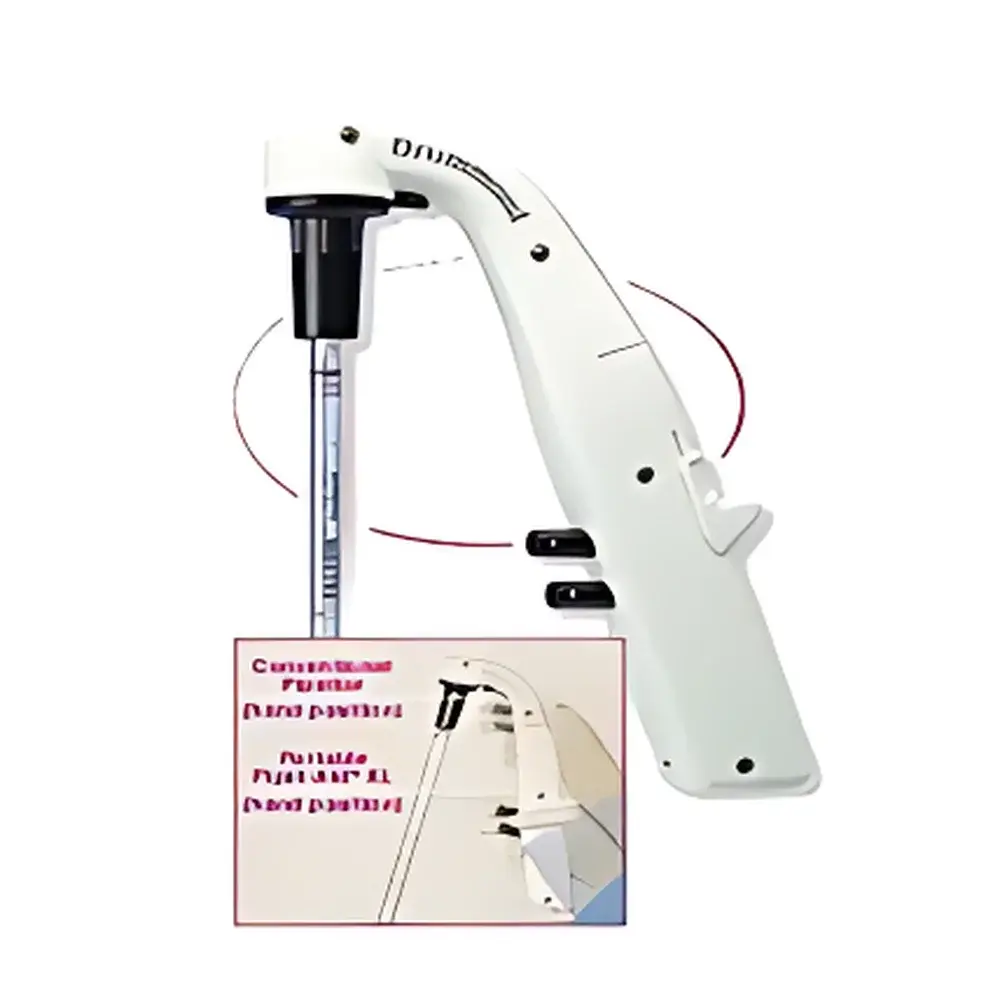
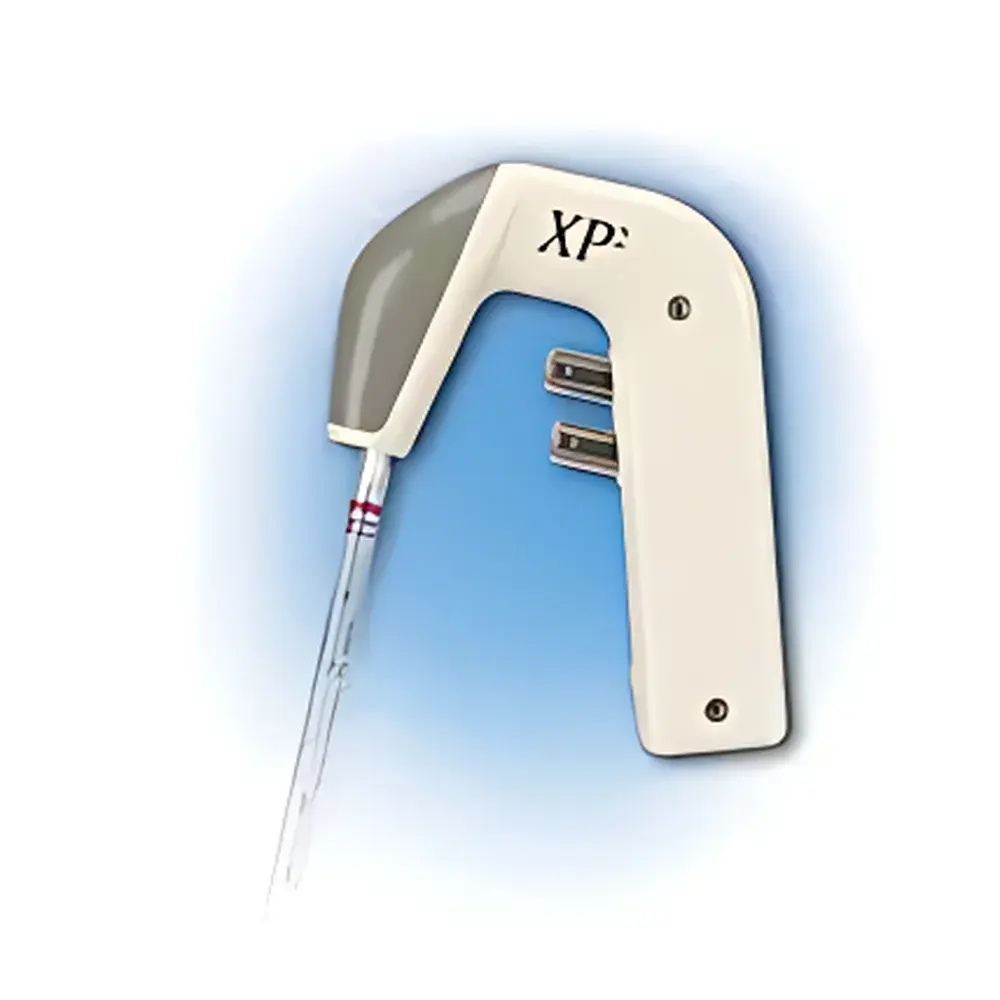
DRUMMOND Portable Pipet-Aid XP2 Handheld Electronic Pipette Controller
| Brand | DRUMMOND |
|---|---|
| Origin | USA |
| Model | Portable Pipet-Aid XP2 |
| Weight | 240 g |
| Dimensions | 14 cm (L) |
| Compatible Pipette Range | 1–100 mL |
| Power Source | NiMH Rechargeable Battery (3.6 V, 700 mAh) |
| Speed Modes | 9 Adjustable Settings (3 per button: Fast/Medium/Slow) |
| Filter Type | Dual-Layer TC-Grade Sterile Filter with Auto-Lock Moisture Detection |
| Certifications | CE, Compliant with IEC 61000-6-3 & IEC 61000-6-1 |
Overview
The DRUMMOND Portable Pipet-Aid XP2 is a precision-engineered handheld electronic pipette controller designed for high-reproducibility liquid handling across diverse laboratory environments—from cell culture suites and molecular biology labs to clinical diagnostics and quality control facilities. Unlike traditional manual pipetting aids or fixed-base systems, the XP2 employs a brushless DC motor-driven vacuum pump architecture optimized for consistent airflow control, minimal pulsation, and low acoustic emission (<45 dB(A)). Its operation is grounded in regulated negative pressure generation (typically −15 to −85 kPa, adjustable via speed selection), enabling precise aspiration and dispensing of liquids ranging from aqueous buffers to viscous cell suspensions and serum-containing media. The device operates independently of external compressors or vacuum manifolds, making it ideal for mobile applications, biosafety cabinets, laminar flow hoods, and field-deployable analytical workflows.
Key Features
- Ergonomic contoured grip with non-slip textured surface—reduces operator fatigue during extended use and supports natural wrist alignment per ISO 11228-3 ergonomic guidelines.
- Integrated rechargeable NiMH battery (3.6 V, 700 mAh) enables continuous operation with hot-swappable charging—no workflow interruption required; full charge supports ≥6 hours of typical intermittent use.
- Redesigned ultra-quiet pump assembly delivers smoother airflow profiles and eliminates audible “cycling” noise common in older diaphragm-based controllers, critical for low-disturbance cell handling.
- Nine discrete, user-selectable speed settings—organized as three tiers (Fast/Medium/Slow) per dedicated aspiration/dispense/blast function button—allow granular control over liquid velocity and shear stress exposure.
- Tool-free service design: Slide-lock nosepiece permits rapid filter replacement and battery access without screwdrivers or disassembly tools—minimizes downtime and supports GLP-compliant maintenance logs.
- Compact form factor (14 cm length, 240 g mass) ensures stable one-handed operation and seamless integration with universal pipette holders, mobile lab carts, or inverted microscope stages.
Sample Compatibility & Compliance
The Pipet-Aid XP2 accommodates standard glass and plastic serological pipettes (1–100 mL), including those equipped with self-draining modules for gravity-assisted dispensing. Its TC-grade dual-layer hydrophobic filter (0.2 µm pore size, certified per ASTM F838-22) provides dual protection: first layer traps particulates and aerosols; second layer functions as a moisture-sensitive barrier—when saturated, airflow resistance increases sharply, providing tactile and auditory feedback indicating potential tubing contamination. The unit complies with CE marking requirements under Directive 2014/30/EU (EMC) and 2014/35/EU (LVD), conforms to IEC 61000-6-3 (emission) and IEC 61000-6-1 (immunity), and meets essential safety provisions of ISO 13485:2016 for in vitro diagnostic support equipment.
Software & Data Management
As a standalone analog control device, the Pipet-Aid XP2 does not incorporate embedded firmware, wireless connectivity, or digital data logging. Its operation remains fully mechanical-electronic—eliminating validation overhead associated with software-based instruments. This architecture aligns with FDA 21 CFR Part 11 Annex A guidance for “non-software” laboratory devices, where operational consistency is verified through periodic performance checks (e.g., gravimetric accuracy verification per ISO 8655-5) rather than electronic audit trails. Maintenance records—including filter replacement dates, battery cycle counts, and calibration verification results—can be documented manually within laboratory notebooks or LIMS-compatible spreadsheets.
Applications
- Cell passaging and dissociation using trypsin-EDTA or enzymatic reagents—precise slow-speed aspiration prevents shearing of sensitive monolayers.
- Serial dilution workflows requiring repeatable volumetric transfer across 10-fold concentration gradients.
- Media preparation and sterile filtration setup in Class II biosafety cabinets—compact footprint avoids obstruction of airflow patterns.
- High-throughput assay plate filling where medium-speed dispensing balances throughput and meniscus stability.
- Field-based environmental sampling—battery autonomy and ruggedized housing support deployment in resource-limited or mobile lab settings.
FAQ
What pipette sizes are compatible with the Pipet-Aid XP2?
The XP2 supports all standard 1 mL, 2 mL, 5 mL, 10 mL, 25 mL, 50 mL, and 100 mL serological pipettes—both reusable glass and disposable polypropylene types.
Does the XP2 require calibration?
While no formal recalibration is mandated by the manufacturer, users should perform routine gravimetric verification (e.g., per ISO 8655-5) at least weekly or after filter/battery replacement to ensure volumetric accuracy remains within ±2% of nominal volume.
Can the XP2 be used with corrosive or volatile solvents?
No. The internal pump and tubing materials are validated only for aqueous, buffered, and mild organic solutions (e.g., ≤10% ethanol). Avoid contact with strong acids, halogenated solvents, or aldehydes to prevent seal degradation.
Is the TC filter autoclavable?
No. The dual-layer TC filter is single-use and must be replaced after each experiment involving potentially biohazardous material or upon visible wetting/moisture breakthrough.
What international voltage configurations are available?
The XP2 is supplied in two variants: 4-000-501-I (220–240 V AC, CE-marked, intended for EU/UK/APAC markets) and 4-000-500-I (100–120 V AC, UL-recognized, for North America).



