
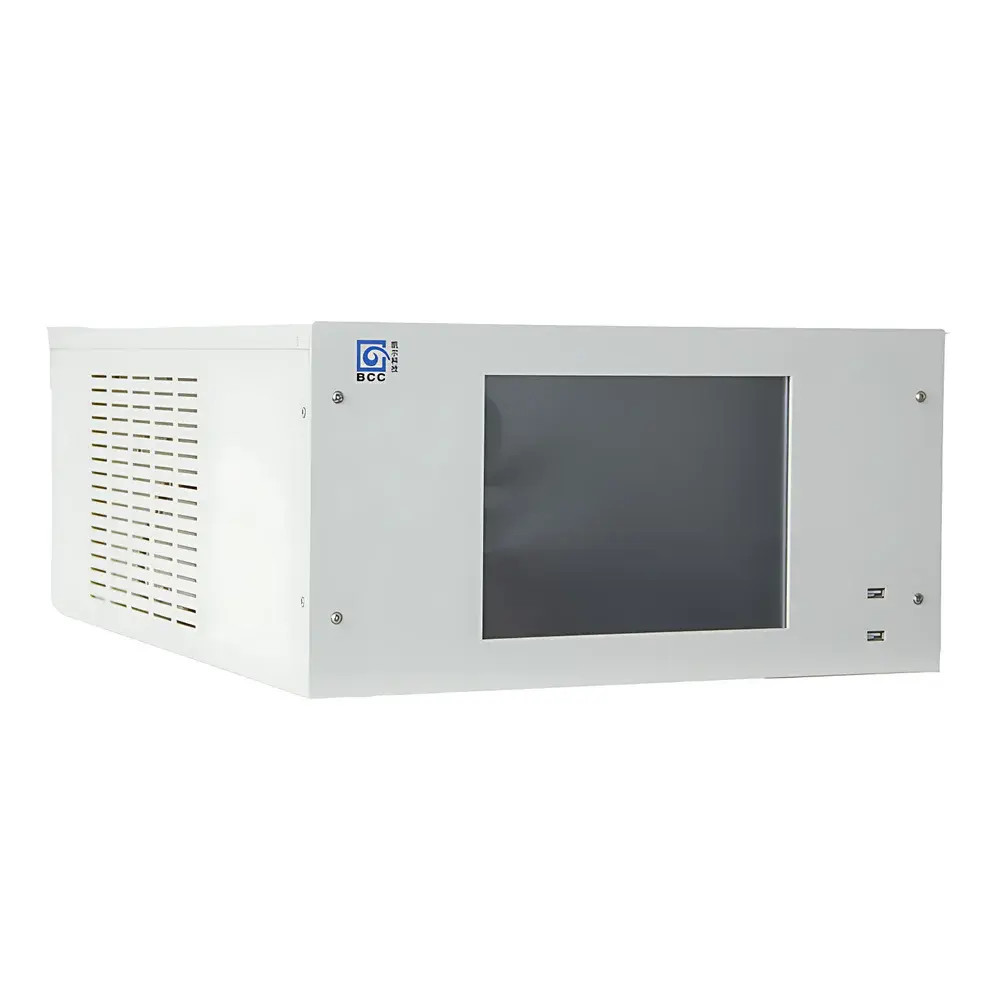
BCC MGA-8000 Multicomponent Gas Analyzer with Off-Axis Integrated Cavity Output Spectroscopy (OA-ICOS)
| Brand | BCC |
|---|---|
| Model | MGA-8000 |
| Measurement Principle | Tunable Diode Laser Absorption Spectroscopy (TDLAS) with Off-Axis ICOS |
| Detection Range | 0–1 / 10 / 50 / 100 / 500 ppm (selectable per gas) |
| Detection Limit | <1 ppb (gas-dependent) |
| Response Time (T90) | ≤20 s |
| Repeatability | ≤±0.1% FS |
| Drift | ≤±1% FS / 24 h |
| Temperature Control Stability | ±0.005 °C |
| Pressure Control Stability | ±0.0002 atm |
| Sample Temperature Range | −10 to +50 °C |
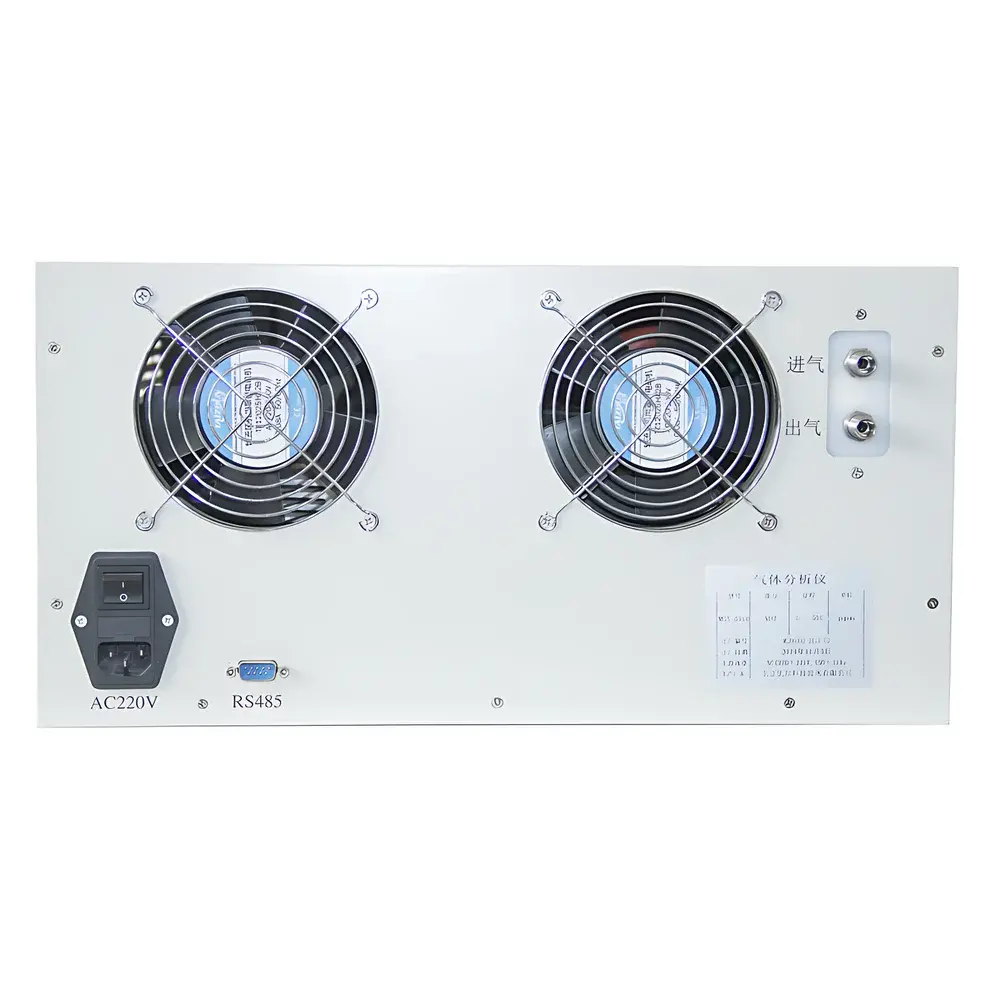
| Output Interfaces | 4–20 mA, RS-232 / RS-485 (Modbus RTU), USB, Ethernet |
| Power Supply | 200–240 VAC, 50/60 Hz |
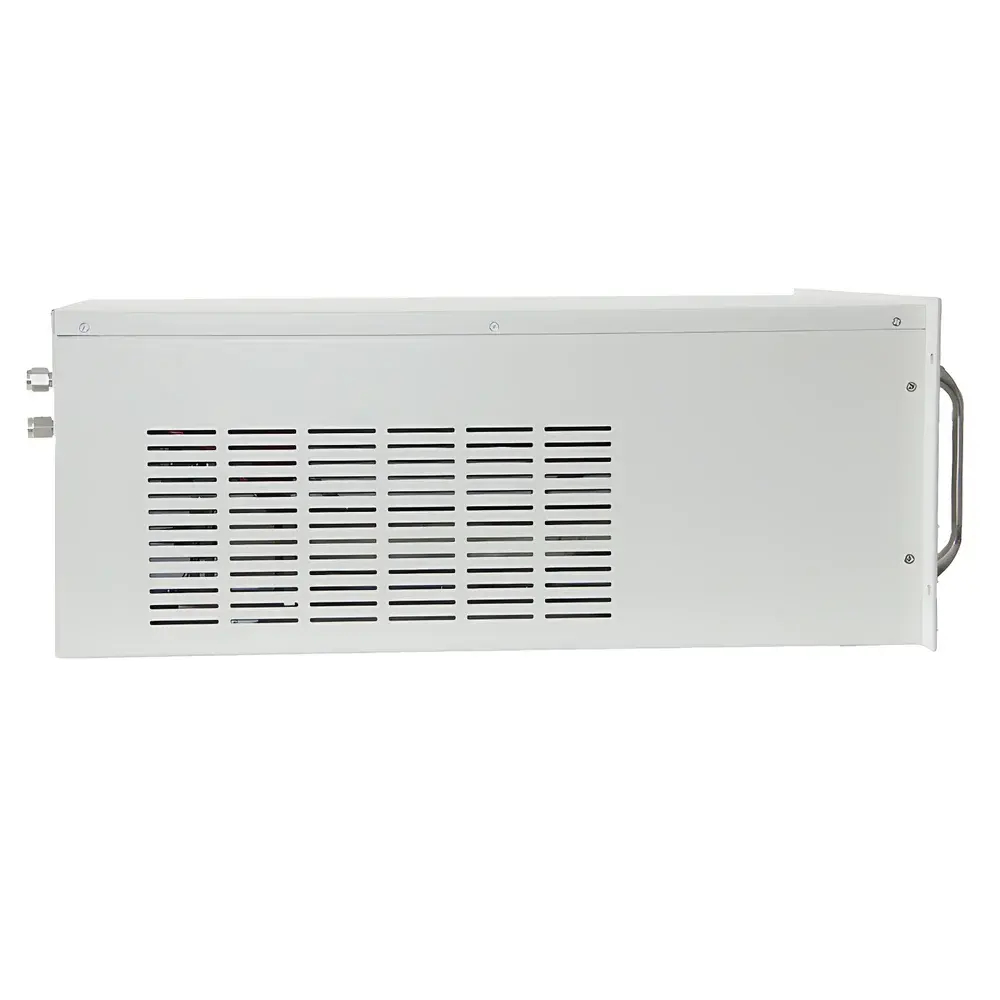
| Enclosure Options | 19″ rack-mount, benchtop, portable |
Overview
The BCC MGA-8000 is a high-performance multicomponent gas analyzer engineered for continuous, real-time, and quantitative measurement of trace and major atmospheric gases using Off-Axis Integrated Cavity Output Spectroscopy (OA-ICOS)—a refined implementation of Tunable Diode Laser Absorption Spectroscopy (TDLAS). Unlike conventional direct absorption or wavelength modulation spectroscopy systems, OA-ICOS achieves effective optical path lengths exceeding several kilometers within a compact cavity by leveraging controlled off-axis laser injection into a high-finesse optical resonator. This architecture delivers exceptional sensitivity and long-term stability without mechanical moving parts or consumables. The instrument is designed for unattended operation in ambient air monitoring, industrial emission compliance, greenhouse gas flux studies, and process control environments where simultaneous, interference-free quantification of multiple analytes is required.
Key Features
- Multi-gas capability: Simultaneous detection of up to 18 target species—including CO, CO₂, CH₄, NO, N₂O, NH₃, HF, HCl, H₂S, SO₂, ¹³CO₂, H₂O, O₂, C₂H₂, C₃H₈, CF₄, and C₂F₆—without cross-sensitivity from spectral interferences or pressure broadening effects.
- Ultra-low detection limits: Sub-parts-per-trillion (sub-ppt) to low-parts-per-trillion (low-ppt) sensitivity across multiple gases, enabled by OA-ICOS’s >10 km effective pathlength and ultra-stable cavity alignment.
- Thermobaric stabilization: Dual-stage temperature control (±0.005 °C) and precision pressure regulation (±0.0002 atm) minimize baseline drift and ensure calibration integrity over extended deployment periods.
- Robust environmental tolerance: Certified operational range of −10 to +50 °C for sample gas inlet conditions, supporting field deployments in diverse climatic zones without external conditioning.
- Flexible integration architecture: Standardized 19″ rack-mount chassis (also available in benchtop and portable configurations), with native support for industrial protocols including Modbus RTU over RS-485 and analog 4–20 mA outputs.
- Zero-interference measurement: Inherent immunity to matrix effects from co-existing gases, particulates, and variable total pressure—validated per ISO 12039 and ASTM D6522 for stack gas applications.
Sample Compatibility & Compliance
The MGA-8000 accepts raw, unfiltered, and non-dried sample streams across its full operating temperature range. Its optical measurement cell is constructed from corrosion-resistant materials (e.g., electropolished stainless steel and fused silica windows), enabling direct analysis of aggressive gas matrices containing HF, HCl, or SO₂ without degradation. The system complies with electromagnetic compatibility (EMC) requirements per IEC 61326-1 and meets safety standards IEC 61010-1 for laboratory and industrial use. Data integrity features—including time-stamped audit logs, user-access controls, and configurable data retention—support GLP/GMP-aligned workflows and are compatible with FDA 21 CFR Part 11 electronic record requirements when deployed with validated software configurations.
Software & Data Management
Control and data acquisition are managed via the BCC GasView™ platform—a Windows-based application offering real-time spectral visualization, multi-channel concentration trending, automated zero/span validation scheduling, and configurable alarm thresholds. All raw interferograms and calibrated concentration time series are stored in HDF5 format for traceability. Export options include CSV, XML, and OPC UA for integration with SCADA, LIMS, or cloud-based environmental dashboards. Remote firmware updates and diagnostic telemetry are supported over secure TLS-enabled Ethernet connections, ensuring minimal on-site maintenance and long-term serviceability.
Applications
- Ambient air quality monitoring networks (AQMS) for regulatory reporting under EU Directive 2008/50/EC and U.S. EPA 40 CFR Part 58.
- Greenhouse gas flux measurements (eddy covariance, chamber-based) requiring simultaneous CO₂, CH₄, N₂O, and H₂O isotopic ratio (¹³CO₂) quantification.
- Industrial stack emission monitoring (CEMS) for combustion processes, semiconductor fabrication, and chemical manufacturing.
- Landfill and biogas facility monitoring for CH₄, CO₂, H₂S, and NH₃ compliance with ISO 14064 and GHG Protocol standards.
- Research-grade atmospheric chemistry studies requiring high temporal resolution (<1 Hz) and sub-ppb precision across dynamic gas mixtures.
FAQ
Does the MGA-8000 require periodic calibration with certified gas standards?
Yes—while the OA-ICOS architecture minimizes drift, quarterly zero/span verification using NIST-traceable calibration gases is recommended for regulatory-grade deployments. Automated span checks can be scheduled via GasView™.
Can the instrument measure isotopic ratios such as ¹³CO₂/¹²CO₂?
Yes—the MGA-8000 supports high-resolution spectral fitting for ¹³CO₂ at 2003 nm, enabling δ¹³C calculation when paired with appropriate reference gas protocols and post-processing routines.
Is the system compatible with explosion-proof (ATEX/IECEx) enclosures?
The standard 19″ rack unit is rated for general-purpose indoor use. Custom ATEX Zone 2 or IECEx-certified variants are available upon request, subject to mechanical redesign and third-party certification.
What is the typical maintenance interval for optical components?
Under normal operating conditions (clean sample stream, stable environment), the cavity mirrors and laser diodes are rated for ≥5 years MTBF. No routine optical alignment is required due to passive OA-ICOS cavity design.
How does the analyzer handle water vapor interference in humid samples?
H₂O is measured as a primary analyte; its spectral contribution is explicitly modeled and subtracted during multi-species fitting. No external drying or permeation dryers are necessary, preserving thermodynamic equilibrium of reactive species.
Related Products







