
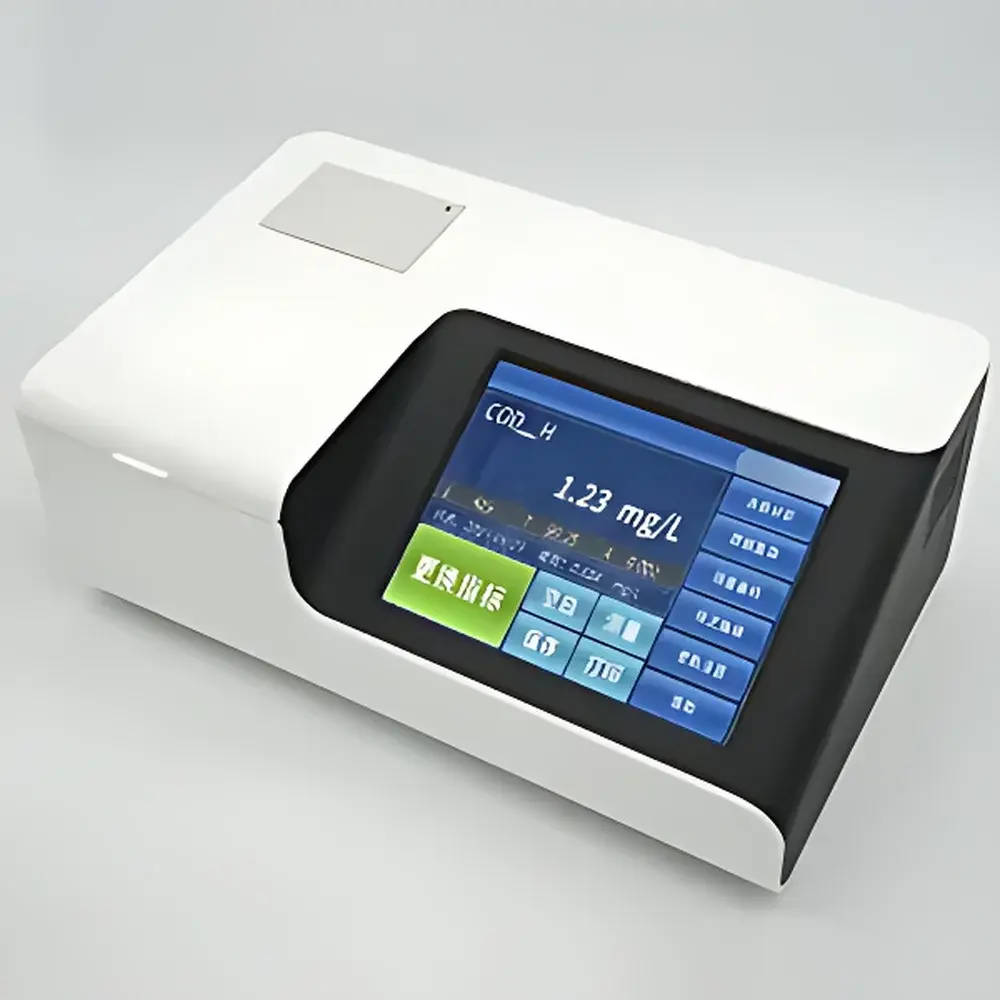
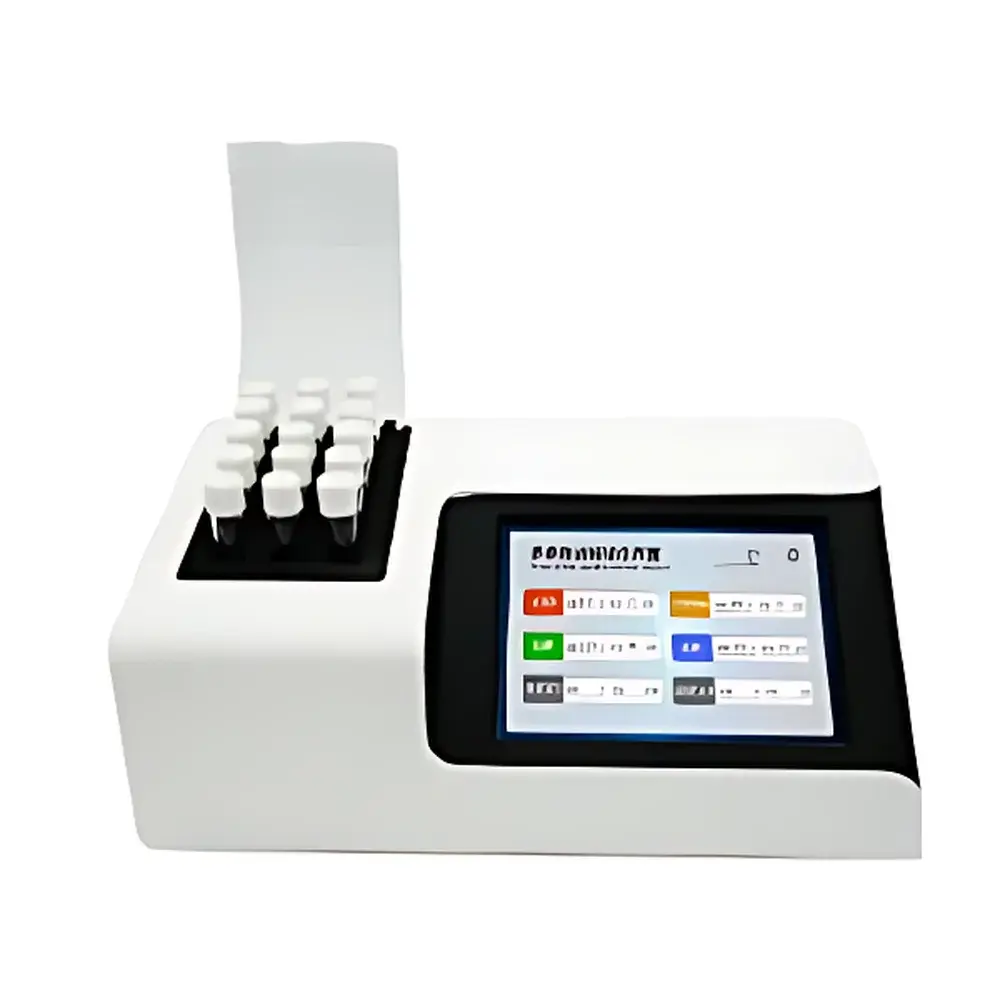
InLab-2022 Multi-Parameter Water Quality Analyzer
| Brand | ZYKX |
|---|---|
| Origin | Beijing, China |
| Manufacturer Type | Authorized Distributor |
| Country of Manufacture | China |
| Model | InLab-2022 |
| Pricing | Upon Request |
Overview
The InLab-2022 Multi-Parameter Water Quality Analyzer is an integrated benchtop instrument engineered for rapid, accurate, and standardized analysis of physical, chemical, and electrochemical water quality parameters. It operates on dual optical detection principles—absorption photometry (for colorimetric assays) and potentiometric/electrochemical transduction (for pH, ORP, conductivity, DO, etc.)—combined with precisely controlled thermal digestion for oxidizable and phosphorus/nitrogen-species determination. Designed to meet routine monitoring requirements in environmental laboratories, municipal wastewater plants, industrial effluent control, and academic research settings, the system complies with core methodological frameworks referenced in ISO 7888 (conductivity), ISO 5667 (water sampling), ASTM D1253 (residual chlorine), and EPA Method 410.1 (COD by dichromate digestion). Its architecture supports both regulatory compliance workflows and exploratory method development through customizable calibration and curve-fitting routines.
Key Features
- 8-inch high-resolution capacitive touch display with full Chinese GUI and guided workflow navigation—no external PC required for basic operation
- Dual-function digestion–colorimetry tubes reduce reagent consumption by up to 40% versus conventional vial-based systems and eliminate cross-contamination risk
- Modular assay architecture: users may install or deactivate individual parameter modules (e.g., COD, NH₃-N, TP, TN, heavy metals) via software license activation—no hardware modification needed
- Precise temperature-controlled digestion block (45–200 °C, ±2 °C accuracy, ≤1 °C uniformity across 15 wells) with real-time temperature vs. time curve visualization and programmable ramp/hold profiles
- Semiconductor cold-light source with >50,000-hour service life and stable spectral output (340–900 nm range); eliminates lamp replacement and warm-up delays
- Auto-calibration support for 1–7 point standardization; automatic slope, intercept, and correlation coefficient calculation per stored curve
- Thermal safety system: overtemperature cutoff, splash-resistant transparent shield, digitally labeled digestion wells, and audible/visual fault alerts
- Onboard thermal printer and dual-data export paths: USB mass storage mode + optional Bluetooth 5.0 module for wireless transfer to LIMS or cloud platforms
Sample Compatibility & Compliance
The InLab-2022 accepts liquid samples ranging from raw surface water and treated effluent to industrial process streams and groundwater extracts. Sample volume requirements are optimized for 10–25 mL per test depending on analyte and dilution factor. All preloaded calibration curves align with national standard methods (HJ/T 399–2007 for COD, HJ 535–2009 for ammonia nitrogen, HJ 671–2013 for total phosphorus). For electrochemical sensors (pH, ORP, conductivity, DO), the system supports interchangeable probe interfaces compliant with DIN 19262 and ASTM D3693. Data integrity meets GLP traceability requirements: each measurement record includes timestamp, operator ID (user login), instrument serial number, calibration history, and digestion protocol ID. Audit trail functionality satisfies FDA 21 CFR Part 11 readiness when paired with optional user authentication and electronic signature modules.
Software & Data Management
Embedded firmware provides local data management for up to 30,000 test records with automatic timestamping and power-loss recovery. Measurement results include raw absorbance values, calculated concentrations, QC flags (e.g., out-of-range, low signal-to-noise), and digestion log metadata (actual temperature profile, hold time, cooling rate). The included Windows-compatible desktop software enables advanced functions: multi-curve regression modeling, batch report generation (PDF/CSV), trend charting across time-series datasets, and custom limit-setting for pass/fail evaluation. Data synchronization supports direct import into common LIMS platforms via CSV or XML schema mapping. Mobile data access is available through a certified Android/iOS companion app supporting QR-code-assisted sample logging and field result verification.
Applications
- Regulatory compliance testing for municipal wastewater discharge permits (e.g., COD, NH₃-N, TP, TN, heavy metals)
- Source water quality assessment in drinking water treatment facilities
- In-process monitoring of industrial cooling towers, plating baths, and semiconductor rinse waters
- Academic and governmental research on nutrient cycling, eutrophication dynamics, and emerging contaminant screening
- Field-deployable lab support for emergency response teams assessing post-spill or flood-affected water bodies
FAQ
Does the InLab-2022 support USP General Chapter <643> or ISO 8536-5 for conductivity validation?
Yes—the conductivity module is factory-calibrated against NIST-traceable KCl standards and supports user-executed two-point verification per ISO 8536-5 protocols. Calibration reports include uncertainty budgets.
Can third-party reagents be used with the preloaded digestion curves?
Preloaded curves are optimized for ZYKX-certified reagent kits. While alternative reagents may function, accuracy and precision must be verified per ISO/IEC 17025 clause 5.4.2 before routine use.
Is remote firmware update capability available?
Firmware updates are delivered via encrypted USB drive with SHA-256 checksum verification. Over-the-air updates are not supported for security and regulatory stability reasons.
What is the recommended maintenance interval for optical path cleaning and thermal block calibration verification?
Optical path inspection and wipe-down every 100 digestions; annual thermal block calibration verification using PT100 reference probes is advised per ISO/IEC 17025 Clause 6.4.6.
How does the system handle matrix interference in high-turbidity or colored samples?
For turbid samples (>100 NTU), built-in compensation algorithms apply dual-wavelength correction (e.g., 700 nm reference channel). Users may also enable manual blank subtraction or perform centrifugal pretreatment per HJ 494–2009 guidelines.







