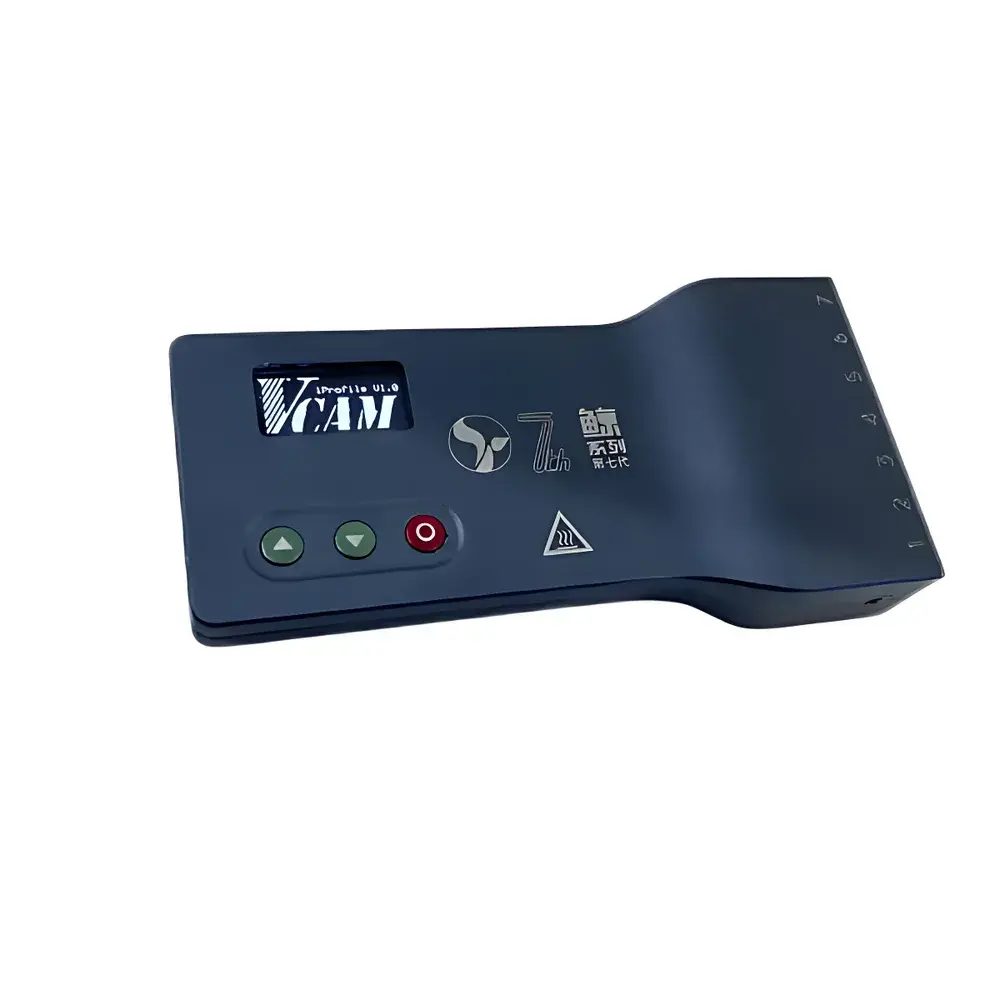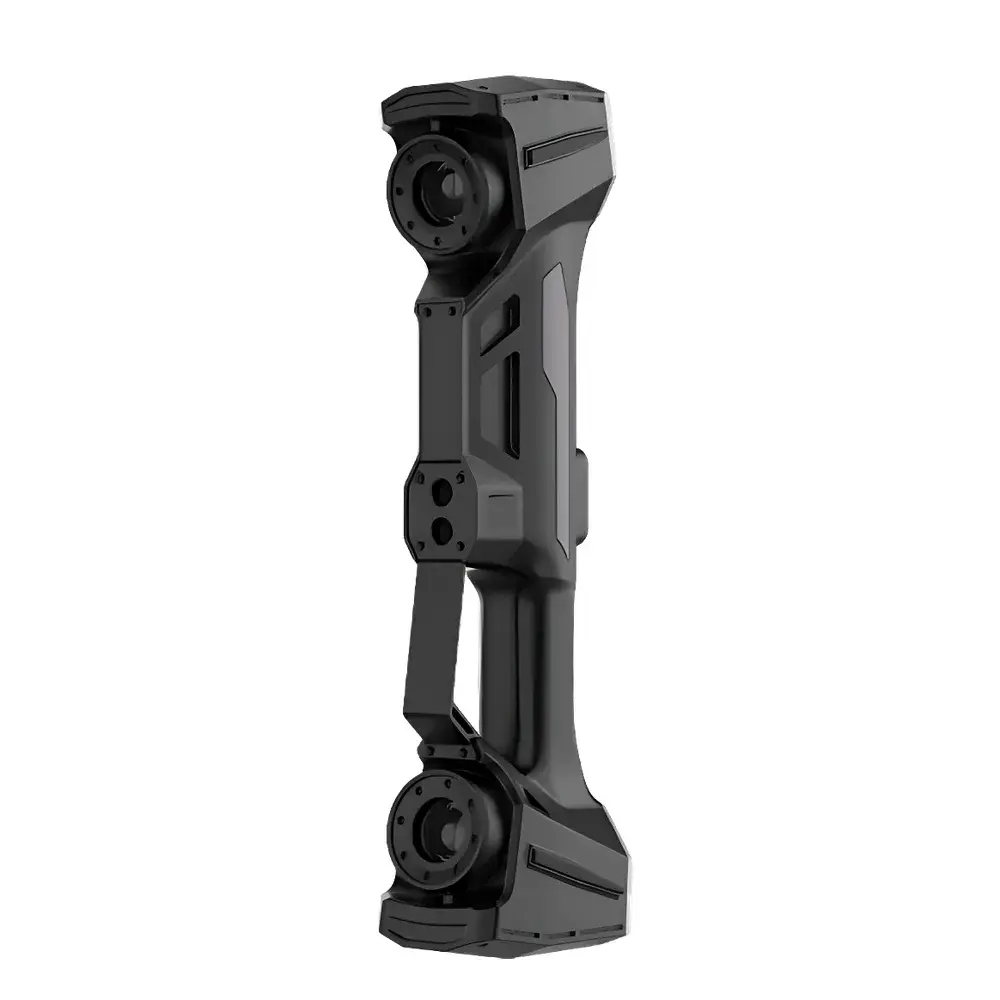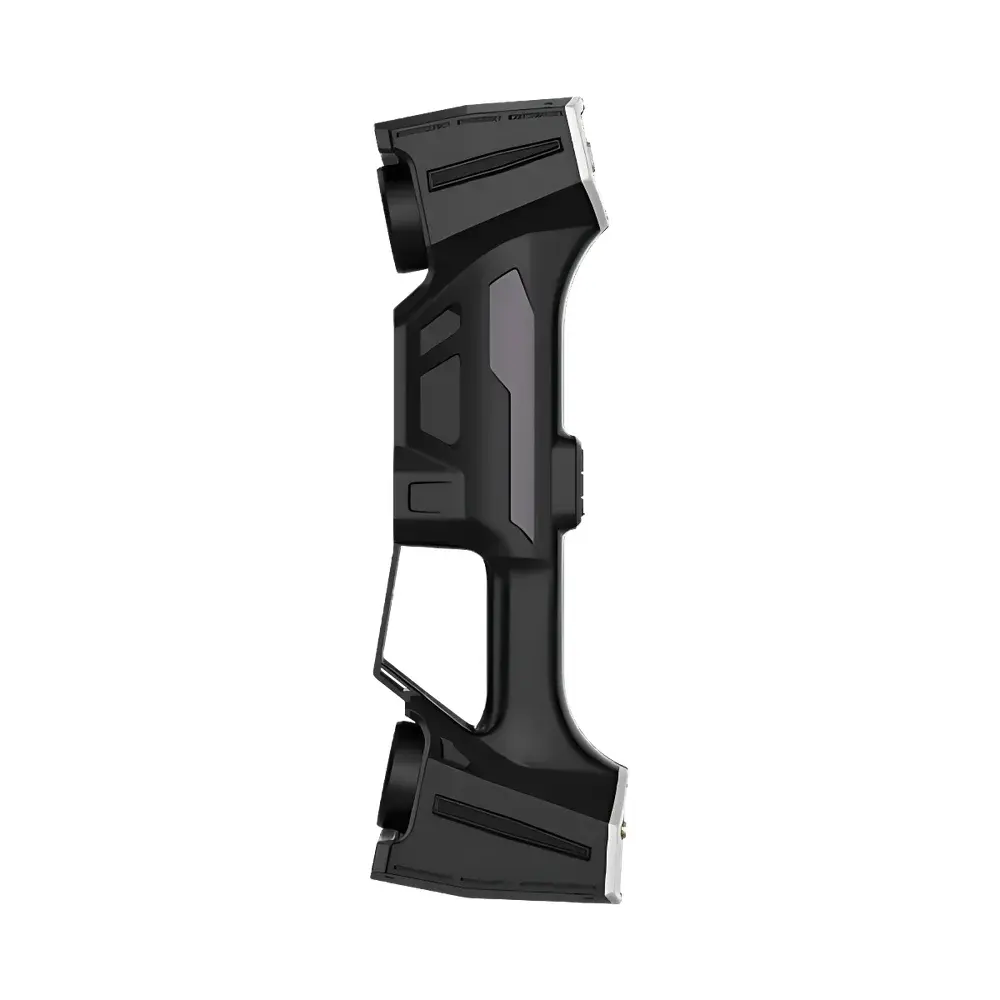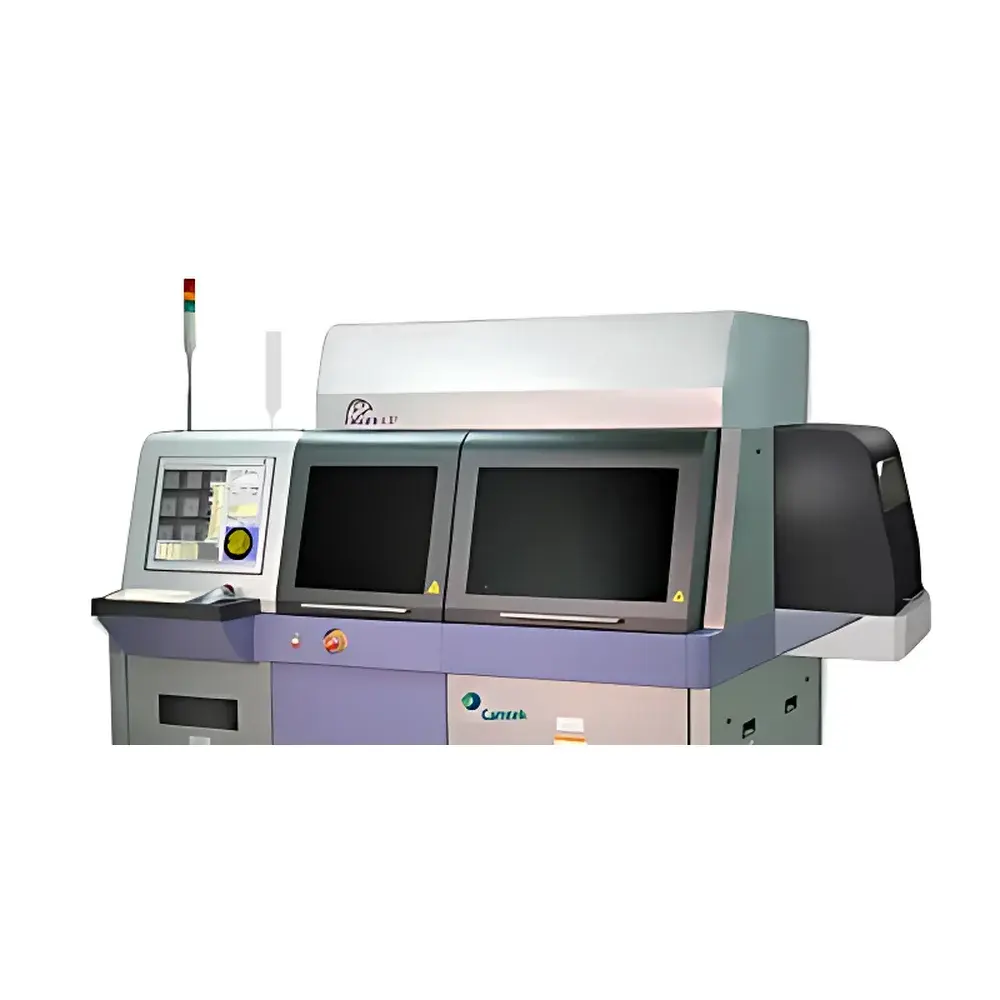
Camtek Falcon600 Automated Optical Inspection System
| Brand | Camtek |
|---|---|
| Origin | Israel |
| Model | Falcon600 |
| Category | Precision Geometric Measurement Instrument / Profilometer |
| Application Scope | Semiconductor Wafer-Level and Advanced Packaging Inspection |
| Maximum Wafer Size | 300 mm (unmounted or framed) |
| Detection Capability | 2D & 3D Defect Detection and Metrology |
| Target Structures | Stacked Die, 3D IC, SiP, Flip-Chip, Fine-Pitch Wire Bonds |
Overview
The Camtek Falcon600 Automated Optical Inspection (AOI) System is an industry-proven, high-resolution optical metrology platform engineered for precision geometric measurement and defect detection at the wafer level and in advanced packaging processes. Leveraging multi-spectral brightfield/darkfield illumination, high-magnification telecentric optics, and sub-pixel image registration algorithms, the Falcon600 performs non-contact, high-throughput 2D and 3D surface profiling—including height, step, coplanarity, solder bump volume, pillar height, and interconnect geometry—with nanometer-scale vertical resolution and micron-level lateral repeatability. Designed specifically for semiconductor manufacturing environments, it supports both front-end-of-line (FEOL) wafer fabrication and back-end-of-line (BEOL) packaging workflows—including fan-out wafer-level packaging (FOWLP), 2.5D/3D heterogeneous integration, and chiplet-based assembly—where dimensional fidelity and defect sensitivity directly impact yield and reliability.
Key Features
- High-precision 2D/3D hybrid inspection engine integrating structured light projection and stereo-vision reconstruction for accurate topography mapping of solder bumps, copper pillars, redistribution layers (RDL), and under-bump metallization (UBM).
- Multi-angle, multi-wavelength illumination architecture optimized for contrast enhancement across diverse surface finishes—including bare silicon, passivated die, gold-plated leads, and low-k dielectrics.
- Real-time defect classification with configurable rule-based and AI-assisted pattern recognition, supporting ISO 14644 cleanroom-compliant operation (Class 100 or better).
- Automated stage with ±0.5 µm positioning accuracy and integrated vacuum chucking for stable handling of 150 mm to 300 mm wafers—both framed and frameless—without mechanical distortion.
- Modular software architecture compliant with SEMI E95 (Equipment Communication Standard) and SECS/GEM protocols for seamless integration into factory automation systems (MES/AMHS).
Sample Compatibility & Compliance
The Falcon600 accommodates a broad range of substrate types and process configurations, including bare silicon wafers, glass interposers, organic substrates (ABF, BT), and ceramic packages. It supports inspection of critical features such as microbumps (<25 µm pitch), TSV openings, RDL line/space down to 2 µm, and wire bond loops with <10 µm standoff height. All measurement algorithms are traceable to NIST standards via on-tool calibration references, and system validation follows ASTM E2782 (Standard Practice for Measuring and Reporting Resolution and Accuracy of Coordinate Measuring Systems) and ISO/IEC 17025-accredited procedures where applicable. The platform meets functional safety requirements per IEC 61508 and is designed for GLP/GMP-aligned production environments requiring full audit trails and electronic signature support.
Software & Data Management
Equipped with Camtek’s proprietary Inspector™ software suite, the Falcon600 delivers comprehensive data acquisition, statistical process control (SPC), and root-cause analysis tools. The software provides full 3D point-cloud visualization, cross-sectional profile extraction, and automated report generation compliant with IPC-A-610 and JEDEC J-STD-020 standards. Data export supports industry-standard formats including CSV, STEP AP214, and GD&T-compliant XML. For regulated environments, optional 21 CFR Part 11 compliance modules enable secure user authentication, electronic signatures, and immutable audit logs for all measurement sessions, calibration events, and parameter modifications.
Applications
- Wafer-level bump inspection: height uniformity, coplanarity, bridging, missing bumps, and void detection in Cu/SnAg/Ni microbumps.
- Advanced packaging metrology: pillar height and diameter measurement in 3D TSV stacks; warpage mapping of thin-die assemblies pre- and post-lamination.
- Flip-chip alignment verification: offset, rotation, and tilt quantification relative to substrate fiducials using sub-micron overlay registration.
- SIP and heterogeneous integration: interposer-to-die gap measurement, underfill void detection, and RDL planarity assessment prior to molding.
- Failure analysis support: correlation of AOI-derived topography data with SEM/FIB cross-sections and X-ray CT volumetric reconstructions.
FAQ
What wafer sizes does the Falcon600 support?
The system handles 150 mm, 200 mm, and 300 mm wafers—both unmounted and mounted on standard frames—using programmable vacuum chucks and adaptive edge detection.
Does the Falcon600 support inline integration with track or probe station systems?
Yes, it offers full SECS/GEM and GEM300 interface compatibility, enabling direct communication with host MES systems and synchronized operation with lithography tracks, dicing saws, and probe stations.
How is measurement traceability maintained?
Traceability is ensured through certified reference standards (NIST-traceable step-height artifacts), daily automated self-calibration routines, and documented uncertainty budgets aligned with ISO/IEC 17025 requirements.
Can the system perform both defect detection and quantitative metrology in a single pass?
Yes, the Falcon600 executes simultaneous defect flagging and dimensional measurement using synchronized multi-modal imaging—eliminating the need for separate AOI and CD-SEM or CMM steps.
Is remote diagnostics and software update capability available?
Remote access is supported via encrypted TLS-secured VNC channels with role-based permissions; firmware and algorithm updates are delivered through Camtek’s validated release management pipeline, including version-controlled change logs and regression test reports.