Kayaku Advanced Materials SU-8 2000 Series Negative Photoresist
| Brand | NIPPON FILCON |
|---|---|
| Origin | Japan |
| Manufacturer Type | Authorized Distributor |
| Origin Category | Imported |
| Model | Kayaku Advanced Materials SU-8 2000 Series Photoresists |
| Pricing | Upon Request |
Overview
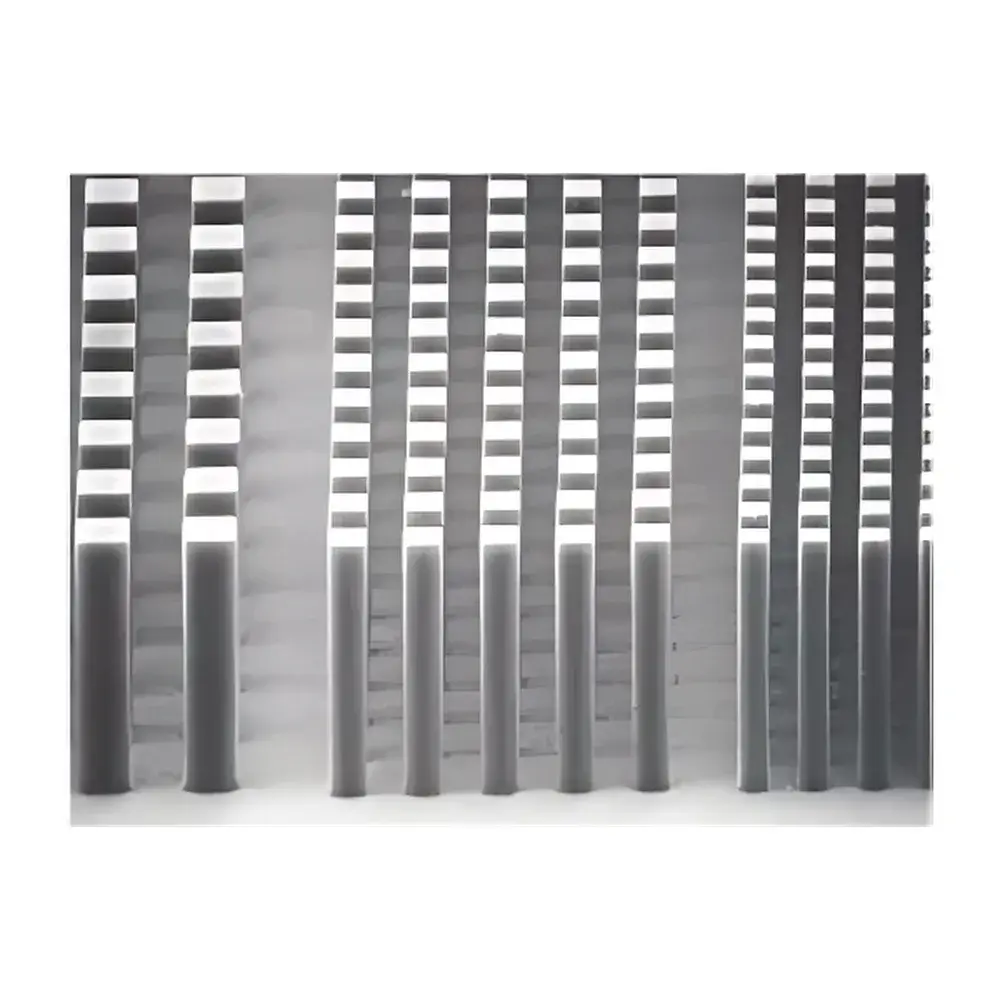
The Kayaku Advanced Materials SU-8 2000 Series is a high-performance, epoxy-based negative-tone photoresist engineered for permanent, high-aspect-ratio microfabrication in semiconductor mask making, MEMS, microfluidics, and advanced packaging applications. Based on a bisphenol-A novolac epoxy resin crosslinked via cationic photopolymerization upon UV exposure (i-line, g-line, h-line), the SU-8 2000 series exhibits exceptional thermal stability (Tg ≈ 210 °C, 5% weight loss in N₂ at 327 °C), low coefficient of thermal expansion (52 ppm/°C), and robust mechanical properties—including Young’s modulus of 2.0 GPa and tensile strength up to 75 MPa. Its formulation minimizes surface tension during spin-coating, enabling uniform films from 0.5 µm to 200 µm with aspect ratios exceeding 10:1. Unlike conventional resists, SU-8 2000 maintains dimensional fidelity after hard bake (up to 250 °C) and demonstrates outstanding chemical resistance to acids, bases, and organic solvents post-cure—making it suitable for electroplating molds, LIGA-derived structures, and hermetic encapsulation layers.
Key Features
- High-aspect-ratio patterning capability (>10:1) with vertical sidewalls and minimal line-edge roughness
- Wide process window: compatible with standard mask aligners and stepper systems operating at i-, g-, and h-line wavelengths
- Thermally stable film architecture supporting post-lithography processing steps including metal sputtering, etching, and electrochemical deposition
- Low intrinsic stress (<50 MPa) and excellent adhesion to silicon, glass, quartz, and metal substrates when used with OmniCoat adhesion promoter
- Controlled crosslink density enables tunable mechanical and dielectric properties—dielectric constant of 4.1 at 10 Hz (50% RH), loss tangent <0.015 at 1 GHz
- Process compatibility with standard cleanroom infrastructure: SU-8 Thinner (diluent), SU-8 Developer (PGMEA-based), Remover PG (for lift-off or stripping), and optional hard bake up to 250 °C
Sample Compatibility & Compliance
The SU-8 2000 series is validated for use in ISO Class 5–7 cleanroom environments and conforms to industry-standard photolithography workflows defined in SEMI, ASTM F1697 (photoresist characterization), and JEDEC J-STD-020 (moisture sensitivity). It supports GLP/GMP-aligned documentation when integrated into validated mask manufacturing lines. Film thickness control (±3% uniformity across 150 mm wafers) meets ITRS lithography requirements for reticle-grade patterning. All formulations are supplied in nitrogen-purged, amber HDPE bottles compliant with REACH and RoHS directives; SDS and lot-specific QC certificates (including viscosity, solids content, and spectral absorbance) are provided per shipment.
Software & Data Management
While SU-8 2000 is a material—not a hardware system—its process integration is supported by industry-standard lithography simulation tools (e.g., Sentaurus Lithography, OptiLith, and Genisys) for dose calibration, PEB optimization, and profile prediction. Kayaku provides comprehensive technical bulletins (TB-2000-01 through TB-2000-08) detailing spin-speed vs. thickness curves, exposure dose matrices (50–1000 mJ/cm²), and developer time–temperature–concentration response surfaces. For traceability in regulated environments, batch-level analytical data—including GPC molecular weight distribution, FTIR epoxy ring conversion rates, and DSC-derived Tg values—are archived and accessible under NDA. Integration with MES platforms (e.g., Applied Materials EnVision, Tokyo Electron TELStep) is achieved via standardized recipe import/export (SEMI E30/E40 compliant).
Applications
- Mask and reticle fabrication for deep-UV and EUV proximity printing
- High-fidelity micro-molds for Ni electroforming (LIGA), PDMS soft lithography, and injection molding inserts
- Structural layers in MEMS accelerometers, pressure sensors, and RF resonators requiring long-term mechanical stability
- Pixel definition walls and planarization layers in microLED and OLED backplane integration
- Microfluidic channel architectures, nozzle plates, and actuator membranes with sub-10 µm feature resolution
- Dielectric interlayer insulation in 2.5D/3D IC packaging and fan-out wafer-level packaging (FOWLP)
FAQ
What substrates are compatible with SU-8 2000?
Silicon, fused silica, quartz, borosilicate glass, stainless steel, and gold-coated wafers—all with appropriate HMDS or OmniCoat priming.
Is SU-8 2000 suitable for electron-beam lithography?
Yes; optimized e-beam sensitivity (~100 µC/cm² at 100 keV) is documented in peer-reviewed literature (e.g., J. Vac. Sci. Technol. B, 2005).
How does SU-8 2000 compare to SU-8 3000 in adhesion performance?
SU-8 3000 incorporates modified pendant groups enhancing interfacial bonding to low-energy surfaces like glass and PET; SU-8 2000 prioritizes rigidity and thermal endurance.
Can SU-8 2000 be removed after hard bake?
Complete removal requires aggressive plasma ashing (O₂/CF₄) or hot piranha (H₂SO₄:H₂O₂), as cured films resist standard removers; lift-off is only feasible pre-bake.
Are there regulatory certifications for use in medical device manufacturing?
SU-8 2000 is not ISO 10993-certified; however, its biocompatibility has been demonstrated in vitro (e.g., NIH/3T3 cytotoxicity assays per ISO 10993-5) for diagnostic microdevice applications.
Related Products