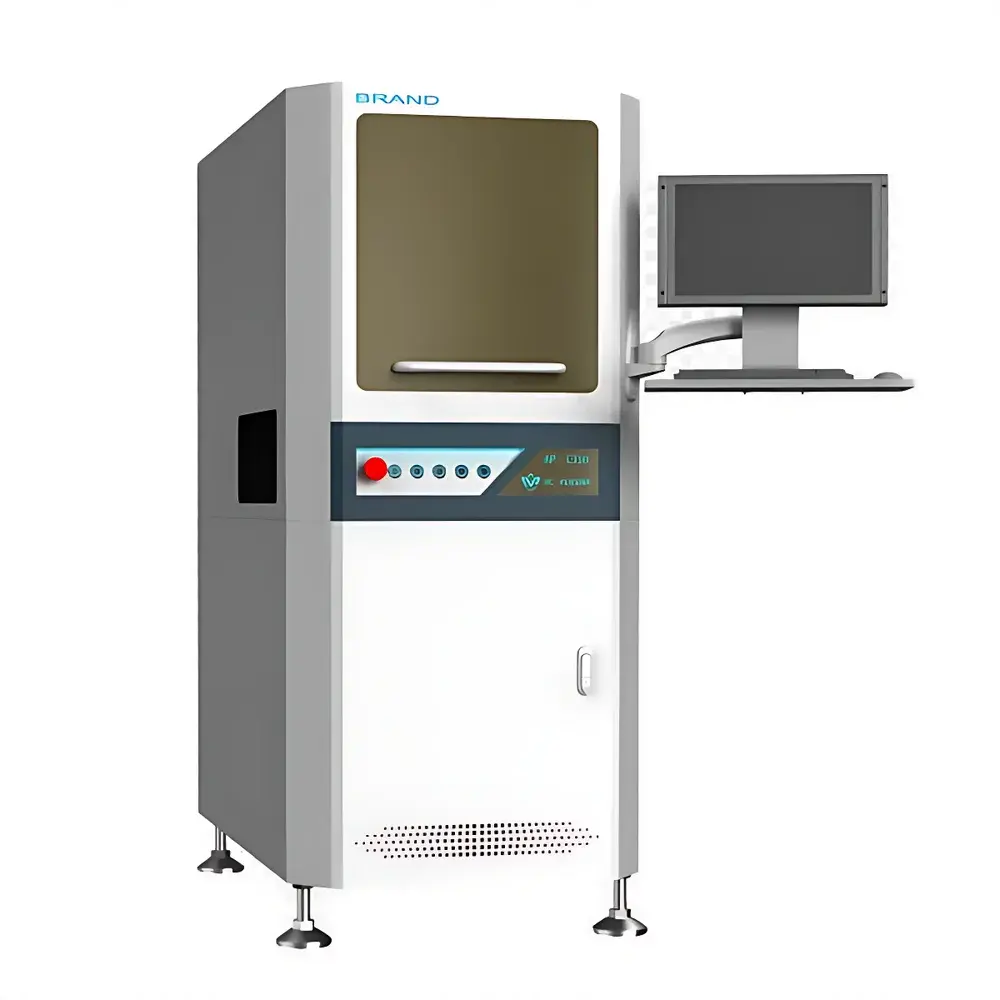
MCC HPB-4 High-Power Burn-In Test System with Individual Chip Temperature Control
| Brand | MCC |
|---|---|
| Origin | USA |
| Manufacturer Type | Authorized Distributor |
| Product Category | Imported |
| Model | HPB-4 |
| Pricing | Available Upon Request |
Overview
The MCC HPB-4 High-Power Burn-In Test System is an engineered platform for accelerated reliability testing of integrated circuits (ICs) under controlled thermal and electrical stress conditions. Designed specifically for semiconductor qualification and production screening, the system implements Couette-flow–inspired thermal management principles—leveraging independent chip-level temperature regulation via dual-mode (heating/cooling) active control—to ensure precise thermal setpoint adherence across heterogeneous device populations. Unlike conventional batch-style burn-in ovens, the HPB-4 employs a modular board architecture where each device-under-test (DUT) receives individually regulated thermal energy through integrated heat-sink heaters and precision pneumatic cooling valves. This architecture enables simultaneous operation at divergent thermal profiles across a single test board, supporting mixed-die testing and enabling correlation between junction temperature (Tj) and parametric drift during extended stress periods (up to 168 hours). The system complies with JEDEC JESD22-A108 and A110 standards for high-temperature operating life (HTOL) and early-life failure rate (ELFR) characterization.
Key Features
- Individual Chip Temperature Control (ICTC) architecture: Real-time closed-loop regulation of junction temperature per DUT using PID-controlled heat-sink heaters and modulated air-cooling valves
- High-power capability: Supports up to 600 W per DUT with board-level current capacity of 1600 A, suitable for power MOSFETs, IGBTs, GaN HEMTs, and high-density memory stacks
- Modular board configuration: Accommodates up to 14 burn-in boards per system chassis, each configurable for socketed or solder-down IC formats (QFP, BGA, LGA, QFN)
- Dual-mode thermal actuation: Integrated aluminum heat-sinks with embedded cartridge heaters (±0.5°C stability) paired with low-inertia solenoid valves for rapid cooling response (<5 s settling time)
- Embedded telemetry: On-board thermocouple arrays (Type K, ±0.25°C accuracy) and shunt-based current sensing (0.1% full-scale linearity) feed real-time Tj and Pdiss data to host controller
- Ruggedized industrial design: IP54-rated enclosure with redundant safety interlocks, over-temperature cutoff, and emergency power-off circuitry compliant with UL 61010-1
Sample Compatibility & Compliance
The HPB-4 supports wafer-level packaged devices ranging from 3 mm × 3 mm CSPs to 55 mm × 55 mm multi-die modules. Socket compatibility includes ZIF, LGA, and pogo-pin interfaces rated for >100,000 insertions. All thermal calibration procedures are traceable to NIST standards, and system validation reports include as-found/as-left data per ISO/IEC 17025 requirements. The platform meets functional safety criteria outlined in IEC 61508 SIL-2 and supports audit-ready documentation packages aligned with ISO 9001:2015, IATF 16949, and FDA 21 CFR Part 11 when integrated with MCC’s optional SecureLog™ software module.
Software & Data Management
Control and monitoring are managed via MCC’s BurnInManager™ v5.2 software suite, running on Windows 10 IoT Enterprise. The application provides synchronized logging of temperature, voltage, current, and leakage parameters at user-defined intervals (100 ms to 10 s resolution). Data export conforms to SEMI E142 (Equipment Data Acquisition) and ASTM E2655 (Standard Guide for Thermal Analysis Data Exchange) formats. Audit trails record all operator actions, parameter changes, and alarm events with digital signature verification. Optional integration with MES platforms (e.g., FactoryTalk, Siemens Opcenter) enables automated lot disposition and SPC charting using JMP or Minitab-compatible CSV outputs.
Applications
- High-temperature operating life (HTOL) testing per JEDEC JESD22-A108
- Early-life failure rate (ELFR) screening for automotive AEC-Q100 Grade 0–2 devices
- Power device reliability validation under dynamic load cycling (e.g., gate drive stress + thermal cycling)
- Qualification of wide-bandgap semiconductors (SiC, GaN) requiring tight Tj control during burn-in
- Failure analysis support: Correlation of parametric shift (Vth, Rds(on), trr) with cumulative thermal exposure
- Foundry process monitoring: Lot-to-lot consistency assessment using normalized thermal resistance (RθJC) trends
FAQ
What thermal accuracy does the ICTC system achieve per DUT?
Typical steady-state deviation is ±0.5°C at setpoints between 25°C and 150°C, verified using calibrated micro-thermocouples bonded directly to die surfaces.
Can the HPB-4 accommodate wafer-level CSPs without sockets?
Yes—custom thermal interface fixtures with vacuum-assisted retention and compliant thermal pads (k ≥ 8 W/m·K) are available for bare-die and fan-out wafer-level packaging (FOWLP) configurations.
Is remote diagnostics supported?
The system includes embedded Ethernet (10/100BASE-T) with SNMP v3 and Modbus TCP support; MCC offers optional 24/7 remote health monitoring via secure TLS-encrypted gateway.
How is calibration maintained across multiple boards?
Each board undergoes quarterly system-level calibration using NIST-traceable reference sources; calibration certificates include uncertainty budgets per GUM (Guide to the Expression of Uncertainty in Measurement).