MicroChem PMMA Electron-Beam Resist
| Brand | MicroChem |
|---|---|
| Origin | USA |
| Model | PMMA Series (495A, 495C, 950A, 950C) |
| Solvent Options | Anisole (A-series) or Chlorobenzene (C-series) |
| Resolution Capability | <100 nm |
| Recommended Developer | MIBK:IPA (1:3 v/v) |
| Stripper | Remover PG |
| Diluent | A Thinner |
| Storage Temperature | 10–27 °C |
| Compliance | Compatible with standard e-beam lithography workflows per ASTM E1981 and ISO/IEC 17025-accredited lab practices |
Overview
MicroChem PMMA Electron-Beam Resist is a high-purity, solvent-based negative-tone resist system engineered for nanoscale patterning in advanced semiconductor fabrication, MEMS development, and nanofabrication research. Composed of polymethyl methacrylate (PMMA) dissolved in controlled-molecular-weight solvents—either anisole (A-series) or chlorobenzene (C-series)—this resist leverages chain scission under electron beam irradiation to generate differential solubility between exposed and unexposed regions. Its fundamental mechanism relies on radiation-induced main-chain cleavage, resulting in increased solubility of exposed areas in weak organic developers—a hallmark of negative-tone behavior in high-resolution e-beam lithography. Designed for compatibility with 100 kV and 200 kV electron beam writers (e.g., Raith, JEOL, Zeiss), PMMA resists support sub-100 nm feature definition and are widely adopted in T-gate transistor fabrication, nanowire templating, plasmonic structure definition, and temporary bonding/debonding processes during wafer thinning.
Key Features
- Four standardized formulations: PMMA 495A, 495C, 950A, and 950C—distinguished by molecular weight (495 kDa vs. 950 kDa) and solvent chemistry (anisole vs. chlorobenzene), enabling precise control over film thickness, contrast, and etch resistance
- Ultra-high resolution capability: Demonstrated resolution down to <100 nm with optimized exposure dose and development conditions; PMMA 950 series delivers superior edge acuity for demanding nanolithography applications
- Controlled viscosity profiles: Each grade is filtered to ≤0.2 µm and supplied in nitrogen-purged, amber glass bottles to prevent solvent evaporation and particulate contamination
- Low outgassing characteristics: Suitable for high-vacuum e-beam tool environments without compromising column stability or detector signal integrity
- Thermal stability up to 180 °C: Enables compatibility with post-lift-off annealing steps and integration into multi-layer process flows
Sample Compatibility & Compliance
PMMA resists are compatible with silicon, SiO₂, SiNₓ, GaAs, InP, and metal-coated substrates (e.g., Au, Cr, Ti). Spin-coating parameters (e.g., 3000–6000 rpm, 30–60 s) yield uniform films from 50 nm to >1 µm depending on concentration and molecular weight. All formulations comply with cleanroom Class 100 handling protocols and meet raw material traceability requirements under ISO 9001-certified manufacturing. While not classified as GMP-grade, the product supports GLP-aligned documentation practices—including lot-specific CoA (Certificate of Analysis) with viscosity, solids content, and filter integrity data—and is routinely validated in labs operating under FDA 21 CFR Part 11–compliant electronic record systems for process qualification.
Software & Data Management
MicroChem does not supply proprietary software; however, PMMA resist performance is fully integrable with industry-standard lithography simulation and dose calibration platforms including Genisys (Raith), WinBeam (JEOL), and NIST’s L-Edit-compatible dose matrix generators. Process data—including spin speed, bake temperature/time, exposure dose (µC/cm²), and development time—is captured and archived using laboratory information management systems (LIMS) such as LabWare LIMS or Thermo Fisher SampleManager. Audit trails for resist lot usage, expiration tracking, and environmental storage logs (temperature/humidity) are maintained per ISO/IEC 17025 clause 7.7 requirements for testing and calibration laboratories.
Applications
- High-aspect-ratio nanofabrication for compound semiconductor devices (e.g., HEMTs, HBTs)
- Maskless direct-write lithography for R&D prototyping and low-volume device fabrication
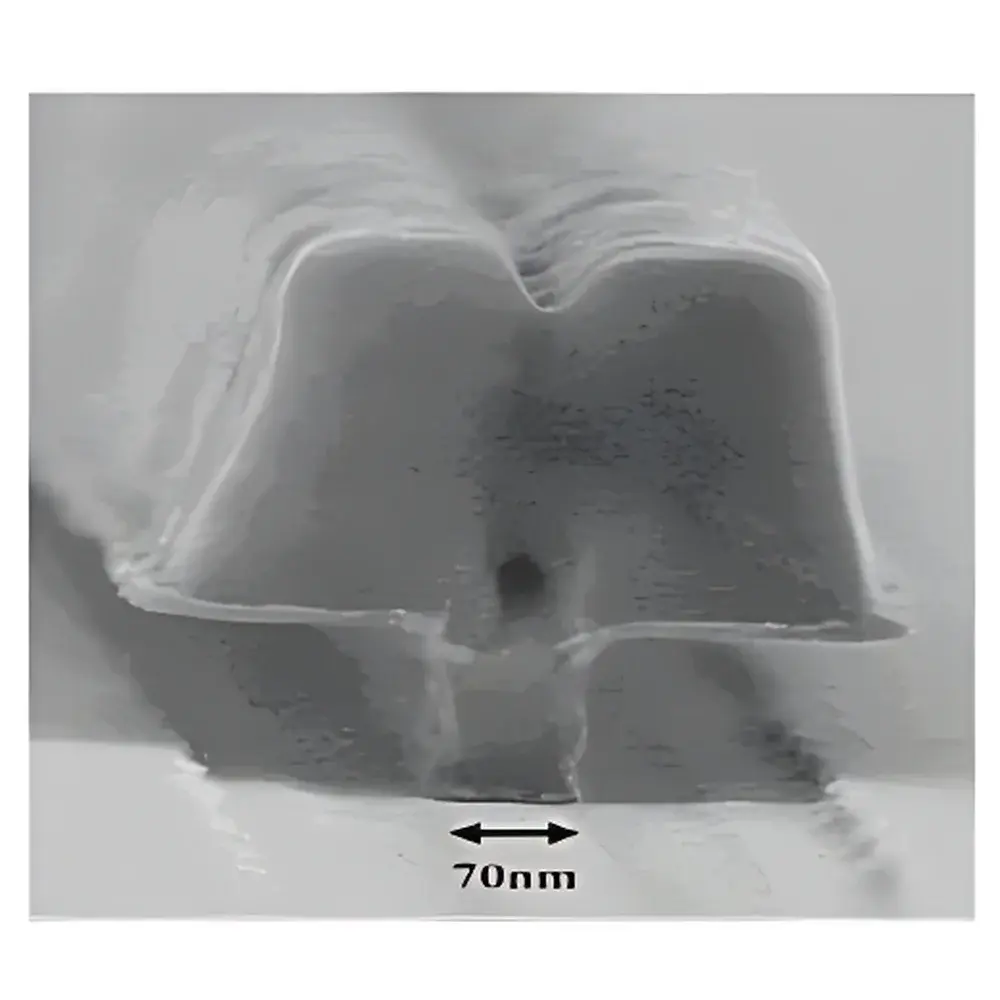
- Multi-layer lift-off processes for T-gate and gate-recess architectures
- Temporary adhesive layers in carrier-wafer bonding schemes for ultra-thin die handling and grinding
- X-ray lithography (synchrotron-based) where high radiation resistance and uniform absorption are required
- Nanopatterning of plasmonic metasurfaces and photonic crystal slabs
FAQ
What is the shelf life of PMMA resist under recommended storage conditions?
Unopened bottles stored at 10–27 °C retain specification compliance for 12 months from date of manufacture. After opening, use within 30 days under inert gas blanket to prevent solvent loss and oxidation.
Can PMMA be used for optical lithography?
No—PMMA exhibits negligible sensitivity to UV (iG-line, 365 nm) and DUV wavelengths; it is exclusively designed for high-energy electron beam and X-ray exposure.
Which developer concentration yields optimal contrast for PMMA 950A?
MIBK:IPA (1:3 v/v) at 23 ± 1 °C for 60 seconds is the empirically validated standard; contrast curves should be re-established for each new lot via dose-to-clear measurements.
Is PMMA compatible with reactive ion etching (RIE) using oxygen plasma?
Yes—PMMA demonstrates moderate etch resistance in O₂ plasma, though selectivity relative to Si or SiO₂ is limited; hard mask integration is recommended for aggressive transfer steps.
Does MicroChem provide lot-specific certificates of analysis?
Yes—each shipment includes a CoA reporting solids content (% w/w), viscosity (cP at 25 °C), filtration rating (0.2 µm), and residual solvent GC-MS screening data.