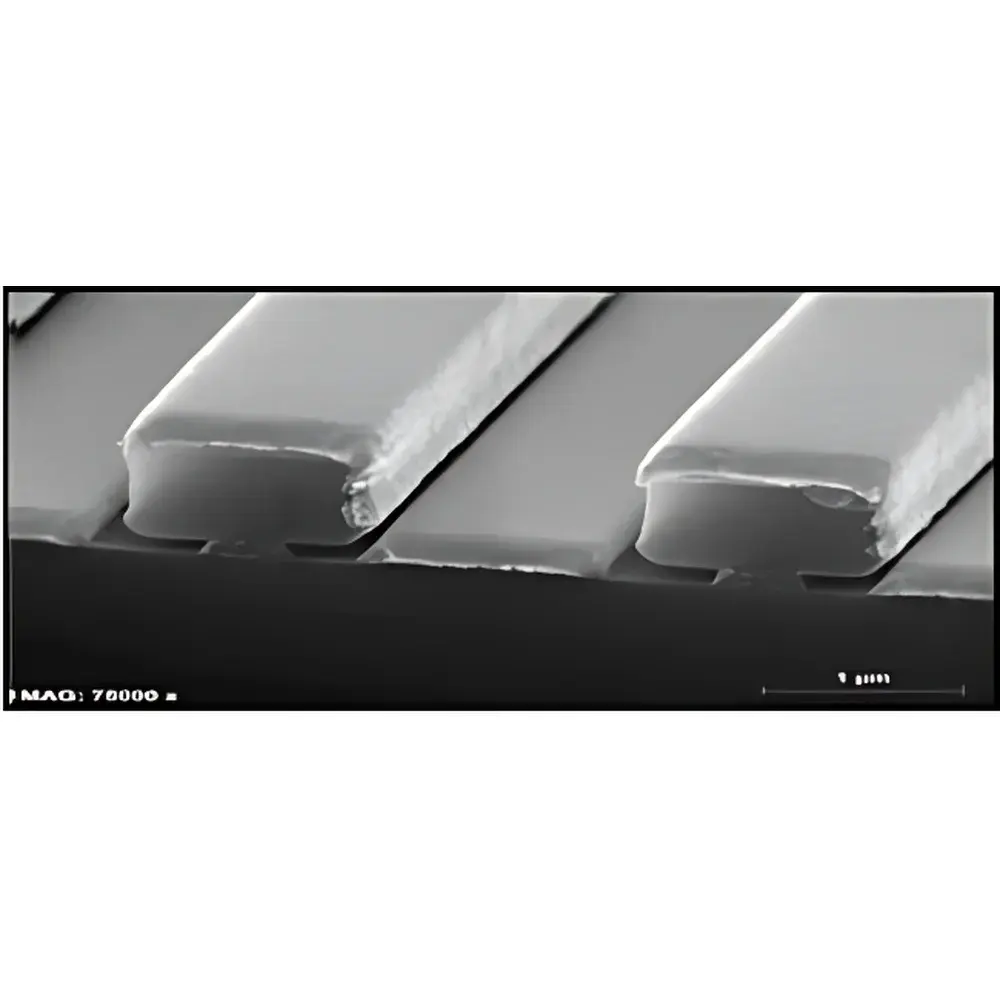
MicroChem PMGI/LOR Bilayer Lift-Off Photoresist System
| Brand | MicroChem Corp |
|---|---|
| Origin | USA |
| Model | PMGI/LOR |
| Type | Negative Tone Bilayer Lift-Off Resist |
| Thermal Glass Transition (Tg) | ~190 °C |
| Resolution Capability | ≤ 0.25 µm |
| Maximum Compatible Metal Thickness | > 3 µm |
| Developer | MicroChem 101 Developer |
| Stripper | MicroChem Remover PG |
| Diluent | MicroChem G Thinner |
| Recommended Storage Temperature | 4–27 °C |
| Process Ambient | 20–25 °C ±1 °C, 35–45% RH ±2% |
Overview
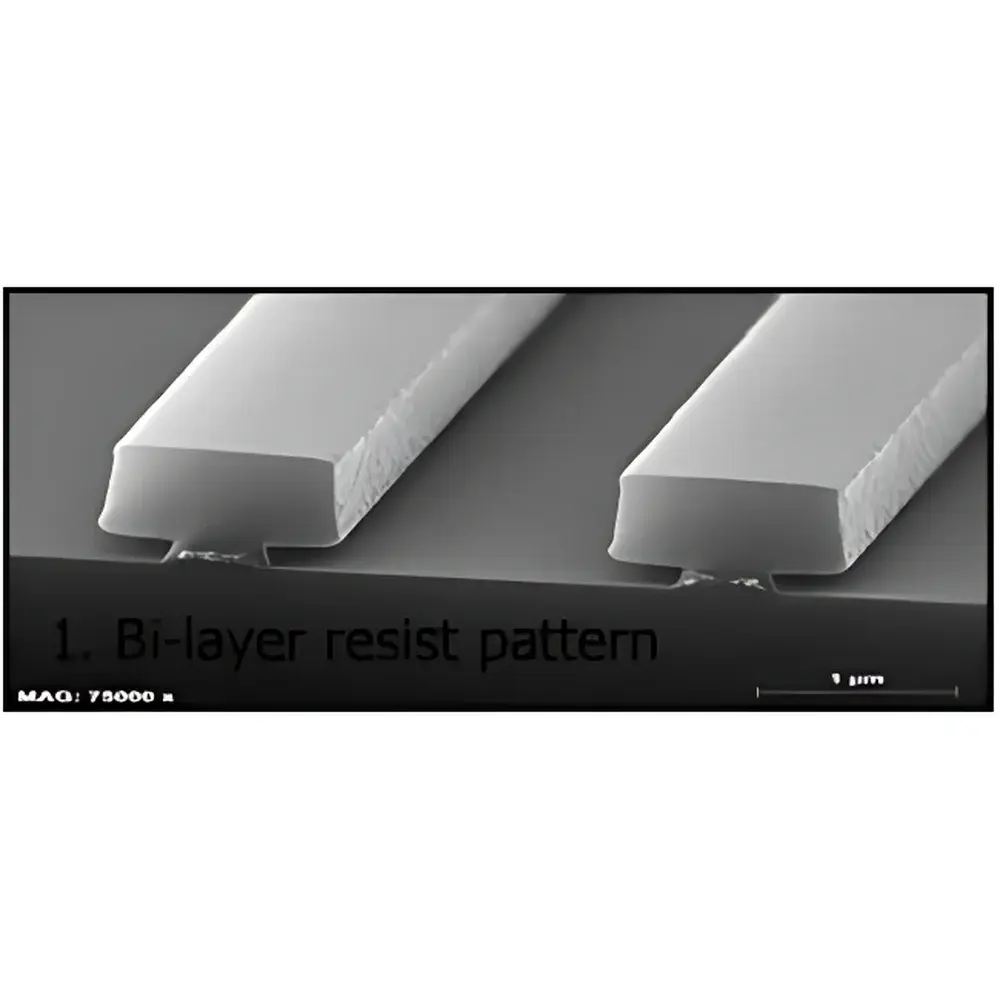
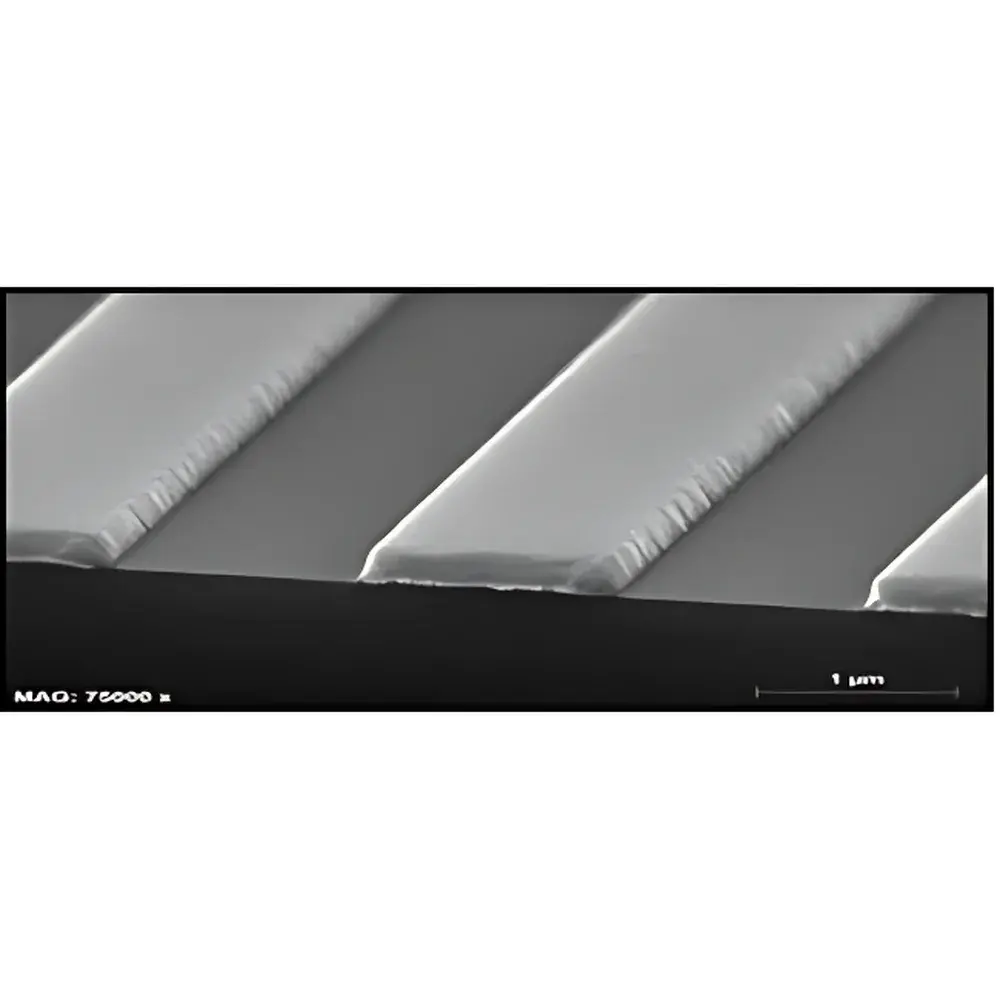
The MicroChem PMGI/LOR Bilayer Lift-Off Photoresist System is a purpose-engineered negative-tone resist architecture designed for high-fidelity, high-aspect-ratio metal patterning in advanced semiconductor fabrication, MEMS manufacturing, and thin-film device processing. Unlike single-layer resists, the PMGI/LOR system operates as a chemically orthogonal bilayer: the bottom layer (PMGI — Poly(methylglutarimide)) serves as a highly controllable underlayer with tunable dissolution kinetics, while the top imaging layer (LOR — Lift-Off Resist) provides high-resolution photopatternability across multiple exposure platforms. This architecture leverages controlled undercut profile formation via selective development—enabling clean, residue-free lift-off of metals including Al, Ti, Au, Cr, NiFe, and refractory alloys—without requiring plasma etch or aggressive wet-stripping steps. Its compatibility spans g-line (436 nm), h-line (405 nm), i-line (365 nm), deep ultraviolet (DUV, 248 nm), 193 nm ArF immersion, and electron-beam lithography, making it a versatile solution for R&D and pilot-line integration where process flexibility and reproducibility are critical.
Key Features
- Sub-0.25 µm resolution capability in lift-off mode, validated under standard i-line and e-beam exposure conditions
- Precisely tunable undercut profile via PMGI thickness control (typically 0.2–2.0 µm) and thermal reflow parameters (soft bake, post-exposure bake)
- Exceptional adhesion to diverse substrates including silicon, GaAs, InP, NiFe, quartz, and oxidized wafers—minimizing edge lifting and delamination during metal deposition and lift-off
- Thermal stability up to 190 °C (Tg), enabling compatibility with high-temperature metallization processes such as e-beam evaporation and sputtering without flow or deformation
- Chemical orthogonality between PMGI and LOR layers prevents intermixing during spin-coating or baking, ensuring interface integrity and process repeatability
- Single-step development using MicroChem 101 Developer (aqueous-based, non-hazardous), eliminating need for multi-stage or solvent-based developers
- Rapid, complete removal of residual resist after lift-off using Remover PG—leaving no carbonaceous residue or metal contamination on underlying structures
Sample Compatibility & Compliance
The PMGI/LOR system has been qualified for use in Class 100–1000 cleanroom environments and conforms to industry-standard handling protocols for photoresist materials in semiconductor front-end-of-line (FEOL) and back-end-of-line (BEOL) processing. It meets ASTM F390-22 specifications for photoresist purity and particulate content. While not inherently certified to ISO 9001 or IATF 16949 at the material level, MicroChem’s manufacturing and packaging processes comply with ISO 14644-1 Class 5 cleanroom standards for resist dispensing and bottling. The formulation contains no halogenated solvents and is compatible with standard solvent recovery systems. For regulated environments (e.g., medical device MEMS or aerospace-grade ICs), full lot traceability, CoA documentation, and batch-specific QC data—including viscosity, solids content, and metal impurity screening (ICP-MS <10 ppt for Na, K, Fe, Cu)—are available upon request.
Software & Data Management
As a consumable photoresist material—not an instrument—the PMGI/LOR system does not incorporate embedded firmware or software interfaces. However, its process integration is fully supported within industry-standard lithography workflow management platforms, including ASML Tachyon, Zeiss PROXECCO, and KLA WISDOM. Process recipes (spin speed, bake temperature/time, exposure dose, development time) are exportable in SECS/GEM-compliant formats for MES integration. MicroChem provides comprehensive technical documentation—including Material Safety Data Sheets (MSDS/SDS), Certificate of Analysis (CoA), and application notes aligned with SEMI D37 (Photoresist Specifications) and SEMI E10 (Definition and Measurement of Process Equipment Reliability Metrics). Audit-ready records for GLP/GMP-aligned facilities include lot-level stability data, shelf-life validation (24 months unopened at 4–27 °C), and humidity-controlled storage logs.
Applications
- Metal lift-off for RF/microwave components (e.g., coplanar waveguides, antenna elements on GaAs and SiGe substrates)
- Fabrication of high-density magnetic tunnel junctions (MTJs) and spin-valve stacks in MRAM development
- MEMS release layer patterning and sacrificial bridge formation in inertial sensor and microactuator fabrication
- Thin-film heater and thermocouple patterning for lab-on-chip and microfluidic platforms
- High-aspect-ratio plasmonic nanostructure definition using e-beam lithography and Au/Ti lift-off
- Prototyping of flexible electronics interconnects on polyimide and PET substrates
FAQ
What exposure wavelengths is PMGI/LOR compatible with?
PMGI/LOR supports g-line (436 nm), h-line (405 nm), i-line (365 nm), DUV (248 nm), 193 nm ArF, and electron-beam lithography—without reformulation.
Can PMGI/LOR be used with TMAH or KOH developers?
Yes—PMGI is soluble in standard TMAH (2.38%) and KOH aqueous solutions; however, MicroChem 101 Developer is recommended for optimal undercut control and reproducibility.
Is pre-bake required before exposure?
A soft bake (90–110 °C, 60–90 sec) is mandatory to remove casting solvent and stabilize the PMGI/LOR interface; post-exposure bake (PEB) is optional but recommended for enhanced contrast in sub-0.3 µm features.
What is the maximum recommended PMGI thickness for reliable lift-off?
For metals ≥3 µm thick, PMGI thickness should be maintained between 0.8–1.5 µm; thicker PMGI (>2.0 µm) may require extended development times and increased undercut risk.
How should PMGI/LOR be stored to maintain shelf life?
Store unopened bottles at 4–27 °C in low-humidity (<40% RH), dark conditions; avoid repeated freeze-thaw cycles and exposure to ambient moisture during dispensing.