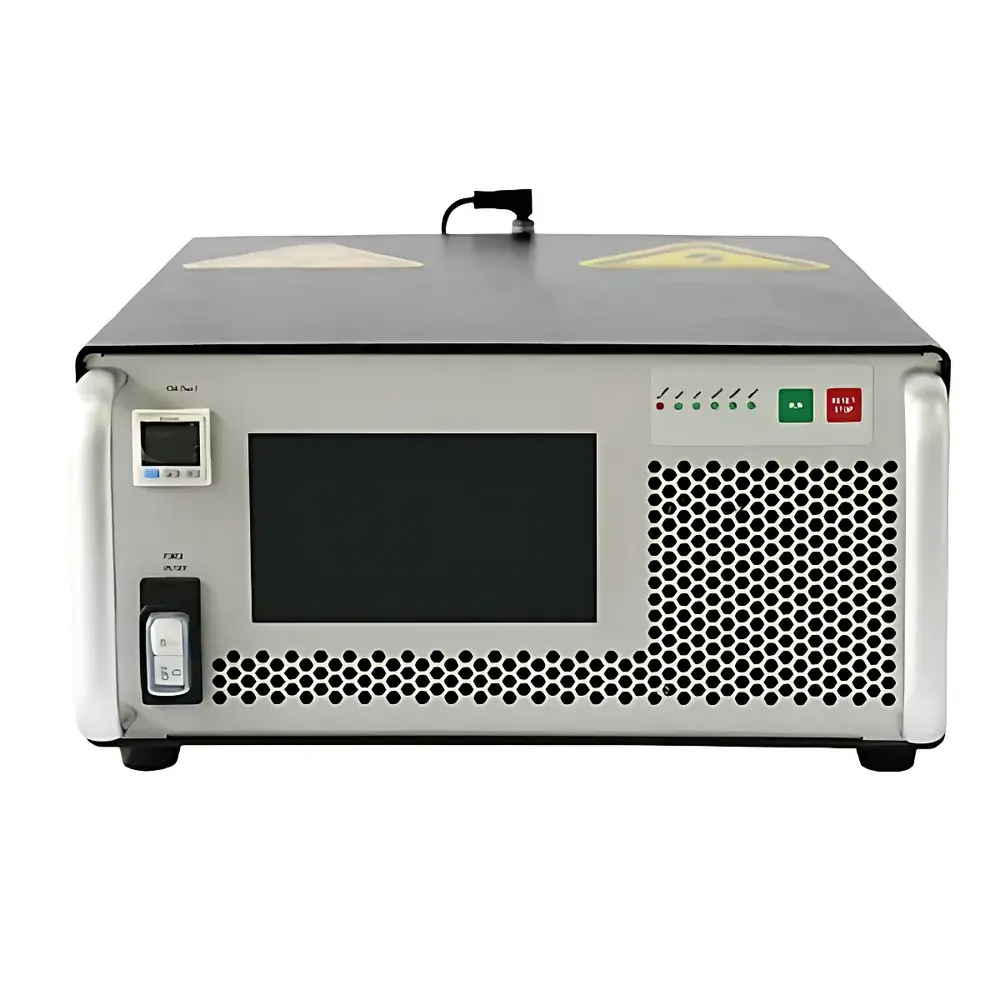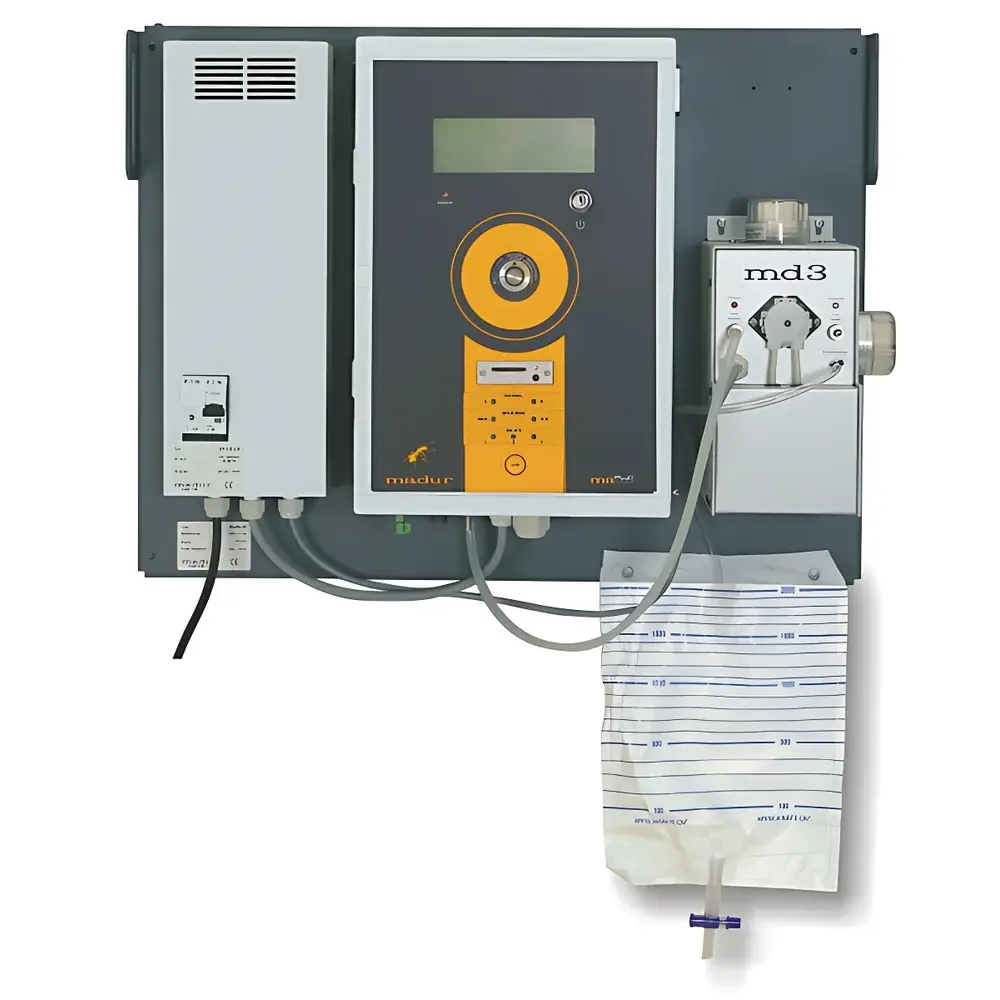
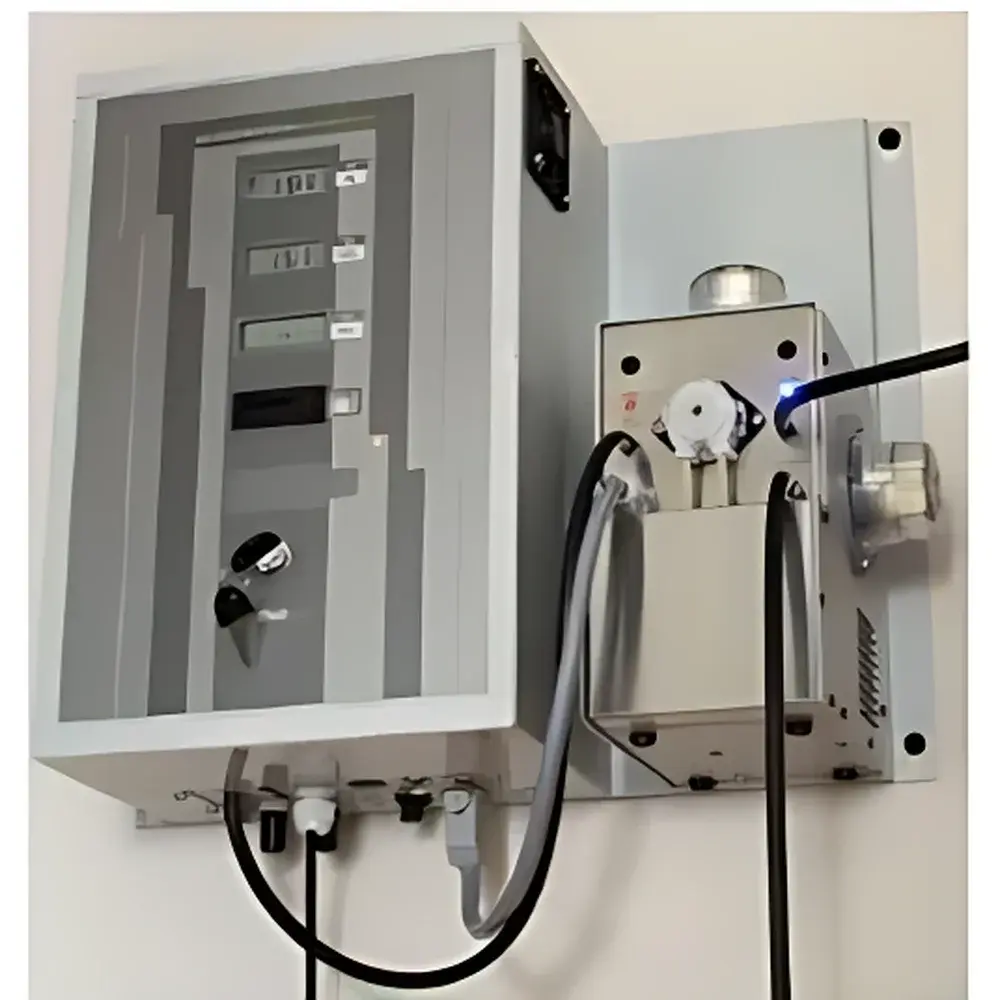
maMoS-100/200/300/400 Fixed (In-Line) Biogas Analyzer
| Origin | Austria |
|---|---|
| Manufacturer Type | Authorized Distributor |
| Origin Category | Imported |
| Model | maMoS-100/200/300/400 |
| Pricing | Upon Request |
Overview
The maMoS-100/200/300/400 is a robust, microprocessor-controlled fixed-position gas analyzer engineered for continuous in-line monitoring of biogas and industrial process streams. Designed for high-reliability operation in demanding environments—including anaerobic digesters, thermal oxidizers, cement kilns, waste incinerators, and greenhouse climate control systems—it integrates dual-sensing technology: electrochemical sensors for O₂, CO, NO, NO₂, SO₂, H₂S, Cl₂, and H₂; and non-dispersive infrared (NDIR) sensors for CO, CO₂, CH₄, and N₂O. Its measurement principle relies on selective absorption spectroscopy (for NDIR channels) and amperometric current generation (for electrochemical cells), both thermally stabilized and digitally compensated for temperature and pressure drift. The system performs fully automated two-stage measurement cycles—zero calibration followed by sample analysis—with independently programmable cycle durations to optimize accuracy and response fidelity. All sensors are factory-calibrated and certified per ISO 17025-accredited procedures; electrochemical units are pre-aged and verified for baseline stability, eliminating field recalibration requirements at installation. NDIR modules exhibit intrinsic long-term stability and require no periodic zero/span adjustments under normal operating conditions.
Key Features
- Modular sensor architecture supporting 1–4 simultaneous gas channels—configurable with mixed electrochemical and NDIR detection technologies
- Integrated sample conditioning system: particulate filter, Peltier-cooled condensate dryer, and peristaltic condensate removal pump
- Membrane-type sampling pump (1.5 L/min flow rate) with built-in temperature compensation and humidity tolerance up to 95% RH (non-condensing)
- IP54-rated ABS enclosure suitable for industrial indoor mounting; operating temperature range: 0–40 °C; storage: −20–+55 °C
- Dual analog outputs per channel: linear 4–20 mA current loop and user-programmable 0–10 V voltage output
- RS232 TTL-level serial interface for real-time data logging, remote configuration, and firmware updates
- Configurable averaging time (2–32 s) and fast T90 response: ≤15 s for electrochemical sensors; ≤10 s for NDIR channels (e.g., CH₄, CO₂)
- Two freely assignable dry-contact relays per channel for alarm triggering or process interlock integration
- Onboard display showing real-time concentration values, status indicators, and diagnostic messages
Sample Compatibility & Compliance
The maMoS series is validated for continuous analysis of humid, particulate-laden biogas and flue gas matrices without external conditioning hardware. It complies with EN 15267-3 (performance certification of automated measuring systems), meets EMC Directive 2014/30/EU, and conforms to Low Voltage Directive 2014/35/EU. Sensor-specific performance aligns with relevant ASTM D6216 (CO, CO₂, CH₄ in biogas), ISO 14687 (H₂S in fuel gases), and EN 14181 (QAL1/QAL2 requirements for continuous emission monitoring). All electrochemical sensors are CE-marked and RoHS-compliant. The instrument supports GLP/GMP-aligned operational traceability via timestamped event logs and configurable audit trails. While not inherently 21 CFR Part 11 compliant out-of-the-box, its RS232 interface enables integration with validated SCADA or LIMS platforms that enforce electronic signature and data integrity controls.
Software & Data Management
Data acquisition and configuration are managed via the proprietary maMoS PC Configuration Tool, a Windows-based utility enabling full parameterization—including span ranges, alarm thresholds, relay logic, averaging intervals, and communication baud rates. Raw measurements are transmitted as ASCII-formatted strings over RS232, facilitating direct ingestion into PLCs, DCS systems, or custom Python/Node-RED data pipelines. Optional Modbus RTU or TCP/IP gateways (sold separately) allow seamless integration into industrial Ethernet networks. Internal memory stores up to 30 days of 1-minute averaged data (configurable), accessible via serial dump. No cloud connectivity or proprietary cloud platform is embedded—ensuring data sovereignty and compatibility with air-gapped facility networks.
Applications
- Real-time biogas quality monitoring in anaerobic digestion plants (O₂, CH₄, CO₂, H₂S, H₂) for feedstock optimization and safety interlocking
- Combustion efficiency control in boiler and thermal oxidizer systems via O₂ trim and CO/NOₓ feedback
- Process gas analysis in cement clinker production, glass melting furnaces, and municipal solid waste incinerators
- Indoor air quality surveillance in agricultural greenhouses (CO₂ 0–2000 ppm; CH₄ 0–5 %v/v)
- Leak detection and ambient safety monitoring in biogas upgrading and compression facilities
- Regulatory compliance reporting for VOC and acid gas emissions (SO₂, H₂S) in industrial stack applications
FAQ
What is the recommended recalibration interval for electrochemical sensors?
Electrochemical sensors are rated for stable operation up to 12 months between verification checks under typical biogas conditions. Annual functional verification against certified gas standards is advised per ISO 13843 and internal QA protocols.
Can the maMoS operate in high-temperature sampling environments?
The analyzer itself must be installed in ambient conditions (0–40 °C). For hot-stack sampling, optional high-temperature probe variants (up to 1600 °C) with PTFE-lined sampling lines are available as accessories.
Is analog output scaling adjustable per channel?
Yes—each 4–20 mA and 0–10 V output can be independently scaled to any linear range within the sensor’s specified measurement span.
Does the device support automatic zero calibration using ambient air?
Yes—the dual-phase cycle includes an automated zero phase using filtered ambient air or user-supplied zero gas; duration and frequency are fully programmable.
What maintenance is required beyond sensor replacement?
Routine maintenance is limited to periodic inspection of inlet filters, condensate pump tubing, and drying element integrity—typically every 6 months in standard biogas applications.