
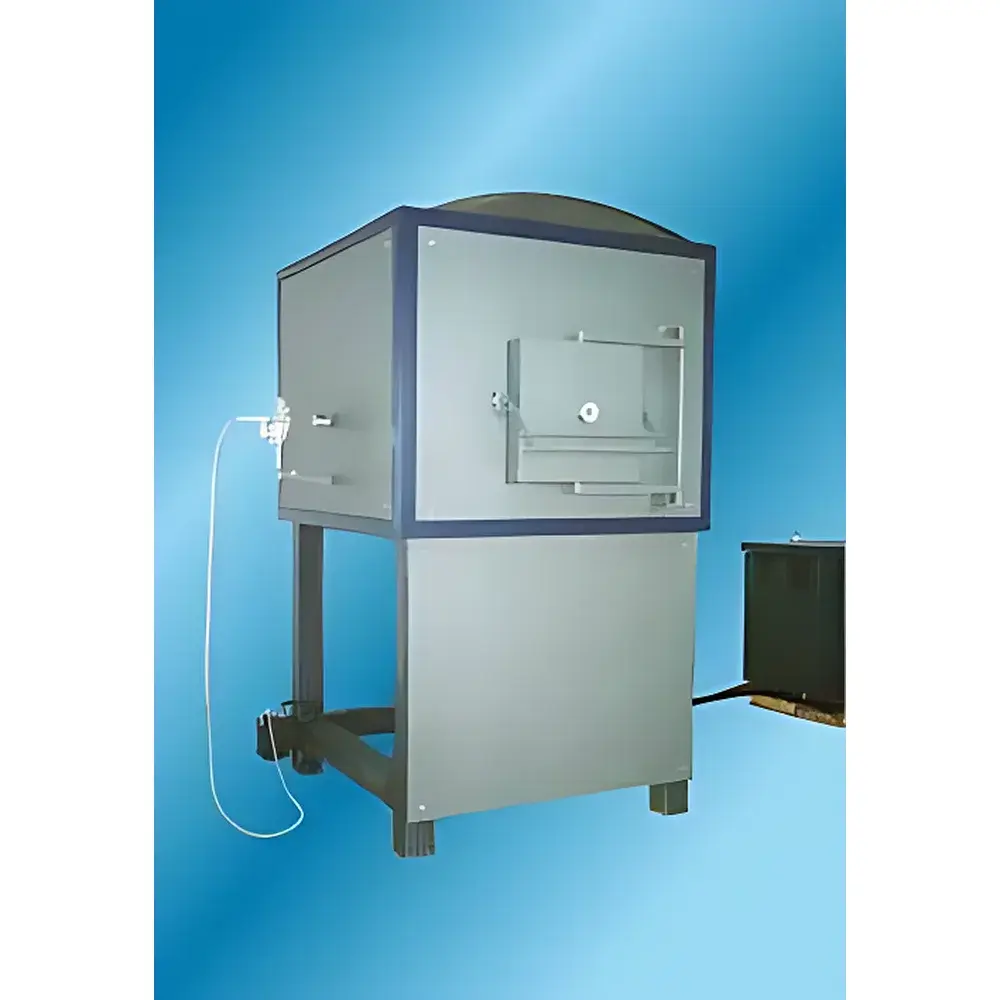
SGM3820 Ultra-High-Temperature Box-Type Resistance Furnace
| Origin | Henan, China |
|---|---|
| Manufacturer Type | Authorized Distributor |
| Origin Category | Domestic (China) |
| Model | SGM3820 |
| Pricing | Available Upon Request |
| Max Operating Temperature | 2000 °C (oxidizing atmosphere) |
| Furnace Chamber Dimensions (SGM3820D) | 200 × 120 × 150 mm |
| Furnace Chamber Dimensions (SGM3820E) | 300 × 120 × 150 mm |
| Temperature Uniformity | ±8 °C |
| Temperature Stability | ±1 °C |
| Control Accuracy (overshoot) | ≤3 °C |
| Programmable Stages | Up to 50 segments |
| Control System | PID with self-tuning, manual/auto seamless switching, over-temperature alarm, temperature offset compensation & calibration capability |
| Heating System | Dual independent heating zones |
| Insulation Structure | Patented double-layer ceramic fiber chamber |
| Heating Element | Specialized high-purity molybdenum disilicide (MoSi₂) or silicon carbide (SiC), rated for continuous operation at 2000 °C in air |
Overview
The SGM3820 Ultra-High-Temperature Box-Type Resistance Furnace is an engineered thermal processing system designed for demanding laboratory and R&D applications requiring precise, repeatable, and stable operation up to 2000 °C in ambient oxidizing atmospheres. Built upon a dual-zone resistive heating architecture and proprietary double-layer ceramic fiber insulation, the furnace delivers rapid thermal response without compromising structural integrity or long-term dimensional stability. Unlike conventional single-wall muffle furnaces, its patented dual-chamber design mitigates thermal gradient accumulation, reduces energy loss, and enhances axial and radial temperature uniformity across the working zone—critical for sintering advanced ceramics, heat-treating refractory metals, ashing high-ash-content samples, and conducting high-temperature phase transformation studies. The system operates under open-air conditions and is not rated for inert or reducing atmospheres unless externally integrated with gas purging or controlled-atmosphere enclosures.
Key Features
- Dual independent heating zones with synchronized PID control ensure robust thermal management and minimize hot/cold spot formation.
- Patented double-layer ceramic fiber insulation structure provides exceptional thermal retention, eliminates cracking or powder shedding even after repeated cycling above 1800 °C, and maintains mechanical rigidity under prolonged exposure to ultra-high temperatures.
- High-performance heating elements—either MoSi₂ or SiC—are selected based on application-specific oxidation resistance and lifetime requirements; both are certified for continuous operation at 2000 °C in air per ASTM C1171 and ISO 8501-1 standards.
- 50-segment programmable controller supports complex thermal profiles including ramp-soak-cool sequences, enabling compliance with standardized test methods such as ASTM E1113 (fire resistance testing) and ISO 5660-1 (heat release rate determination).
- Integrated safety architecture includes over-temperature cut-off (with independent thermocouple monitoring), real-time drift compensation, user-accessible temperature calibration offsets, and electromagnetic interference (EMI)-hardened signal conditioning.
Sample Compatibility & Compliance
The SGM3820 accommodates a broad range of sample geometries and material classes—including oxide and non-oxide ceramics, metal oxides, rare-earth compounds, graphite crucibles, platinum-rhodium alloys, and refractory powders—within its standardized chamber configurations (200 × 120 × 150 mm or 300 × 120 × 150 mm). All internal surfaces are free of metallic contaminants and conform to ISO/IEC 17025 requirements for equipment suitability in accredited testing laboratories. The furnace meets CE marking directives for electromagnetic compatibility (2014/30/EU) and low-voltage safety (2014/35/EU). While not intrinsically explosion-proof, it may be operated within Class 1000 cleanrooms or fume hoods when handling volatile precursors, provided external ventilation and exhaust interlocks are implemented per ANSI Z9.5 guidelines.
Software & Data Management
The embedded microprocessor controller logs time-stamped temperature data at user-defined intervals (1–60 seconds) and stores up to 10 complete thermal cycles locally. Optional RS485 Modbus RTU or Ethernet TCP/IP interface enables integration with LabView, SCADA systems, or centralized LIMS platforms. Data export is supported in CSV format with UTC timestamps, facilitating audit-ready documentation for GLP, GMP, or FDA 21 CFR Part 11–compliant environments—provided external electronic signature and audit trail modules are deployed per organizational validation protocols. Firmware updates are performed via USB port using signed binary packages to ensure traceability and integrity.
Applications
- Sintering of yttria-stabilized zirconia (YSZ), silicon nitride (Si₃N₄), and boron carbide (B₄C) compacts under atmospheric conditions.
- Thermal gravimetric analysis (TGA) pre-conditioning and residue quantification in coal, biomass, and polymer composites per ASTM D3175 and ISO 1171.
- Calibration of high-temperature reference materials (e.g., gold, palladium, and nickel fixed points) in metrology labs.
- Heat treatment of tungsten filaments, molybdenum sheet substrates, and niobium-based superconductors prior to thin-film deposition.
- Accelerated aging studies of thermal barrier coatings (TBCs) and environmental barrier coatings (EBCs) used in turbine engine components.
FAQ
What atmosphere is the SGM3820 rated for?
The furnace is validated for continuous operation in ambient air (oxidizing atmosphere) up to 2000 °C. It is not sealed or rated for vacuum, inert gas, or reducing environments without external modification.
Can the temperature uniformity specification be verified independently?
Yes—uniformity mapping per ASTM E220 or ISO/IEC 17025 Annex A.3 can be performed using a calibrated multi-point thermocouple array and NIST-traceable reference instruments.
Is firmware validation support available for regulated industries?
Full IQ/OQ documentation templates, along with installation and operational qualification checklists, are provided upon request for GxP-compliant deployment.
What maintenance is required to sustain accuracy over 5+ years of service?
Annual verification of thermocouple calibration, visual inspection of heating element continuity and insulation integrity, and cleaning of terminal blocks and airflow vents are recommended per manufacturer’s technical bulletin TB-SGM3820-REV4.
Does the system comply with energy efficiency regulations?
It meets China’s GB 30253–2013 standard for industrial electric heating equipment and exceeds EU Ecodesign Directive 2009/125/EC Tier 2 requirements for standby power consumption (<0.5 W).



