
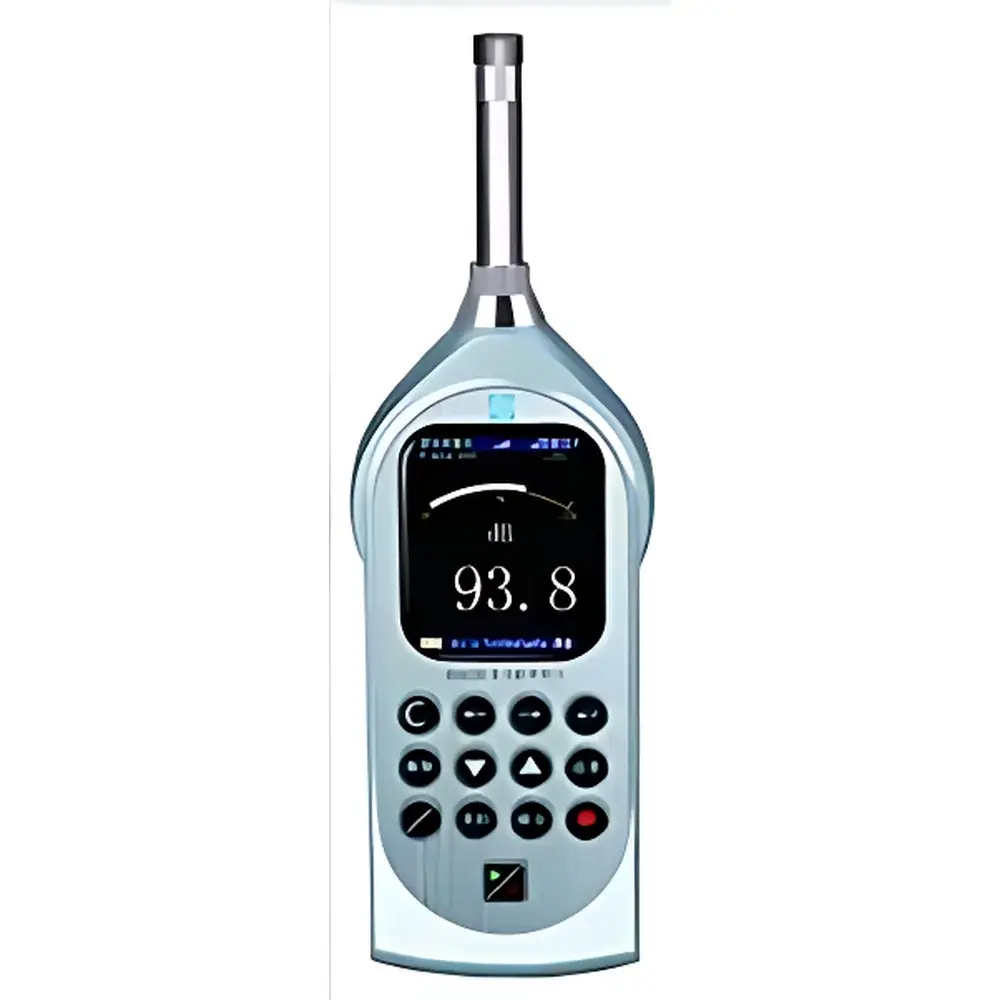
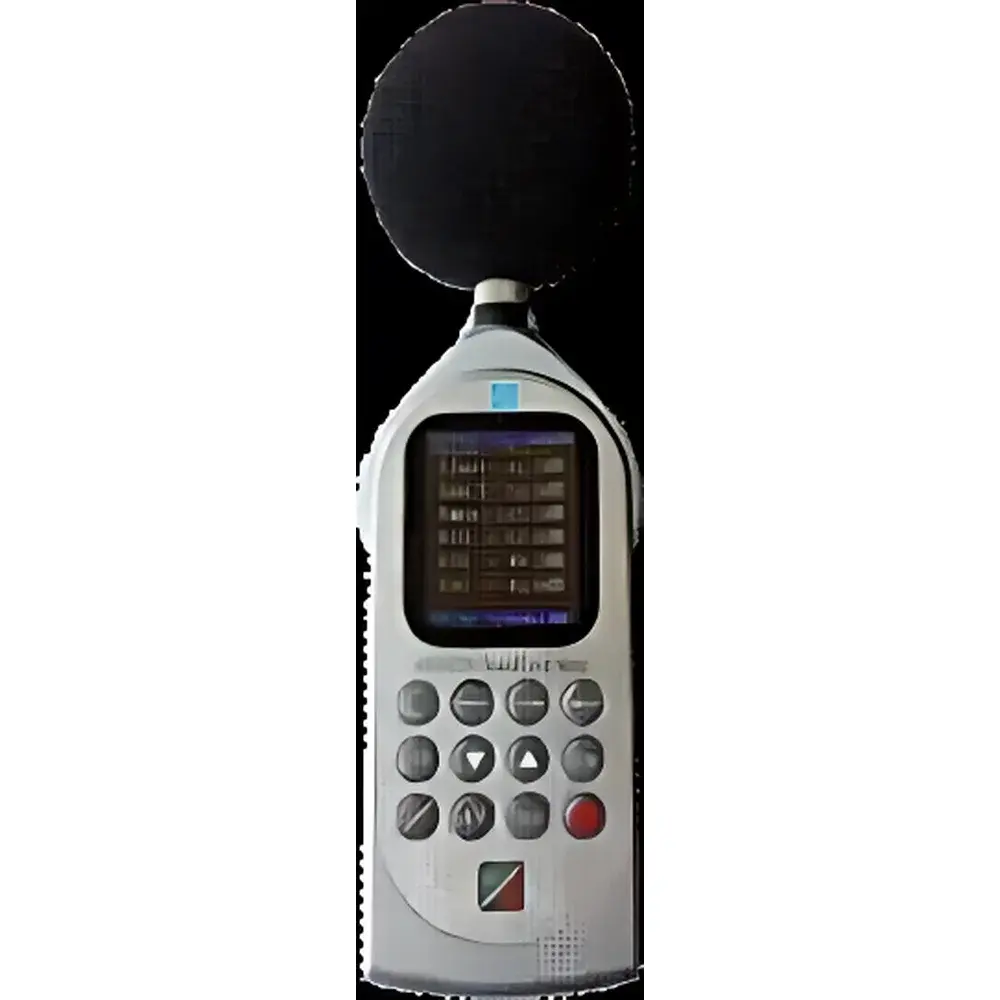
AWA AWA6228+ Class 1 Digital Sound Level Meter with Real-Time Octave & FFT Analysis
| Origin | Beijing, China |
|---|---|
| Manufacturer Type | Authorized Distributor |
| Country of Origin | China |
| Model | AWA6228+ |
| Price Range | USD 1,400–2,800 (FOB) |
| Frequency Range | 10 Hz – 20 kHz |
| Measurement Range | 30–142 dBA, 35–142 dBC, 40–142 dBZ |
| Internal Noise Floor | <12 dBA (low range), <23 dBA (high range) |
| Accuracy Class | IEC 61672:2013 Class 1 / GB/T 3785-2010 Class 1 |
| Measurement Duration | Programmable from 1 second to 99 hours (continuous or interval-triggered) |
Overview
The AWA AWA6228+ Class 1 Digital Sound Level Meter is a high-fidelity, microprocessor-controlled acoustic measurement instrument engineered for precision environmental, occupational, and industrial noise assessment. Based on advanced digital signal processing (DSP) architecture and compliant with IEC 61672:2013 Class 1 and GB/T 3785-2010 Class 1 performance requirements, it delivers traceable, metrologically robust sound pressure level (SPL) measurements across an extended dynamic range. The instrument employs true RMS digital detection at a 48 kHz sampling rate with 24-bit analog-to-digital conversion, ensuring minimal quantization error and high temporal resolution. Its parallel A-, C-, and Z-frequency weighting filters operate simultaneously with F-, S-, and I-time weighting networks—enabling concurrent acquisition of multiple standardized metrics (e.g., LAeq,T, LCpeak, LZmax) without sequential mode switching. Designed for field-deployable reliability, the AWA6228+ integrates low-power electronics, automatic power source management, and ruggedized mechanical construction (260 × 80 × 30 mm, ~350 g), making it suitable for long-duration unattended monitoring in ambient, industrial, and building acoustics applications.
Key Features
- Class 1 accuracy per IEC 61672:2013 and GB/T 3785-2010, validated across full operational temperature (–15 °C to +55 °C) and humidity (20–90% RH) ranges
- 2.6-inch color TFT display (240 × 320 pixels) with auto-brightness control and sunlight-readable contrast
- Integrated dual-range amplifier architecture: low-range (20–132 dBA) and high-range (30–142 dBA), each offering >112 dB linear dynamic span
- Real-time parallel analysis engines supporting simultaneous 1/1-octave (11 center frequencies), 1/3-octave (33 center frequencies + extended F₀), and 2048-line FFT spectral analysis
- Onboard data storage: 3 MB internal flash (up to 3,328 integrated measurement records); expandable to 32 GB via SD card (optional)
- Flexible triggering: manual key press, acoustic threshold exceedance, scheduled start/stop, or periodic interval activation
- Intelligent power management: automatic switchover between four AA alkaline cells (≥30 h typical operation) and external 5 V ±0.5 V DC supply; internal backup battery maintains real-time clock (<1 min/month drift)
- Modular expansion capability: optional GPS geotagging, Bluetooth 4.0 wireless interface, GSM SMS alert module, solar charging adapter, and thermal printer support
Sample Compatibility & Compliance
The AWA6228+ accepts standard 1/2″ pre-polarized condenser microphone cartridges (e.g., AWA14601 with nominal sensitivity –28 dB re 1 V/Pa), enabling seamless calibration against accredited acoustic standards. Its frequency response (10 Hz–20 kHz ±0.5 dB, A-weighted) supports compliance testing per ISO 1996 (environmental noise), ISO 9612 (occupational exposure), ISO 3744/3746 (sound power), and ASTM E1050 (impedance tube). The instrument’s statistical and integrative algorithms conform to ISO 1996-2:2017 Annex B for long-term noise mapping and EN 50130-4 for electromagnetic compatibility. All firmware and calibration routines are designed to support audit-ready documentation under GLP and ISO/IEC 17025 laboratory quality systems. Data export formats include CSV, TXT, and proprietary binary archives compatible with third-party post-processing tools.
Software & Data Management
Data acquisition, visualization, and reporting are managed through AWA6228+’s embedded real-time OS and optional PC-based AWA6290M software suite. Raw time-history waveforms, octave band spectra, FFT magnitude/phase plots, and statistical distributions (L10, L50, L90, SD, T20/T30) are timestamped and stored with full metadata—including GPS coordinates (if enabled), battery status, transducer ID, and calibration history. USB 1.1/2.0 and RS-232 interfaces permit bidirectional communication for firmware updates, remote configuration, and bulk data retrieval. Audit trails record all parameter changes, measurement starts/stops, and calibration events—supporting FDA 21 CFR Part 11 compliance when used in regulated environments. Exported datasets retain traceability to NIST-traceable reference calibrations performed using Class 1 pistonphones (e.g., Brüel & Kjær 4228).
Applications
The AWA6228+ serves as a primary measurement platform across multiple regulatory and technical domains: environmental noise monitoring near transportation corridors and residential zones; occupational health assessments for OSHA 1910.95 and EU Directive 2003/10/EC compliance; industrial machinery noise characterization per ISO 3744; architectural acoustics evaluation including reverberation time (T20, T30, EDT) and speech transmission index (STI) preparation; and educational laboratory instruction in acoustics engineering. Its personal sound exposure module enables full-dose computation (DOSE, LEX,8h, TWA) with configurable exchange rates (3–6 dB) and action levels (70–90 dB), satisfying both U.S. and EU hearing conservation program requirements.
FAQ
Does the AWA6228+ meet international Class 1 certification requirements?
Yes—it is fully compliant with IEC 61672:2013 Class 1 and GB/T 3785-2010 Class 1 specifications, including linearity, frequency weighting, time weighting, and temperature/humidity stability tests.
Can the instrument perform simultaneous 1/1-octave and FFT analysis?
No—real-time 1/1-octave, 1/3-octave, and FFT analyses operate in mutually exclusive modes due to computational resource constraints; however, integrated metrics (e.g., LAeq, LCpeak) are always available in parallel regardless of spectral analysis selection.
Is GPS positioning data embedded directly into measurement files?
When the optional GPS module is installed and active, geotags (latitude, longitude, altitude, UTC timestamp, speed) are appended to each stored record and exported with CSV data.
What calibration standards are recommended for routine verification?
We recommend annual verification using a Class 1 pistonphone (e.g., B&K 4228 or G.R.A.S. 42AG) traceable to NIST or equivalent national metrology institute, followed by acoustic calibrator checks (e.g., B&K 4231) before and after each measurement session.
How is data integrity ensured during extended unattended deployments?
The device implements cyclic redundancy check (CRC) on all stored records, timestamps all events via internal RTC with GPS synchronization capability, and logs power source transitions and memory write errors—ensuring forensic-grade data provenance.
Related Products







