
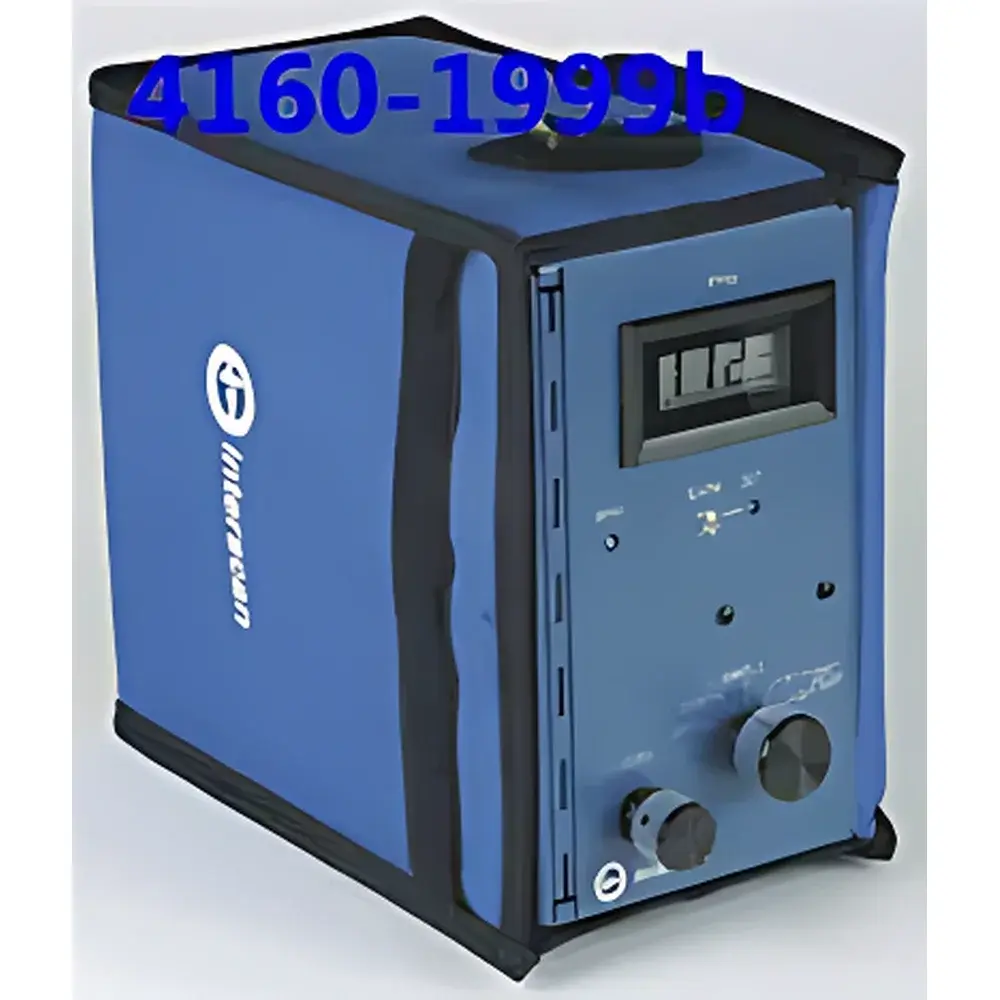
4160 Portable Formaldehyde Analyzer
| Origin | USA |
|---|---|
| Manufacturer Type | Authorized Distributor |
| Origin Category | Imported |
| Model | 4160 |
| Pricing | Available Upon Request |
| Measurement Range | 0–19.99 ppm |
| Resolution | 0.01 ppm |
| Accuracy | ±2% of reading + 0.01 ppm |
| Response Time | < 60 s |
| Linearity | ±1.0% |
| Repeatability | ±0.5% |
| Zero Drift | ±1.0% per 24 h |
| Span Drift | ±2.0% per 24 h |
| Sampling Method | Continuous pump-suction, 1 L/min |
| Dimensions | 178 mm × 102 mm × 225 mm |
| Weight | 2 kg |
Overview
The 4160 Portable Formaldehyde Analyzer is a field-deployable, battery-powered electrochemical gas detection instrument engineered for real-time, direct-reading quantification of formaldehyde (HCHO) in ambient air. Designed in accordance with the fundamental principles of amperometric electrochemical sensing, the analyzer operates by catalytically oxidizing formaldehyde at a working electrode within a three-electrode cell configuration—generating a current proportional to analyte concentration. This measurement architecture delivers high specificity for formaldehyde in complex matrices, minimizing cross-sensitivity to common interferents such as methanol, ethanol, CO, and NO₂—critical for reliable indoor air quality (IAQ) assessment and occupational hygiene monitoring. The instrument complies with U.S. EPA Compendium Method TO-11A for formaldehyde sampling and supports data acquisition under ISO 16000-23 (Indoor air — Part 23: Determination of formaldehyde and other carbonyl compounds — Active sampling onto solid sorbent, thermal desorption and gas chromatographic analysis) as a screening-level verification tool. Its compact form factor and integrated sampling pump enable rapid deployment in residential buildings, schools, hospitals, manufacturing facilities, and post-construction environments where regulatory or voluntary IAQ compliance is required.
Key Features
- Patented high-stability electrochemical sensor with linear response across full 0–19.99 ppm range
- Integrated rechargeable lithium-ion battery powering both electronics and a precision diaphragm sampling pump (1.0 ± 0.1 L/min)
- Real-time digital display with auto-zeroing function and user-accessible calibration mode
- Ruggedized ABS housing rated IP54 for dust and splash resistance during field use
- Onboard data logging (up to 10,000 records) with time/date stamp and configurable sampling intervals
- Compliant with China’s CPA (China Metrology Accreditation) certification for imported measuring instruments (Certificate No. CPACN2021-XXXXX)
Sample Compatibility & Compliance
The 4160 analyzer is validated for use in gaseous samples at ambient temperature (5–40 °C) and relative humidity (15–90% RH, non-condensing). It meets the performance criteria outlined in GB/T 18204.2–2014 (Chinese National Standard for Formaldehyde Detection in Public Places) and serves as an equivalent alternative to reference methods such as DNPH-HPLC for rapid on-site screening. While not intended for regulatory enforcement without confirmatory lab analysis, its accuracy specification (±2% of reading + 0.01 ppm) satisfies QA/QC requirements for routine industrial hygiene surveys and pre-occupancy IAQ audits. Instrument traceability is maintained via NIST-traceable span gas calibration (certified formaldehyde standard at 1.0 ppm in nitrogen), and all calibrations are documented with audit trails supporting GLP-compliant reporting.
Software & Data Management
Data export is supported via USB-C interface using proprietary PC software compatible with Windows 10/11. The application enables visualization of time-series concentration plots, generation of PDF summary reports (including instrument ID, operator name, location tag, and calibration history), and CSV export for integration into LIMS or enterprise EHS platforms. All logged measurements include metadata: timestamp, battery level, pump status, sensor temperature, and alarm flags (e.g., over-range, low battery, sensor fault). Software enforces electronic signature authentication and maintains immutable calibration logs—aligned with FDA 21 CFR Part 11 principles for systems used in regulated environments requiring audit-ready documentation.
Applications
- Indoor Air Quality (IAQ) assessments in offices, schools, and residential dwellings post-renovation or furniture installation
- OCCUPATIONAL EXPOSURE MONITORING in woodworking, textile finishing, resin manufacturing, and disinfection facilities
- Public health surveillance by municipal CDC and environmental protection agencies during epidemic response or building commissioning
- Verification of formaldehyde emission compliance for composite wood products (CARB ATCM, EPA TSCA Title VI)
- Field validation of HVAC system effectiveness in reducing volatile organic compound (VOC) concentrations
- Research-grade screening in environmental science laboratories conducting exposure-response studies
FAQ
What is the recommended calibration frequency for routine use?
For daily field operations, zero and span calibration is advised before each sampling session; for infrequent use, calibration verification should occur at least once every 7 days.
Can the instrument be used in high-humidity environments such as bathrooms or greenhouses?
Yes—operational up to 90% RH (non-condensing); however, prolonged exposure above 80% RH may require more frequent zero checks due to potential electrolyte dilution effects.
Is the sensor replaceable by the end user?
Yes—the electrochemical sensor module is field-replaceable with no soldering or firmware reconfiguration required; replacement sensors are supplied with individual calibration coefficients stored on an embedded EEPROM.
Does the device meet any international explosion-proof certifications?
No—the 4160 is not rated for Class I, Division 1 hazardous locations; it is designed exclusively for general indoor/outdoor ambient air monitoring.
How is measurement uncertainty quantified and reported?
Total uncertainty is calculated per GUM (Guide to the Expression of Uncertainty in Measurement) principles, incorporating contributions from sensor accuracy, pump flow tolerance (±5%), temperature drift, and calibration gas uncertainty—typical expanded uncertainty (k=2) is ≤ ±3.2% at 1 ppm.







