
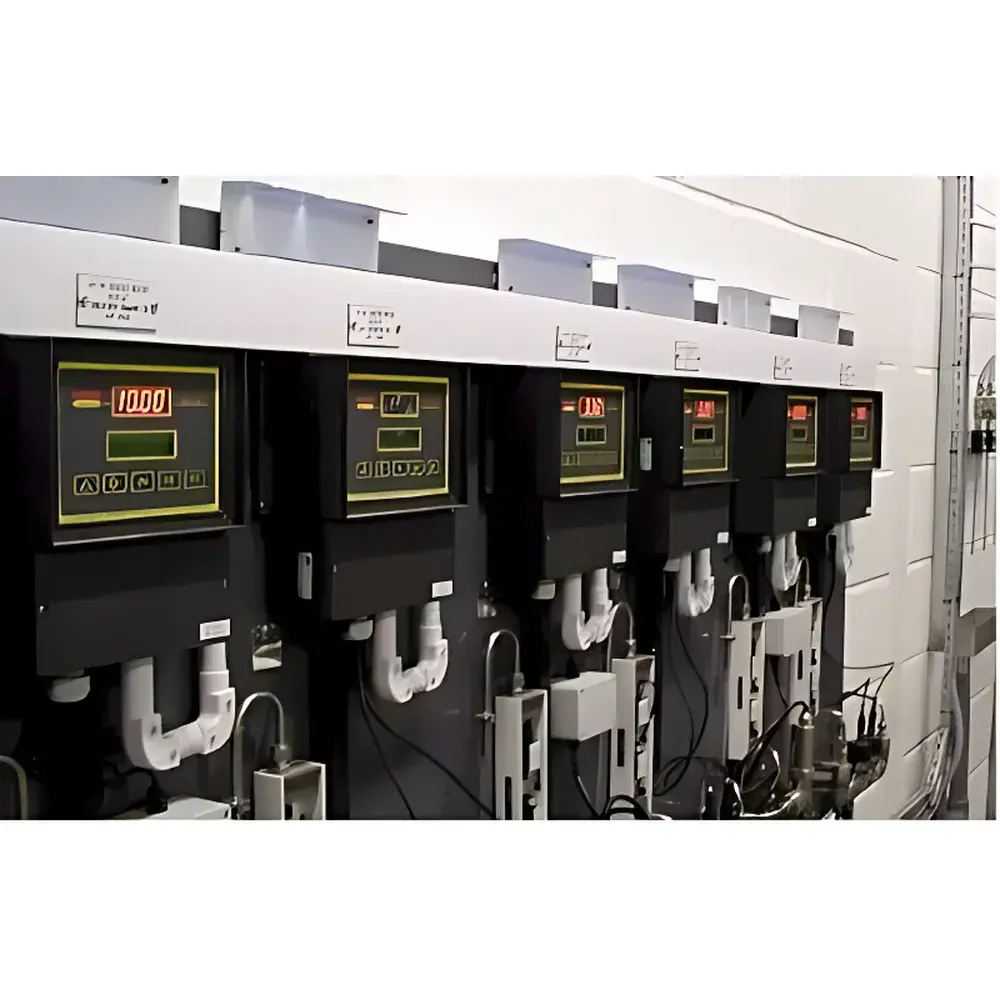
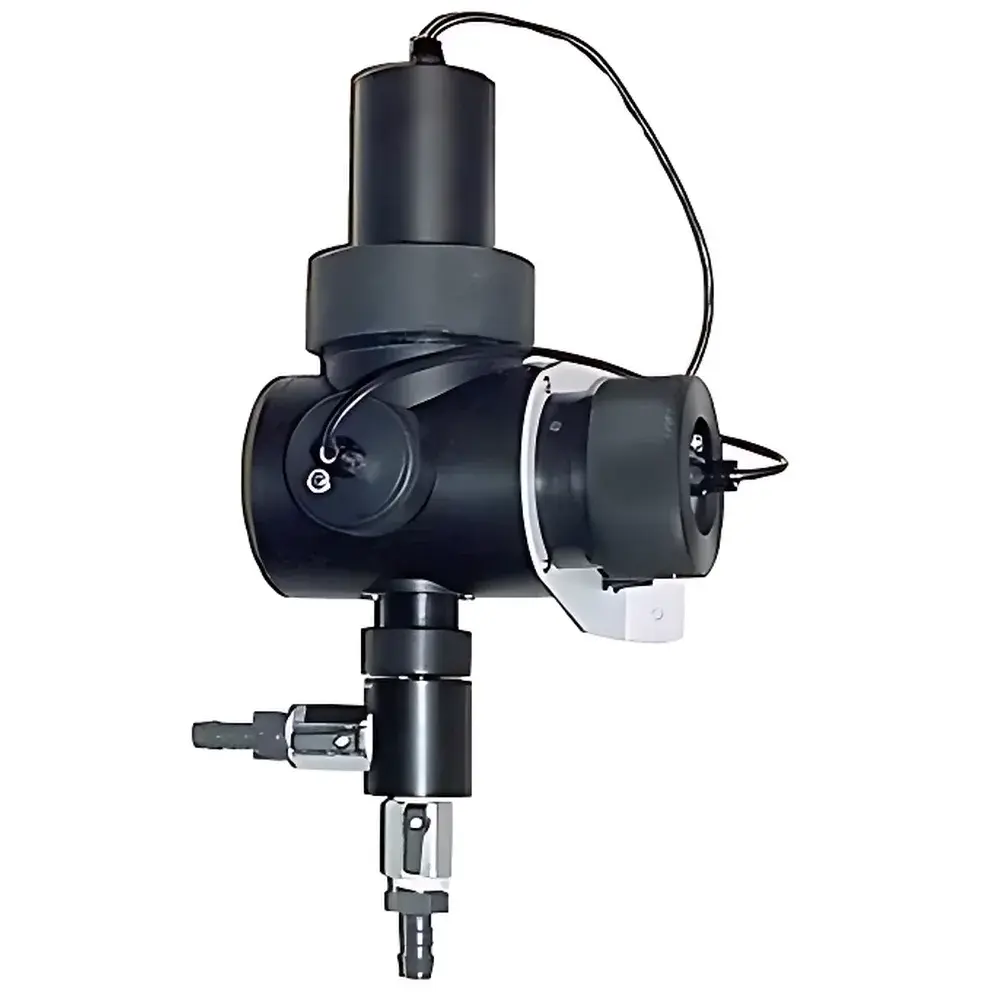
Waterwatch2300 Online Turbidity and Suspended Solids Analyzer
| Origin | UK |
|---|---|
| Manufacturer Type | Authorized Distributor |
| Origin Category | Imported |
| Model | Waterwatch2300 |
| Pricing | Upon Request |
Overview
The Waterwatch2300 is a field-deployable, microprocessor-controlled online analyzer engineered for continuous, real-time measurement of turbidity and suspended solids (TSS) in water and wastewater streams. It operates on the principle of infrared (IR) nephelometry—employing a 850 nm LED light source and a 90° scattered-light detection geometry—to deliver stable, interference-resistant turbidity readings across a wide dynamic range. For TSS quantification, the instrument applies a calibrated empirical correlation between optical scatter intensity and gravimetrically validated solid concentration, eliminating reliance on wet chemical calibration or frequent zero-point drift correction. Its mechanical design incorporates a sealed, leak-proof sensor interface and dry-reference calibration architecture—ensuring long-term zero stability without exposure to process moisture or condensation. This robust physical and optical configuration makes the Waterwatch2300 particularly suitable for unattended operation in municipal influent/effluent channels, industrial discharge monitoring points, stormwater retention basins, and drinking water distribution networks.
Key Features
- IP65-rated ABS enclosure (IP55 when equipped with optional data logger), certified for outdoor installation under rain, dust, and temperature extremes
- Dual-parameter capability: simultaneous turbidity (NTU, FTU, ppm) and suspended solids (mg/L, g/L, %S) output with user-selectable units
- 4-digit graphical LCD display with intuitive 5-key touch interface—enabling local configuration, real-time value viewing, and diagnostic status checks without external software
- Stable zero maintenance via mechanically isolated dry reference cell—eliminates need for wet calibration standards or frequent manual verification
- Standard 4–20 mA analog output (isolated, max. load 750 Ω) with configurable scaling per parameter; RS232 serial port for configuration, diagnostics, and firmware updates
- Optional PCMCIA-based data logger (64 KB–1 MB capacity) supporting time-stamped storage at user-defined intervals (e.g., 15-min logging yields ~4 weeks of data on 256 KB card)
Sample Compatibility & Compliance
The Waterwatch2300 is compatible with raw surface water, clarified effluent, activated sludge return streams, and filtered potable water—provided sample flow is laminar and free of entrained air bubbles or coarse particulates >2 mm. Sensor fouling resistance is enhanced by integrated wiper-compatible optics and optional ultrasonic cleaning modules (sold separately). The system complies with ISO 7027:2016 for turbidity measurement methodology and supports traceability in accordance with ISO/IEC 17025 laboratory quality requirements. While not intrinsically certified for hazardous areas, its low-power design (11 W nominal) and non-sparking enclosure meet general-purpose industrial safety expectations for Class I, Division 2 environments. Data integrity features—including timestamped logs and non-volatile memory—support audit readiness for environmental reporting frameworks aligned with EPA Method 180.1 and EU Bathing Water Directive (2006/7/EC).
Software & Data Management
No proprietary PC software is required for basic operation; all setup and calibration are performed locally via the front-panel interface. When paired with the optional data logger, stored records are exported via standard PCMCIA slot using FAT16-formatted cards—compatible with Windows/Linux systems without driver installation. Logged datasets include date/time stamps, measured values, sensor status flags (e.g., “optical window dirty”, “zero drift warning”), and power-on reset counters. The system does not implement FDA 21 CFR Part 11 electronic signature functionality, but audit trails (via log timestamps and configuration change history) support GLP-aligned documentation practices where formal validation is conducted by end users. Firmware updates are delivered as ASCII hex files via RS232 and verified using CRC-16 checksums.
Applications
- Real-time compliance monitoring at wastewater treatment plant discharge outfalls per national permit limits (e.g., EPA NPDES)
- Early-warning detection of filter breakthrough or clarifier upsets in drinking water facilities
- Stormwater runoff characterization during precipitation events for sediment load estimation
- Process control feedback for coagulant dosing optimization in tertiary treatment stages
- Long-term trend analysis of reservoir turbidity linked to algal bloom dynamics or watershed erosion
FAQ
What calibration standards are required for routine verification?
A dry, solid-reference cell is supplied for daily zero verification; no liquid standards are needed unless full span validation is performed annually per site QA/QC protocols.
Can the instrument operate on battery or solar power?
Yes—when configured with 12 VDC or 24 VDC input option, it integrates seamlessly with off-grid power systems typical in remote monitoring stations.
Is the data logger compatible with SD or microSD cards?
No—only Type I PCMCIA memory cards (e.g., ATA Flash) are supported; legacy compatibility ensures long-term spare part availability.
How often does the optical window require cleaning?
Under typical municipal wastewater conditions, manual cleaning is recommended every 2–4 weeks; ultrasonic assist modules extend intervals to 8+ weeks.
Does the unit support Modbus RTU or Profibus communication?
Not natively—only RS232 is provided; third-party protocol converters may be used for integration into SCADA systems requiring Modbus or other fieldbus standards.







