
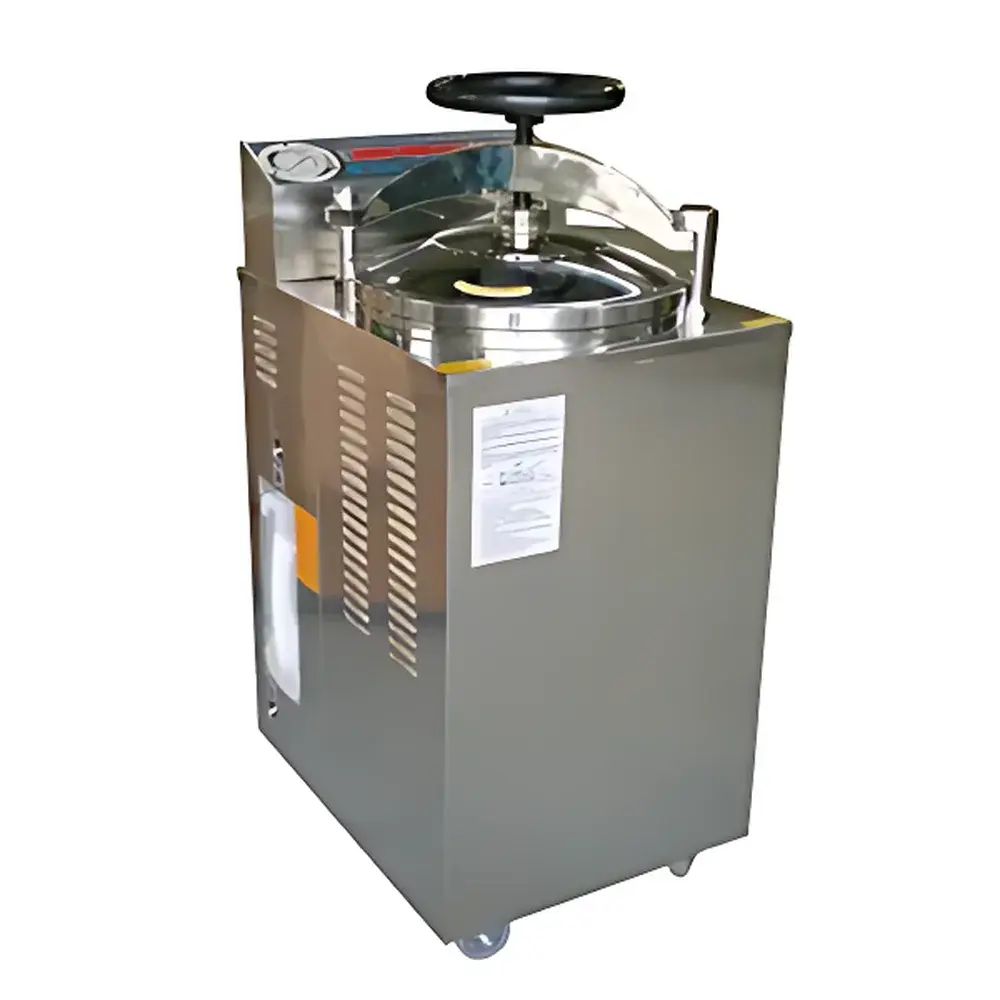
BOXUN YXQ-75G Vertical Steam Autoclave
| Brand | BOXUN |
|---|---|
| Origin | Shanghai, China |
| Manufacturer Type | Direct Manufacturer |
| Product Category | Domestic |
| Model | YXQ-75G |
| Instrument Type | Vertical Autoclave |
| Max Temperature | 135 °C |
| Max Pressure | 0.22 MPa |
| Chamber Dimensions | Ø400 mm × 720 mm |
| External Dimensions | 485 mm × 605 mm × 1190 mm |
| Chamber Volume | 75 L |
| Sterilization Power | 3.5 kW |
| Drying Power | 0.8 kW |
| Voltage | 220 V ±10%, 50 Hz ±2% |
| Sterilization Timer | 4–120 min |
| Drying Timer | 30–240 min |
| Design Temp/Pressure | 138 °C / 0.25 MPa |
| Basket Size | Ø360 mm × 280 mm × 2 pcs |
Overview
The BOXUN YXQ-75G Vertical Steam Autoclave is a fully integrated, microprocessor-controlled sterilization system engineered for precision, safety, and operational reliability in regulated laboratory, clinical, and research environments. It operates on the validated principle of saturated steam under pressure—leveraging the thermodynamic properties of moist heat to achieve microbial inactivation through protein denaturation and nucleic acid disruption. Designed to meet internationally recognized sterilization efficacy requirements (including ISO 17665-1:2017 for moist heat sterilization validation), the YXQ-75G delivers consistent lethality (F0 ≥ 12 min) across its 75 L chamber volume when operated within defined cycle parameters (e.g., 121 °C for 15–20 min or 135 °C for 3–5 min). Its vertical orientation optimizes floor space utilization while maintaining full accessibility for loading/unloading large or bulky items such as glassware racks, instrument trays, and media bottles.
Key Features
- Intelligent microcomputer control system with real-time digital display of temperature, pressure, time, and phase status (sterilization, exhaust, drying)
- Interlocked handwheel-type fast-opening door with automatic pressure release and mechanical safety lock—complies with ASME BPVC Section VIII and GB 8599–2008 safety standards
- Self-sealing silicone gasket (auto-expanding design) ensuring leak-tight integrity during pressurization and eliminating manual tightening
- Dual-stage safety architecture: includes overtemperature cutoff (138 °C limit), overpressure relief valve (0.25 MPa design rating), low-water level detection, dry-run prevention, and automatic emergency venting
- Integrated cold air purge function using dynamic internal circulation—ensures complete air removal prior to sterilization for uniform steam penetration
- Three-phase programmable cycle logic: (a) sterilize only; (b) sterilize + exhaust; (c) sterilize + exhaust + drain + drying—with independent timer settings for each stage
- Standard 3 L condensate collection bottle and built-in sample test port (Ø10 mm) for process validation and biological indicator placement
- Automatic water replenishment, heating, sterilization, exhaust, drainage, and post-cycle drying—all sequenced without operator intervention
Sample Compatibility & Compliance
The YXQ-75G accommodates a broad range of load types—including wrapped surgical instruments, unwrapped metal tools, porous materials (e.g., cotton gauze, linen packs), liquid media in sealed containers (with pressure-equalizing venting), and heat-stable glassware. Chamber geometry (Ø400 × 720 mm) supports standard autoclave baskets (Ø360 × 280 mm × 2) and allows stacking of multiple layers without compromising steam flow distribution. All wetted components—including chamber, jacket, basket, and door liner—are fabricated from medical-grade SUS304 stainless steel (ASTM A240/A240M), providing long-term resistance to chloride-induced pitting and alkaline corrosion common in repeated cleaning cycles. The unit conforms to national safety standard GB 8599–2008 and aligns with essential principles of ISO 13485 quality management systems for medical device manufacturers. Optional printer integration enables permanent hardcopy record generation compliant with GLP and basic GMP documentation requirements.
Software & Data Management
While the YXQ-75G does not feature networked or cloud-based software, its embedded controller provides deterministic, non-volatile cycle logging with timestamped event records stored internally (up to 100 cycles). Each log captures start/end times, peak temperature/pressure values, phase durations, and fault codes—accessible via front-panel navigation. Optional RS232 or USB-to-serial interface supports connection to external PCs for data export (CSV format) and integration into local LIMS or QA databases. When paired with an optional thermal printer, the system generates audit-ready printouts containing cycle ID, date/time, operator ID (if entered), setpoints, actual process values, and pass/fail status—supporting traceability per FDA 21 CFR Part 11 basic electronic record principles where signature controls are implemented externally.
Applications
This autoclave serves core sterilization workflows across academic research laboratories, hospital central sterile supply departments (CSSD), pharmaceutical QC labs, veterinary clinics, and agricultural biotechnology facilities. Typical use cases include terminal sterilization of microbiological culture media (e.g., nutrient agar, LB broth), decontamination of biohazardous waste prior to disposal, preparation of sterile surgical packs, reprocessing of reusable lab glassware and pipette tips, and validation of sterilization protocols for Class B loads per EN 13060. Its robust thermal performance and repeatable pressure control make it suitable for routine sterilization of both solid and liquid loads—particularly where regulatory documentation and reproducible F0 delivery are required.
FAQ
What is the maximum allowable working pressure and temperature?
The rated maximum working pressure is 0.22 MPa at 135 °C. The safety design limits are 0.25 MPa and 138 °C, respectively.
Does the unit support sterilization of liquids in sealed containers?
Yes—provided containers are equipped with vented closures or pressure-relief caps to prevent rupture; cycle parameters must be adjusted to accommodate slower heat-up and cool-down rates.
Is validation support documentation available?
BOXUN provides factory calibration certificates for temperature and pressure sensors, along with IQ/OQ protocol templates compatible with ISO 17665-1 and EU Annex 1 guidelines.
Can the drying function be disabled?
Yes—the drying phase is fully configurable and may be omitted or shortened via the control panel interface.
What maintenance intervals are recommended?
Daily: visual inspection of door seal and chamber interior; weekly: drain line flushing and gasket cleaning; annually: third-party verification of safety valves and sensor calibration.



