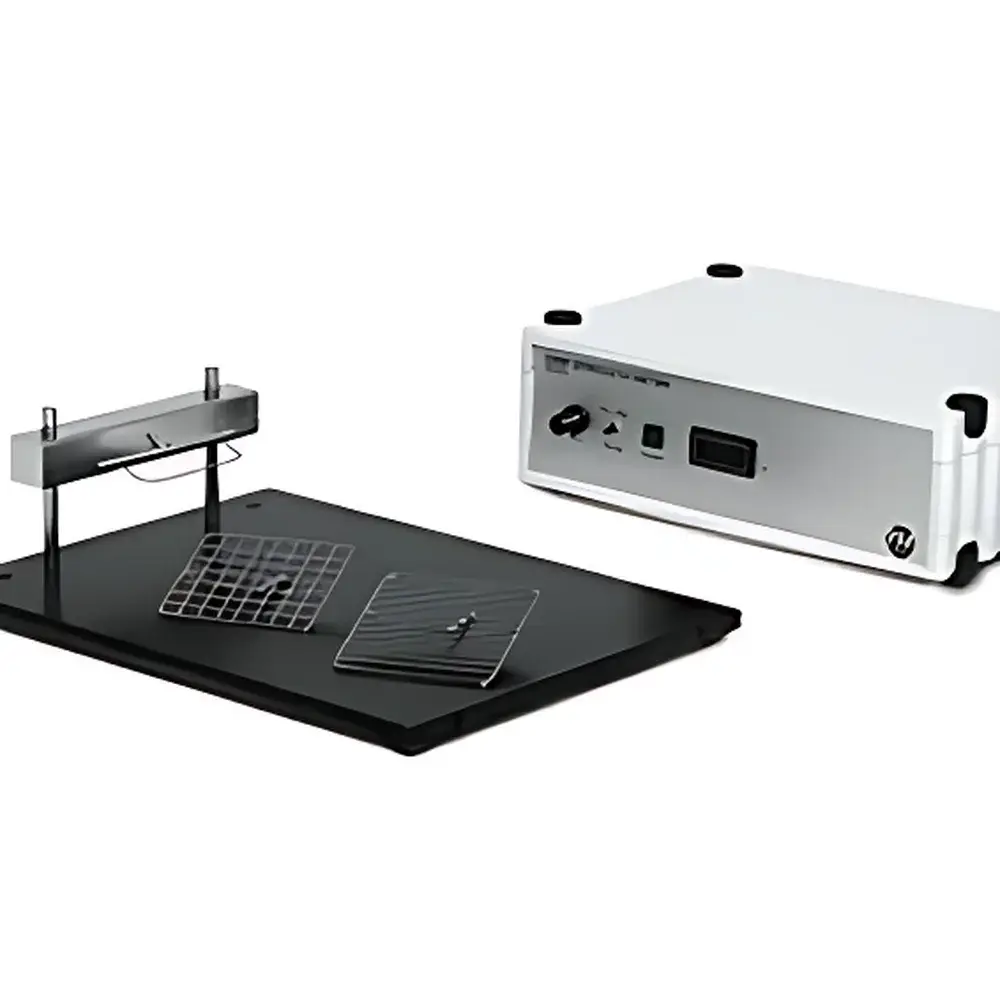
TSE Systems Strength Meter Grip Strength Measurement System
| Brand | TSE Systems |
|---|---|
| Origin | Germany |
| Model | Strength Meter |
| Force Range (Mouse) | 0–600 g (≈0–5.88 N) |
| Force Range (Rat) | 0–2000 g (≈0–19.62 N) |
| Sensor Resolution | ≤0.1 g |
| Adjustable Height Module | 0–120 mm |
| Grip Configurations | Grid, Trapezoidal Bar, Custom Options |
| Interface | Analog Output (±10 V), USB Digital Interface (with optional control unit) |
| Compliance | Designed for GLP-compliant preclinical neuromuscular phenotyping |
Overview
The TSE Systems Strength Meter Grip Strength Measurement System is an engineered solution for objective, repeatable quantification of forelimb and hindlimb grip strength in small laboratory rodents—primarily mice and rats. Based on high-precision load cell technology operating under controlled isometric contraction conditions, the system captures peak force exerted during voluntary grasping against calibrated mechanical interfaces. This principle aligns with standardized neuromuscular functional assessment protocols widely adopted in preclinical pharmacology, toxicology, neurodegenerative disease modeling (e.g., ALS, SMA), and muscle physiology research. The system operates without electrical stimulation or restraint-induced stress, preserving behavioral integrity and minimizing confounding variables associated with animal distress. Its modular architecture supports both stand-alone operation via integrated digital display and computer-based acquisition, enabling synchronization with video tracking, EMG, or other physiological monitoring platforms.
Key Features
- High-fidelity load cell sensor with ≤0.1 g resolution and factory-calibrated traceability to DIN EN ISO/IEC 17025 standards
- Dual-range sensor modules: mouse-optimized (0–600 g) and rat-optimized (0–2000 g), each with independent mechanical zeroing and thermal drift compensation
- Vertically adjustable sensor mount (0–120 mm range) allowing precise alignment for forelimb-only, hindlimb-only, or full-body pull assays
- Interchangeable grip configurations—including stainless-steel grid, trapezoidal bar, and user-defined fixtures—designed to minimize paw slippage and ensure consistent biomechanical engagement
- Analog output (±10 V) compatible with chart recorders, data acquisition systems (e.g., PowerLab, Spike2), and third-party DAQ hardware
- Digital USB interface with TSE’s proprietary acquisition software supporting real-time waveform visualization, automatic peak detection, and timestamped event logging
- Modular design compliant with IEC 61000-6-3 (EMC) and IEC 61010-1 (electrical safety) for laboratory integration
Sample Compatibility & Compliance
The Strength Meter is validated for use with C57BL/6, BALB/c, CD-1, Sprague-Dawley, and Wistar strains across standard age ranges (4–24 weeks). It accommodates standard housing conditions (individually ventilated cages, ambient temperature 20–24 °C, 12-h light/dark cycle) and requires no surgical preparation or sedation. Protocols align with OECD Test Guideline 426 (Neurotoxicity Study) and NIH-approved SOPs for grip strength endpoints in longitudinal studies. Data output formats (CSV, TXT) support audit-ready archiving per 21 CFR Part 11 requirements when paired with validated software and electronic signature workflows. All mechanical components are autoclavable or ethanol-compatible for cross-animal hygiene compliance.
Software & Data Management
TSE’s Strength Meter Control Software (v3.2+) provides a validated, configurable environment for acquisition, annotation, and export. Each trial records raw analog signal at ≥1 kHz sampling rate, applies digital filtering (Butterworth low-pass, cutoff 50 Hz), identifies maximum force amplitude with ±0.5% repeatability across sessions, and logs metadata including operator ID, animal ID, date/time, grip configuration, and height setting. Export options include Excel-compatible .csv files with column headers aligned to MIAME/ISA-tab conventions, as well as .mat files for MATLAB-based statistical modeling. Audit trails capture all parameter changes, file exports, and user logins—enabling full traceability required under GLP and GCP frameworks.
Applications
- Longitudinal monitoring of neuromuscular decline in transgenic models of spinal muscular atrophy (SMA), amyotrophic lateral sclerosis (ALS), and Duchenne muscular dystrophy (DMD)
- Evaluation of myotoxicity and off-target skeletal muscle effects in early-phase small-molecule and biologic drug development
- Quantitative assessment of recovery kinetics following peripheral nerve injury or denervation-reinnervation paradigms
- Standardized endpoint in regulatory neurotoxicity studies per OECD TG 426 and EPA OPPTS 870.6200
- Integration into multi-parameter phenotyping pipelines alongside rotarod, open field, and gait analysis modules
FAQ
What species and weight ranges is the Strength Meter validated for?
The system is validated for mice (15–45 g) and rats (150–500 g); sensor selection must match expected force output to maintain optimal signal-to-noise ratio.
Is calibration traceable to national standards?
Yes—each load cell is supplied with a certificate of calibration traceable to PTB (Physikalisch-Technische Bundesanstalt, Germany) and includes linearity, hysteresis, and repeatability metrics.
Can the system be used for hindlimb-only testing?
Yes—the adjustable height module and optional tail suspension fixture enable isolated hindlimb pull assays without forelimb contribution.
Does the software support automated batch processing of multiple animals?
Yes—batch import/export tools allow assignment of animal IDs, group codes, and protocol templates to streamline high-throughput screening workflows.
Is the system compatible with existing lab infrastructure such as LabChart or MATLAB?
Yes—via analog output or ASCII-over-USB, enabling direct integration with LabChart (ADInstruments), MATLAB (Data Acquisition Toolbox), or Python-based analysis pipelines using PySerial or NI-DAQmx drivers.