
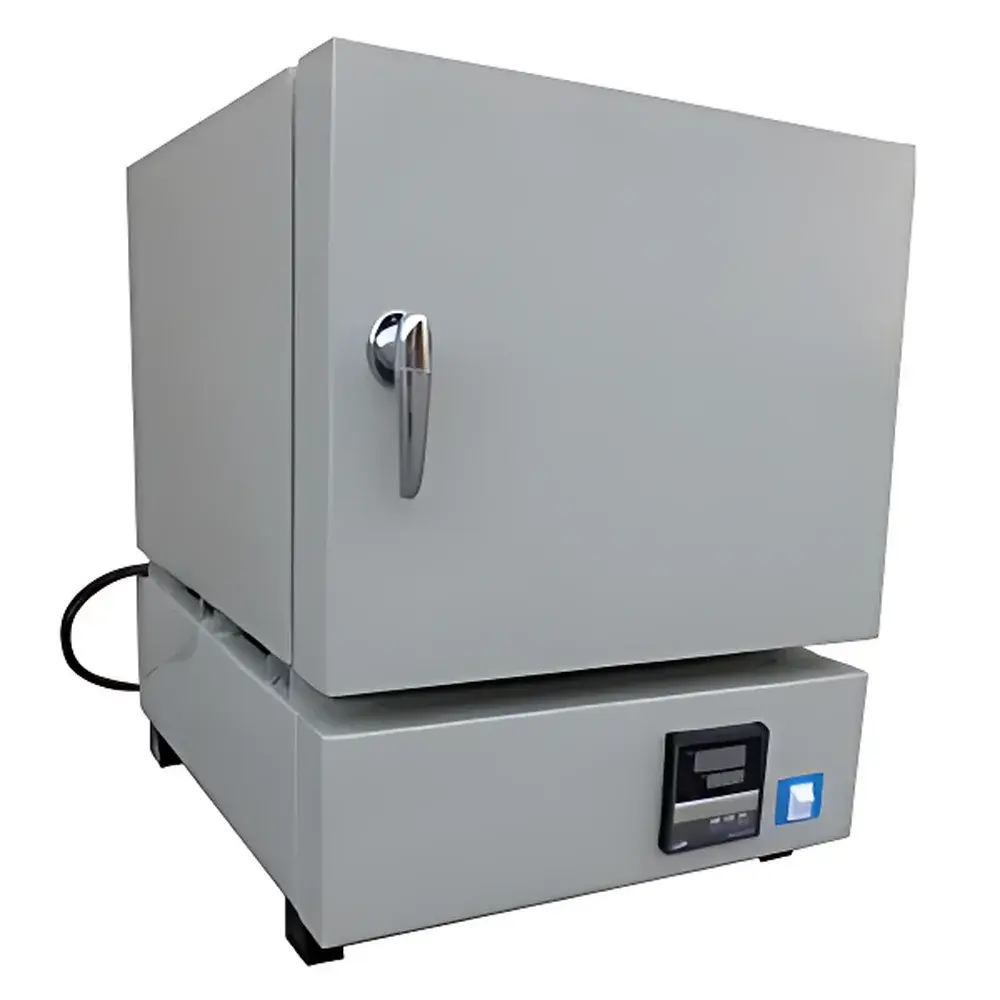
Boxun SX2-TZ Series Ceramic Fiber Intelligent Box-Type Muffle Furnace
| Brand | Boxun |
|---|---|
| Origin | Shanghai, China |
| Manufacturer Type | Direct Manufacturer |
| Product Category | Domestic |
| Model | SX2-TZ Series |
| Instrument Type | Box-Type Muffle Furnace |
| Maximum Temperature | 1000 °C (Standard Models up to 1100 °C) |
| Heating Method | Resistance Wire (High-Temperature Alloy or Silicon Carbide Elements) |
| Internal Chamber Dimensions | 200×120×80 mm to 400×250×160 mm (L×W×H) |
| Max Power | 2.5–8 kW |
| Ramp Time to Max Temp | ≤60 min |
| Insulation Material | High-Purity Ceramic Fiber (Al₂O₃-SiO₂ Composite) |
| Control System | Digital PID Controller with Programmable Ramp/Soak Profiles (Optional Fuji Electric 8-Stage Program Controller) |
| Safety Features | Over-Temperature Protection, Door-Switch Interlock, Ground Fault Detection, Thermal Cut-Out Switch |
Overview
The Boxun SX2-TZ Series Ceramic Fiber Intelligent Box-Type Muffle Furnace is engineered for precise, repeatable high-temperature thermal processing in research laboratories, quality control environments, and industrial R&D settings. Based on conventional resistive heating architecture, the furnace employs embedded resistance wire elements—typically Kanthal A1 or SiC-based heating rods—mounted in a dual-side衬板 (side-panel) configuration to ensure uniform radial heat distribution across the chamber. Its core innovation lies in the use of low-density, high-purity ceramic fiber insulation (≥95% Al₂O₃ content), which reduces thermal mass and enables rapid, energy-efficient heating cycles while maintaining exceptional thermal stability at steady state. Designed to meet fundamental requirements of ASTM E1112 (Standard Specification for Laboratory Muffle Furnaces), ISO 7888 (Water Quality – Determination of Residue After Evaporation), and USP (Heavy Metals Test), the SX2-TZ series supports standardized ashing, calcination, volatilization, and pre-treatment protocols across regulated analytical workflows.
Key Features
- Modular side-panel heating assembly: Facilitates quick, tool-free replacement of heating elements without disassembling the furnace shell or compromising insulation integrity.
- Ceramic fiber chamber lining (density: 128–160 kg/m³): Provides thermal conductivity <0.08 W/(m·K) at 800 °C, enabling ≤60-minute ramp to 1000 °C and surface temperatures <50 °C at ambient conditions—significantly lower than refractory brick alternatives.
- Digital PID temperature controller with ±1 °C setpoint repeatability (typical): Supports manual setpoint entry, real-time deviation display, and optional Fuji Electric PXR/PXG-series 8-segment programmable ramp-soak profiles for GLP-compliant thermal cycling.
- Integrated safety architecture: Includes independent over-temperature cutoff (mechanical bimetal switch), door interlock circuitry, earth leakage protection, and redundant thermocouple monitoring (Type K, Class 1 tolerance).
- Robust steel enclosure with reinforced corner welds and powder-coated finish: Rated IP20 for indoor laboratory use; designed for long-term operation under continuous duty cycles (IEC 60068-2-2 compliance).
Sample Compatibility & Compliance
The SX2-TZ series accommodates crucibles (alumina, quartz, platinum), petri dishes, evaporation boats, and standard ashing trays up to 100 mL volume. It is routinely deployed in ASTM D3174 (ash content in coal), ASTM D7582 (proximate analysis of coal and coke), EPA Method 2540E (total solids and fixed/ volatile solids), and ISO 1171 (determination of ash in solid mineral fuels). All models are CE-marked per EN 61000-6-3 (EMC) and EN 61000-6-4, and comply with IEC 61010-1 for electrical safety in laboratory equipment. When configured with audit-trail-capable controllers (e.g., Fuji PXR+ with SD logging), the system supports 21 CFR Part 11–aligned data integrity practices for pharmaceutical and clinical labs operating under GMP/GLP frameworks.
Software & Data Management
While the base unit operates via standalone digital controller, optional Fuji Electric PXR/PXG modules support RS-485 Modbus RTU communication for integration into LabVantage, STARLIMS, or custom SCADA systems. Logged parameters include actual vs. setpoint temperature, program segment ID, dwell time, ramp rate, and fault event timestamps. All firmware versions maintain traceable revision history and support password-protected parameter locking—critical for FDA-regulated environments requiring change control documentation. No proprietary cloud platform or vendor-hosted software is required; raw CSV export and local SD card storage satisfy internal validation requirements.
Applications
- Coal & petroleum analysis: Moisture, ash, volatile matter, and fixed carbon determination per ASTM D3172/D3173.
- Environmental testing: Total suspended solids (TSS), total dissolved solids (TDS), and residue-on-ignition (ROI) in wastewater and soil extracts.
- Pharmaceutical QC: Loss on drying (LOD), residual solvents, and heavy metals pre-digestion (USP , ).
- Materials science: Sintering aids evaluation, catalyst precursor calcination, and ceramic green-body densification studies.
- Food & agriculture: Crude fiber analysis (AOAC 967.05), ash content in feedstuffs (AOAC 942.05), and mineral assay sample preparation.
FAQ
What is the maximum recommended continuous operating temperature?
Rated for continuous operation at 1000 °C; select models (SX2-4-10TZ and above) are validated for intermittent use up to 1100 °C.
Can the furnace be used under inert or reducing atmospheres?
No—standard configuration is air-atmosphere only. Optional quartz tube inserts or flanged gas ports (N₂ purge compatible) are available as factory-installed accessories.
Is calibration certificate included with shipment?
A factory-issued calibration report (traceable to NIM, China) is provided; full ISO/IEC 17025-accredited calibration requires third-party service.
How often should the ceramic fiber insulation be inspected?
Visual inspection recommended every 200 operational hours; replacement advised after 1,500–2,000 h at ≥900 °C or upon visible cracking/compression.
Does the controller support Ethernet or USB connectivity?
Base controller: RS-232 only. Fuji PXR/PXG option adds RS-485; Ethernet or USB-to-serial adapters may be added externally per site IT policy.



