
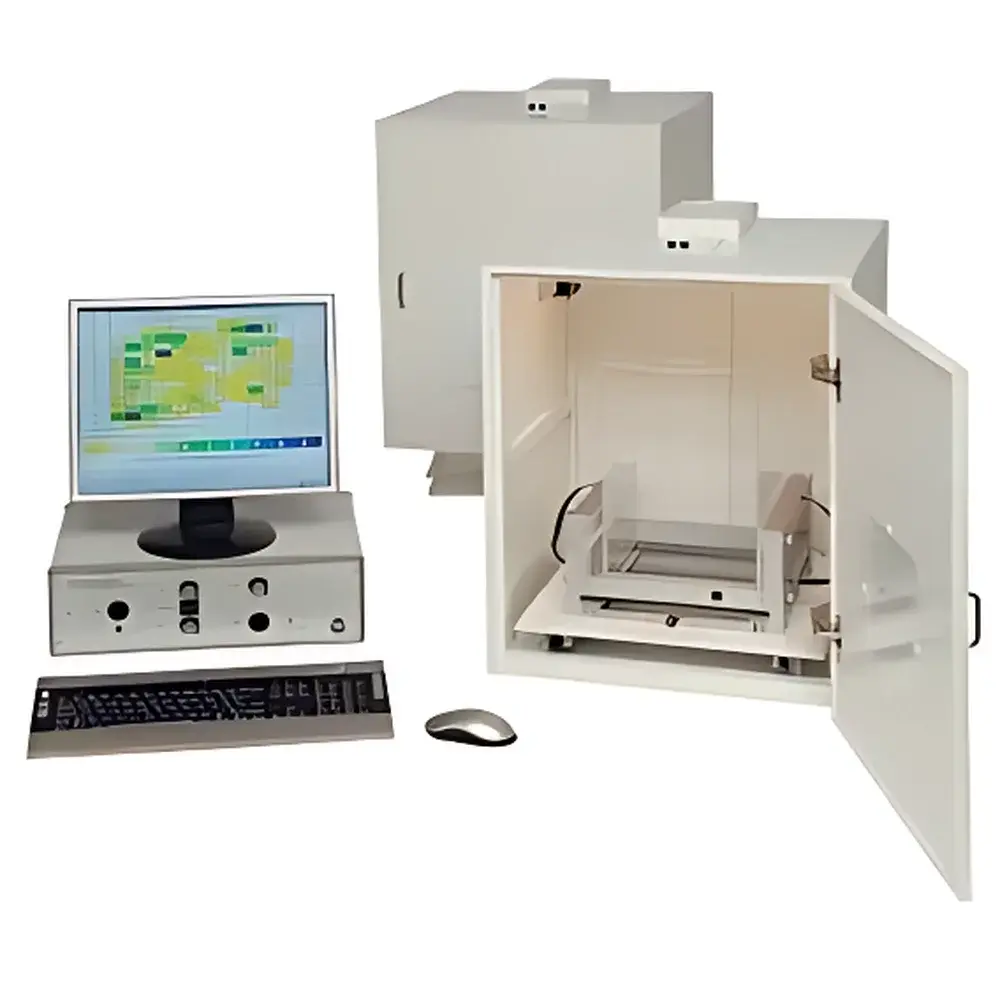
TSE Systems Fear Conditioning System Advanced
| Brand | TSE Systems |
|---|---|
| Origin | Germany |
| Manufacturer Type | Authorized Distributor |
| Product Origin | Imported |
| Model | Fear Conditioning System Advanced |
| Pricing | Available Upon Request |
Overview
The TSE Systems Fear Conditioning System Advanced is a fully integrated, computer-controlled platform engineered for high-fidelity behavioral phenotyping in rodent models of associative learning and memory. Based on classical Pavlovian fear conditioning paradigms, the system enables precise temporal coupling of neutral conditioned stimuli (CS)—including auditory tones, visual cues, or tactile context changes—with an aversive unconditioned stimulus (US), typically a calibrated foot shock. It supports both cue-dependent (discrete signal) and context-dependent (environmental ensemble) conditioning protocols, as well as extinction and recall testing across multiple sessions. The system operates on validated ethological principles: freezing behavior—defined as complete immobility except for respiration—is quantified as the primary readout of learned fear, with secondary metrics including locomotor activity, rearing events, velocity profiles, and spatial exploration distribution. Its modular architecture allows seamless transition between fear conditioning, light-dark preference, and place preference assays, facilitating cross-paradigm validation within longitudinal studies.
Key Features
- High-resolution 3D photobeam array with 100 Hz sampling frequency for sub-second detection of subtle movement cessation and micro-mobility patterns.
- Programmable stimulus delivery: independent control over tone frequency (1–20 kHz), duration, rise/fall time, white noise amplitude (20–120 dB SPL), and LED intensity (0–100% PWM).
- Context modulation suite: interchangeable floor plates, wall inserts, odor dispensers, and ambient lighting modules to generate distinct “novel context” environments with controlled multisensory differentiation.
- Integrated ultrasonic vocalization (USV) acquisition module (15–100 kHz range) for parallel assessment of panic-related 22-kHz calls in rats, synchronized with behavioral event timestamps.
- Modular chamber design: standardized 28 × 28 × 30 cm acrylic enclosures compatible with IVC caging systems; optional integration with automated door mechanisms and shock grid calibration tools.
- Real-time behavioral scoring engine with adaptive thresholding algorithms to minimize false positives during low-activity states (e.g., grooming, resting).
Sample Compatibility & Compliance
The system is validated for use with C57BL/6, BALB/c, CD-1, and Sprague-Dawley strains across age ranges from postnatal day 60 to 18 months. All hardware components comply with EU CE marking requirements for laboratory equipment (2014/30/EU EMC Directive and 2014/35/EU Low Voltage Directive). Experimental protocols align with NIH Guide for the Care and Use of Laboratory Animals and AAALAC International standards. Data acquisition and storage support ALARA-compliant documentation practices and are compatible with institutional GLP/GCP audit frameworks when paired with TSE’s optional 21 CFR Part 11–compliant software add-on (requires separate validation package).
Software & Data Management
The proprietary TSE BioControl Software v5.x provides a graphical experiment builder for defining multi-phase conditioning protocols—including habituation, acquisition, retention, extinction, and reinstatement—with up to eight user-defined stages per session. All stimulus timing, behavioral tracking, and USV recording are synchronized via hardware-triggered TTL pulses. Raw data (X/Y/Z beam-break timestamps, analog shock voltage logs, microphone waveforms) are stored in HDF5 format with embedded metadata (animal ID, protocol version, operator, timestamp, environmental sensor readings). Export options include CSV, MATLAB .mat, and JSON for downstream analysis in R, Python (SciPy/Pandas), or commercial platforms such as EthoVision XT or ANY-maze. Audit trails record all parameter modifications, user logins, and data export events.
Applications
- Neuropharmacology: evaluation of NMDA receptor antagonists, benzodiazepines, and novel anxiolytics on acquisition, consolidation, and extinction kinetics.
- Genetic model characterization: phenotype screening in transgenic, knockout, and CRISPR-edited lines related to BDNF, CREB, amygdala-specific GABAergic circuits, or hippocampal CA1 plasticity.
- Neuropsychiatric disease modeling: longitudinal assessment of fear memory deficits in models of PTSD, depression, and Alzheimer’s disease (e.g., APP/PS1 mice at 6–12 months).
- Circuit neuroscience: integration with optogenetic/electrophysiological rigs via TTL synchronization ports for closed-loop stimulation during specific behavioral epochs (e.g., freezing onset).
- Developmental neurobiology: ontogeny of contextual discrimination learning across adolescent and adult timepoints.
FAQ
Is the shock grid calibrated per session?
Yes—each chamber includes a built-in digital voltmeter and adjustable current limiter; calibration certificates traceable to national standards are provided annually.
Can multiple chambers be controlled simultaneously from one PC?
Up to eight independent chambers can be operated in parallel using a single host PC with dual PCIe frame grabbers and dedicated USB hubs.
Does the system support automated shock titration based on real-time freezing levels?
Not natively—but custom scripting via Python API (included with software license) enables conditional stimulus delivery logic based on live behavioral thresholds.
What is the minimum detectable movement duration for freezing classification?
The system resolves immobility episodes ≥200 ms with >99.2% sensitivity and <1.8% false-positive rate under standard lighting and acoustic conditions.
Are replacement parts and service contracts available globally?
TSE Systems maintains regional service centers in the US, UK, Germany, Japan, and China; OEM spare parts carry 24-month warranty and are shipped within 72 hours of order confirmation.






