
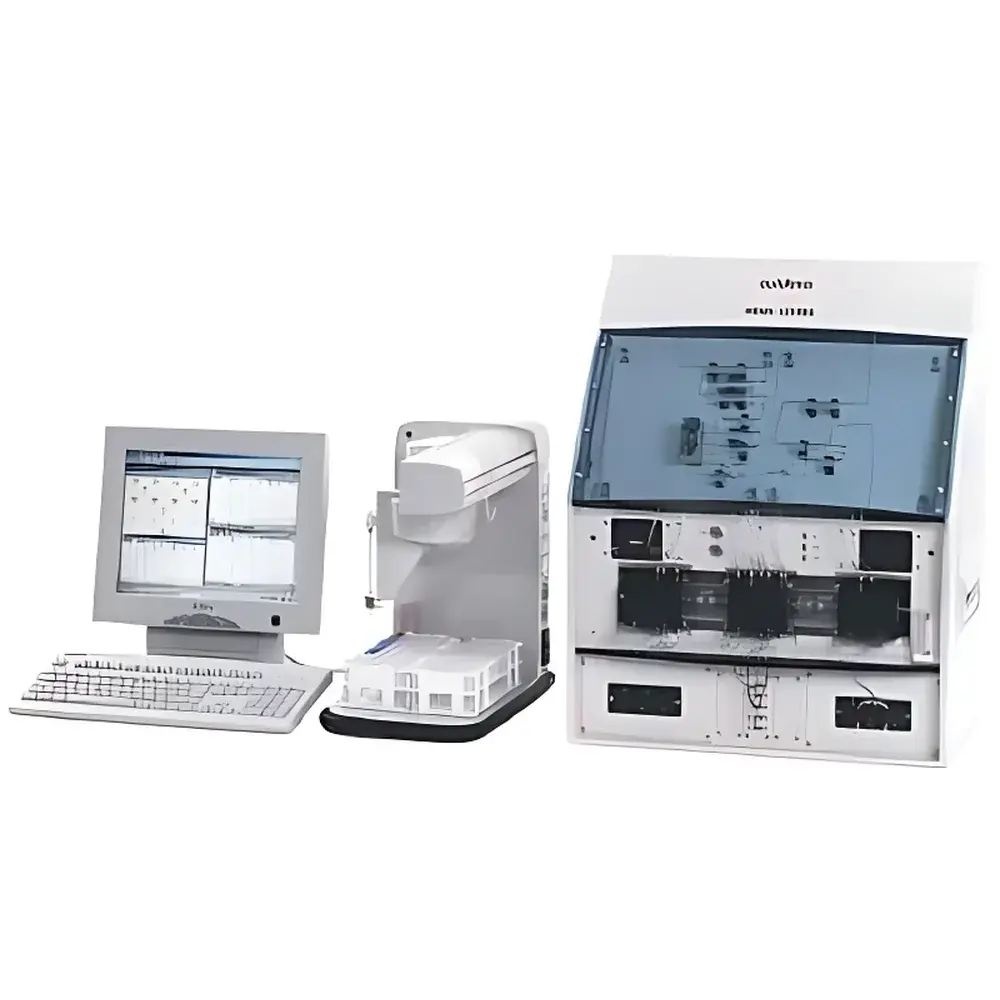
SEAL QuAAtro Advanced Continuous Flow Analyzer
| Brand | SEAL |
|---|---|
| Origin | Germany |
| Product Type | Continuous Flow Analyzer (CFA) |
| Wavelength Range | 340–900 nm |
| Sample Capacity | 120 / 180 / 270 positions |
| Reagent Positions | Unlimited |
| Flow Cell Path Length | 10 mm, 50 mm |
| Light Source | High-Pressure Krypton Lamp or LED |
Overview
The SEAL QuAAtro Advanced Continuous Flow Analyzer is a vertically integrated, high-precision wet-chemistry platform engineered for fully automated, standardized colorimetric and ion-selective analyses in environmental, agricultural, food, and industrial laboratories. It operates on the air-segmented continuous flow analysis (CFA) principle—where discrete sample segments are separated by precisely injected air bubbles within a continuously flowing carrier stream. This segmentation minimizes cross-contamination, ensures reproducible reaction kinetics, and enables strict adherence to standardized methods requiring defined mixing times, heating durations, dialysis steps, or ion-exchange pre-treatment. Unlike discrete analyzers, the QuAAtro maintains constant fluidic conditions across hundreds of samples per run, delivering high inter- and intra-run precision essential for regulatory compliance and long-term method validation.
Key Features
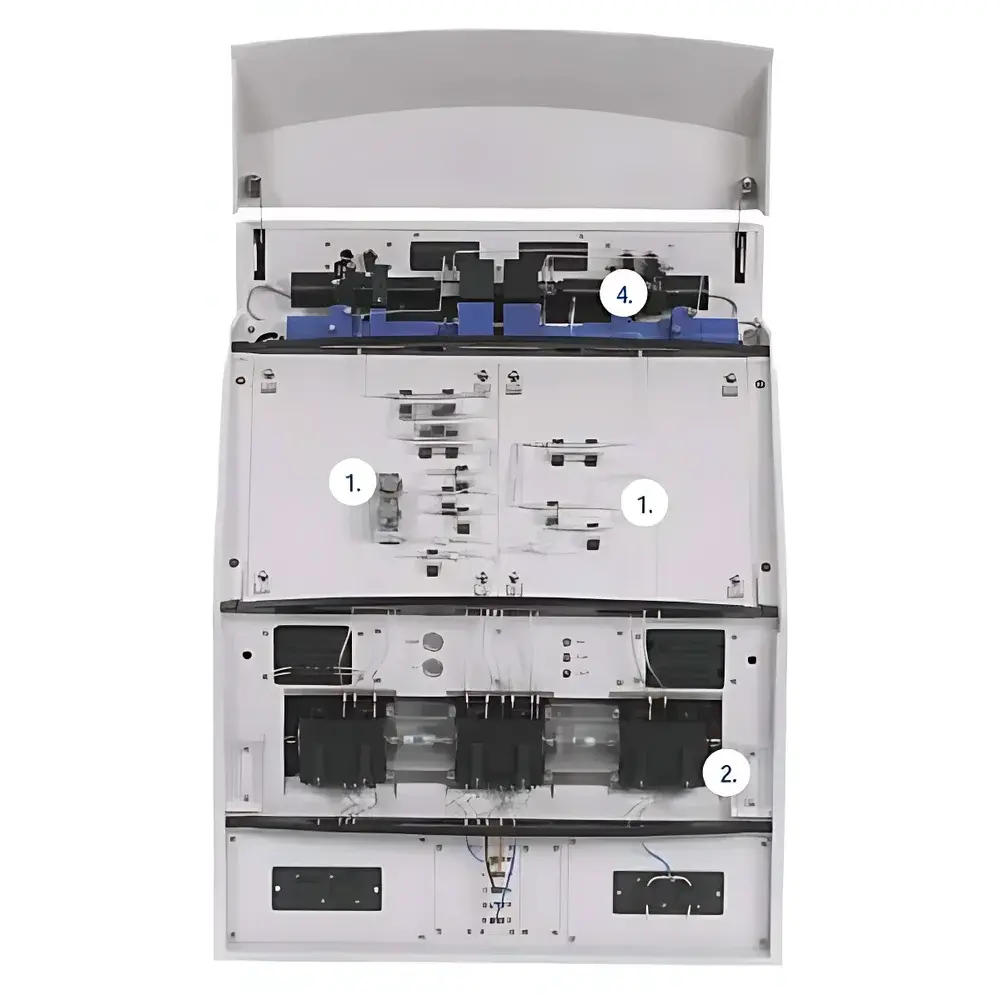
- Modular architecture supporting up to two independently configurable analysis discs—each accommodating up to three distinct analytical methods simultaneously.
- High-capacity random-access autosamplers: XY-2 (180-position), XY-2 Dual-Needle (2 × 40 positions), and XY-3 (270-position), all compatible with standard microtiter plates, test tubes, and custom vial formats.
- Integrated syringe-based dilutor (optional for XY-2/XY-3) enabling real-time, software-triggered auto-dilution of out-of-range samples without manual intervention.
- 15 independently controlled, low-volume, dual-channel reagent valves—allowing precise metering of multiple reagents per method, including unstable or light-sensitive reagents stored under inert gas.
- High-stability peristaltic pump module with calibrated flow control across sample, reagent, and air lines—ensuring consistent dispersion, mixing, and reaction timing per ASTM D3370 and ISO 15681 standards.
- Multi-detector flexibility: Up to four optical modules (absorbance at 340–900 nm) can be installed; alternative detection options include flame photometry (with analog signal interface), potentiometric electrodes, and UV photometry—enabling hybrid method development.
Sample Compatibility & Compliance
The QuAAtro accommodates diverse matrices without matrix-specific hardware modification: aqueous samples (drinking water, wastewater, seawater, boiler feedwater), soil and plant extracts (CaCl₂, Mehlich-3, HNO₃ digestates), animal feed homogenates, dairy products, wine musts, tobacco smoke condensates, and fertilizer solutions. Over 250 validated chemistries are available—including EPA Methods 353.2, 365.4, and 4500-NH₃ F; ISO 15681-1/-2 (phosphate, nitrate); ISO 6776 (ammonia); and AOAC 981.10 (crude protein). All methods comply with GLP and GMP data integrity requirements when operated with AACE software configured for 21 CFR Part 11 audit trails, electronic signatures, and secure user role management.
Software & Data Management
AACE (Automated Analytical Control Environment) is SEAL’s proprietary Windows-based control and data acquisition software. It provides full instrument orchestration—from method loading and sequence definition to real-time monitoring of pressure, flow rate, temperature, and detector baseline stability. Raw absorbance/time traces are archived with metadata (sample ID, reagent lot, calibration curve version, operator login). Quantitative results are calculated using multi-point calibration curves with optional weighting (1/x, 1/x²), outlier rejection (Dixon’s Q-test), and QC flagging per ISO/IEC 17025 criteria. Reports export natively to PDF, CSV, and LIMS-compatible XML formats; audit logs record every parameter change, method edit, and result override with timestamp and user ID.
Applications
- Environmental Monitoring: Alkalinity, NH₄⁺, NO₃⁻, NO₂⁻, PO₄³⁻, SiO₂, SO₄²⁻, Cl⁻, F⁻, CN⁻, Cr(VI), total Kjeldahl nitrogen (TKN), total Kjeldahl phosphorus (TKP), Fe, Mn, Cu, hardness.
- Agricultural & Soil Science: Extractable K⁺, Ca²⁺, Mg²⁺, Na⁺, B, NO₃⁻, NH₄⁺, PO₄³⁻ from Mehlich-3, ammonium acetate, or CaCl₂ extracts.
- Food & Beverage: Free/total SO₂ in wine; volatile acidity, lactic acid, malic acid, citric acid, glucose, fructose, reducing sugars, nicotine, urea, cyanide (in smoke), lactose, nitrate in milk.
- Industrial QA/QC: Phosphate in boiler water; sulfate in fertilizers; ammonia and urea in animal feed; protein (as N × 6.25) via AOAC 981.10.
FAQ
What regulatory standards does the QuAAtro support?
The system supports EPA, ISO, AOAC, and ASTM methods—with built-in templates for EPA 353.2 (nitrate), ISO 15681-1 (phosphate), and AOAC 981.10 (protein). When used with AACE software in 21 CFR Part 11 mode, it meets FDA requirements for electronic records and signatures.
Can multiple methods run concurrently?
Yes—up to six methods (three per analysis disc) can be executed in parallel using shared fluidic resources, provided they do not conflict in reagent or detector allocation.
Is method transfer from older CFA systems possible?
Most legacy CFA methods (e.g., Technicon AutoAnalyzer II/III) can be adapted via AACE’s method editor, preserving reaction coil lengths, heating zones, and timing parameters—though optimization may be required due to improved segmentation precision.
How is maintenance tracked and documented?
AACE logs all maintenance events—including pump tube replacement, lamp hours, valve actuation counts, and calibration history—with automatic alerts at predefined thresholds and exportable service reports.
What safety features prevent hazardous reagent exposure?
The sealed optical compartment isolates UV/visible detectors; reagent lines are housed in ventilated trays with leak sensors; and the integrated waste management system routes all effluents to dedicated, labeled collection vessels compliant with CLP/GHS labeling requirements.





