ZEISS CALYPSO Coordinate Measuring Machine (CMM) Software
| Brand | ZEISS |
|---|---|
| Origin | Shanghai, China |
| Manufacturer Type | Original Equipment Manufacturer (OEM) |
| Regional Classification | Domestic (China-made) |
| Model | CALYPSO |
| Pricing | Available Upon Request |
Overview
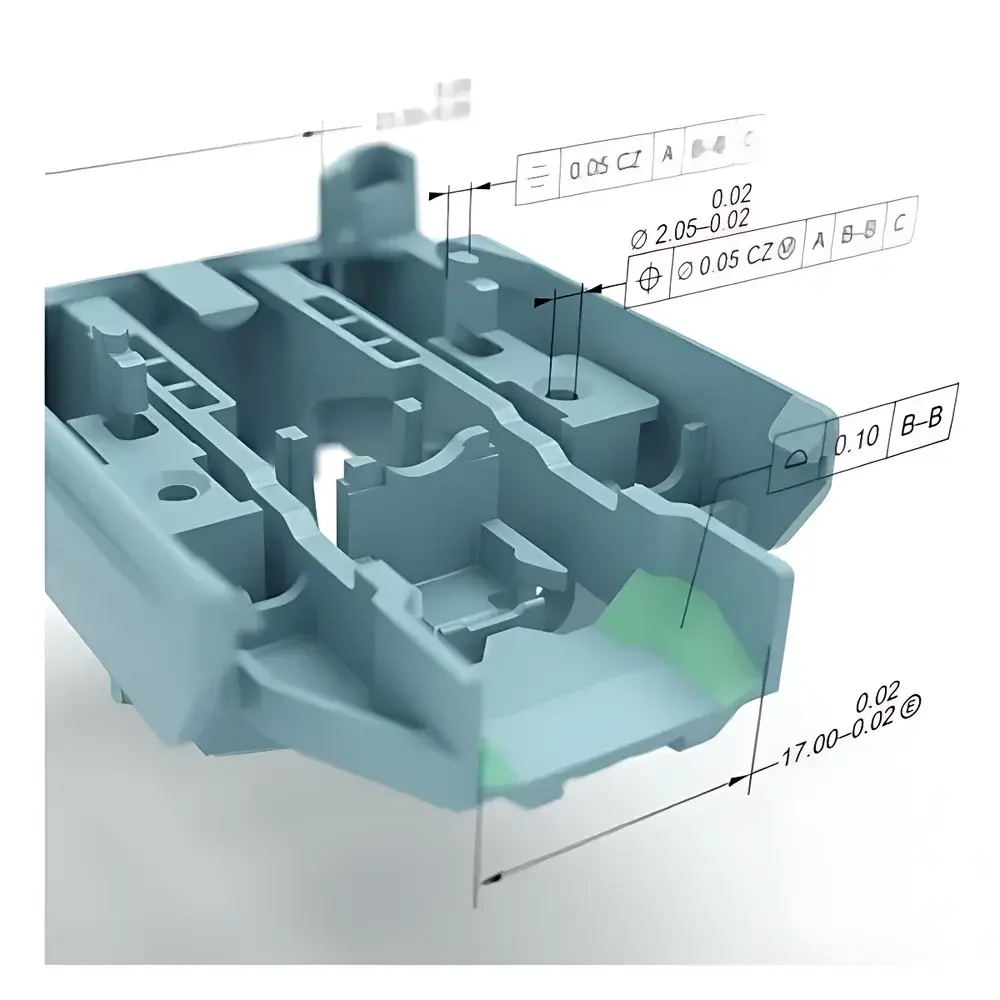
ZEISS CALYPSO is a comprehensive, metrology-grade software platform engineered for coordinate measuring machines (CMMs) used in precision dimensional inspection and quality assurance. Built on ISO/IEC 17025-aligned metrological principles, CALYPSO unifies tactile probing, optical scanning (including structured light and fringe projection), multi-sensor fusion, and surface texture analysis—integrating ZEISS roughness sensors into a single, coherent measurement workflow. Unlike legacy CMM software reliant on manual G-code or proprietary scripting, CALYPSO implements feature-based, model-driven metrology: it interprets geometric dimensioning and tolerancing (GD&T) directly from native CAD models and Product Manufacturing Information (PMI)-embedded design data. This enables deterministic, repeatable measurement planning without requiring prior programming expertise. The software supports both on-machine (in situ) programming—where operators define features directly on the physical part—and off-line CAD-based programming, ensuring flexibility across shop-floor, lab, and engineering environments.
Key Features
- Unified Multi-Sensor Workflow: Seamlessly combines tactile probe routines, optical scanning paths, and surface finish evaluation within one measurement plan—eliminating data silos and manual rework.
- No-Code Measurement Planning: Intuitive graphical interface allows creation of GD&T-compliant inspection sequences via point-and-click interaction; no knowledge of ISO 10360 validation protocols or kinematic path optimization required.
- PMI-Driven Automation: Automatically extracts geometric features, datums, tolerances, and annotation sets from STEP AP242, JT, or native CAD files (e.g., NX, Creo, CATIA) to generate validated, traceable measurement programs.
- Version-Controlled Plan Management: All revisions of measurement plans—including parameter changes, probe assignments, and alignment strategies—are tracked with full audit trails, timestamps, and user attribution—supporting ISO 9001 clause 8.5.2 and AS9100 Rev D change control requirements.
- Embedded Strategy Framework: Preconfigured templates and rule-based engines allow implementation of company-specific measurement policies (e.g., first-article inspection logic, statistical process control sampling rules, or AI-assisted outlier detection thresholds).
- Cross-Platform Deployment: Supports remote workstation licensing; measurement plans can be authored, reviewed, and archived on networked engineering PCs independent of CMM hardware availability.
Sample Compatibility & Compliance
CALYPSO natively supports all ZEISS CMM platforms—including CONTURA, METROTOM, PRISMO, and XENOS—as well as third-party tactile and optical sensors compliant with I++ DME v3.0 and VDI/VDE 2617 Part 10 interfaces. The software conforms to international metrological standards including ISO 10360 (CMM verification), ISO 1101 (GD&T interpretation), ISO 14253-1 (decision rules for conformity assessment), and ASTM E1316 (terminology for non-destructive testing). Its data structure and reporting engine are designed to meet FDA 21 CFR Part 11 requirements when deployed with ZEISS PiWeb Server and electronic signature modules—ensuring integrity, confidentiality, and accountability in regulated manufacturing (e.g., medical devices, aerospace components).
Software & Data Management
Data management is centralized through ZEISS PiWeb integration: raw point clouds, GD&T result tables, deviation heatmaps, and statistical summaries are stored in a relational database with role-based access control. CALYPSO’s built-in reporting module supports customizable XML-based report templates aligned with PPAP Level 3 deliverables, APQP gate reviews, and internal quality dashboards. All measurement results include full traceability to calibration certificates (via ZEISS CALYPSO Calibration Manager), environmental logs (temperature, humidity), and machine kinematic status (probe qualification history, axis error maps). Audit trails comply with GLP/GMP documentation standards, capturing every user action—including plan edits, result overrides, and tolerance modifications—with immutable timestamps.
Applications
CALYPSO serves critical roles across high-precision manufacturing sectors: automotive powertrain component validation (cylinder heads, turbochargers), aerospace structural assemblies (wing ribs, landing gear brackets), medical implant dimensional release (hip stems, dental abutments), and semiconductor packaging metrology (leadframe coplanarity, mold cavity fidelity). Its curve-related feature analysis option enables evaluation of freeform surfaces per ISO 1660 (geometrical product specifications), while the offline programming module accelerates new-product introduction (NPI) by decoupling measurement development from production line downtime. In additive manufacturing QA, CALYPSO’s lattice structure analysis and porosity quantification tools support ASTM F3122 compliance verification.
FAQ
Can CALYPSO import and interpret PMI data from non-ZEISS CAD systems?
Yes—CALYPSO supports PMI extraction from STEP AP242, JT, and native formats from Siemens NX, PTC Creo, Dassault Systèmes CATIA, and Autodesk Inventor, provided the source file includes ASME Y14.41 or ISO 16792-compliant annotations.
Does CALYPSO require a dedicated server for multi-user deployment?
No—client-server architecture is optional. Standalone licenses operate on Windows 10/11 x64 with ≥32 GB RAM and NVIDIA Quadro RTX-series GPU for optical scan processing; network deployment uses Microsoft SQL Server for centralized PiWeb database hosting.
Is CALYPSO validated for use in FDA-regulated environments?
Yes—when configured with ZEISS PiWeb Server, electronic signatures, and audit trail logging, CALYPSO meets 21 CFR Part 11 Subpart B requirements for electronic records and signatures in pharmaceutical and medical device manufacturing.
How does CALYPSO handle measurement uncertainty propagation?
Through integrated uncertainty estimation per ISO/IEC Guide 98-3 (GUM), CALYPSO calculates expanded uncertainties (k=2) for each reported characteristic by combining CMM volumetric error maps, probe bending compensation, thermal drift models, and calibration certificate uncertainties.
Are software options like Curve Analysis or Offline Programming delivered as modular licenses?
Yes—all optional modules—including Freeform Surface Analysis, GD&T Advanced, and NC Program Simulation—are licensed separately and activated via ZEISS License Manager, enabling scalable configuration based on application scope and audit requirements.