
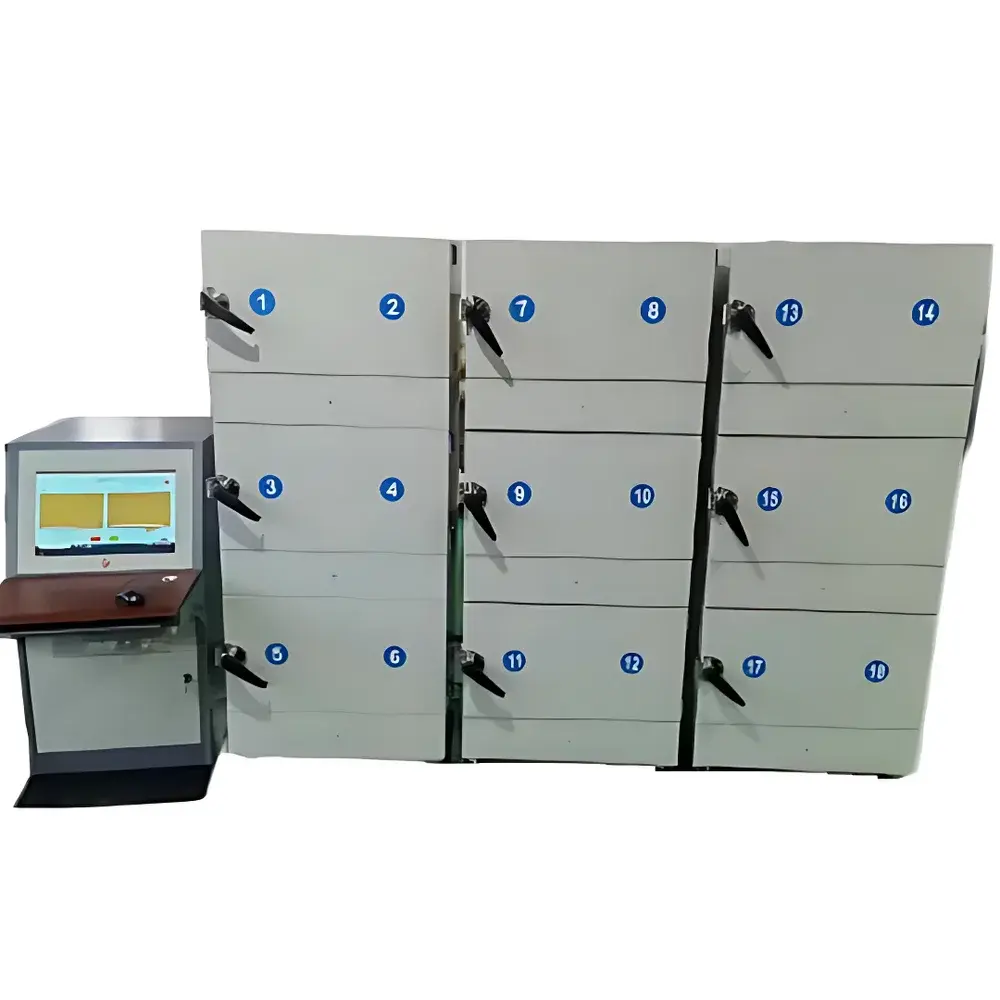
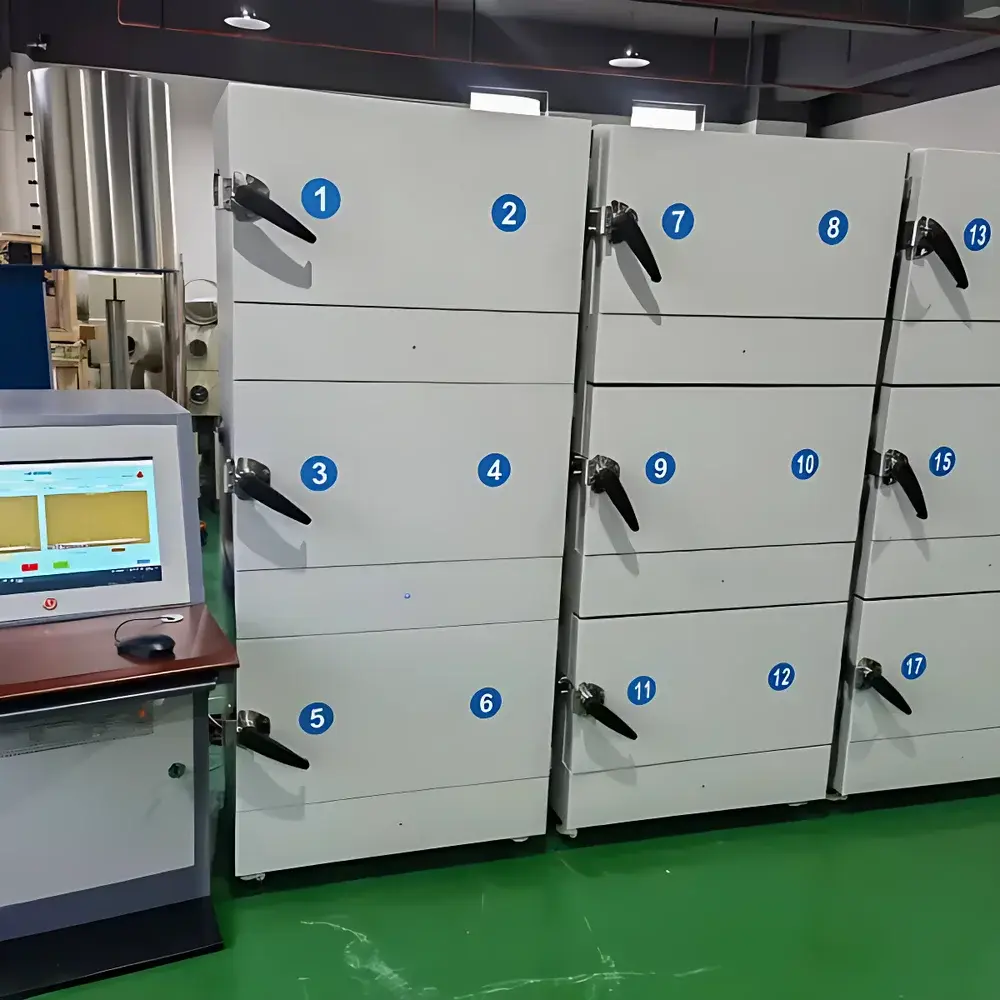
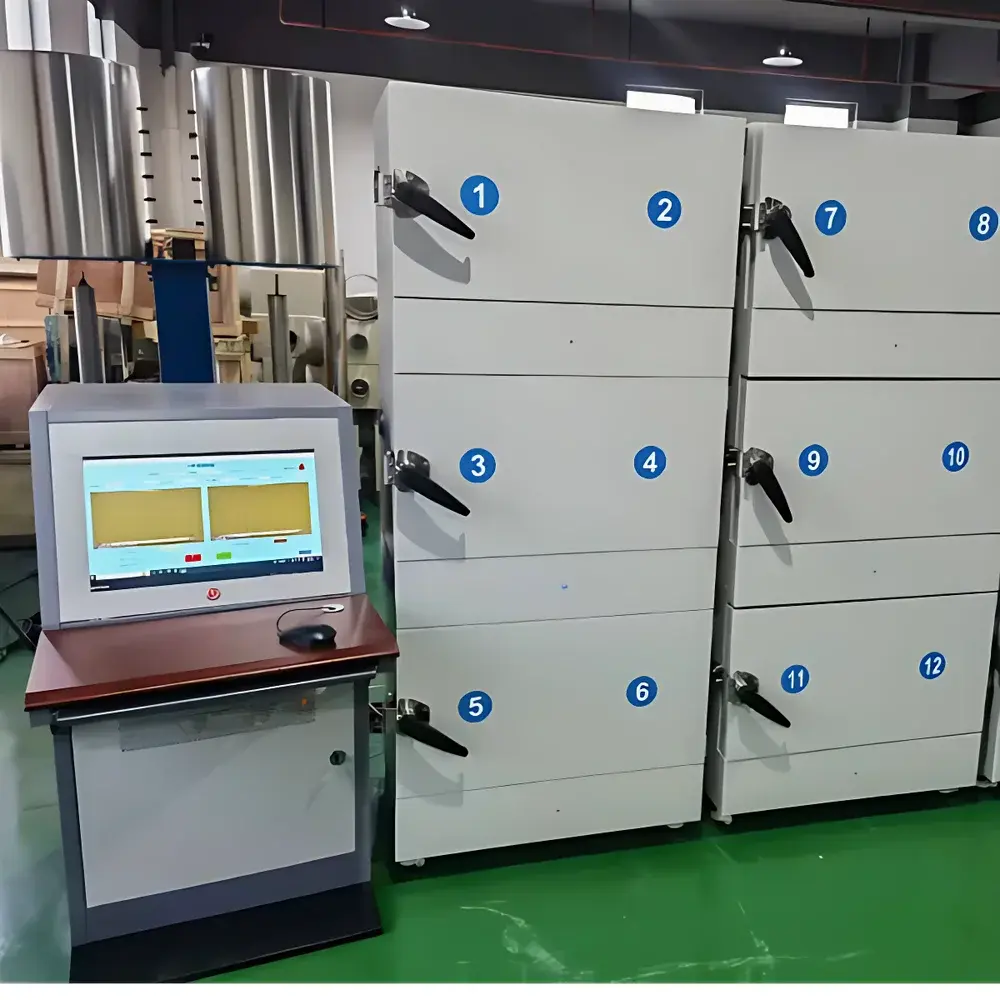
Langbo LBSF-3A Multi-Station Coal Moisture Analyzer
| Brand | Langbo Instruments |
|---|---|
| Origin | Jiangsu, China |
| Manufacturer Type | Authorized Distributor |
| Country of Origin | China |
| Model | LBSF-3A |
| Price | USD 40,200 (FOB Jiangsu) |
| Power Supply | 220 V AC, 50 Hz |
| Max. Power Consumption | 9 kW (scalable +3 kW per additional 6 stations) |
| Operating Temperature Range | 0–300 °C |
| Number of Stations | Configurable — 6 / 12 / 18 / 24 (standard configuration: 18 stations) |
| Sample Capacity per Station | Coal or coke: 500 g ±10 g |
| Iron ore | 1000 g ±10 g |
| Chamber Dimensions (per dual-station unit) | 600 × 400 × 250 mm |
| Integrated Balance | Dual independent load cells per station |
| Balance Capacity | 3 kg |
| Balance Resolution | 0.1 g |
| Weighing Mode | Real-time in-situ gravimetric monitoring during drying |
| Sample Tray Material | Stainless steel (individual, non-interfering trays) |
| Compliance | GB/T 211–2017, GB/T 2001–2011, GB/T 483–2007, GB/T 6730.2–2018 |
| Data Output | CSV, PDF, XML |
| Software Features | Audit trail, user-level access control, automated report generation, curve visualization (mass vs. time), GLP-compliant data archiving |
Overview
The Langbo LBSF-3A Multi-Station Coal Moisture Analyzer is a fully automated, gravimetric moisture determination system engineered for high-throughput compliance testing in coal preparation plants, coke ovens, iron ore processing facilities, and third-party quality laboratories. It implements the standardized loss-on-drying (LOD) principle per national standards—primarily GB/T 211–2017 (total moisture in coal), GB/T 2001–2011 (industrial analysis of coke), GB/T 483–2007 (coal testing methodology), and GB/T 6730.2–2018 (moisture in iron ores). Unlike single-batch ovens or manual balance-based procedures, the LBSF-3A integrates precision thermogravimetry with parallelized sample processing: up to 24 independently controlled stations operate simultaneously within modular, thermally isolated chambers. Each station houses a dedicated 3 kg/0.1 g resolution load cell, enabling real-time mass tracking throughout the entire drying cycle—including pre-heating, constant-temperature drying, forced-air convection, and final stabilization phases. The system eliminates operator-dependent variability in weighing timing, temperature ramping, endpoint judgment, and data transcription—critical for ISO/IEC 17025-accredited labs requiring documented traceability and measurement uncertainty control.
Key Features
- Modular dual-station chamber architecture: Two sample positions share one insulated drying cavity, facilitating direct parallel-sample comparison under identical thermal conditions while maintaining full independence between adjacent units.
- Independent station control: Each station executes its own heating profile (ramp rate, target temperature, hold duration), airflow activation, and gravimetric sampling schedule—enabling heterogeneous sample batches (e.g., mixed coal ranks + coke + iron ore fines) to be processed concurrently without cross-contamination or thermal coupling.
- Stainless-steel, removable sample trays: Designed for rapid loading/unloading without disturbing ongoing assays; trays are spatially isolated to prevent vapor migration or heat transfer between samples.
- Comprehensive hardware protection suite: Overcurrent, overvoltage, and overload circuit protection; automatic fault detection with on-screen diagnostic codes; door-opening event logging with timestamped interruption alerts to ensure test integrity and regulatory audit readiness.
- Real-time data acquisition: Continuous mass recording at user-defined intervals (default: every 30 s); integrated curve plotting of mass loss versus time; auto-detection of equilibrium endpoints based on configurable stability thresholds (e.g., Δm ≤ 0.05 g over 5 min).
Sample Compatibility & Compliance
The LBSF-3A accommodates heterogeneous solid particulates typical of bulk energy and metallurgical feedstocks: bituminous and anthracite coals, lignite, pulverized coke, sinter fines, and crushed iron ore concentrates. Sample mass ranges are strictly aligned with referenced standards—500 g ±10 g for coal/coke and 1000 g ±10 g for iron ore—to ensure representative subsampling and minimize heterogeneity-induced bias. All operational sequences adhere to mandatory procedural clauses in GB/T 211–2017 (including air-drying preconditioning, nitrogen-purged optional modes, and final cooling protocols). System firmware enforces mandatory parameter locks (e.g., max 160 °C for coal total moisture, 105–110 °C for air-dried basis) to prevent out-of-specification operation. Full electronic records—including raw mass logs, environmental chamber temperatures, fan status, and user authentication stamps—are retained locally and support export for external review per GLP/GMP documentation requirements.
Software & Data Management
The embedded Windows-based control software provides role-based access (administrator, analyst, reviewer) with password-protected configuration changes. Every assay generates a unique digital dossier containing metadata (sample ID, operator, date/time, station number), instrument calibration certificates (balance and PT100 sensor), raw time-series mass values, derivative moisture calculation (Mt, Mad, Mf), statistical summaries (RSD across replicates), and annotated trend graphs. All data are written directly to encrypted local storage with SHA-256 hashing; optional network integration enables secure SFTP upload to LIMS or ERP systems. Audit trails log all user actions—including method edits, result overrides, and report exports—with immutable timestamps and IP addresses. Software complies with ALCOA+ principles (Attributable, Legible, Contemporaneous, Original, Accurate, Complete, Consistent, Enduring, Available) and supports 21 CFR Part 11 readiness via electronic signatures and configurable retention policies.
Applications
- Coal trading and blending: Rapid determination of total moisture (Mt) for contractual settlement and calorific value correction per ASTM D3173 and ISO 589.
- Coke oven battery QC: Monitoring moisture content in metallurgical coke prior to blast furnace charging to avoid thermal shock and permeability loss.
- Iron ore pellet plant QA: Verifying green pellet moisture before induration to optimize binder efficiency and structural integrity.
- Power plant fuel management: Daily batch verification of received coal moisture to calibrate pulverizer settings and boiler combustion models.
- Research laboratories: Method validation studies comparing LOD performance against Karl Fischer titration or microwave drying per ISO 589–2.
FAQ
Does the LBSF-3A comply with international standards such as ISO or ASTM?
Yes—the instrument’s operational logic, temperature control accuracy, weighing resolution, and reporting structure align with the technical requirements of ISO 589 (coal moisture), ASTM D3173 (moisture in coal and coke), and ASTM E1868 (thermogravimetric moisture analysis). While certified to Chinese national standards by default, its measurement traceability path supports ISO/IEC 17025 accreditation when paired with NIST-traceable mass and temperature standards.
Can the system be validated for GxP environments?
Yes—software features including electronic signatures, audit trails, data immutability, and user access controls meet core expectations for GLP and GMP environments. IQ/OQ documentation packages are available upon request, and the system supports periodic performance verification per USP and Ph. Eur. 2.2.43.
What maintenance is required for long-term accuracy?
Annual recalibration of load cells and PT100 sensors is recommended using certified reference standards. Chamber insulation integrity and fan airflow uniformity should be verified semiannually. No consumables are required beyond standard stainless-steel trays and desiccant for internal humidity control modules.
Is remote monitoring or integration with existing lab infrastructure possible?
Yes—the system includes Ethernet connectivity and exposes RESTful API endpoints for integration with LIMS, MES, or SCADA platforms. Optional OPC UA server module enables real-time process data streaming to industrial automation systems.
How is temperature uniformity across all stations verified?
Each dual-chamber unit undergoes factory thermal mapping per ICH Q5C Annex 1 using 9-point sensor arrays. A certificate of thermal uniformity (±1.5 °C at 105 °C, ±2.0 °C at 160 °C) is supplied with each unit, and users may perform requalification using provided mapping templates and validation software tools.





