
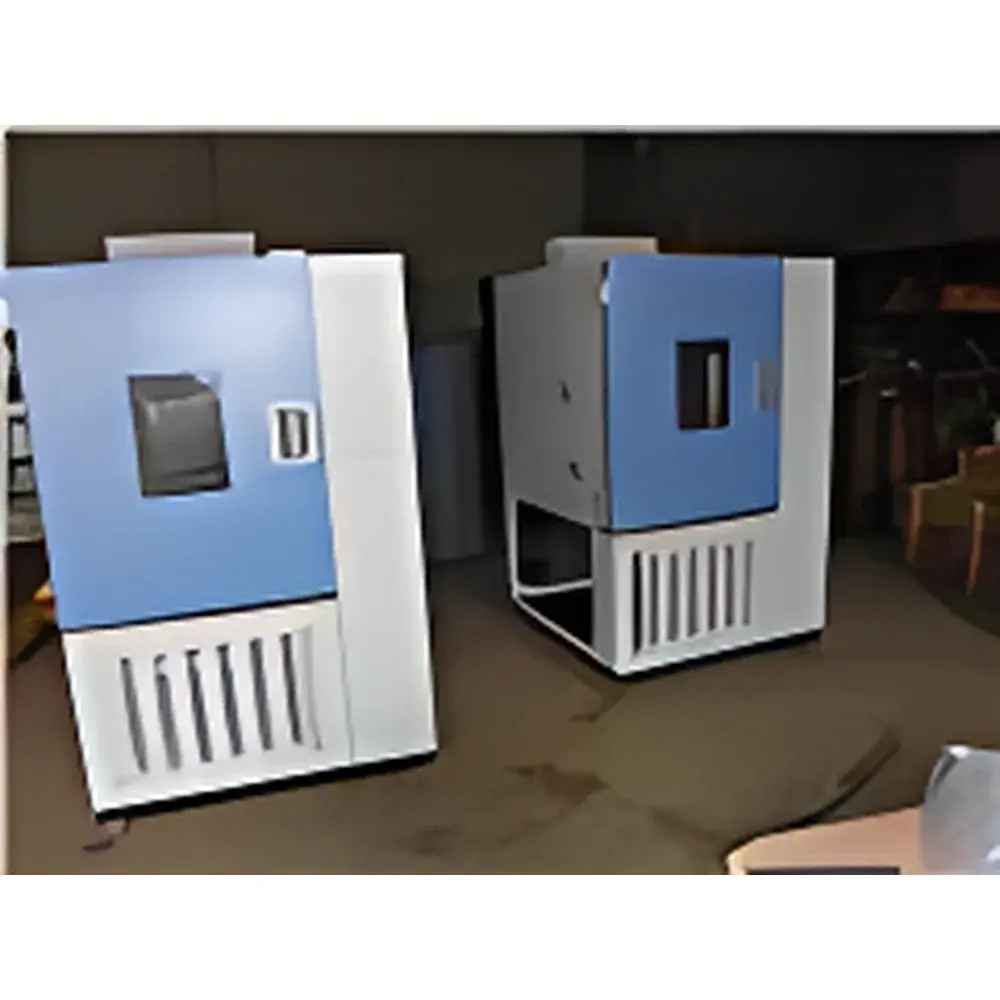
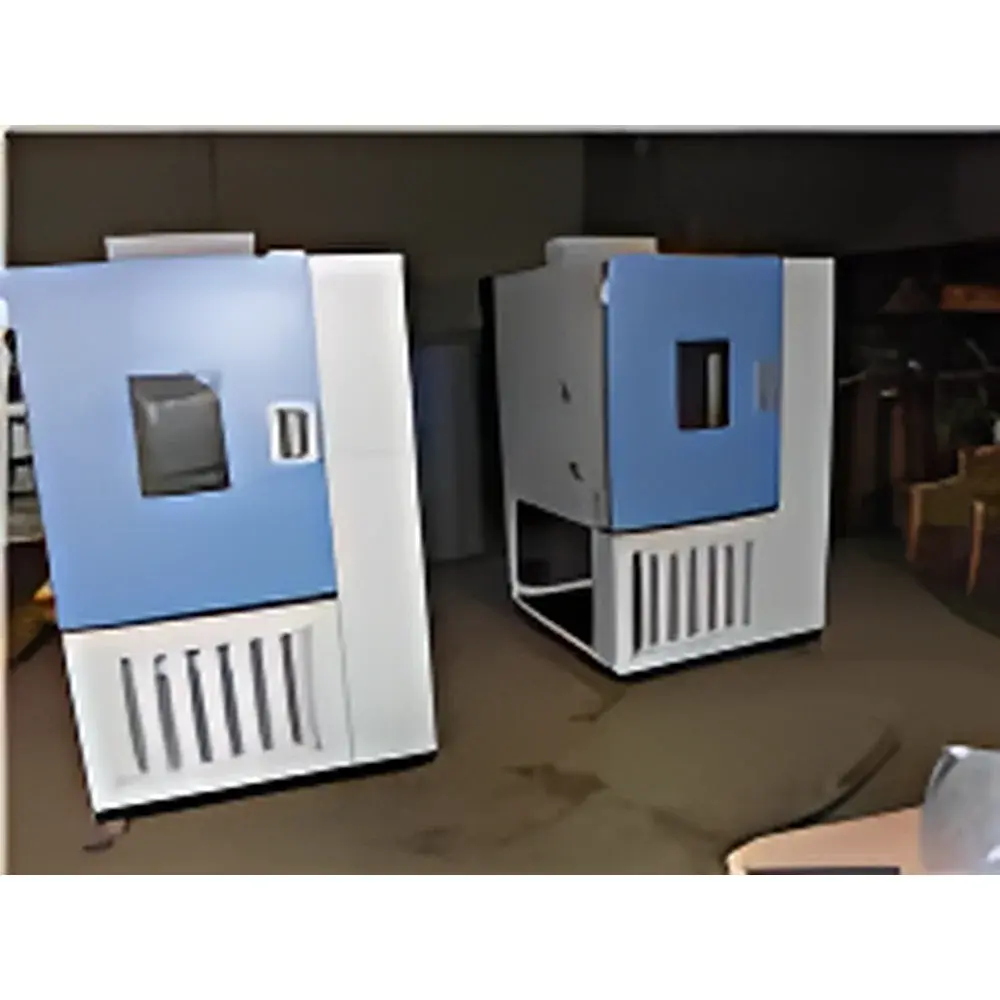
Langbo LBCY-100 Ozone Aging Test Chamber
| Brand | Langbo |
|---|---|
| Model | LBCY-100 |
| Chamber Internal Dimensions (D×W×H) | 450×450×500 mm |
| External Dimensions (D×W×H) | 1050×870×1670 mm |
| Power Consumption | 3 kW |
| Temperature Range | 0–70 °C |
| Humidity Range | 50–95% RH |
| Ozone Concentration Range | 0–200 ppm (standard), optional 0–500 ppm |
| Temperature Uniformity | ±0.5 °C |
| Sample Rack Rotation | 360° continuous, 1 rpm |
| Gas Flow Velocity | 12–16 mm/s |
| Control System | Microprocessor-based LED display controller with PID algorithm |
| Ozone Monitoring | Imported electrochemical ozone analyzer with 4–20 mA analog output and RS232 interface |
| Ozone Generator | Silent corona discharge tube |
| Construction | Exterior — powder-coated cold-rolled steel |
| Door Seal | High-temp/low-temp resistant silicone rubber |
| Safety Protections | Over-temperature, over-current, leakage current, motor overheat, short-circuit protection |
| Supply Voltage | AC 380 V ±10%, 50 Hz ±0.5 Hz, 3-phase 5-wire |
| Compliance | GB/T 7762–2003, GB/T 3642–92 |
| Operating Environment | 5–30 °C, ≤85% RH |
Overview
The Langbo LBCY-100 Ozone Aging Test Chamber is an engineered environmental test system designed to evaluate the resistance of elastomeric and polymeric materials to oxidative degradation under controlled ozone exposure. It operates on the principle of accelerated aging via dynamic or static ozone atmosphere simulation—mimicking real-world atmospheric ozone concentrations (ppm-level) while maintaining precise regulation of temperature, relative humidity, and gas flow dynamics. This chamber complies with internationally referenced test standards including GB/T 7762–2003 (equivalent in scope to ISO 1431-1) for determining ozone cracking resistance of vulcanized rubber, and GB/T 3642–92 (aligned with ASTM D1149) for evaluating surface cracking behavior under static strain conditions. Its architecture integrates a silent corona discharge ozone generator, high-stability microprocessor control, and corrosion-resistant chamber construction to ensure long-term repeatability and measurement integrity across laboratory, QC, and R&D environments.
Key Features
- Stable ozone generation using silent corona discharge technology—minimizing electromagnetic interference and acoustic noise in sensitive lab settings
- 360° continuously rotating sample rack (1 rpm) enabling uniform ozone exposure across all specimen surfaces—critical for assessing directional vulnerability in molded or extruded rubber components
- Microprocessor-based dual-loop PID control system with LED digital interface for independent regulation of temperature, humidity, and ozone concentration
- Imported electrochemical ozone sensor with 4–20 mA analog output and RS232 serial communication—enabling integration into centralized lab data acquisition networks or SCADA systems
- SUS304 mirror-finish stainless steel interior chamber and powder-coated cold-rolled steel exterior—ensuring chemical inertness, cleanability, and structural longevity
- Comprehensive safety suite: over-temperature cutoff, motor thermal overload protection, ground-fault circuit interruption, and short-circuit isolation—all independently monitored and logged
- Configurable operation modes: static (fixed-strain specimens) and dynamic (rotating or flexing samples), supporting both ISO 1431-1 and ASTM D1149 test protocols
Sample Compatibility & Compliance
The LBCY-100 accommodates standard test specimens per GB/T 7762–2003—including dumbbell-shaped tensile strips (Type 1 or 2), ring specimens under constant elongation, and molded parts mounted on custom fixtures. Its internal volume (100 L) and 450 × 450 × 500 mm usable workspace support multiple parallel samples without compromising airflow uniformity. All operational parameters—including ozone concentration (0–200 ppm, extendable to 500 ppm), temperature (0–70 °C), and humidity (50–95% RH)—are traceable to NIST-traceable reference instruments and validated per IQ/OQ protocols. The system supports GLP-compliant documentation workflows when paired with external audit-ready data loggers, and its control firmware permits user-defined test profiles with timestamped parameter logging—facilitating FDA 21 CFR Part 11 compliance when configured with electronic signature modules.
Software & Data Management
While the LBCY-100 operates as a standalone instrument with embedded microcontroller logic, its RS232 port enables bidirectional communication with third-party PC-based software platforms (e.g., LabVIEW, MATLAB, or custom Python-based DAQ suites). Real-time ozone concentration, chamber temperature, and runtime are streamed at configurable intervals (1–60 s). The 4–20 mA analog output allows direct connection to PLCs or industrial HMIs for facility-wide environmental monitoring. All controllers retain onboard event logs—including alarm triggers, setpoint changes, and power cycle history—for post-test forensic analysis. Firmware updates are performed via secure USB interface, with version checksums and rollback capability to maintain regulatory continuity during validation lifecycles.
Applications
- Evaluation of ozone resistance in automotive rubber seals, brake hoses, and suspension bushings per OEM specifications (e.g., GMW15634, Ford CETP 00.00-L-467)
- Quality assurance testing of cable jacketing materials (PVC, EPDM, CR) in power transmission and telecom infrastructure
- Material qualification for aerospace elastomers exposed to stratospheric ozone during high-altitude flight cycles
- Accelerated aging studies in polymer R&D labs investigating antioxidant efficacy and crosslink density effects on crack initiation thresholds
- Conformance verification for medical-grade tubing and gasketing used in sterilization equipment where ozone exposure may occur during cleaning cycles
FAQ
What ozone concentration ranges does the LBCY-100 support, and how is calibration maintained?
The standard configuration delivers 0–200 ppm ozone; an optional upgrade extends range to 0–500 ppm. Calibration is performed using certified ozone transfer standards traceable to national metrology institutes, with annual verification recommended per ISO/IEC 17025 guidelines.
Can the chamber operate under both static and dynamic test conditions?
Yes—the system supports static mode (stationary specimens under fixed strain) and dynamic mode (continuous 360° rotation at 1 rpm). Optional accessories include adjustable strain fixtures and flexing mechanisms compliant with ASTM D1149 Annex A1.
Is the controller compatible with networked laboratory information management systems (LIMS)?
Direct LIMS integration requires middleware translation of RS232 ASCII commands or analog signal digitization. We provide protocol documentation and sample Python scripts for common LIMS APIs upon request.
What maintenance intervals are recommended for the ozone generator and sensor?
The corona discharge tube requires cleaning every 500 operational hours; the electrochemical sensor has a typical service life of 18–24 months under continuous use and must be zero-calibrated weekly using ambient air scrubbed of ozone.
Does the chamber meet CE or UL certification requirements for export to North America or the EU?
The base unit meets IEC 61000-6-2/6-3 EMC immunity/emission standards and carries China Compulsory Certification (CCC). For CE or UL listing, factory-installed safety upgrades—including reinforced grounding, additional interlocks, and third-party witnessed type testing—are available as configurable options.



