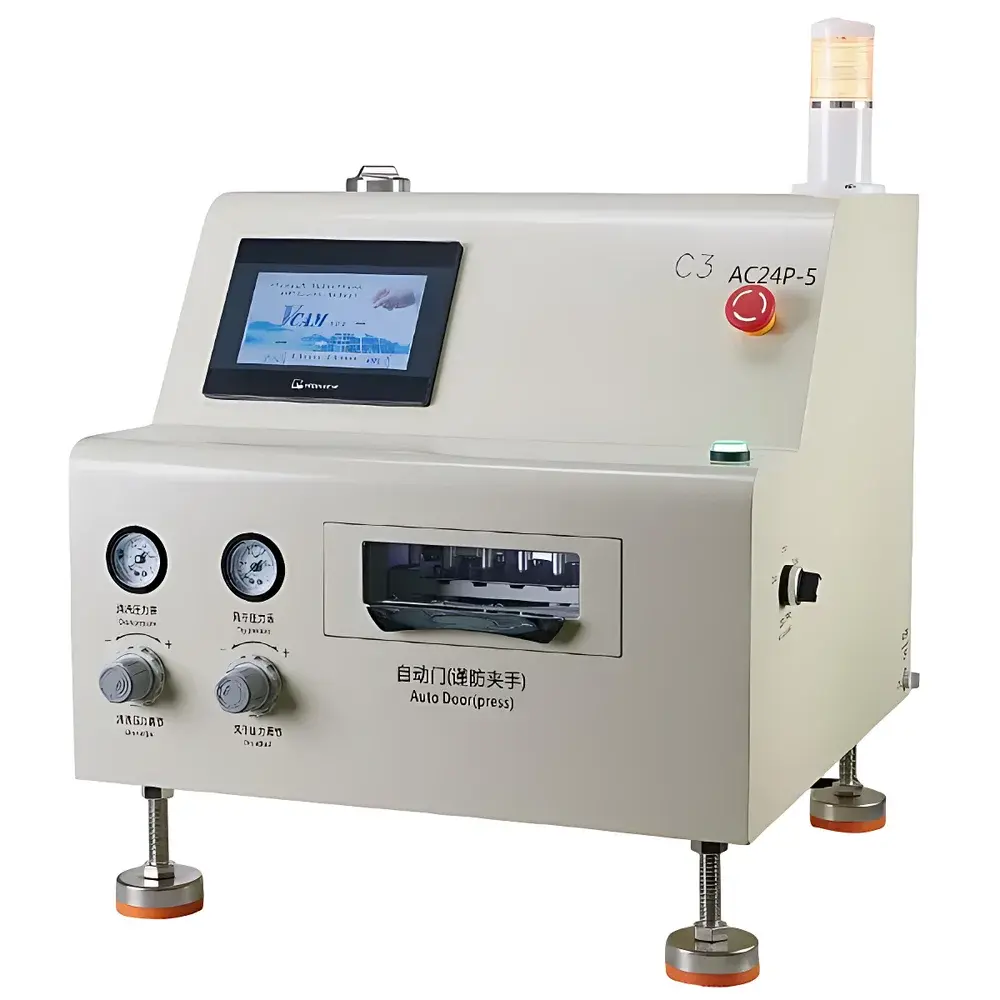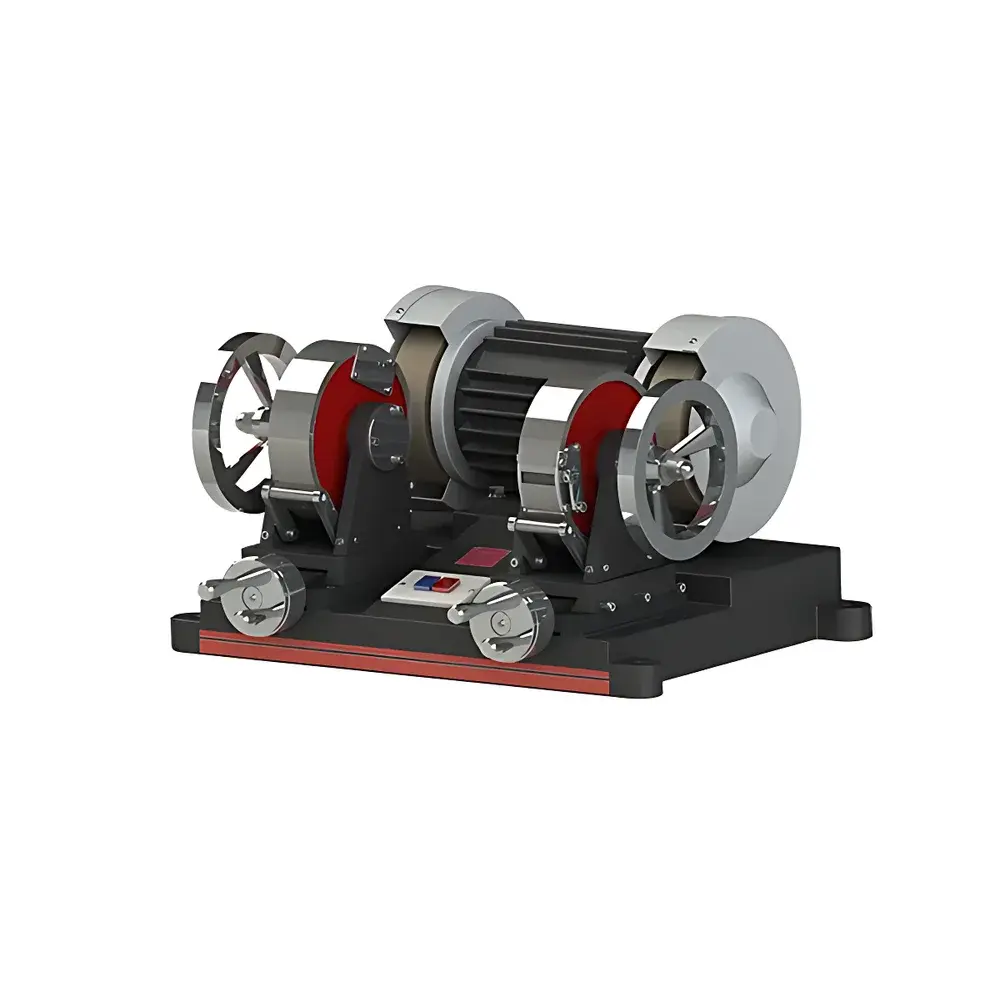
TYTESTER TYMP-II Dual-Head Abrasive Grinding Machine
| Brand | TYTESTER |
|---|---|
| Model | TYMP-II |
| Origin | Jiangsu, China |
| Manufacturer Type | Direct Manufacturer |
| Country of Origin | China |
| Price Range | USD 1,400 – 2,100 |
| Wheel Linear Speed | 12 m/s |
| Coarse Wheel Specification | G260APRI 170×40×32 mm, 32-grit |
| Fine Wheel Specification | G260APRI 170×40×32 mm, 80-grit |
| Worktable Diameter | 160×44 mm |
| Center Height | 214 mm |
| Grinding Stroke | 20 mm |
| Sample Dimensions (L×W×H) | >260 mm × ≤36 mm × ≤8 mm |
| Overall Dimensions | 500×400×314 mm |
| Weight | 80 kg |
Overview
The TYTESTER TYMP-II Dual-Head Abrasive Grinding Machine is a precision sample preparation instrument engineered for standardized thickness reduction of elastomeric and thermoplastic specimens prior to mechanical, physical, or rheological testing. Designed in accordance with the operational principles of controlled surface abrasion using counter-rotating abrasive wheels, the TYMP-II enables reproducible material removal under fixed kinematic conditions—ensuring uniform specimen geometry essential for ASTM D3182, ISO 37, ISO 527, and GB/T 528 compliant tensile, hardness, and tear testing. Its dual-wheel architecture supports sequential coarse and fine grinding stages within a single clamping cycle, minimizing operator-induced variability and eliminating inter-stage handling errors common in single-head systems.
Key Features
- Dual abrasive wheel configuration: One coarse (32-grit) and one fine (80-grit) G260APRI bonded abrasive wheel mounted on independent spindles, enabling integrated roughing and finishing without repositioning the specimen.
- Precision-controlled linear wheel speed of 12 m/s—optimized for consistent material removal rate across rubber compounds (e.g., natural rubber, SBR, EPDM) and rigid plastics (e.g., PVC, ABS, polypropylene) while minimizing thermal degradation and edge chipping.
- Fixed-stroke grinding mechanism with 20 mm vertical travel range, actuated via calibrated micrometer feed; ensures repeatable depth-of-cut and eliminates manual pressure dependency.
- Robust cast-iron base and rigid column structure (overall weight: 80 kg) dampen vibration during operation, maintaining dimensional stability and surface flatness within ±0.03 mm across the full 160 mm worktable diameter.
- Center height of 214 mm accommodates standard specimen holders and aligns with ergonomic workflow integration in QC laboratories performing parallel tests on universal testing machines or hardness testers.
Sample Compatibility & Compliance
The TYMP-II accepts rectangular specimens up to 260 mm in length, 36 mm in width, and 8 mm in initial thickness—covering the dimensional envelope required for dumbbell-shaped tensile bars (Type I–IV per ISO 37), compression set discs (ISO 815), and Shore A durometer test pieces (ASTM D2240). All grinding parameters—including wheel grit distribution, bond type (vitrified), and peripheral velocity—are selected to comply with ISO 2782-1 (rubber—determination of hardness) and GB/T 6031 (rubber—measurement of hardness) pre-test specimen conditioning requirements. The machine’s mechanical design and operational repeatability support GLP-compliant documentation when paired with laboratory SOPs governing specimen preparation traceability.
Software & Data Management
As a fully mechanical, non-digitalized grinding system, the TYMP-II operates without embedded firmware or software interfaces. All process parameters—including stroke count, feed increment, and wheel dressing frequency—are recorded manually in laboratory notebooks or LIMS-integrated log sheets. This analog architecture ensures immunity to electromagnetic interference, eliminates cybersecurity concerns associated with connected instrumentation, and facilitates straightforward FDA 21 CFR Part 11 compliance through handwritten signature validation of grinding logs. Optional calibration certificates (traceable to NIM China) and wheel wear tracking templates are available upon request to support internal audit readiness.
Applications
- Preparation of standardized tensile test specimens from vulcanized rubber sheets and extruded plastic profiles.
- Thickness normalization of cured elastomer strips prior to compression set, rebound resilience, or fatigue testing.
- Surface conditioning of polymer films and composites for adhesion or peel strength evaluation (ASTM D903, ISO 8510).
- Routine quality control grinding in rubber compounding labs where batch-to-batch consistency of raw material sheets must be verified before downstream processing.
- Academic research environments requiring deterministic specimen geometry for structure–property correlation studies in polymer physics.
FAQ
What types of materials can be processed on the TYMP-II?
The TYMP-II is validated for use with uncured and cured rubber compounds (NR, SBR, BR, EPDM), thermoplastics (PP, PE, PVC, ABS), and thermoset laminates—provided specimen height does not exceed 8 mm and surface hardness remains below 95 Shore A.
Is wheel dressing required, and how often?
Yes. Vitrified abrasive wheels require periodic truing and dressing using diamond tools; recommended frequency is every 40–60 grinding cycles or when surface finish degradation or increased grinding time is observed.
Can the TYMP-II be integrated into an automated test line?
No—it is a standalone manual-feed machine. Integration requires external robotic handling and custom fixture design, which is not supported by TYTESTER’s current engineering specifications.
Does the machine include calibration documentation?
Standard delivery includes a factory-verified mechanical calibration report for stroke accuracy and center height; NIST-traceable certification is available as a value-added service.
What maintenance schedule is recommended?
Lubrication of spindle bearings every 200 operating hours, belt tension verification quarterly, and wheel flange torque check before each shift—per the maintenance log template supplied with the user manual.