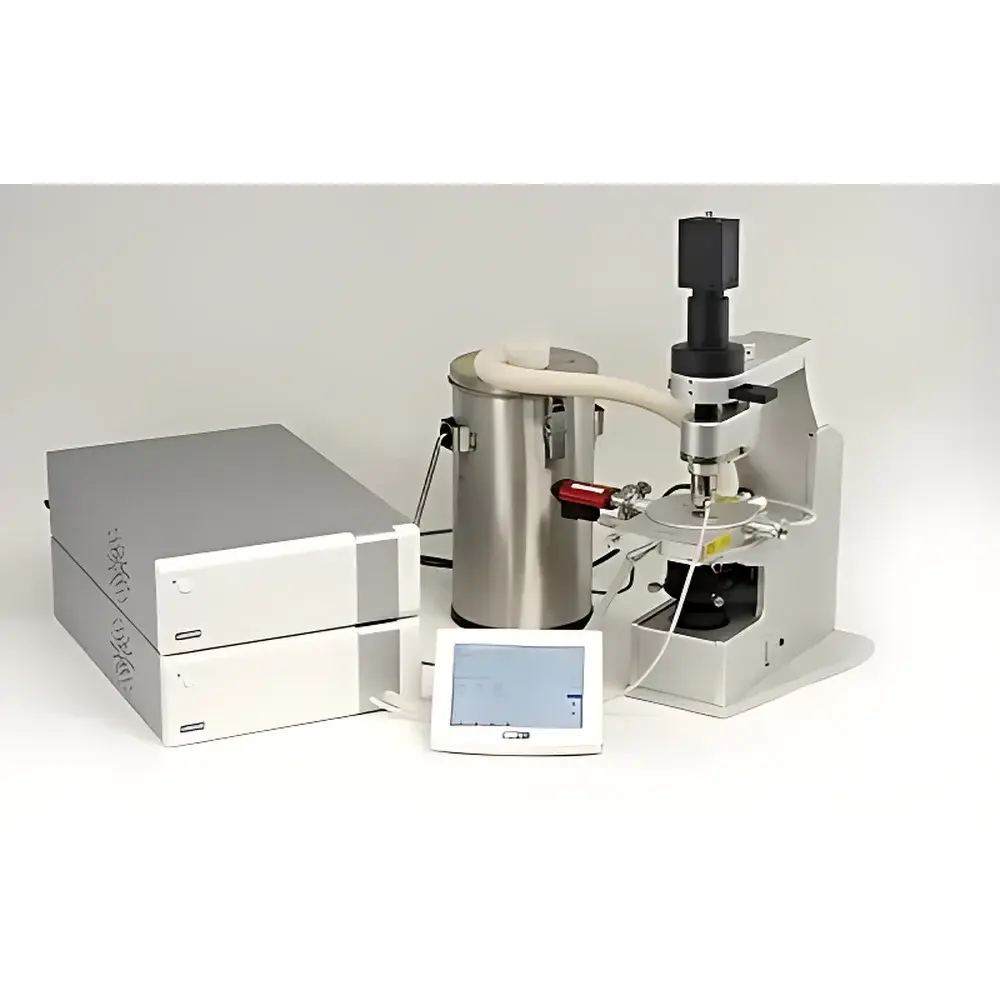
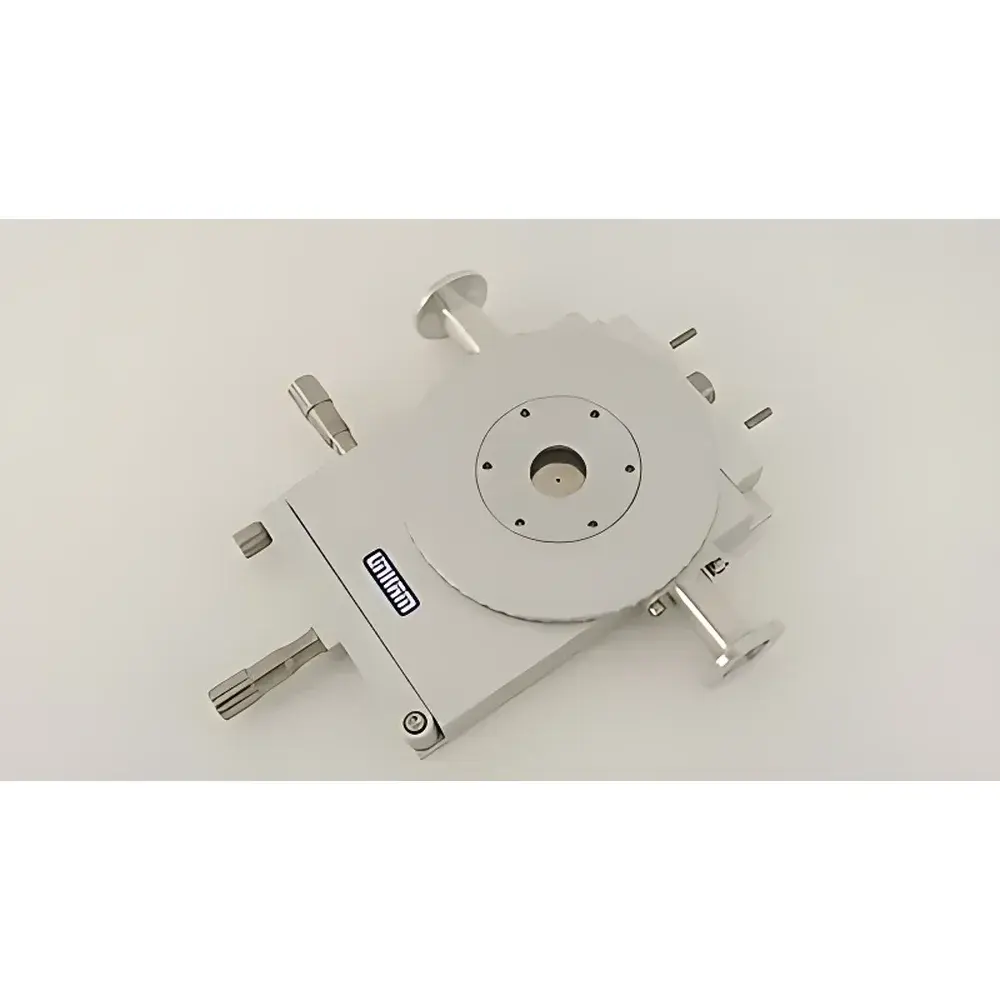
FDCS196 Cryo-Stage for Freeze-Drying Microscopy (Linkam)
| Brand | Linkam |
|---|---|
| Origin | United Kingdom |
| Model | FDCS196 with Image Station |
| Microscope Type | Upright Biological Microscope |
| Eyepiece Configuration | Binocular |
| Temperature Range | −195 °C to +125 °C |
| Vacuum Range | down to 10⁻³ mbar |
| Temperature Stability & Accuracy | ±0.01 °C (with 100 Ω Pt sensor, ±0.1 °C absolute accuracy) |
| Heating/Cooling Rate | up to 150 °C/min |
| Optical Aperture Diameter | 1.3 mm |
| Sample X–Y Translation Range | 16 mm |
| Heating Stage Surface Area | 22 mm diameter |
| Minimum Objective/Condenser Working Distance | 4.5 mm / 12.5 mm |
| Cooling Method | Direct cryogen (e.g., liquid nitrogen) cooling of high-conductivity silver heating block |
| Illumination Path | C-mount-compatible transmitted-light optical train |
| Vacuum Monitoring | Pirani gauge integrated |
| Compliance | ISO 9001-certified service and training support |
Overview
The Linkam FDCS196 Cryo-Stage for Freeze-Drying Microscopy is a precision-engineered thermal vacuum stage designed for in situ optical observation of lyophilization (freeze-drying) processes under controlled low-temperature and low-pressure conditions. Integrated with upright biological microscopes—compatible with phase contrast, polarized light, and brightfield imaging—the FDCS196 enables real-time, high-resolution visualization of structural evolution during freezing, primary drying, and secondary drying phases. Its core measurement principle relies on dynamic thermal–vacuum correlation: simultaneous high-fidelity monitoring of sample temperature (via calibrated 100 Ω platinum resistance thermometer), chamber pressure (via integrated Pirani vacuum gauge), and morphological change at the microscopic level. This allows precise determination of critical thermophysical parameters—including collapse temperature (Tc), eutectic melting point (Teutectic), and glass transition temperature (Tg′)—essential for rational formulation development and process optimization in biopharmaceutical and functional food manufacturing.
Key Features
- Wide operational range: −195 °C to +125 °C, achieved via direct liquid nitrogen cooling and rapid resistive heating (up to 150 °C/min), enabling both deep cryogenic stabilization and accelerated thermal ramping.
- High-stability temperature control: ±0.01 °C short-term stability supported by a 100 Ω Pt100 sensor with ±0.1 °C absolute accuracy, traceable to NIST standards.
- Integrated vacuum capability: base pressure down to 10⁻³ mbar, actively monitored by an on-board Pirani gauge; compatible with external vacuum pumps and pressure controllers for process-relevant drying simulations.
- Mechanically robust optical design: 1.3 mm central aperture optimized for minimal thermal distortion and maximum light transmission; minimum objective working distance of 4.5 mm supports use of high-NA dry objectives without interference.
- Motorized X–Y translation stage: 16 mm travel range with sub-micron repeatability, permitting precise region-of-interest navigation across heterogeneous samples under vacuum and cryogenic conditions.
- Thermally efficient silver heating block: high thermal conductivity ensures uniform temperature distribution across the 22 mm diameter sample area, minimizing radial gradients during dynamic thermal cycles.
- C-mount optical interface: fully compatible with industry-standard CCD/CMOS cameras and third-party image acquisition software for quantitative time-lapse analysis.
Sample Compatibility & Compliance
The FDCS196 accommodates standard microscope slides (e.g., 25 × 75 mm), custom aluminum or copper sample holders, and sealed capillary cells for volatile or oxygen-sensitive formulations. It supports aqueous, viscous, and amorphous systems—including protein therapeutics, monoclonal antibodies, vaccines, probiotics, and freeze-dried fruit powders. All thermal and vacuum protocols are repeatable and documentable, supporting adherence to ICH Q5C, USP , and ASTM F2750-21 guidelines for lyophilization characterization. Service, calibration, and operator training are delivered under ISO 9001:2015 quality management system certification, ensuring audit readiness for GLP and GMP-regulated environments.
Software & Data Management
Paired with the dedicated Linkam Image Station, the FDCS196 enables synchronized acquisition of thermal profiles, vacuum traces, and time-resolved microscopy video (up to 60 fps). Metadata—including timestamp, temperature setpoint, actual stage temperature, pressure reading, and user-defined annotations—is embedded into each frame using standardized AVI or TIFF sequence formats. Exported datasets comply with FAIR principles (Findable, Accessible, Interoperable, Reusable) and integrate natively with MATLAB, Python (OpenCV, NumPy), and commercial image analysis platforms (e.g., ImageJ/Fiji, MetaMorph). Audit trails meet FDA 21 CFR Part 11 requirements when deployed with validated electronic signature modules and role-based access control.
Applications
- Determination of product-specific collapse temperature to define safe primary drying shelf temperature.
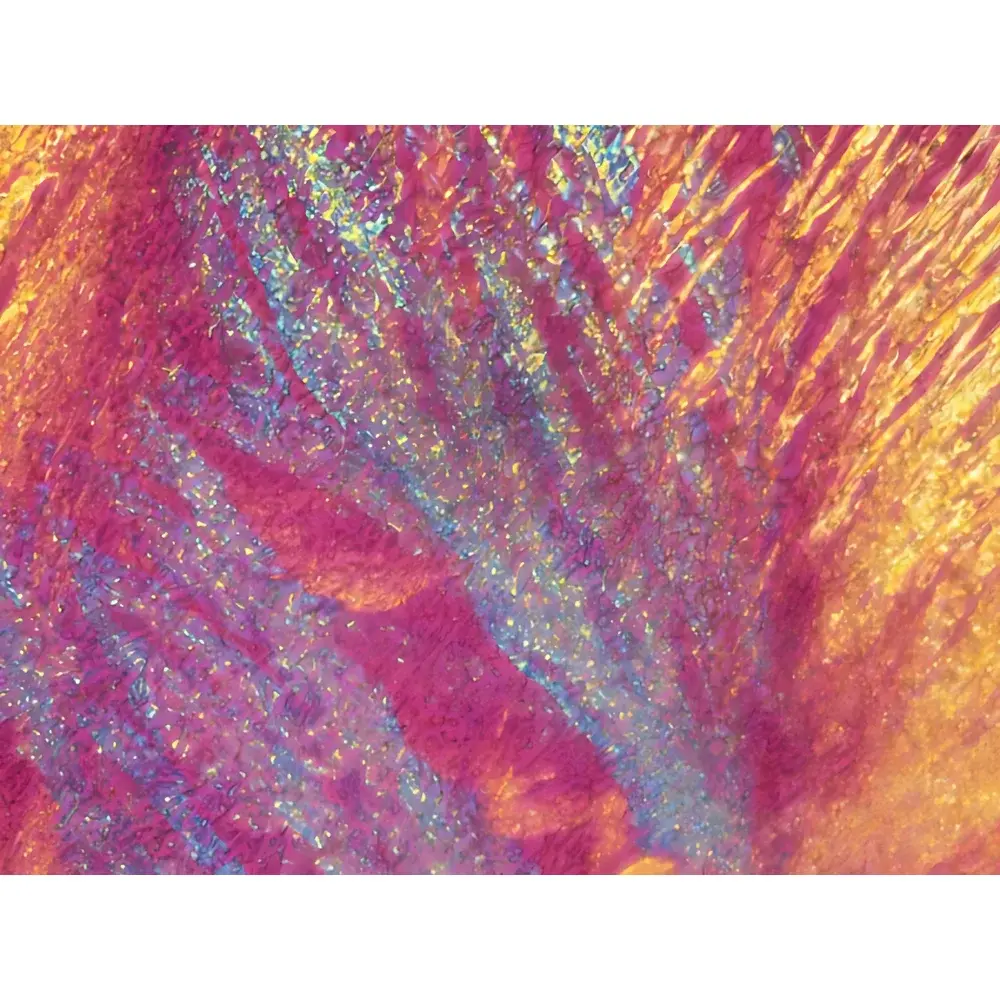
- Visualization of ice crystal nucleation, growth, and recrystallization kinetics during annealing steps.
- Assessment of pore structure formation, shrinkage, and surface wrinkling during drying front propagation.
- Investigation of excipient–API interactions influencing amorphous phase behavior and crystallinity onset.
- Method development for continuous freeze-drying and microfluidic lyophilization platforms.
- Stability assessment of live biotherapeutics, lyophilized bacteria, and viral vectors under accelerated storage conditions.
FAQ
Can the FDCS196 be used with inverted microscopes?
No—the FDCS196 is mechanically and optically configured exclusively for upright microscope integration due to its top-access thermal stage architecture and transmitted-light C-mount path.
Is the stage compatible with environmental chambers or gloveboxes?
Yes; the unit’s compact footprint and feedthrough-compatible electrical/vacuum interfaces allow integration into inert-atmosphere enclosures for oxygen- or moisture-sensitive studies.
What level of vacuum is required to observe sublimation fronts clearly?
Optimal sublimation visualization typically occurs between 10⁻² and 10⁻¹ mbar, balancing vapor transport rate with optical clarity and thermal control fidelity.
Does Linkam provide application-specific SOPs for pharmaceutical freeze-drying studies?
Yes—validated SOP templates aligned with EMA CHMP reflection papers and ISPE Baseline Guide Volume 8 are available upon request for qualified users.