
Linkam CSS450 Shear Stage for Optical Rheology
| Brand | Linkam |
|---|---|
| Origin | United Kingdom |
| Model | CSS450 |
| Temperature Range | −50 °C to 450 °C |
| Temperature Accuracy & Stability | ±0.1 °C |
| Optical Aperture Diameter | 2.5 mm |
| Sample Heating Area | 30 mm |
| Max. Heating/Cooling Rate | 30 °C/min |
| Minimum Objective/Condenser Working Distance | 7.4 mm / 11.5 mm |
| Shear Modes | Oscillatory, Steady, Step |
| Shear Rate Range | 0.003–7500 s⁻¹ |
| Gap Control Range | 5–2500 µm |
Overview
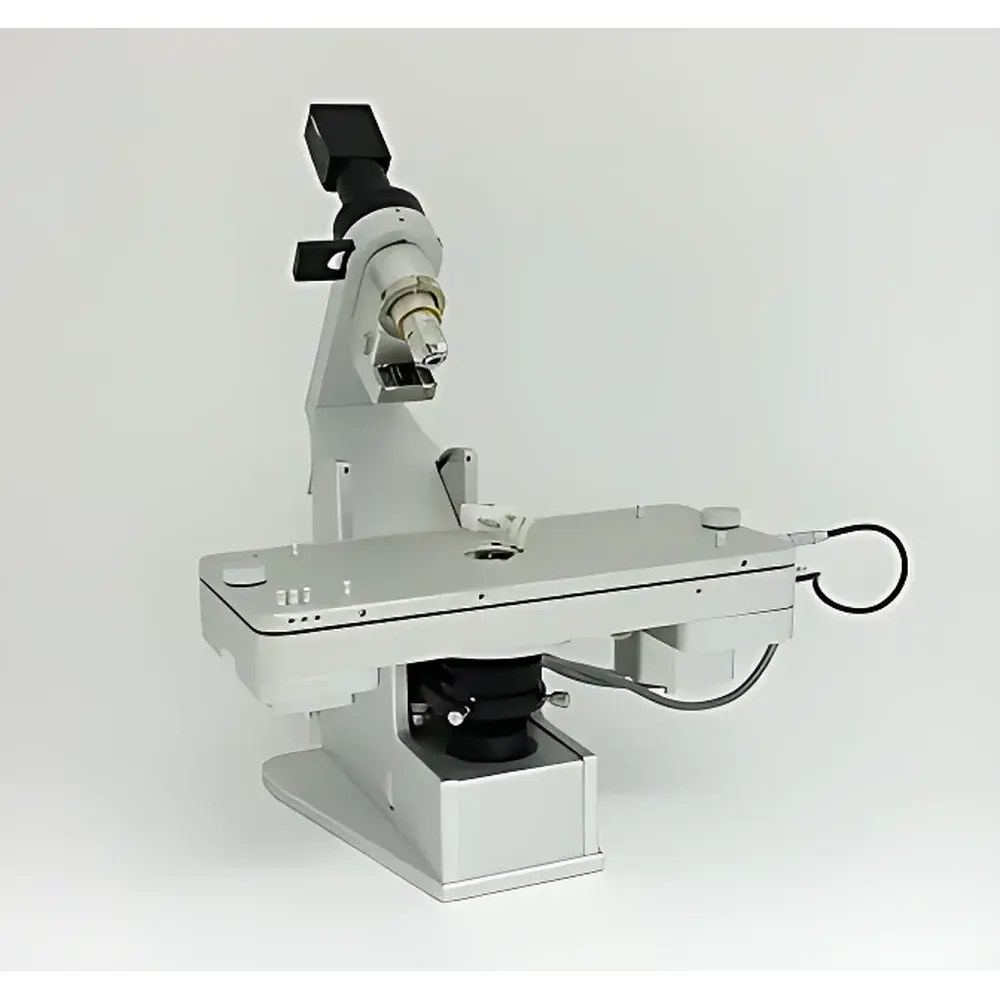
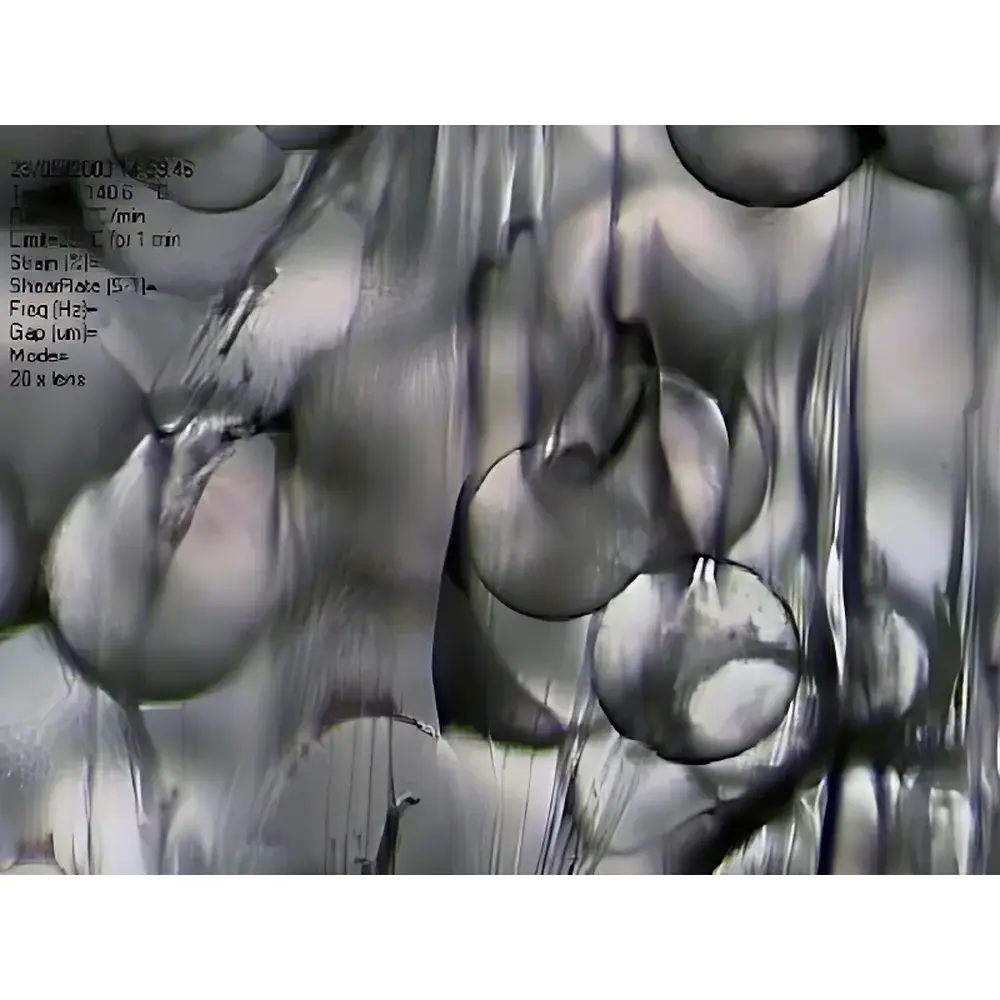
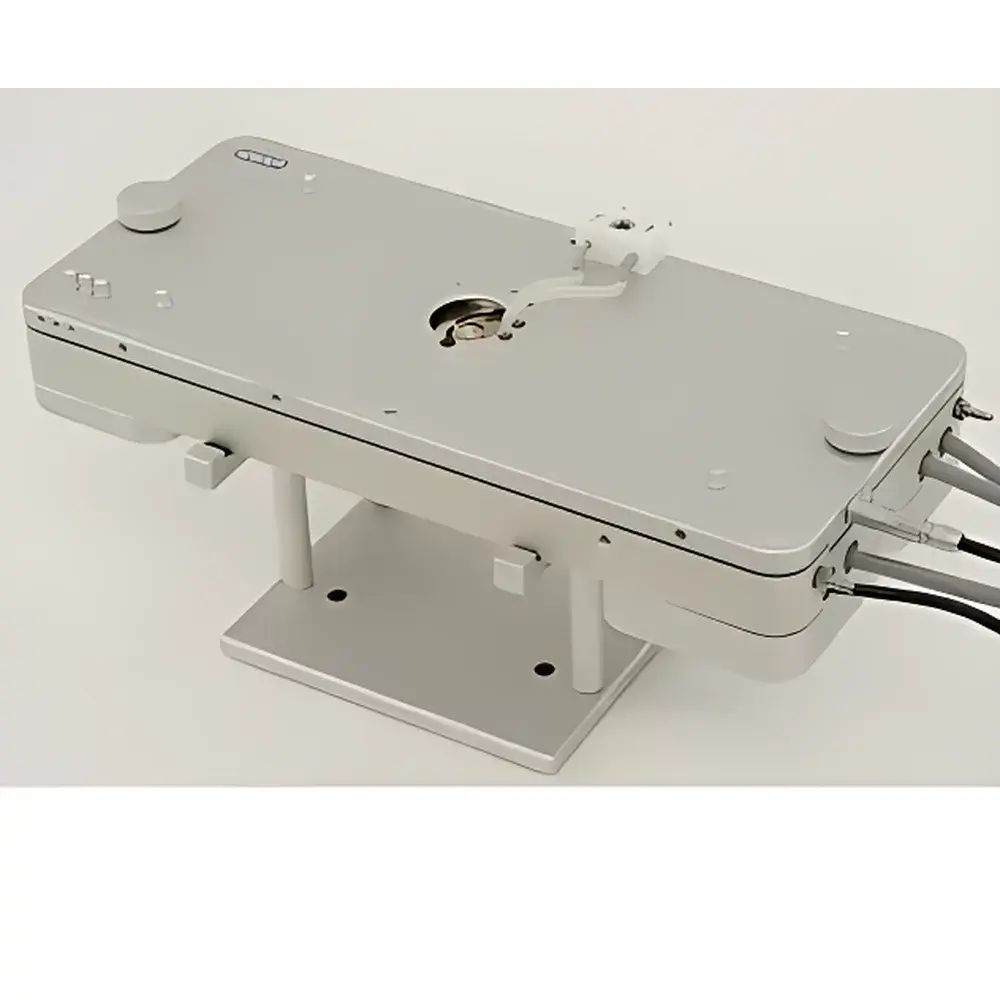
The Linkam CSS450 Shear Stage for Optical Rheology is a precision-engineered thermo-mechanical platform designed for in situ microscopic observation of complex fluids under controlled temperature and defined shear conditions. It operates on the principle of Couette-based shear geometry, utilizing two optically flat, parallel quartz plates (flatness ≤2 µm) mounted on independent silver heating blocks with integrated Pt100 resistance thermometers. This architecture enables simultaneous high-fidelity thermal control and mechanical deformation while maintaining optical transparency across UV–NIR wavelengths. The lower quartz plate is actuated by a high-resolution stepper motor, permitting programmable shear motion—including oscillatory, steady-state, and step-strain protocols—while the upper plate remains stationary or optionally driven for symmetric flow field generation. The system is fully compatible with upright and inverted optical microscopes, enabling real-time visualization of microstructural evolution during phase transitions, flow-induced alignment, defect dynamics, and viscoelastic relaxation.
Key Features
- Wide operational temperature range from −50 °C to +450 °C, supported by liquid nitrogen cooling and resistive heating with dual-stage PID control
- Temperature stability and accuracy maintained at ±0.1 °C over full range, verified per ASTM E220 and ISO 17025 traceable calibration protocols
- Optimized optical path with 2.5 mm central aperture and minimal working distance requirements (7.4 mm objective / 11.5 mm condenser), facilitating use with high-NA oil-immersion and long-working-distance objectives
- Precise gap control from 5 µm to 2500 µm via micrometer-driven vertical translation, enabling reproducible sample thickness definition and normal force compensation
- Shear rate programmability from 0.003 s⁻¹ to 7500 s⁻¹ across three distinct modes: oscillatory (0.001–100 Hz), steady (0.003–7500 s⁻¹), and step (programmable strain amplitude and duration)
- Quartz cell construction ensures chemical inertness, thermal homogeneity, and minimal birefringence—critical for polarized light microscopy and quantitative birefringence imaging
Sample Compatibility & Compliance
The CSS450 accommodates a broad spectrum of soft matter systems, including polymer melts and solutions, colloidal dispersions, lyotropic and thermotropic liquid crystals, biological gels, blood analogues, and pharmaceutical suspensions. Its design conforms to key regulatory and quality frameworks for materials characterization: temperature control algorithms support GLP-compliant audit trails when paired with Linkam’s TMS94 or LTS420 controllers; data acquisition meets FDA 21 CFR Part 11 requirements for electronic records when used with compliant software configurations. All mechanical and thermal components are manufactured to ISO 9001-certified processes, and the quartz cell assembly complies with ISO 10110-7 surface quality standards for optical elements.
Software & Data Management
Control and synchronization are managed via Linkam’s proprietary Linksys software (v6.x+), which provides deterministic real-time command execution, multi-axis parameter logging (temperature, gap, shear rate, torque, time), and hardware-triggered image capture integration with common microscope camera APIs (e.g., Thorlabs DCx, Hamamatsu ORCA, Nikon NIS-Elements). Experimental sequences—including temperature ramps with concurrent shear profiles—are defined using a hierarchical script editor supporting nested loops, conditional branching, and user-defined metadata tagging. Export formats include CSV, HDF5, and MDF4, ensuring compatibility with MATLAB, Python (via h5py), and commercial rheological analysis suites such as RheoSense VROC® or TA Instruments TRIOS™. Audit logs record operator ID, timestamp, firmware version, and parameter set checksums for full experimental provenance.
Applications
- Phase separation kinetics in binary polymer blends under shear, visualizing domain coarsening and flow-induced stabilization
- Defect nucleation, annihilation, and topological charge transport in nematic and smectic liquid crystal films
- Rheo-optical characterization of fibrin network formation and platelet aggregation under physiological shear gradients
- Crystallization onset and polymorph selection in supersaturated small-molecule solutions during controlled cooling
- Microstructural breakdown and reformation in yield-stress fluids (e.g., bentonite gels, carbomer dispersions) during start-up flow
- Thermally reversible gel-sol transitions in biopolymer hydrogels (e.g., agarose, gelatin) coupled with shear-thinning response mapping
FAQ
Is the CSS450 compatible with confocal laser scanning microscopy (CLSM)?
Yes—the quartz cell and compact stage footprint permit integration with most CLSM systems, provided the objective working distance exceeds 7.4 mm and the laser wavelength falls within quartz transmission range (200–2500 nm). Optional anti-reflection coatings are available.
Can normal force be measured directly on the CSS450?
No—normal force measurement requires optional load-cell integration (e.g., Linkam FCS1000) or external transducer coupling. The CSS450 provides precise gap control and position feedback but does not include force sensing.
What is the maximum sample volume accommodated at 2500 µm gap?
At maximum gap and full 30 mm heating area, the nominal volume is ~1.77 µL (π × (15 mm)² × 2.5 µm); however, practical loading volume is typically 0.5–1.2 µL to ensure meniscus stability and thermal uniformity.
Does the system support vacuum or controlled-atmosphere operation?
The standard CSS450 is air-operated; a hermetic chamber variant (CSS450-VAC) is available for inert gas purging or low-pressure environments down to 10⁻² mbar.
How is temperature calibrated across the quartz plate surface?
Calibration is performed using a NIST-traceable micro-thermocouple array mapped across the 30 mm zone; spatial uniformity is validated to ±0.15 °C at 200 °C and ±0.25 °C at 450 °C per ISO/IEC 17025 procedures.




